Visual perception Normal Addition & Subtraction Worksheets for Ages 4-8
3 filtered results
-
From - To
Boost your child's math readiness with our "Visual Perception Normal Addition & Subtraction Worksheets" designed for kids aged 4-8. These engaging worksheets focus on enhancing visual perception skills while introducing foundational math concepts. Children will practice identifying numbers and visual patterns, using fun images and exercises to solidify their understanding of addition and subtraction. Ideal for pre-schoolers and early-grade learners, these worksheets promote cognitive development, critical thinking, and problem-solving abilities. Download our resources today and enable your child to build confidence in math skills while having fun! Perfect for both classroom and home learning environments.
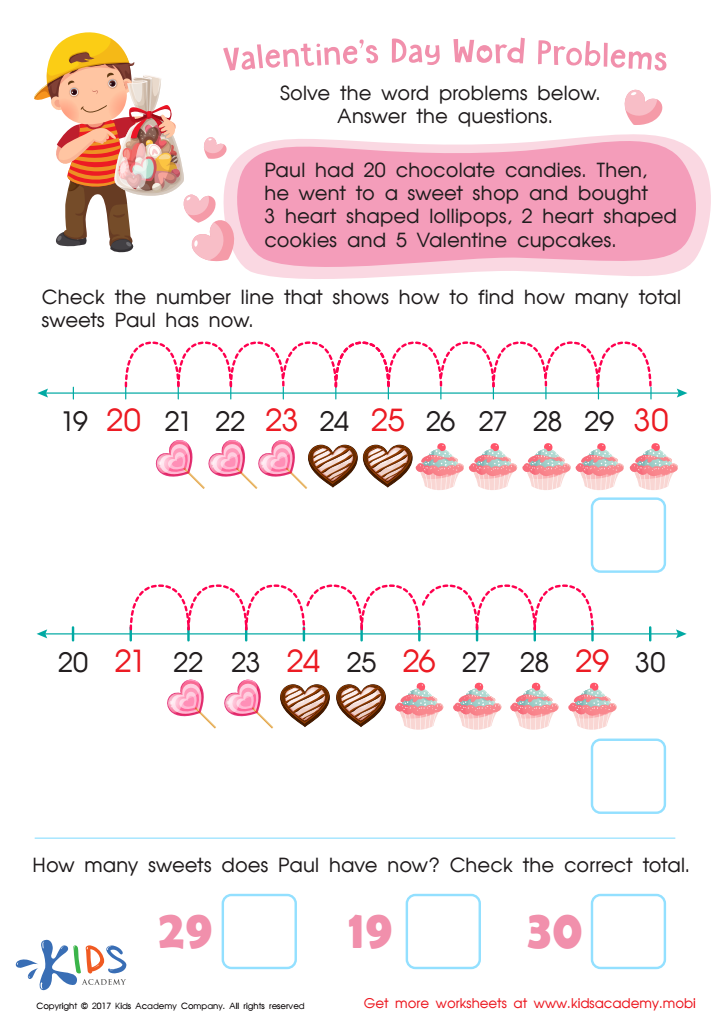
Valentines Day 2 Printable
 Assign to My Students
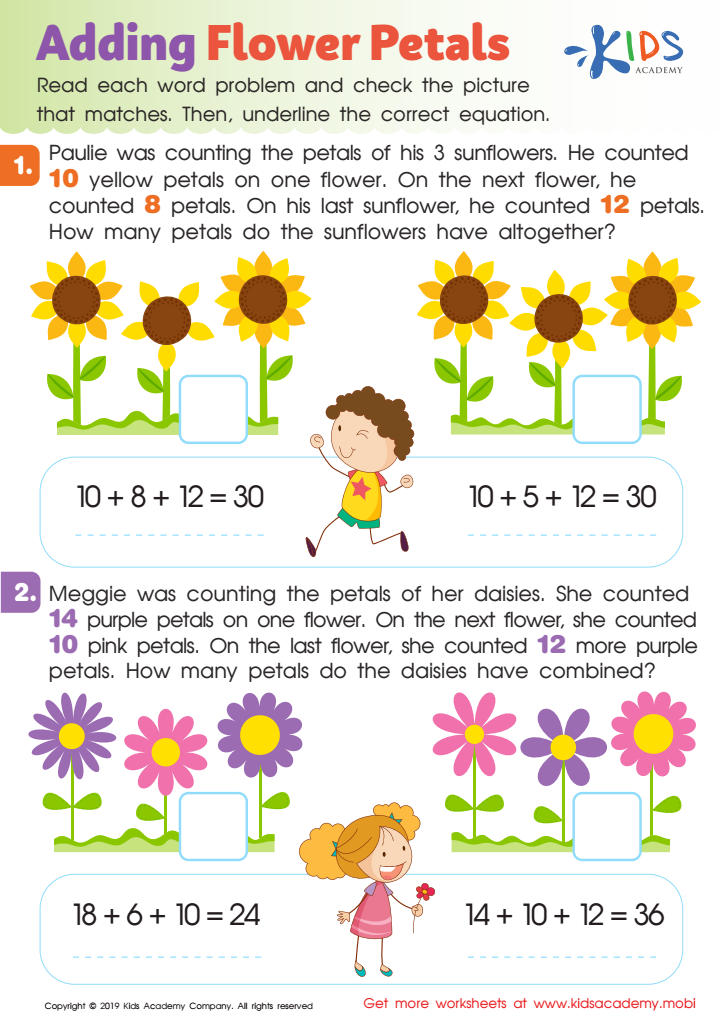
Adding Flower Petals Worksheet

Find 10 Barrels Worksheet








Visual perception is crucial for children aged 4-8 as it plays a significant role in their academic and everyday success, especially in fundamental skills like addition and subtraction. At this age, children are still developing their cognitive abilities, and their visual perception skills help them interpret, analyze, and process visual information efficiently.
Effective visual perception supports mathematical understanding by helping children accurately recognize numbers, shapes, and spatial relationships, which are foundational for performing addition and subtraction tasks. When children can visually distinguish between different quantities and positions of objects, they are more likely to grasp mathematical concepts.
Moreover, strong visual perception can enhance fine motor skills, which are essential for writing numbers and working with manipulatives in math activities. By nurturing visual perceptual skills through games, puzzles, and interactive learning activities, parents and teachers can contribute significantly to a child’s confidence in math.
Ignoring these developmental aspects can lead to difficulties in more advanced mathematical concepts later on. Thus, parents and teachers should prioritize activities that boost visual perception, ensuring children build a solid foundation for their future academic journeys and daily problem-solving abilities.








