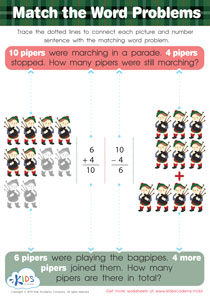
Mathematical reasoning Normal Addition Worksheets for Ages 4-8
4 filtered results
-
From - To
Discover our engaging Mathematical Reasoning Normal Addition Worksheets designed specifically for children ages 4-8! These worksheets aim to enhance young learners' addition skills while developing critical thinking and problem-solving abilities. Perfect for early grade teachers and parents alike, our worksheets feature colorful illustrations and age-appropriate exercises that make math fun. With an emphasis on reasoning skills, children will learn to apply addition in real-life scenarios, fostering a solid understanding of mathematical concepts. Ideal for independent study or classroom activities, our worksheets support diverse learning styles and help build confidence in math. Start your child's math journey today with our delightful worksheets!
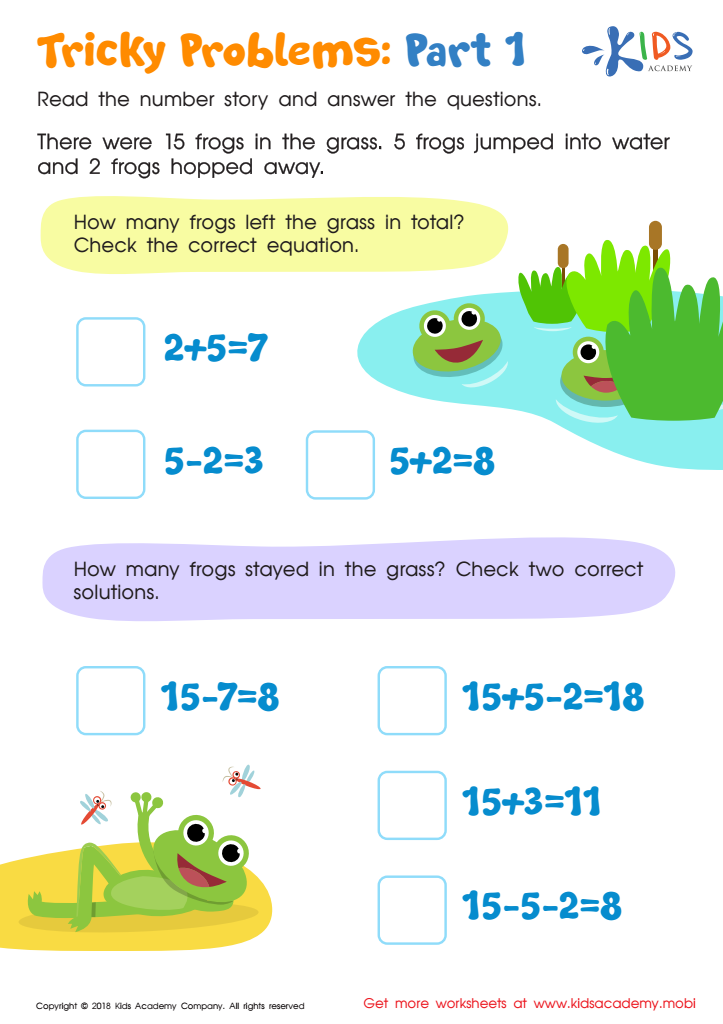
Tricky Problems Worksheet: Part 1
 Assign to My Students
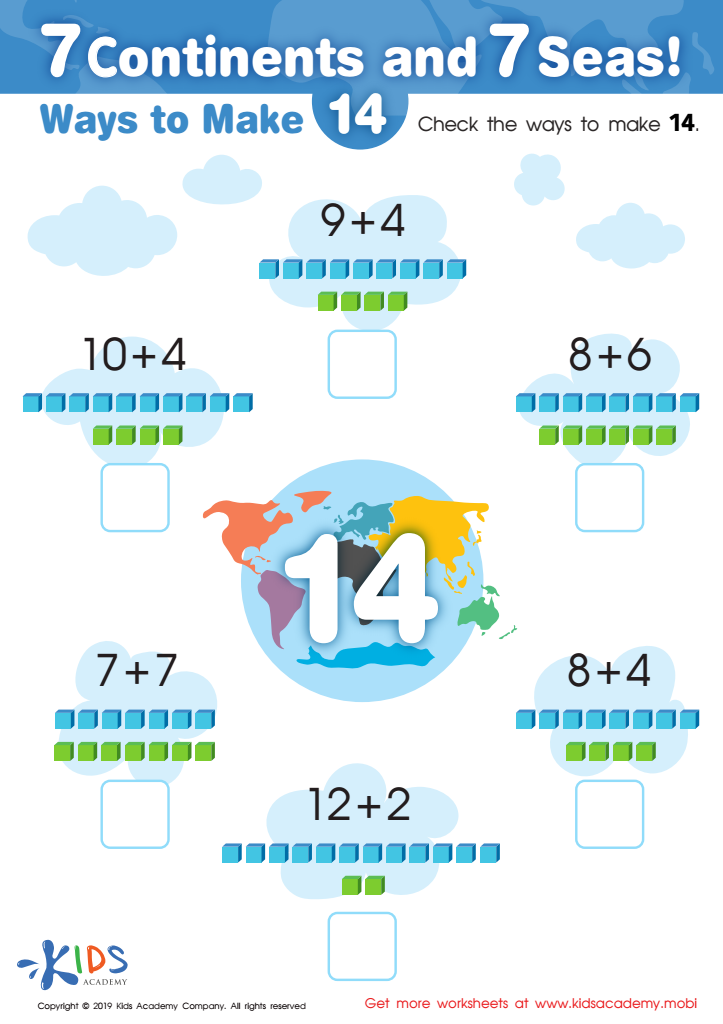
7 Continents and 7 Seas Worksheet
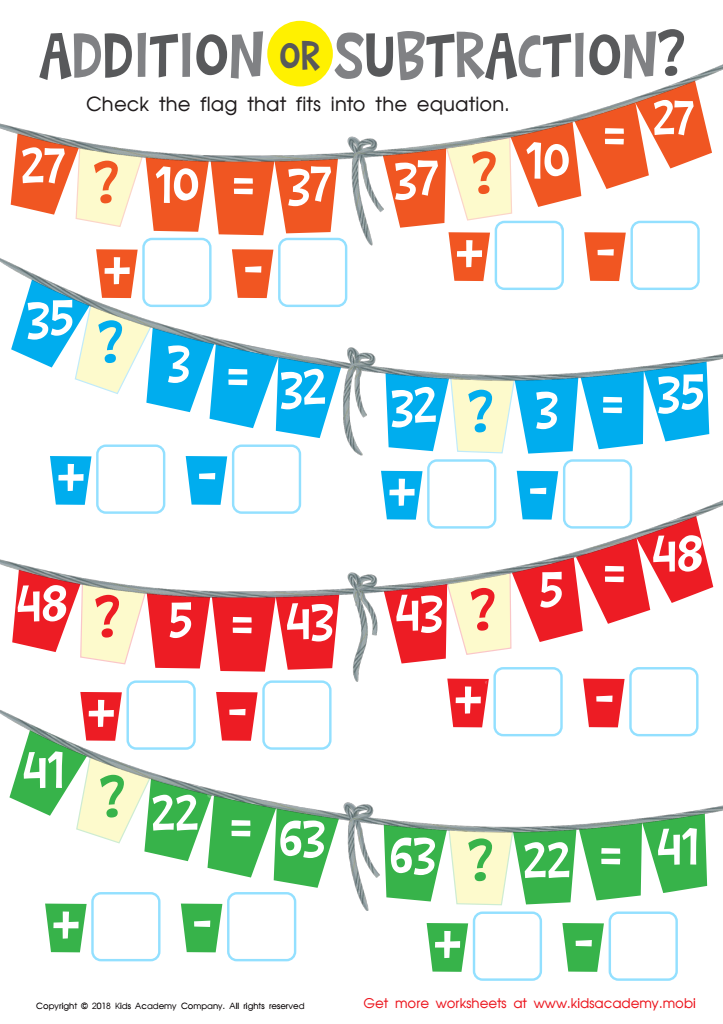
Addition or Subtraction? Worksheet
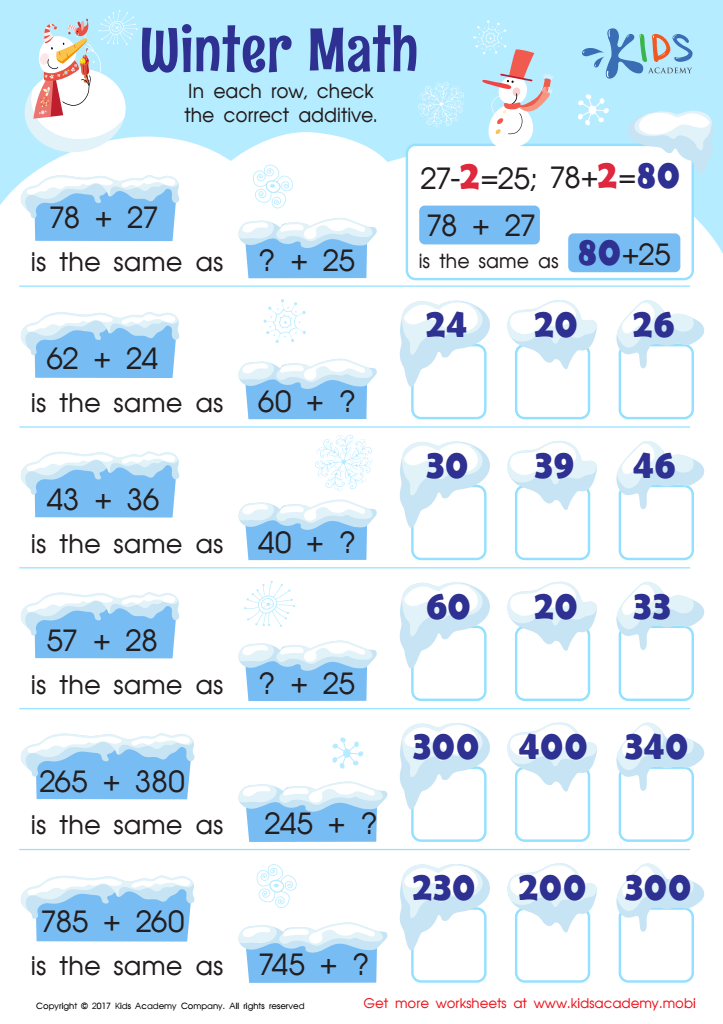
Free Addition Worksheet








Mathematical reasoning in the context of normal addition is crucial for children aged 4-8 as it forms the foundation for their overall cognitive development and problem-solving skills. This stage of early mathematics is not just about memorizing facts and figures; it involves understanding concepts such as quantity, relationships, and the ability to visualize problems in a tangible way.
For parents and teachers, nurturing mathematical reasoning through normal addition enhances critical thinking. Children become adept at recognizing patterns, making predictions, and justifying their conclusions, skills that extend beyond math into all areas of learning and daily life. Moreover, developing a strong aptitude for mathematical reasoning helps demystify math, alleviating anxiety around the subject as children progress to more complex concepts in later grades.
Furthermore, fostering mathematical reasoning at this age encourages children to explore and communicate their thought processes, building confidence in their abilities. Engaging parents in mathematical learning at home creates a supportive environment that reinforces skills and underscores the importance of math in everyday contexts. By prioritizing mathematical reasoning, parents and teachers are empowering children to become independent thinkers and confident problem solvers, setting the stage for future academic success.