Filters

7 filtered results

Clear all filters
Favorites
With answer key
Interactive

7 filtered results

Difficulty Level

Grade


Subject

    Discover our engaging Normal Area and Perimeter Worksheets designed specifically for children aged 4-8! These worksheets offer a fun and interactive way for young learners to explore the concepts of area and perimeter through vibrant illustrations and age-appropriate exercises. Each worksheet promotes critical thinking and problem-solving skills as children measure objects and calculate areas and perimeters in various shapes. Ideal for reinforcing classroom learning or for home practice, our worksheets ensure that children enjoy mastering math fundamentals. Download now and make learning about area and perimeter an exciting adventure for your little ones!

    Check out this FREE Trial Lesson on Area and Perimeter for age 4-8!

    Understanding Perimeter

    Favorites
    With answer key
    Interactive
    • 4-8
    • Area and Perimeter
    • Normal
    Sports Area Worksheet
    Sports Area Worksheet

    Sports Area Worksheet

    Help your preschoolers understand area by showing them it's just length x width. Point to the picture in the worksheet, get them to read the labels and select the right answer. Encourage them that calculating areas of shapes, objects and places isn't too hard!
    Sports Area Worksheet
    Worksheet
    Flag Area Worksheet
    Flag Area Worksheet

    Flag Area Worksheet

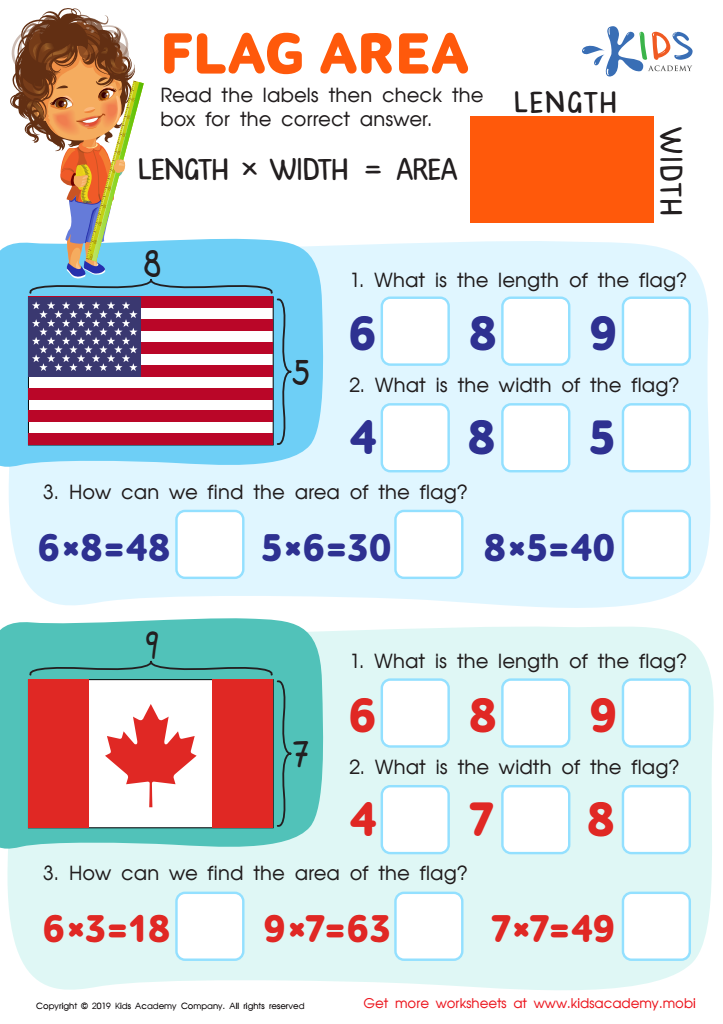
    Test your child's knowledge of flags by asking which ones they can identify in the image. Then, study the worksheet together. There are 6 questions with labels. Have them read each label and check the box for the correct answer.
    Flag Area Worksheet
    Worksheet
    Calculating Perimeter Worksheet Grade 3
    Calculating Perimeter Worksheet Grade 3

    Calculating Perimeter Worksheet

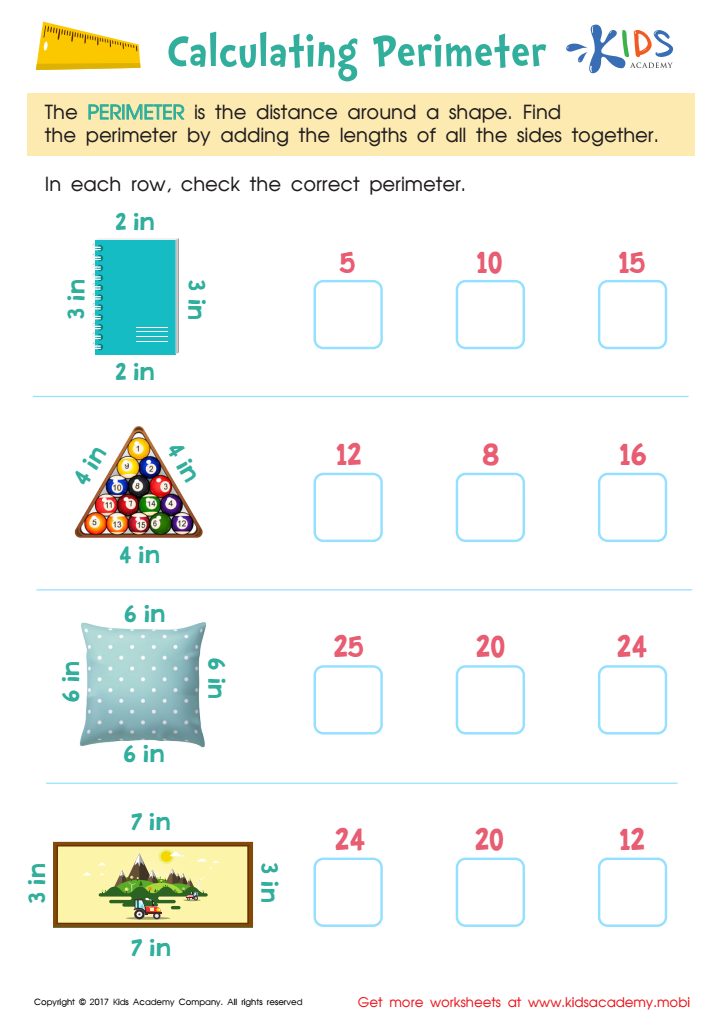
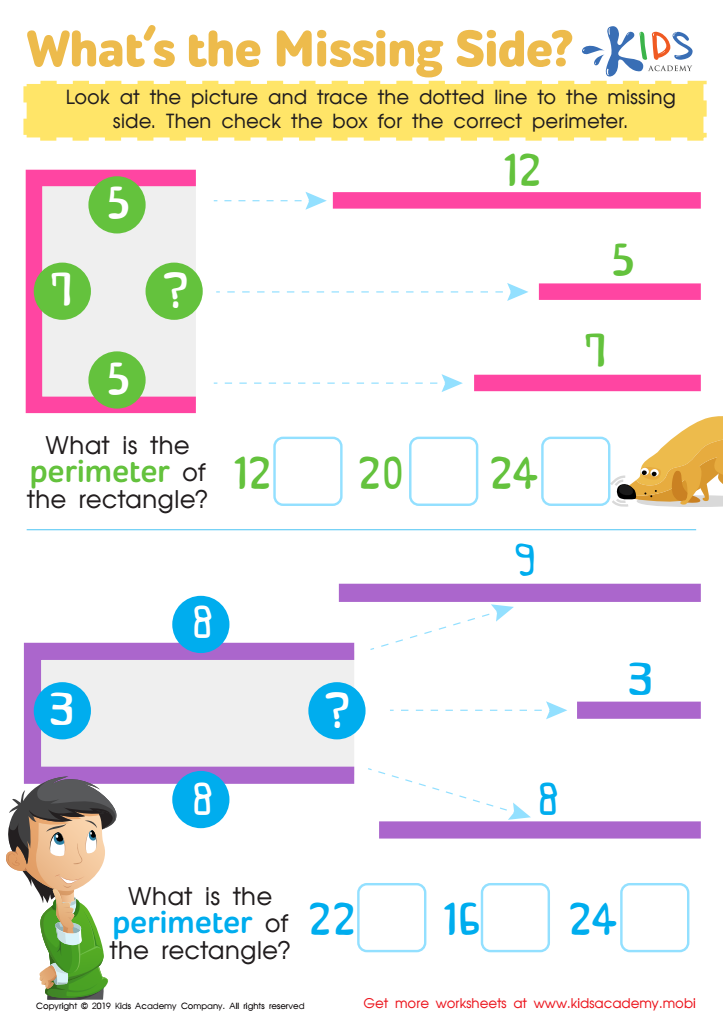
    Check out this worksheet to help kids calculate perimeter! Kids can use it to practice important math skills such as geometry. With everyday objects pictured, they'll find the perimeter and master this useful skill.
    Calculating Perimeter Worksheet
    Worksheet
    What's the Missing Side Worksheet
    What's the Missing Side Worksheet

    What's the Missing Side Worksheet

    Assist your pupils in improving math skills with fun exercises like the tracing sheet. Show them the picture and guide them to trace the missing side. Ask them to check the box of the right perimeter afterwards. Doing this regularly can help them to enjoy and appreciate the subject more.
    What's the Missing Side Worksheet
    Worksheet
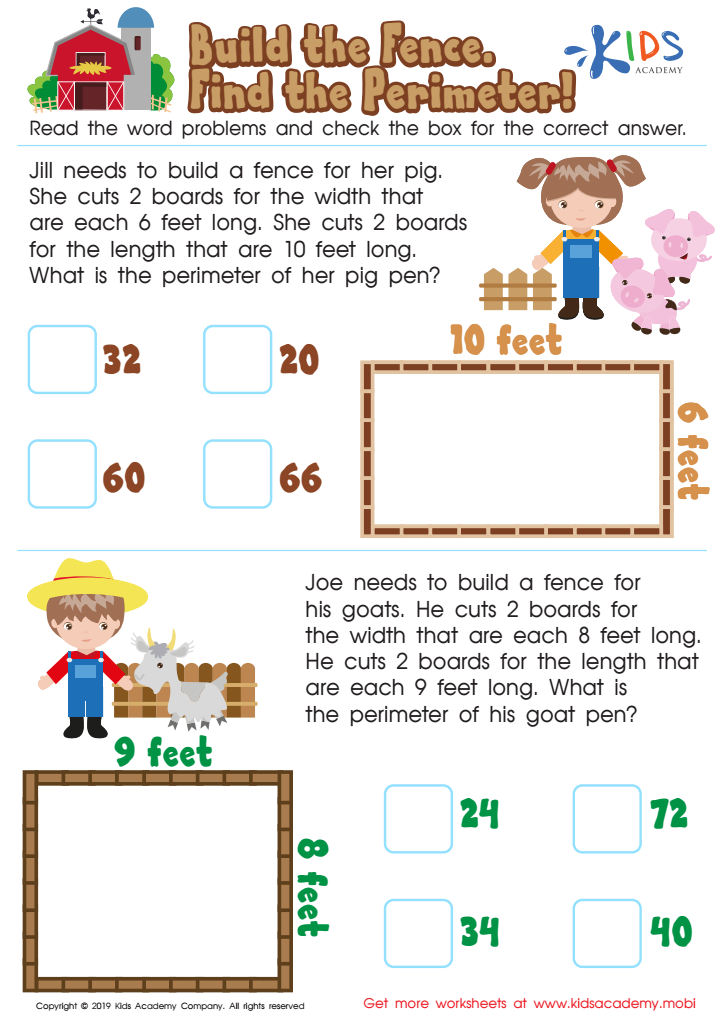
    Build the Fence, Find the Perimeter Worksheet
    Build the Fence, Find the Perimeter Worksheet

    Build the Fence, Find the Perimeter Worksheet

    This worksheet is great for kids needing extra help with geometry and maths. Read the problems to your kids and assist them in answering them correctly by ticking the box. This way, they'll be combining their addition and subtraction skills with literacy to help them learn.
    Build the Fence, Find the Perimeter Worksheet
    Worksheet
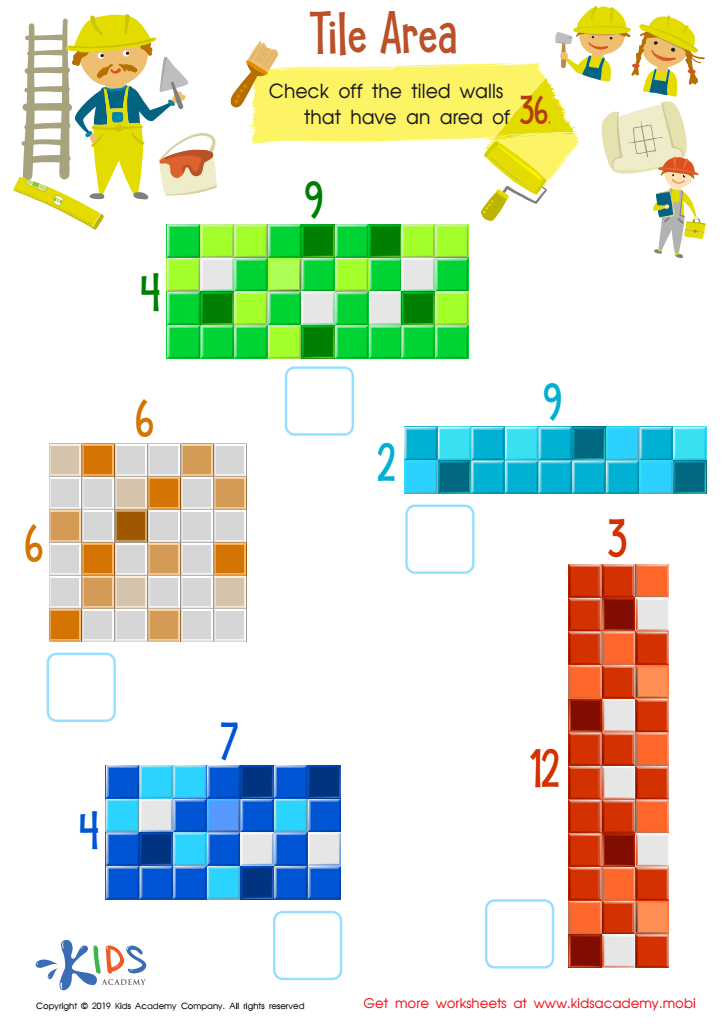
    Tile Area Worksheet
    Tile Area Worksheet

    Tile Area Worksheet

    Help kindergartners become experts in solving simple math problems. Teach them about measuring, the parts to measure, and how to measure the area of tiled walls. Use the worksheet to check off the walls with an area of 36. This can help them understand the concepts and make measuring objects less intimidating.
    Tile Area Worksheet
    Worksheet
    Perimeter Parking Worksheet

    Perimeter Parking Worksheet

    Perimeter Parking Worksheet

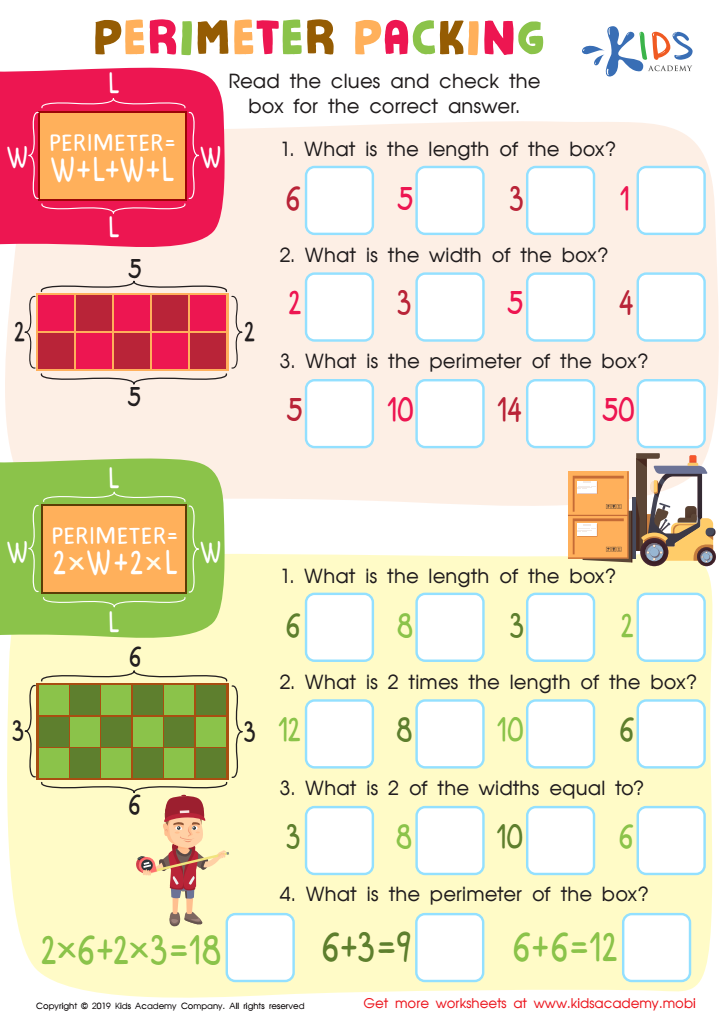
    Geometry can be daunting for kids, but you can make it easy with simple exercises and familiar objects. Check out this worksheet with two sections of questions. Guide your kids to read clues and check the correct answer box. Help them become better at solving geometry problems.
    Perimeter Parking Worksheet
    Worksheet


    Understanding the concepts of area and perimeter is essential for children aged 4-8 as it lays a strong foundation for mathematical reasoning and problem-solving skills. Both area and perimeter represent fundamental attributes of shapes, fostering spatial awareness and comprehension of how objects occupy space.

    For parents and teachers, introducing these concepts at an early age can enhance logical thinking and encourage a curiosity about the world. By engaging young learners in practical activities—such as measuring playground spaces or even calculating how many tiles fit in a box—educators can make learning fun and relatable. These activities nurture critical thinking and allow children to apply their mathematical understanding in real-life situations.

    Additionally, learning about area and perimeter develops skills that extend beyond mathematics. It encourages teamwork when working in groups and builds confidence as children tackle challenges and solve problems together. This foundational knowledge supports success in future mathematical concepts, aiding in smoother transitions as they progress to more advanced topics such as geometry.

    In summary, teaching area and perimeter cultivates a comprehensive skill set in young learners, fostering inquiry, computational thinking, and life skills that will serve them well throughout their educational journey and beyond.