Animal Classification Normal Math Worksheets for Ages 4-8
4 filtered results
-
From - To
Introduce young learners to the exciting world of Animal Classification with our Math Worksheets designed for ages 4-8. These engaging printables help kids develop essential math skills while exploring different animal categories. Perfect for beginners, our worksheets incorporate colorful illustrations and fun activities to make learning enjoyable. Children will practice counting, sorting, and categorizing animals, building a solid foundation for future math and science concepts. Whether at home or in the classroom, our worksheets are an excellent resource to spark curiosity and enhance learning. Explore our Animal Classification Normal Math Worksheets today and watch your child’s understanding and enthusiasm grow!
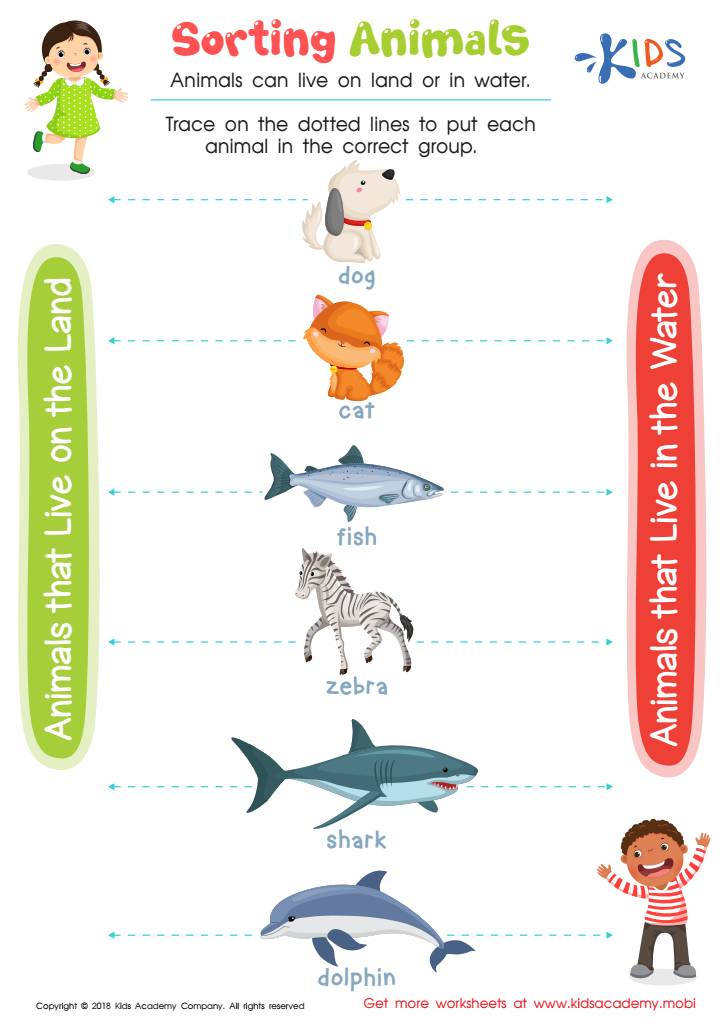
Sorting Animals Worksheet
 Assign to My Students
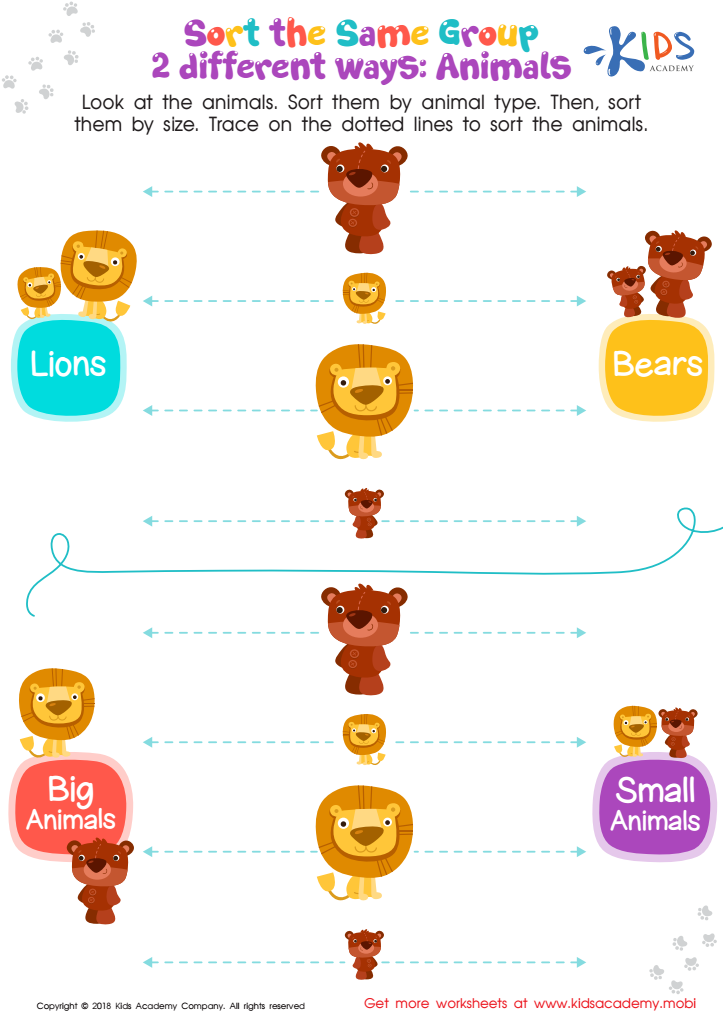
Sort the Same Group 2 Different Ways: Animals Worksheet
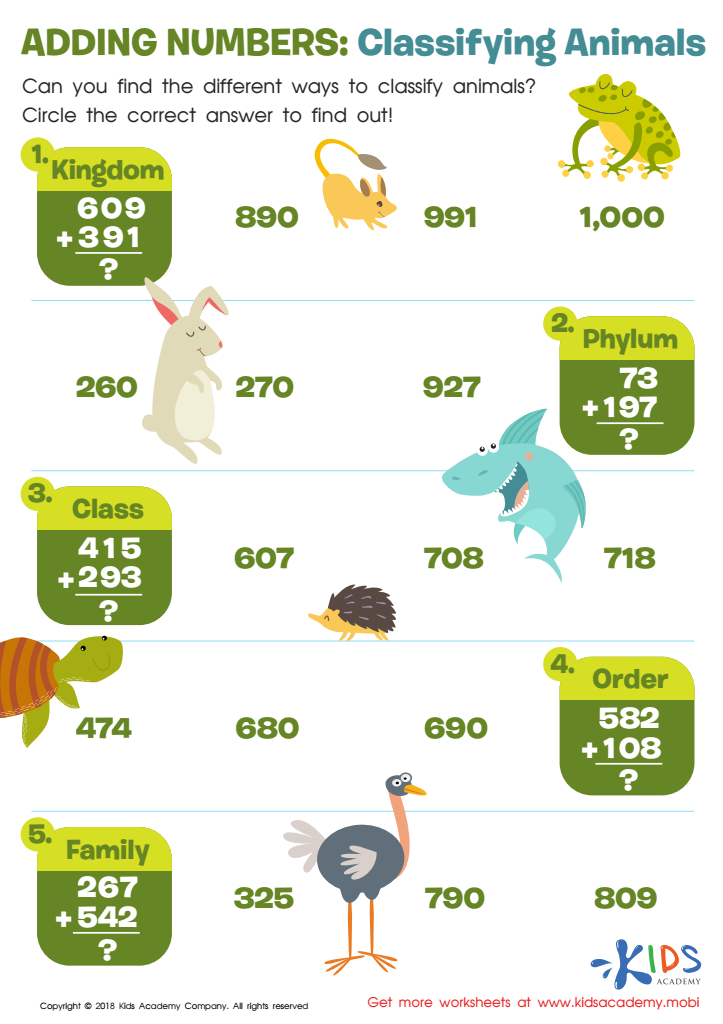
Adding Numbers: Classifying Animals Worksheet
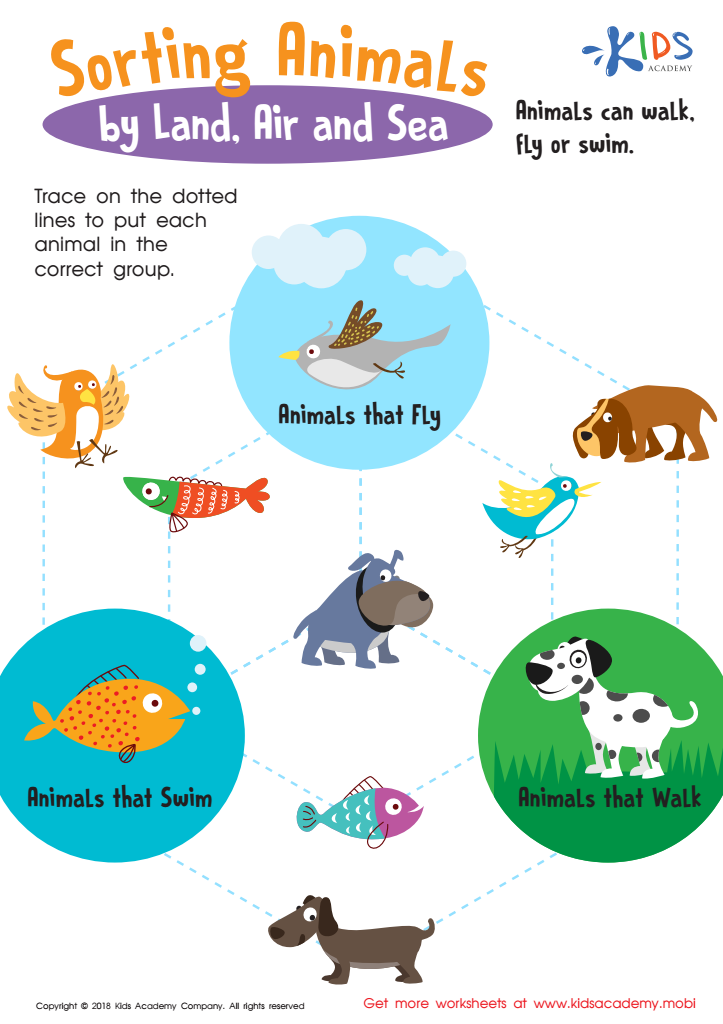
Sorting Animals by Land, Air and Sea Worksheet






Animal Classification in early grade education isn't just about learning animal names or categories; it's a rich foundation for a child's development in various essential skills. For children aged 4-8, this activity engages their natural curiosity and introduces them to basic scientific concepts in an accessible and enjoyable way.
Firstly, understanding Animal Classification enhances critical thinking and problem-solving skills. Children learn to observe, compare, and contrast different characteristics of animals—whether they have fur or feathers, what they eat, or where they live. These activities help develop their analytical abilities and observation skills.
Animal Classification also supports language development. As kids learn the names and traits of animals, they expand their vocabulary and improve their descriptive language skills. This becomes a foundational asset for reading and writing proficiency in later years.
Mathematics gets seamlessly integrated when children count animals, group them based on similarities, or compare sizes. These simple sorting and grouping activities promote early numeracy, pattern recognition, and the ability to categorize, essential mathematical reasoning skills.
Socially and emotionally, learning about animals instills empathy and environmental awareness, teaching children about biodiversity and the importance of all living things. Overall, engaging with Animal Classification builds a holistic, multidimensional foundation that benefits intellectual and emotional growth. Parents and teachers should care because it cultivates a well-rounded, inquisitive, and informed young mind.








