Interpreting data Normal Math Worksheets for Ages 4-8
3 filtered results
-
From - To
Unlock the exciting world of interpreting data for children ages 4-8 with our engaging math worksheets. As they explore these carefully crafted activities, young learners will develop essential skills in data analysis and visualization, setting a strong foundation for future math success. Our fun and interactive exercises are designed to enhance critical thinking and problem-solving abilities by presenting data in various kid-friendly formats, like charts and graphs. Perfect for home or classroom use, these worksheets by Kids Academy are tailored to cater to the unique learning pace and style of each child, making learning both enjoyable and effective.
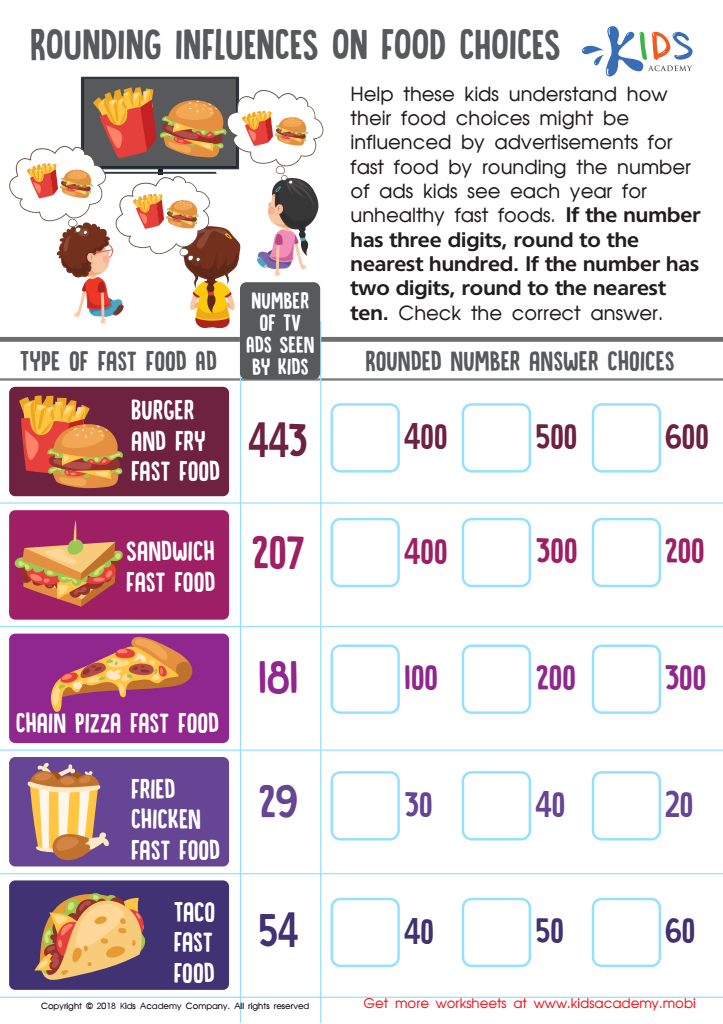
Rounding Influences Food Choices Worksheet
 Assign to My Students
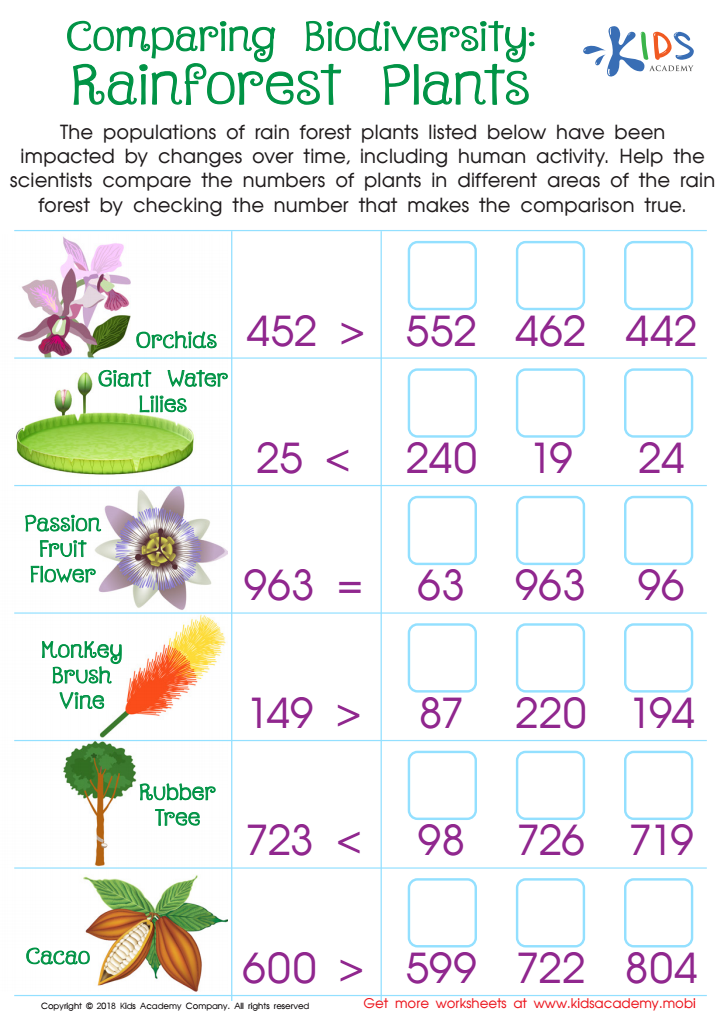
Comparing Biodiversity: Rainforest Plants Worksheet
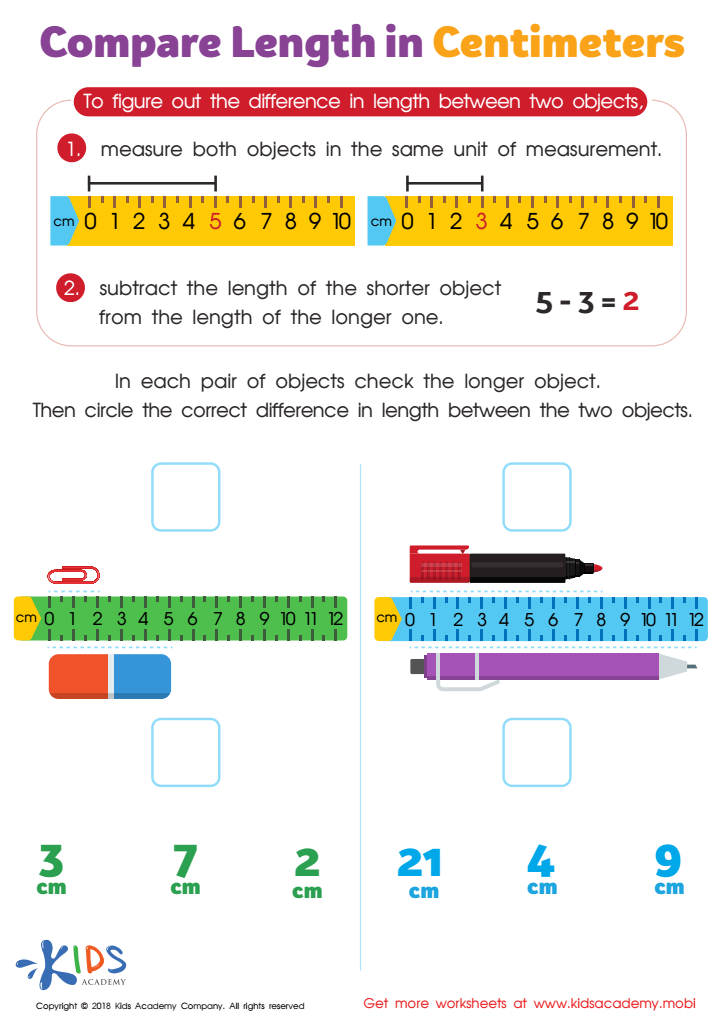
Compare Length in Centimeters Worksheet








Interpreting data is a foundational skill that aids critical thinking and problem-solving, making it vital for young learners, ages 4-8, to grasp early on. For parents and teachers, fostering this understanding from a young age helps build numeracy, which is as essential as literacy in a child's overall education. Introductions to simple data interpretation, such as understanding and creating basic charts, graphs, or pictograms, develop a child's ability to organize information and recognize patterns and trends.
Data interpretation reinforces cognitive skills and encourages logical reasoning. For instance, when children learn to interpret data through everyday activities, like counting and categorizing objects or discussing weather patterns, they learn to navigate through information meaningfully. This engagement also fosters mathematical communication as they discuss their findings with peers or adults.
Early exposure demystifies mathematics, portraying it not just as abstract numbers and symbols but as a practical tool in daily life. Support from parents and teachers in these formative years can instill a lasting positive attitude toward math. Approaching math through fun, real-world applications makes learning engaging, and helps children carry analytical skills with them as they progress academically. Hence, caring about interpreting data for young children equips them with critical life skills that serve beyond the classroom.








