Practical math application Normal Measurement Worksheets for Ages 4-8
3 filtered results
-
From - To
Discover our Practical Math Application Normal Measurement Worksheets, designed specifically for children ages 4-8! These engaging worksheets help young learners grasp essential measurement concepts through fun, hands-on activities. Children will enhance their understanding of lengths, weights, and distances while developing critical thinking skills. Our meticulously crafted exercises encourage observation and application of measuring in everyday situations, making math both relatable and enjoyable. With colorful visuals and simple instructions, these worksheets provide an excellent foundation for early math education. Perfect for homeschooling or supplemental learning, empower your child's academic journey and spark their curiosity with our dynamic measurement resources today!
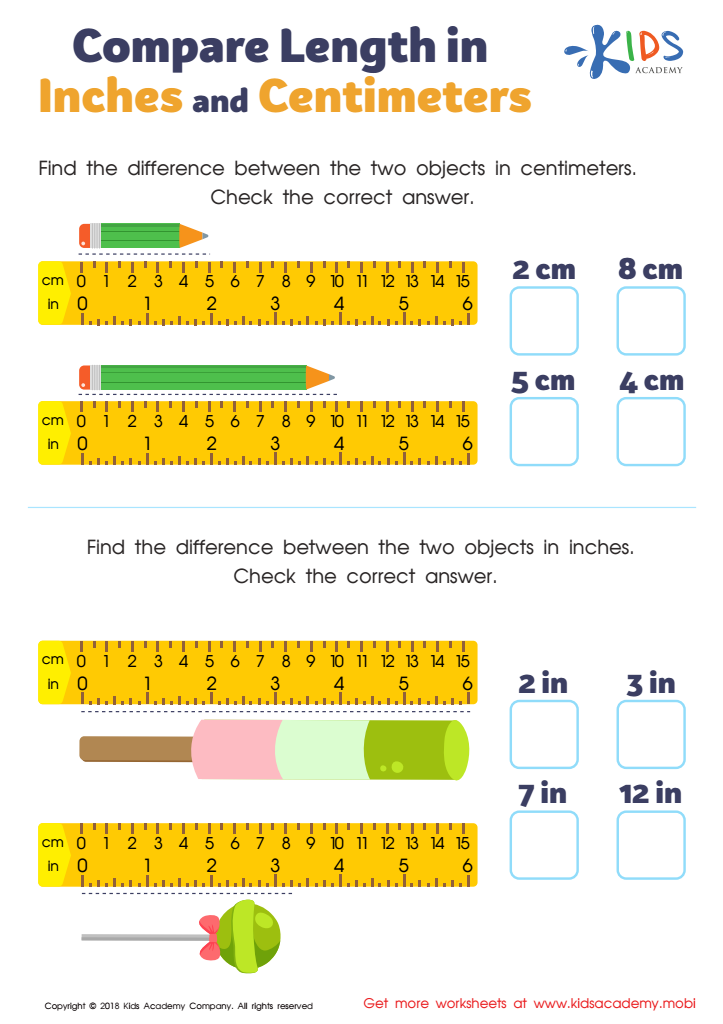
Compare Length in Inches and Centimeters Worksheet
 Assign to My Students
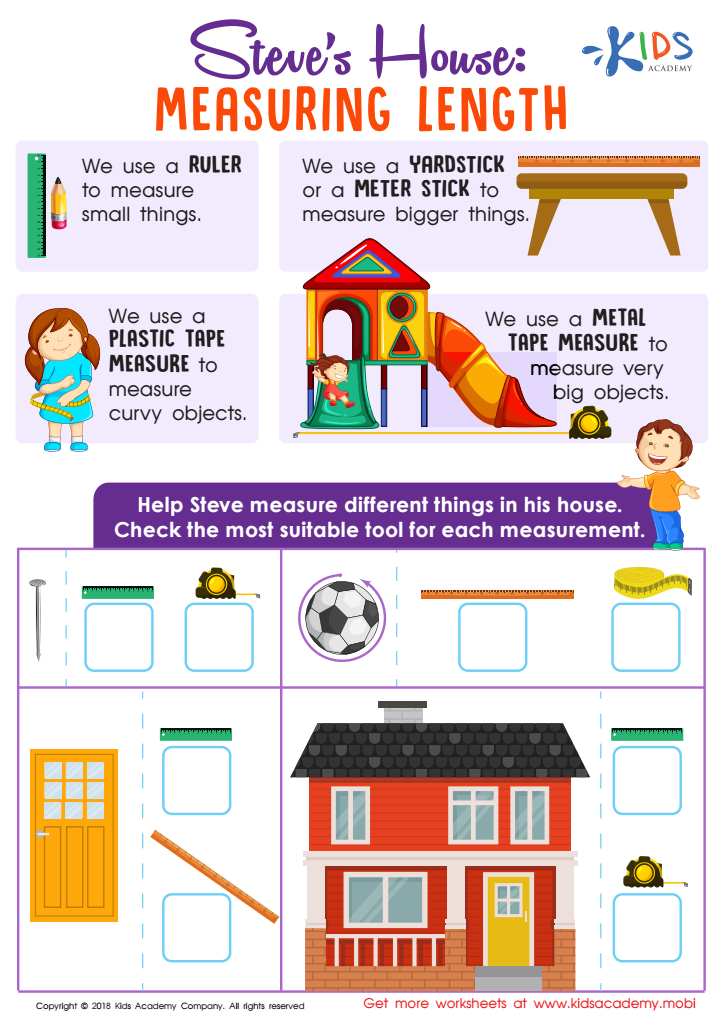
Steve's House: Measuring Length Worksheet
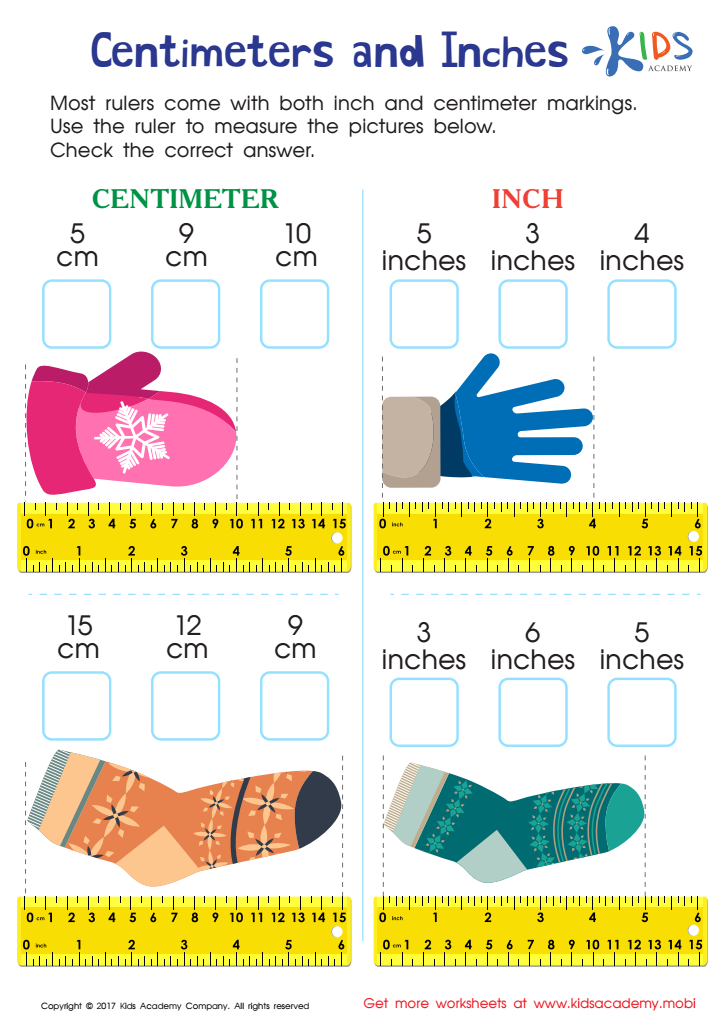
Centimeters and Inches Worksheet








Practical math applications, particularly in normal measurement, are crucial for children aged 4-8, as they lay the foundation for essential life skills. During these formative years, children are naturally curious and eager to learn, making it an ideal time for parents and teachers to introduce measurement concepts.
First, measurement helps children understand the world around them. By learning to measure length, weight, and capacity, children can relate mathematical concepts to real-life situations, such as measuring ingredients for a recipe or comparing the heights of friends. This hands-on learning fosters critical thinking, boosts confidence, and makes math relatable.
Furthermore, practical math builds important cognitive skills. Young learners develop spatial awareness and improve their problem-solving abilities as they encounter measurement challenges. Engaging in measurement activities promotes fine motor skills through hands-on tasks.
For parents and teachers, incorporating normal measurement into daily routines can be easily integrated into playtime, crafts, cooking, or outdoor activities, making learning enjoyable and reinforcing essential concepts. Supporting children in these areas not only enhances their mathematical understanding but also prepares them for future academics. Ultimately, nurturing these skills sets a strong foundation for lifelong math competence and a positive attitude toward learning.








