Reading comprehension Normal Word Problems Worksheets for Ages 4-8
9 filtered results
-
From - To
Enhance your child's reading comprehension and math skills with our "Reading Comprehension Normal Word Problems Worksheets for Ages 4-8." Designed specifically for young learners, these engaging worksheets combine fun storytelling with practical math challenges. Each worksheet presents a relatable scenario followed by questions that encourage kids to read carefully and think critically. Perfect for early grade students, our resources assist in developing both literacy and problem-solving abilities. Ideal for classroom use or at-home practice, these worksheets make learning enjoyable and effective. Discover how our thoughtfully crafted activities can support your child's educational journey today!
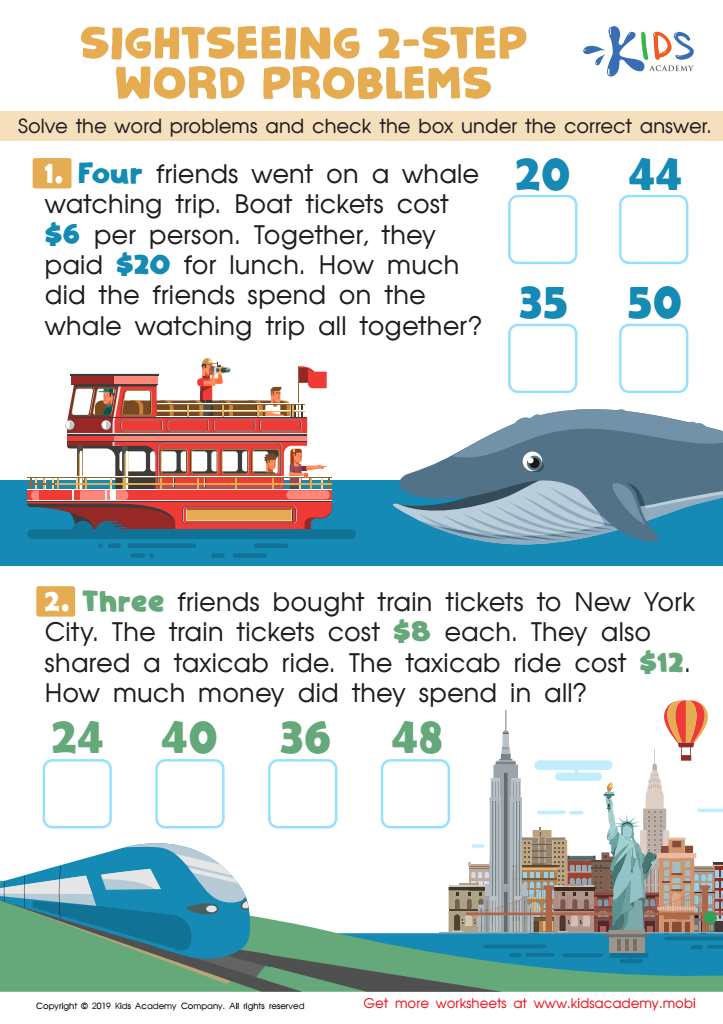
Sightseeing 2-Step Word Problems Worksheet
 Assign to My Students
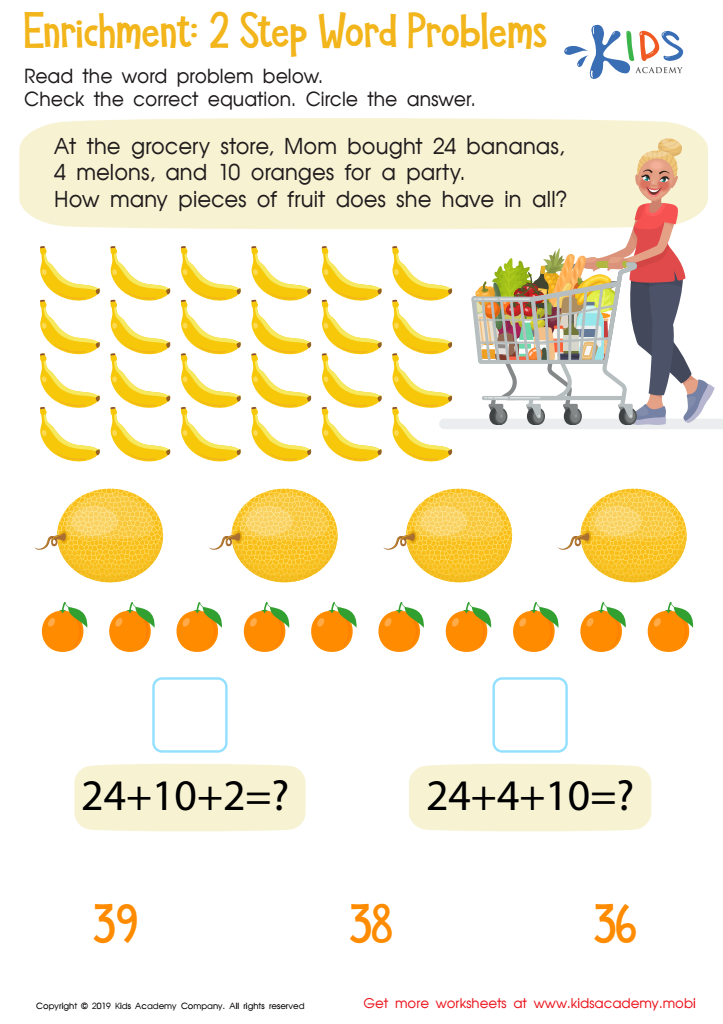
Enrichment -2 Step Word Problems Worksheet
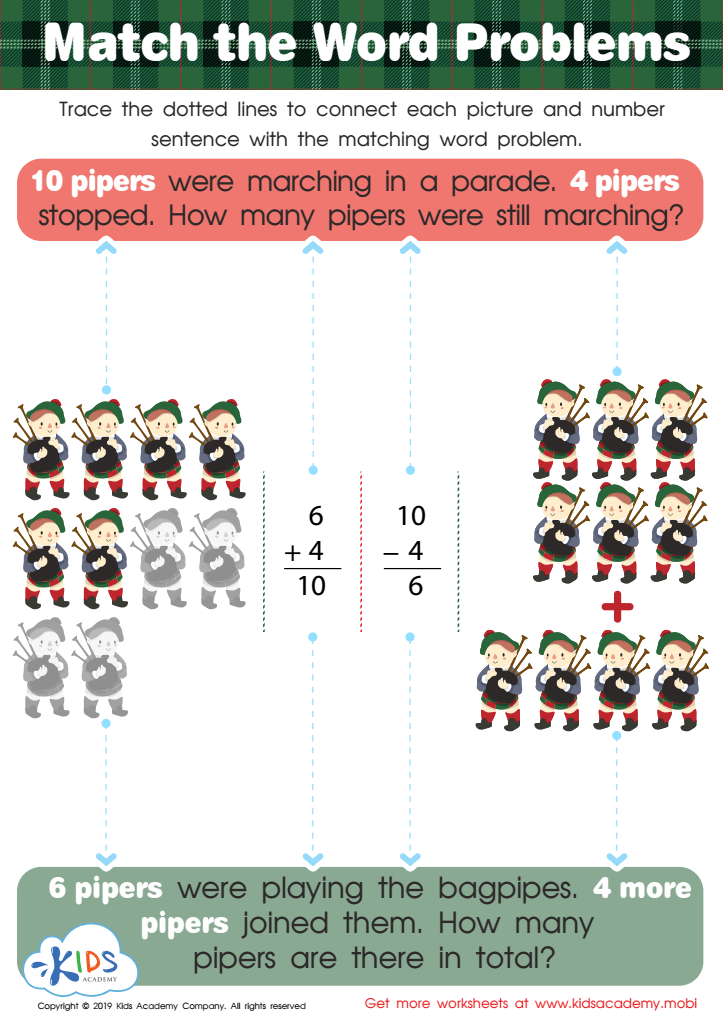
Match the Word Problems Worksheet
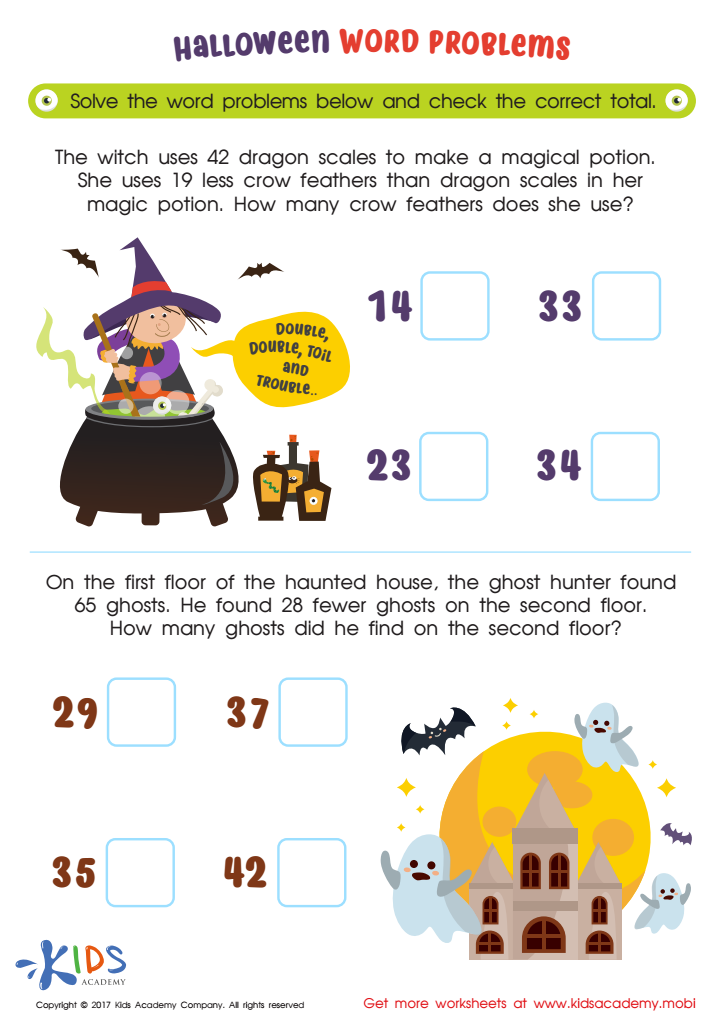
Halloween Word Problems Printable
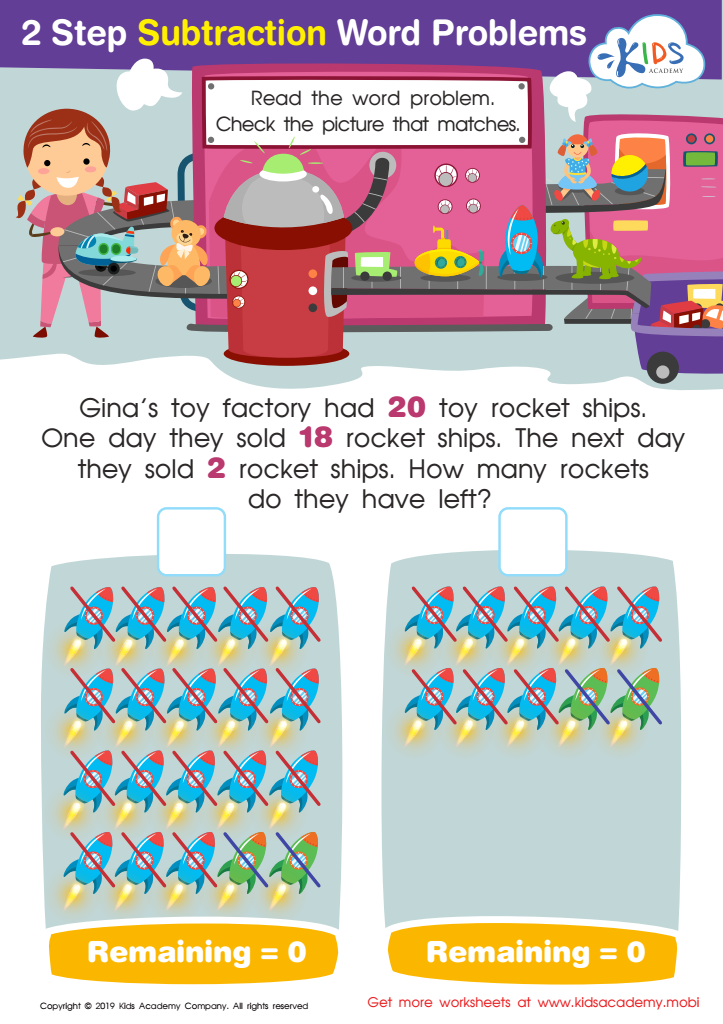
Step Subtraction Word Problems Worksheet
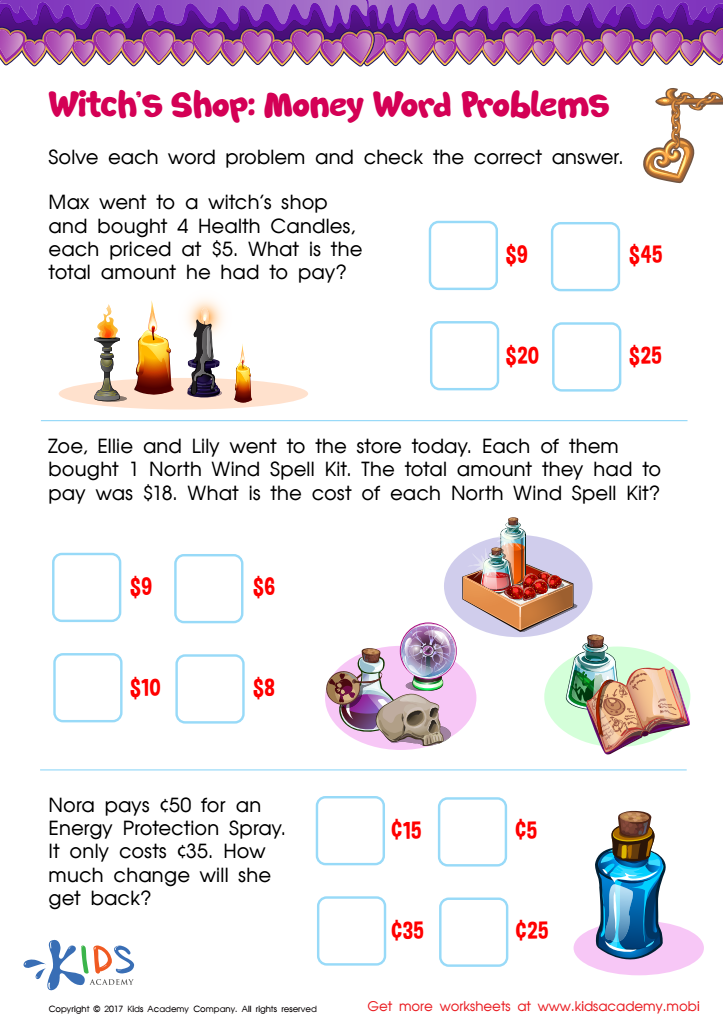
Money Word Problems Printable
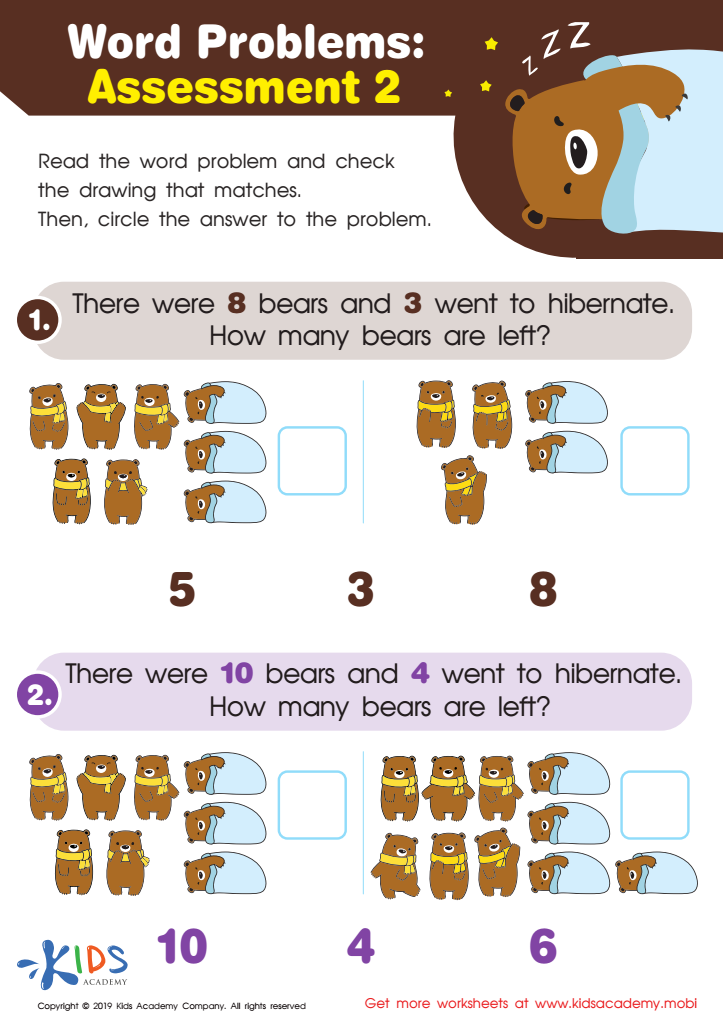
Word Problems: Assessment 2 Worksheet
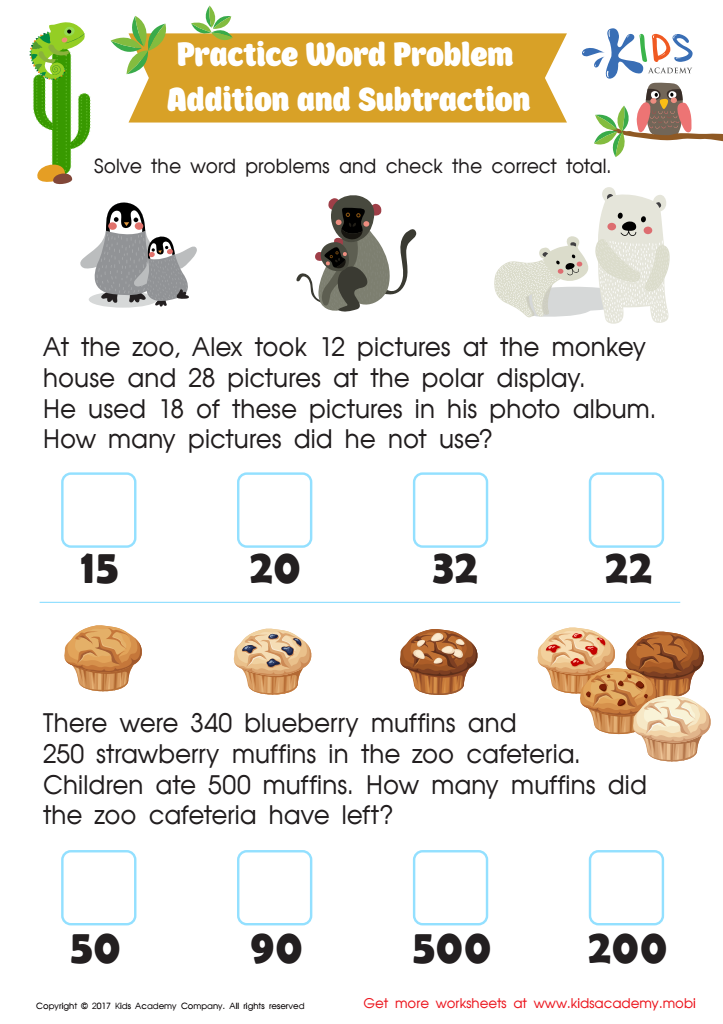
Addition and Subtraction: Word Problems Worksheet
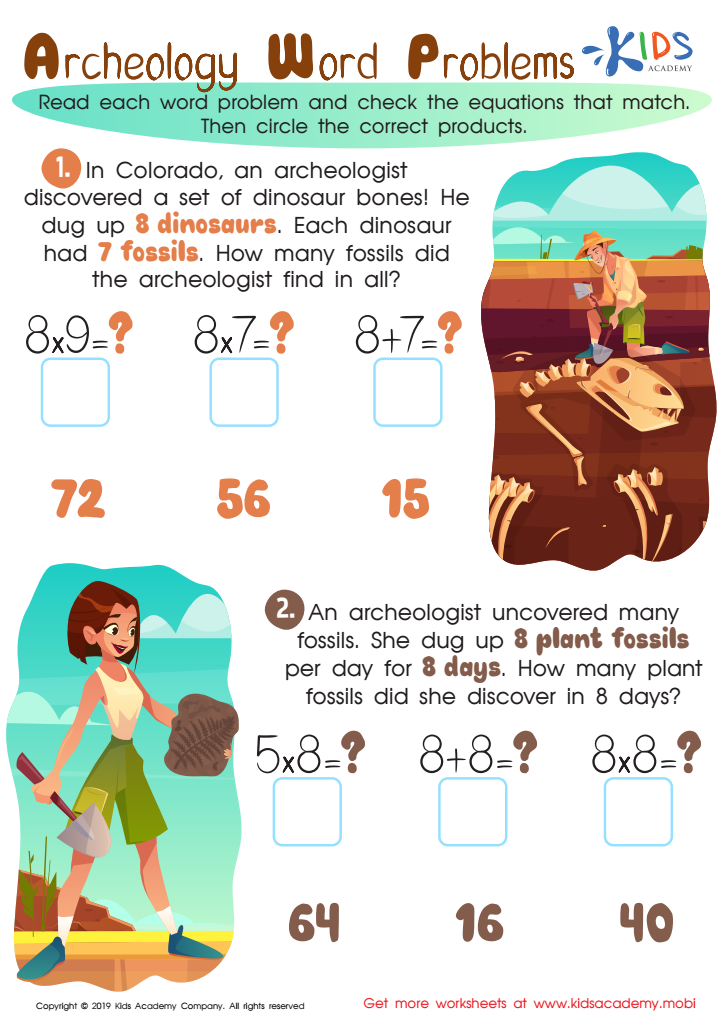
Archeology Word Problems Worksheet








Reading comprehension in the context of word problems is crucial for the development of children aged 4-8 for several foundational reasons. Firstly, reading comprehension improves cognitive skills like critical thinking and problem-solving. When children encounter word problems, they must not only read the text but also understand and interpret the information to find solutions. This dual engagement with language and logical reasoning fosters a robust intellectual foundation.
Secondly, early exposure to word problems helps in developing mathematical skills. Comprehending a scenario described in words and translating it into a mathematical context strengthens their numeracy and application skills. This lays the groundwork for more complex mathematical thinking in later years.
Moreover, quality reading comprehension in word problems nurtures language development. As children articulate mathematical solutions or describe their reasoning, they enhance their vocabulary and grammatical skills. This multi-disciplinary learning process encourages a broad spectrum of linguistic and cognitive abilities.
Parents and teachers should actively engage children with reading comprehension word problems to help them develop a balanced skill set. By doing so, young learners gain confidence and adaptability in approaching various academic challenges, preparing them for future academic success and holistic development. Providing support early ensures they have the necessary tools to think critically and creatively in diverse contexts.








