Critical Thinking Normal Reading Fiction Worksheets for Ages 4-8 - Page 2
35 filtered results
-
From - To
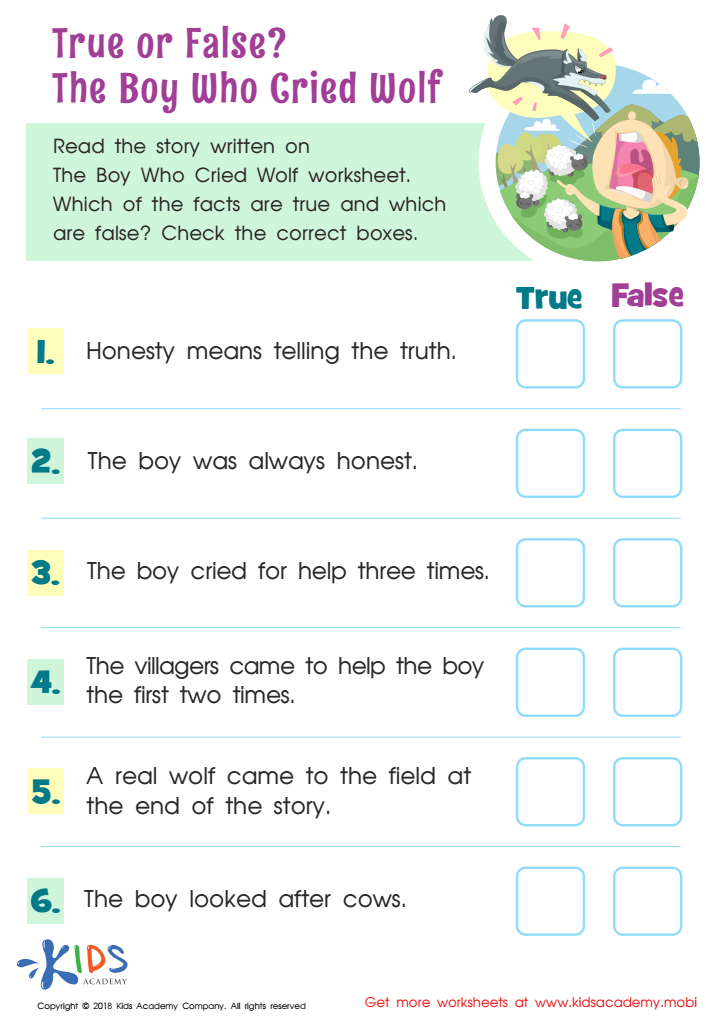
True or False? The Boy Who Cried Wolf Worksheet
 Assign to My Students
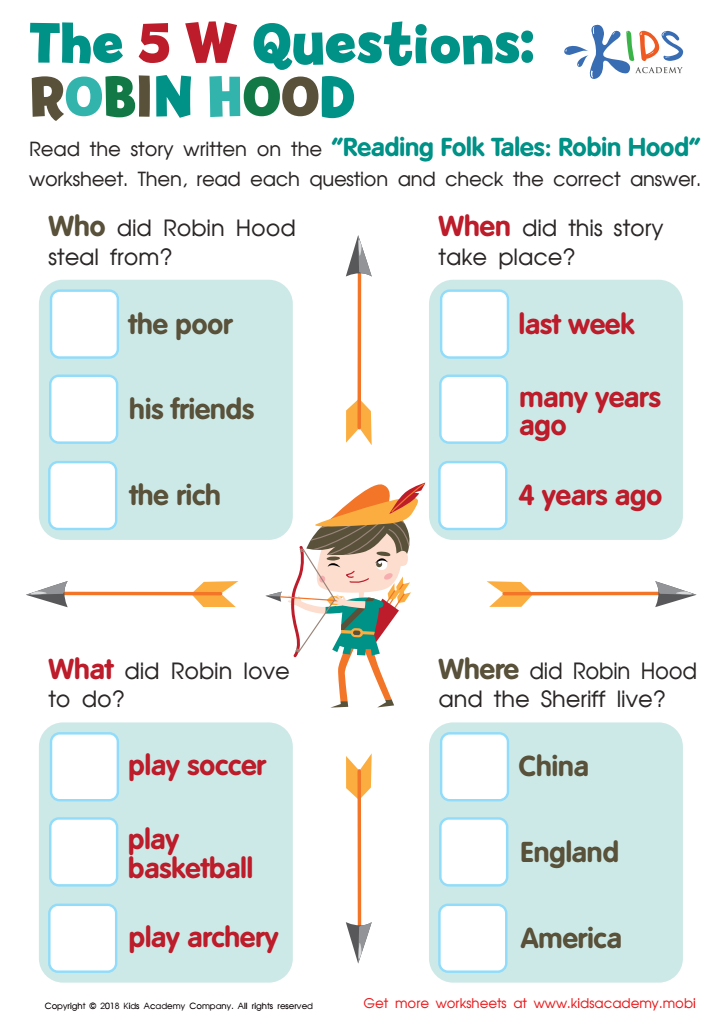
The 5 W Questions: Robin Hood Worksheet
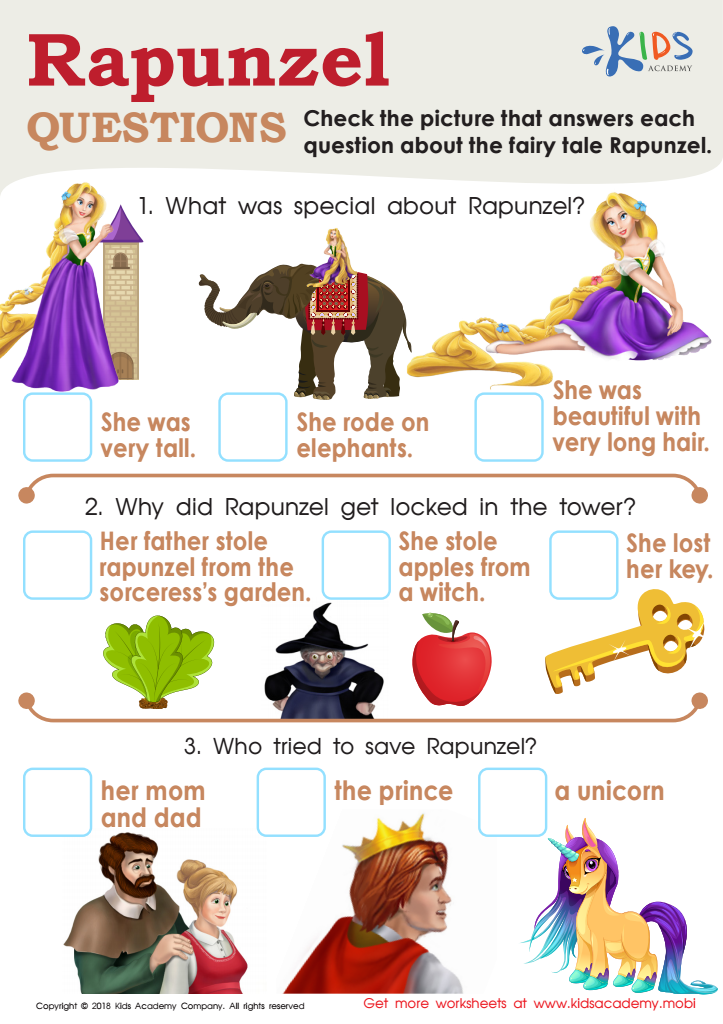
Rapunzel Questions Worksheet
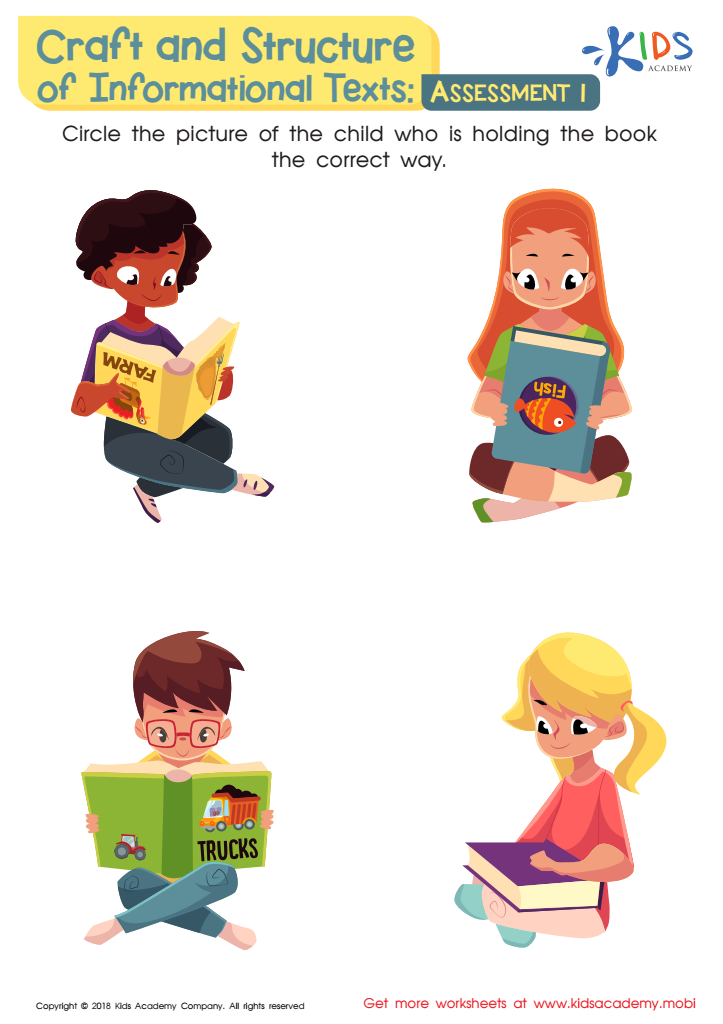
Craft and Structure of Informational Texts: Assessment 1 Worksheet
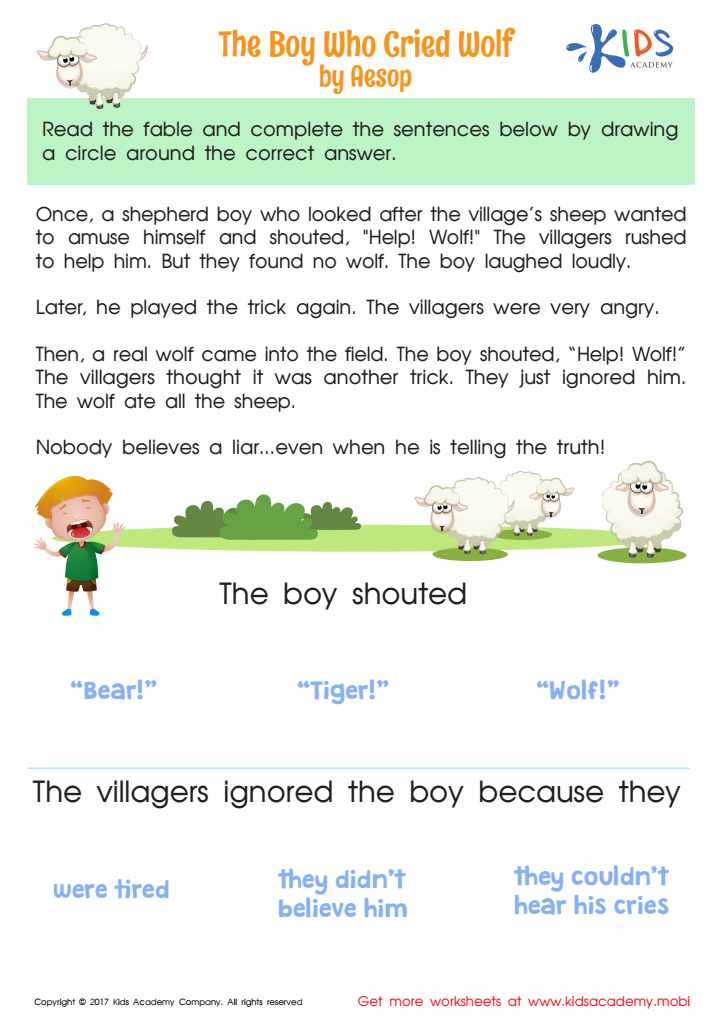
The Boy Who Cried Wolf Worksheet
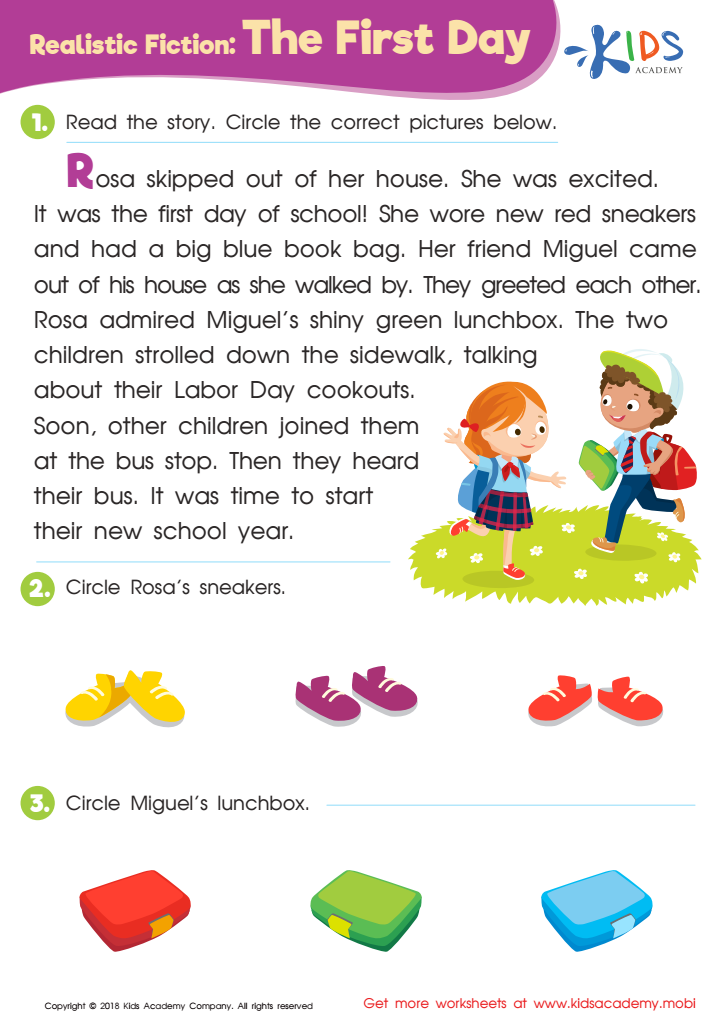
Realistic Fiction: The First Day Worksheet
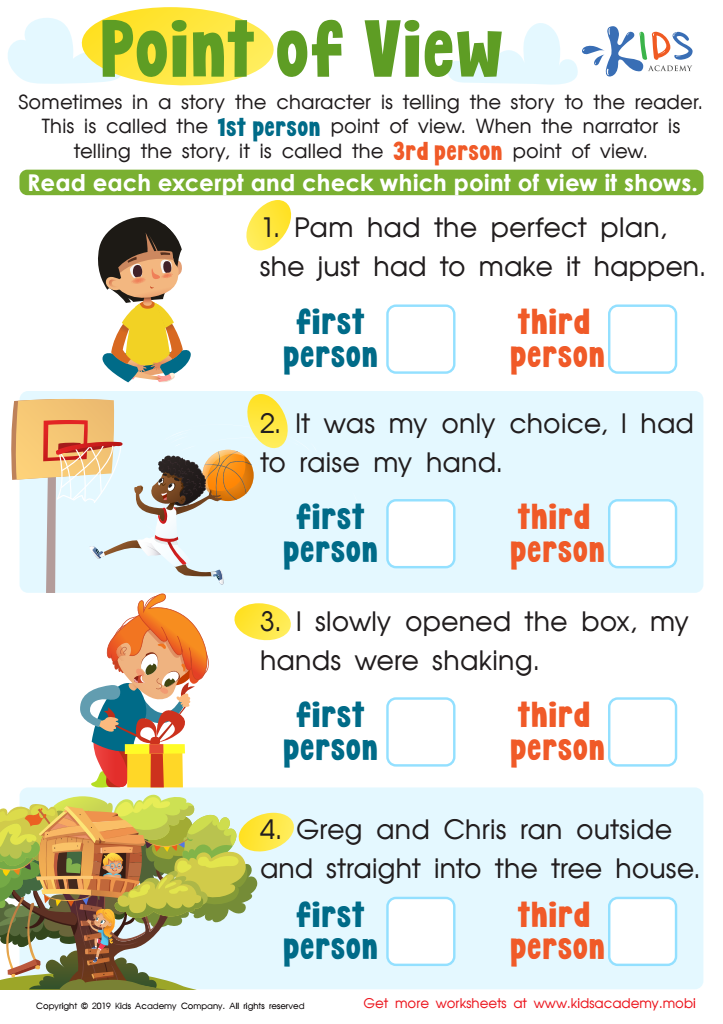
Point of View Printable
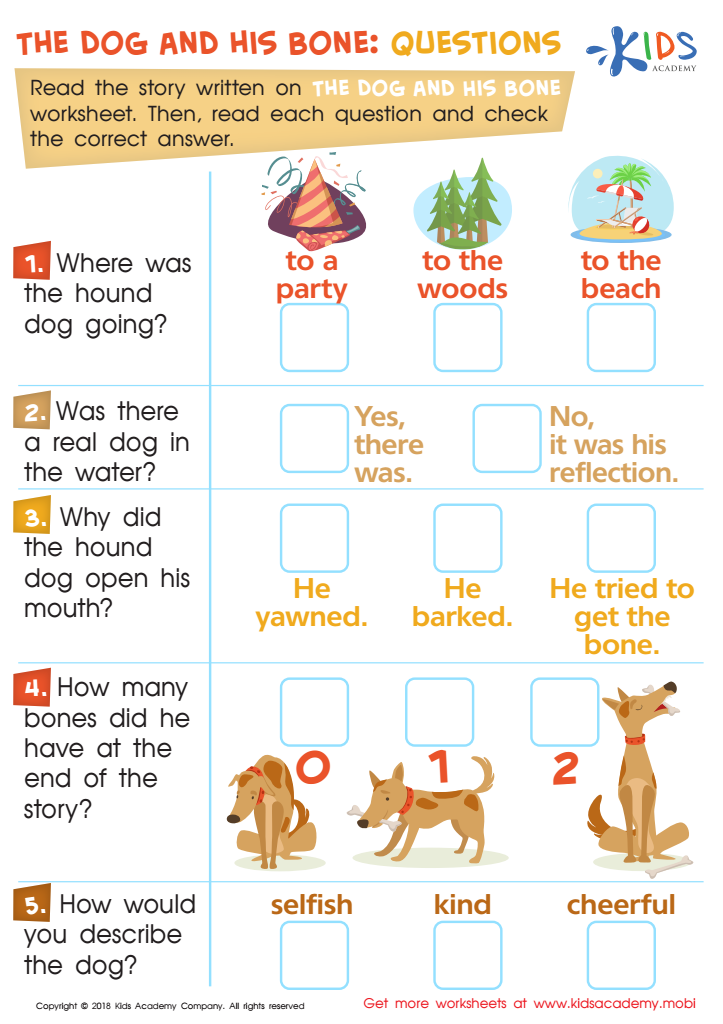
The Dog and His Bone: Questions Worksheet
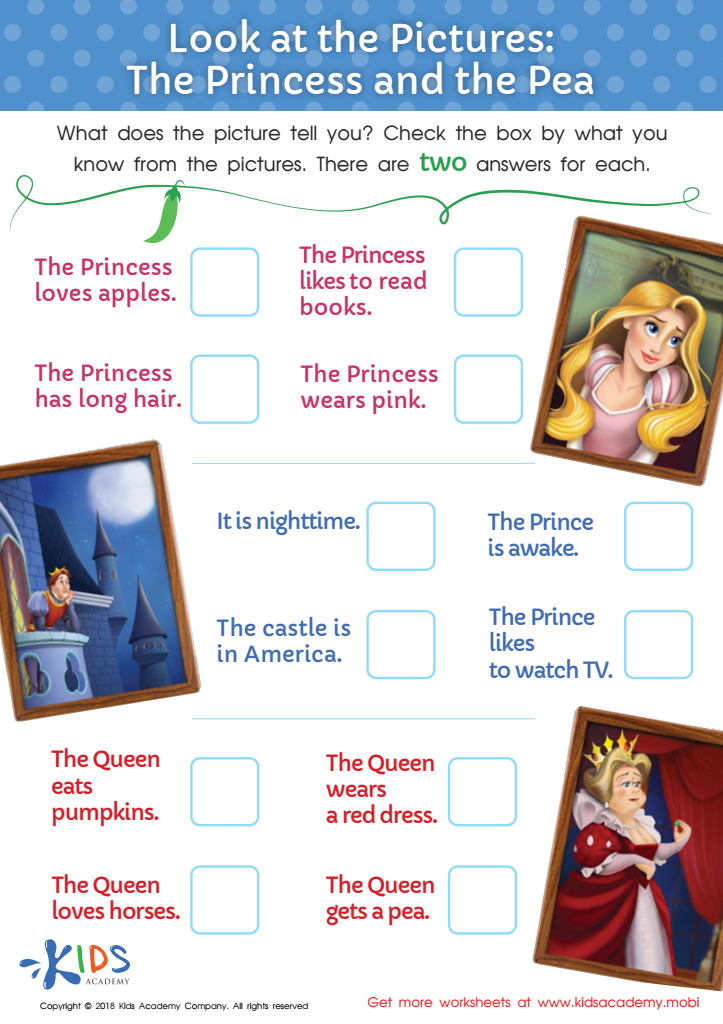
Look at the Pictures: The Princess and the Pea Worksheet
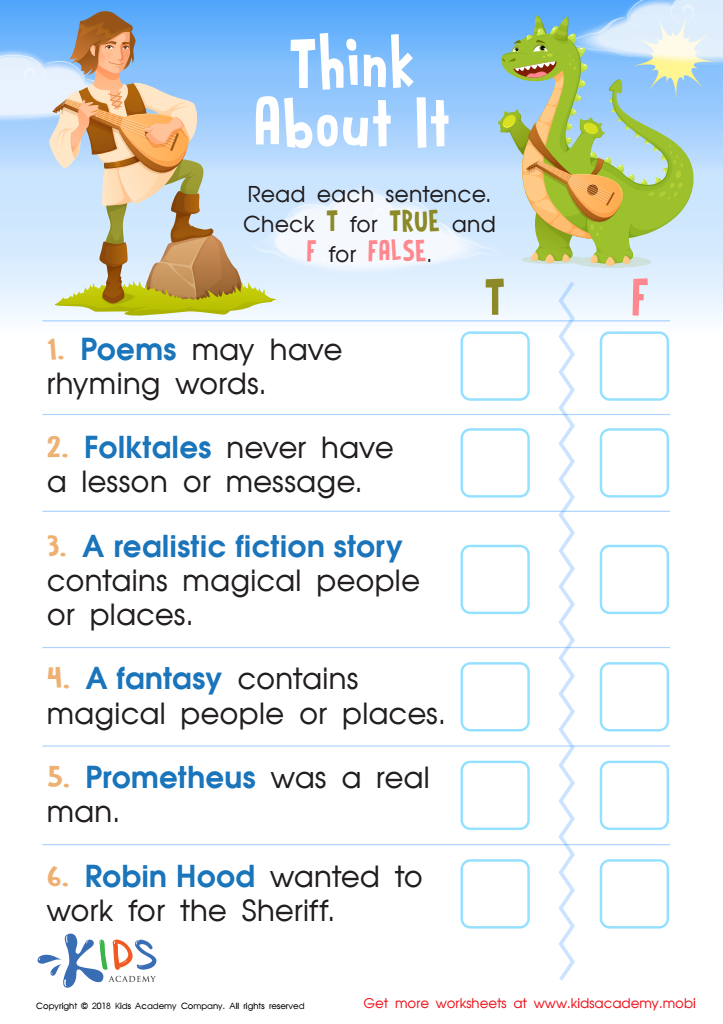
Think About It: Assessment Worksheet
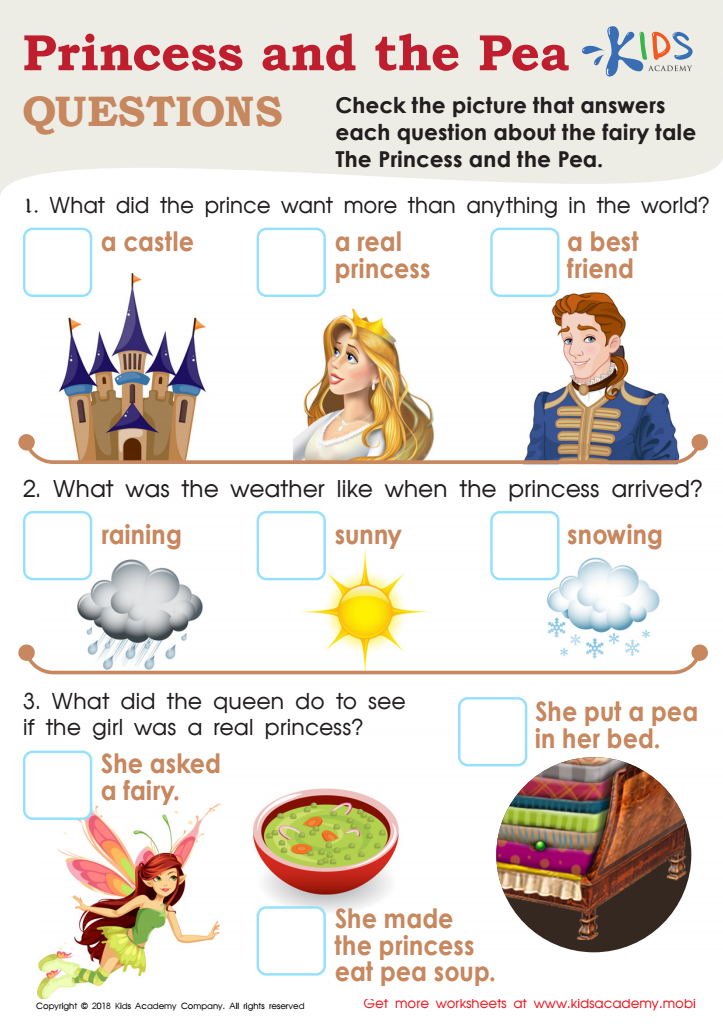
Princess and the Pea Questions Worksheet







Critical thinking is a foundational skill that significantly enhances children's cognitive development, making it essential for parents and teachers to prioritize in early education, especially when introducing reading fiction to children aged 4-8. Reading fiction fosters imagination and empathy, while critical thinking helps children analyze, question, and interpret the stories they encounter.
By engaging with fiction, children learn to identify characters’ motives, predict outcomes, and challenge narratives. This not only improves comprehension but also equips them to think independently. Parents and teachers can facilitate this by asking open-ended questions about the story, encouraging discussions that explore various perspectives, and prompting children to relate fiction to their personal experiences.
Moreover, critical thinking nurtures creativity, enhancing problem-solving skills vital for future academic and life challenges. As children interpret themes, analyze conflicts, and draw conclusions, they learn to express their opinions and support them with reasoning, which establishes a strong foundation for effective communication.
Furthermore, fostering critical thinking through reading prepares children to navigate the complexities of the real world, making them more adaptable and discerning individuals. In essence, encouraging critical thinking in conjunction with reading fiction enriches children's understanding, nurtures their thinking skills, and promotes a lifelong love of learning.







