Understanding ecosystems Normal Animals Worksheets for Ages 4-8
3 filtered results
-
From - To
Unlock your child's curiosity with our "Understanding Ecosystems: Normal Animals Worksheets for Ages 4-8." Designed to make learning fun and engaging, these worksheets introduce young minds to the diverse world of animals and their habitats. Tailored for kids aged 4-8, each activity encourages exploration of different ecosystems while enhancing critical thinking, observation, and comprehension skills. Vibrant illustrations and interactive tasks ensure that learning about ecosystems is both educational and enjoyable. Let your child discover the wonders of nature while developing their scientific knowledge and cognitive abilities with our expertly crafted worksheets. Explore now for joyful and enriching educational experiences!
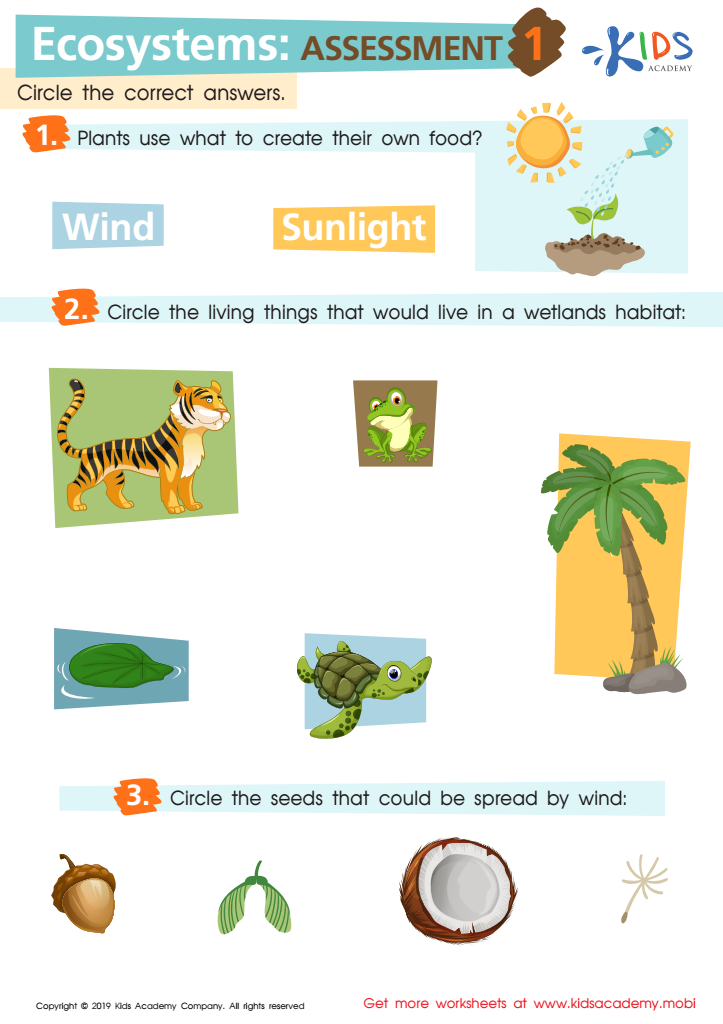
Ecosystems: Assessment 1 Worksheet
 Assign to My Students
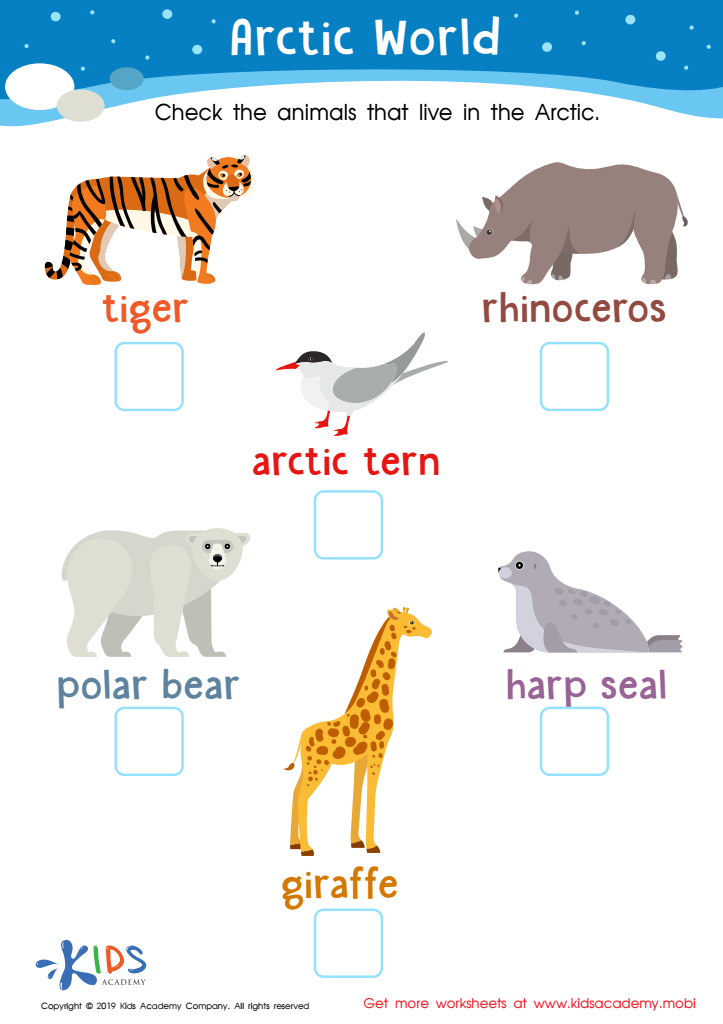
Arctic World Worksheet
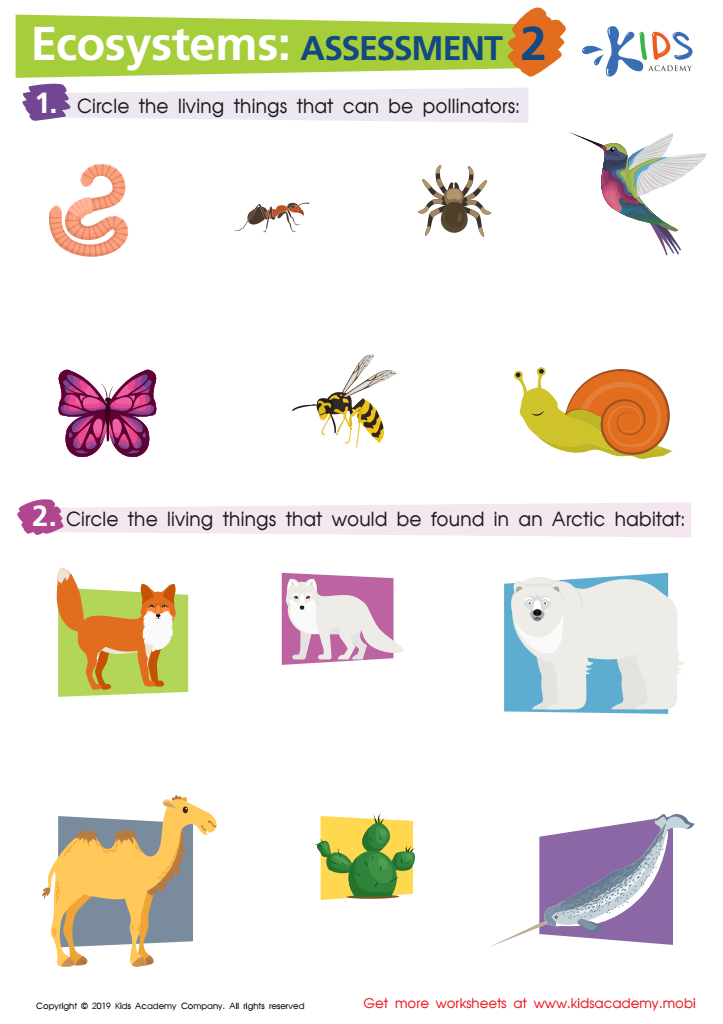
Ecosystems: Assessment 2 Worksheet








Understanding ecosystems and the role of normal animals is crucial for young children aged 4-8 for several reasons. Firstly, it fosters a sense of curiosity and respect for nature. When parents and teachers introduce children to various ecosystems, they stimulate wonder and appreciation for the diverse living beings that inhabit our planet. This early exposure helps build an emotional connection to the environment, laying the foundation for eco-friendly habits and attitudes as they grow.
Secondly, learning about ecosystems enhances cognitive development. Children engage in critical thinking as they observe how animals interact with their environment, exploring concepts like food chains, habitats, and the balance of nature. These hands-on learning experiences can improve problem-solving skills and scientific literacy, which are invaluable in today's world.
Moreover, understanding ecosystems promotes empathy and social learning. Recognizing that every living being has a role helps kids develop a sense of responsibility and empathy not just towards animals, but also towards their peers. Collaborating on projects related to ecosystems can enhance cooperative learning and communication skills.
Finally, teaching kids about normal animals within ecosystems makes learning tangible and relatable. Familiar creatures like squirrels, birds, or insects become gateways for broader ecological understanding. By investing in such education, we nurture informed, compassionate, and proactive future stewards of our earth.








