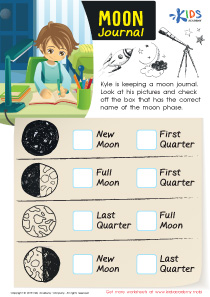
Understanding ecosystems Normal Plants and Animals Worksheets for Ages 4-8
4 filtered results
-
From - To
Unlock the wonders of nature with our "Understanding Ecosystems: Normal Plants and Animals Worksheets" designed for children ages 4-8. These engaging worksheets help young learners explore the vital roles of plants and animals in ecosystems through hands-on activities and interactive exercises. Perfect for homeschooling or classroom settings, our resources nurture curiosity and scientific understanding from a young age. Developed by education experts, these worksheets cover topics like habitats, life cycles, and interdependence, fostering a love for nature and the environment. Dive in and let your child discover the intricate balance of our world’s ecosystems!
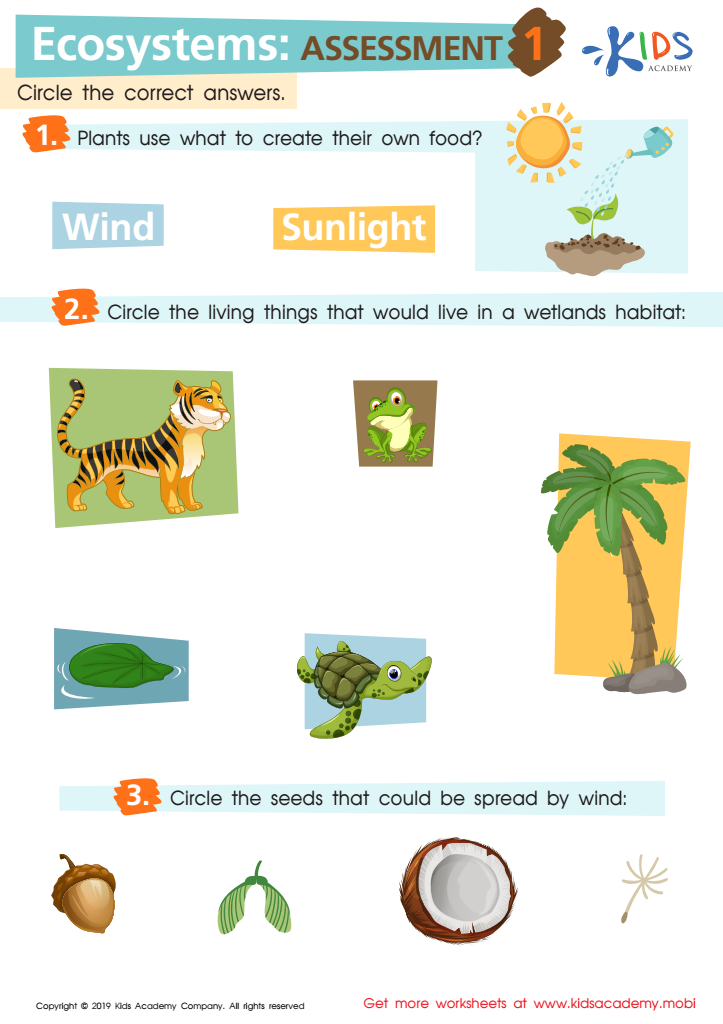
Ecosystems: Assessment 1 Worksheet
 Assign to My Students

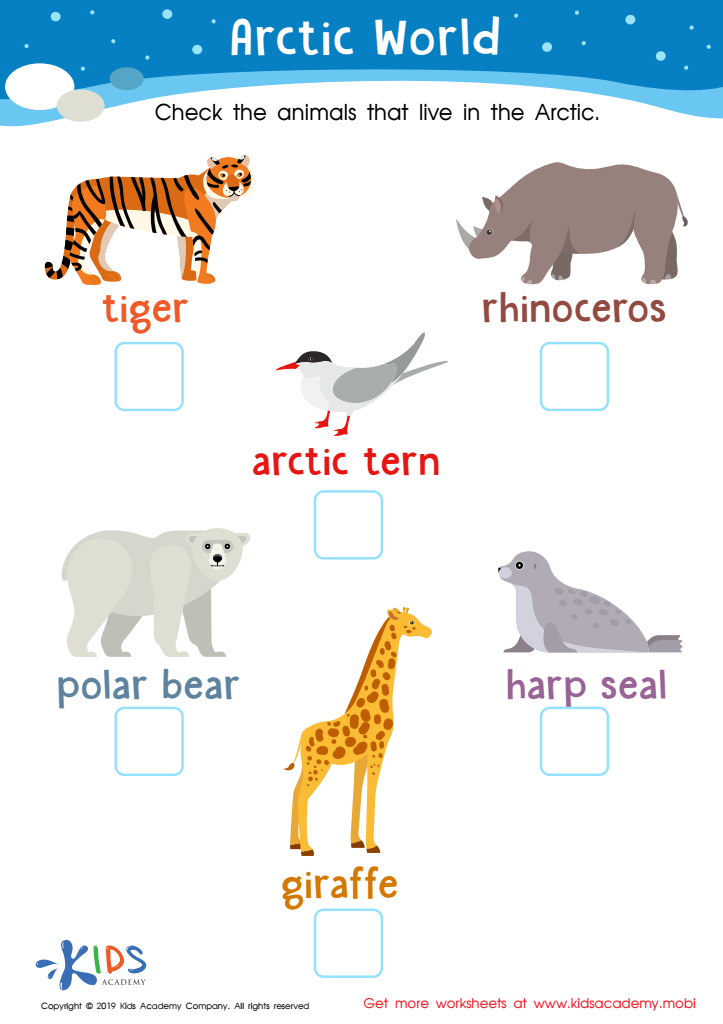
Arctic World Worksheet
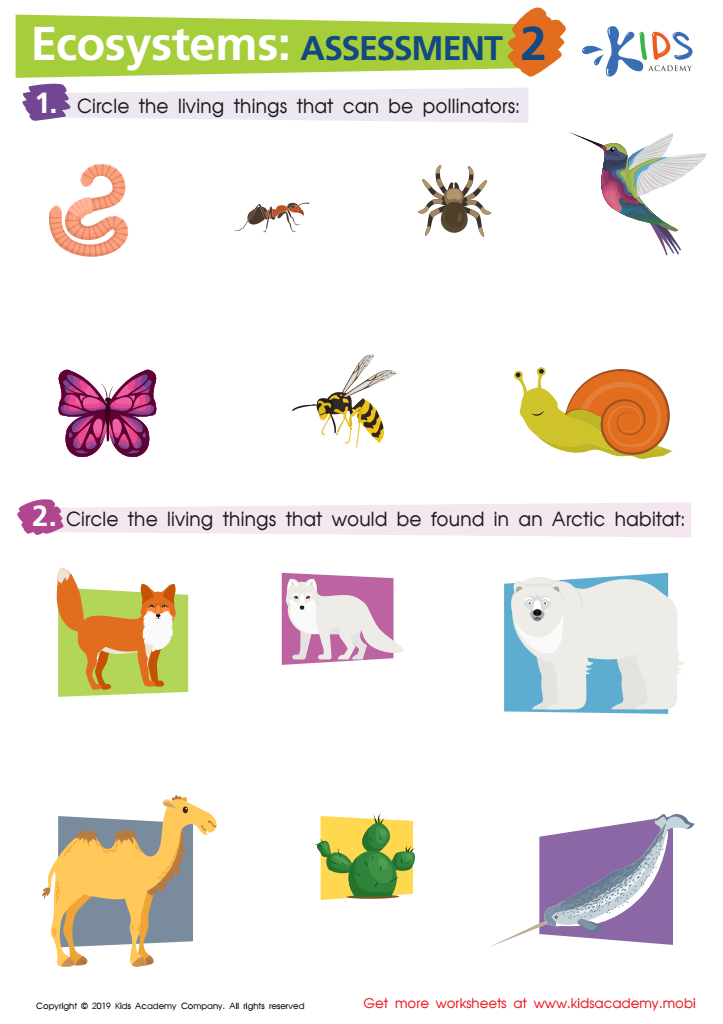
Ecosystems: Assessment 2 Worksheet
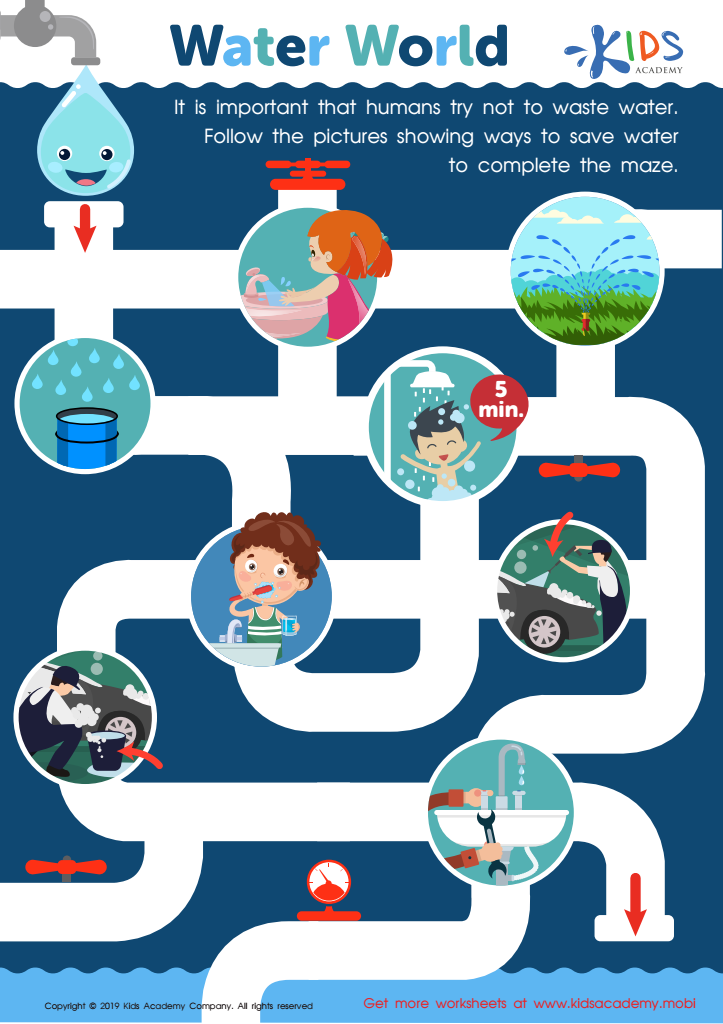
Water World Worksheet





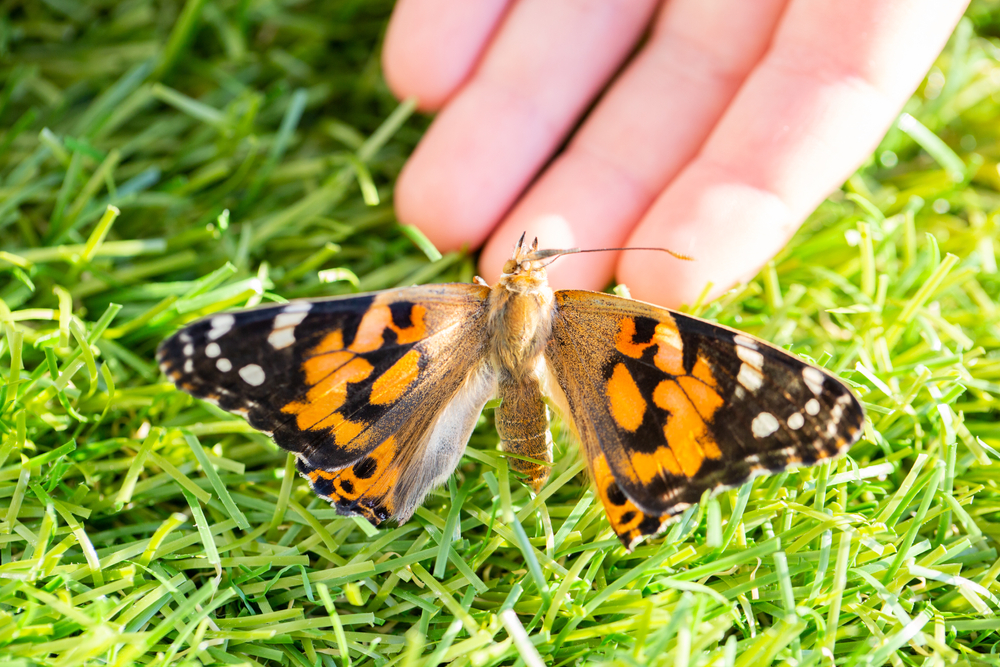


Understanding ecosystems and the role of plants and animals within them is crucial for young children aged 4-8 for multiple reasons. Firstly, instilling a sense of environmental stewardship at a young age can lay the groundwork for a lifetime of sustainable living. Knowing how plants produce oxygen, purify the air, and provide food, and understanding the interconnectedness of animals within these ecosystems can teach children the value of all life forms and the importance of biodiversity.
Secondly, learning about ecosystems encourages curiosity and investigative skills. Children at this age are naturally curious; exploring how plants and animals interact within their habitats can ignite their interest in science and natural history. This foundational knowledge enhances their cognitive development and critical thinking skills, enabling them to make informed decisions and understand complex concepts later in life.
Additionally, fostering an understanding and appreciation for nature can enhance children's emotional well-being. Spending time in natural settings and learning about the environment has been shown to reduce stress, improve concentration and increase creativity.
Therefore, by giving young minds a foundational grasp of ecosystems, parents and teachers can nurture responsible, curious, and well-rounded individuals who appreciate the world around them and are motivated to protect it.