Normal Silent Vowels Worksheets for Ages 4-9
5 filtered results
-
From - To
Our "Normal Silent Vowels Worksheets" are specially designed for children ages 4-9, helping them master the subtle yet essential concept of silent vowels in a fun and engaging way. These worksheets feature a variety of exercises, including identifying silent vowels in words, filling in the blanks, and matching games that reinforce learning through play. With colorful illustrations and age-appropriate challenges, our resources enhance reading and vocabulary skills while keeping young learners motivated. Perfect for both classroom and home use, these worksheets are an essential tool for developing proficient readers and confident writers. Explore our collection and watch your child's literacy skills flourish!
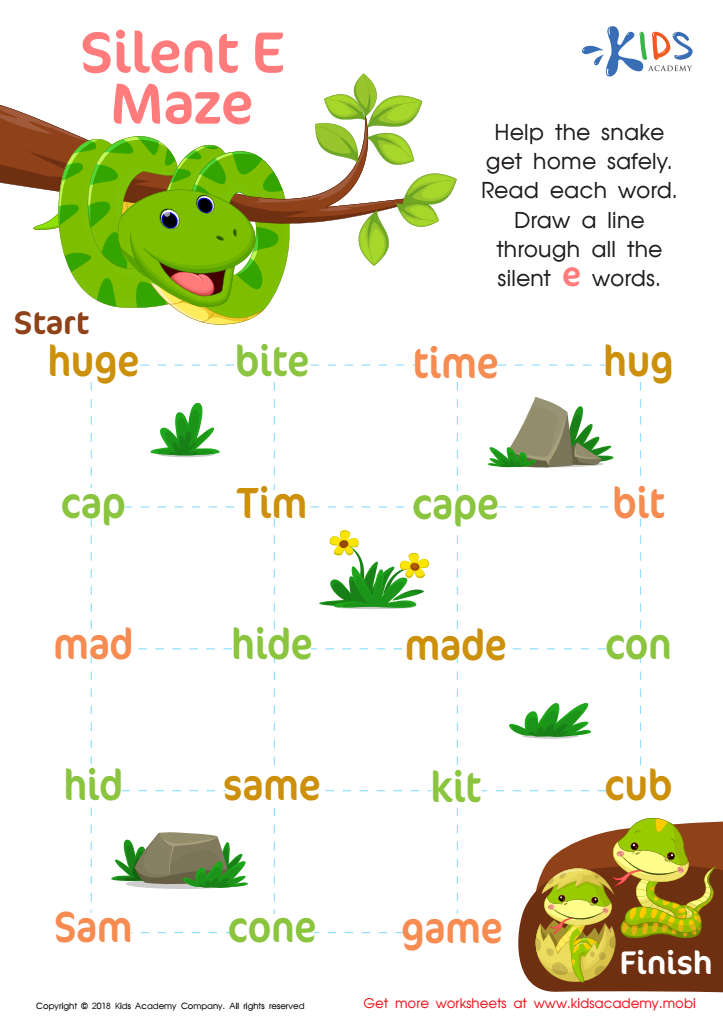
Silent E Maze Worksheet
 Assign to My Students
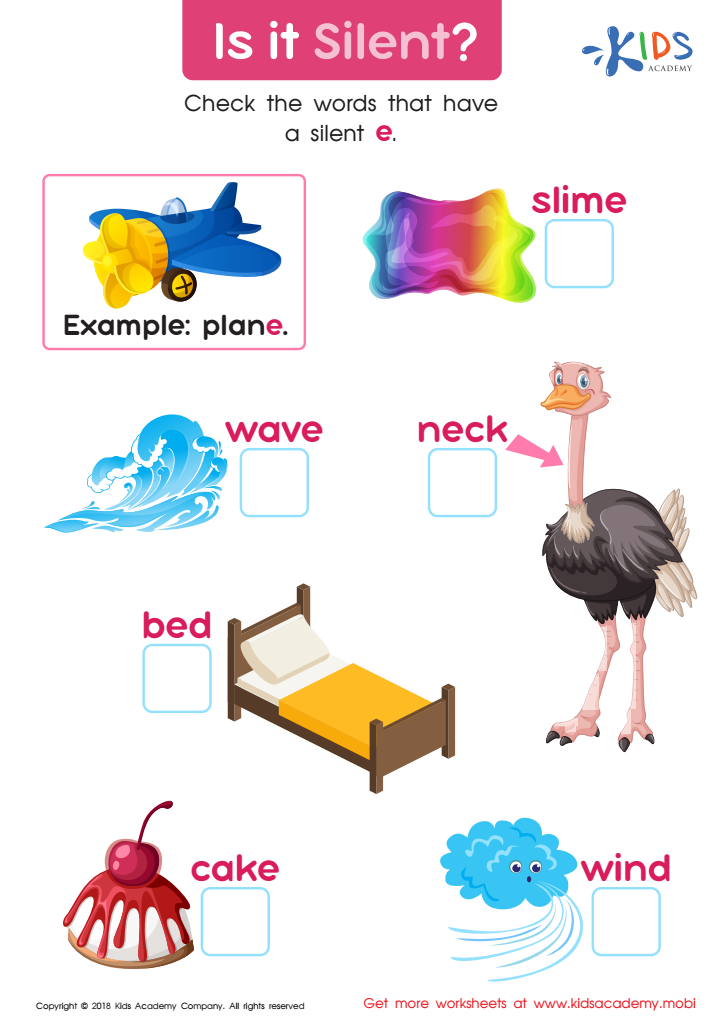
Is It Silent? Worksheet
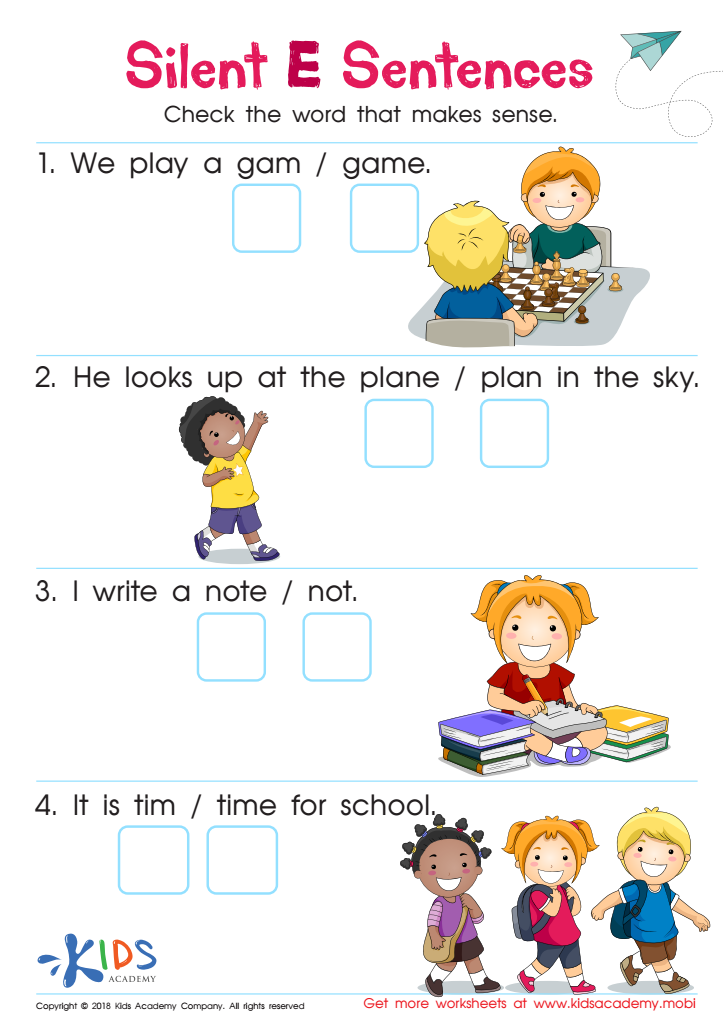
Silent E Sentences Worksheet
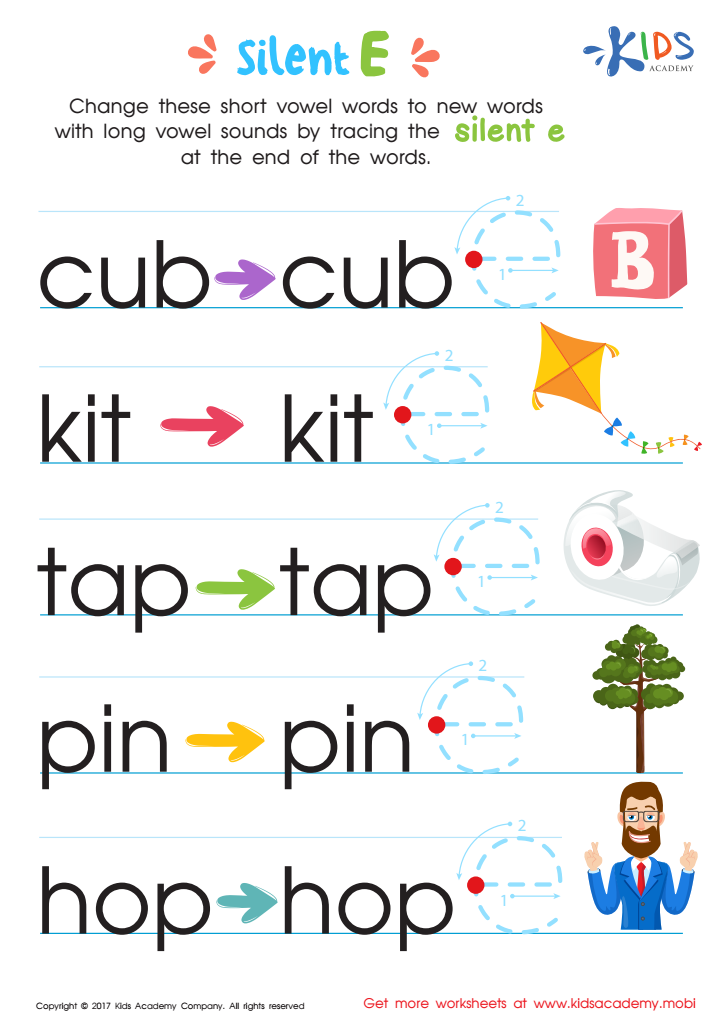
Silent E Words Worksheet
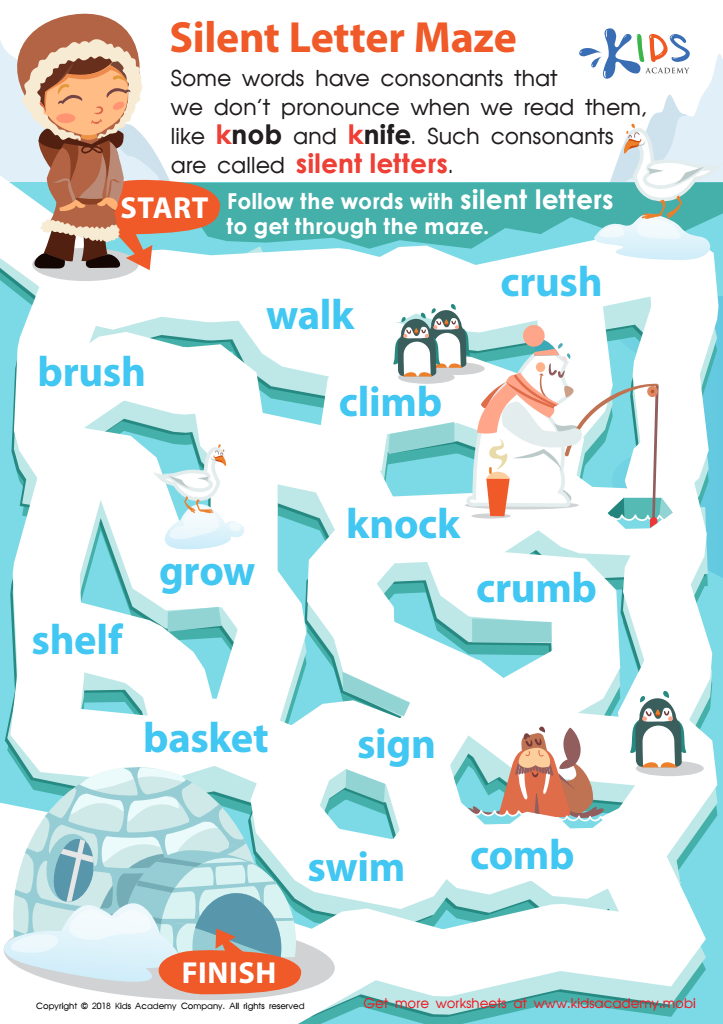
Silent Letter Maze Worksheet


Normal Silent Vowels, also known as “silent letters,” play a vital role in helping children between ages 4-9 develop strong reading and writing skills. Understanding these silent vowels, such as the ‘e’ in “blade” or ‘k’ in “knight,” fosters phonemic awareness, allowing kids to decode words correctly, enhance their vocabulary, and improve spelling acquisition.
For parents and teachers, focusing on silent vowels is crucial as they provide insight into the complexities of the English language, helping young learners to recognize patterns and rules. This knowledge aids children in approaching new or unfamiliar words with confidence, reducing frustration and boosting self-esteem.
Additionally, an early grasp of silent letters enhances comprehension skills, vital for lifelong learning. It allows students to participate actively in reading groups and discussions, making connections between words and concepts.
By integrating fun and engaging activities that target silent vowels—such as puzzles, games, and storytelling—parents and teachers can ignite a love for literacy and create a strong foundation for future academic success. Ultimately, prioritizing the understanding of silent vowels ensures that children become proficient readers, setting them on a path toward a lifetime of learning and enjoyment in language.