Basic geometry understanding Normal Worksheets for Ages 4-9
4 filtered results
-
From - To
Discover our expertly designed basic geometry worksheets for children aged 4-9! Our printable activities focus on essential geometric concepts, helping young learners master shapes, patterns, symmetry, and spatial thinking. With engaging exercises tailored to early grade students, these worksheets encourage development in visual recognition and problem-solving skills. Perfect for both classroom and home learning, our resources ensure a fun and educational experience, laying a strong foundation in geometry. Elevate your child's learning journey today and watch their confidence grow as they navigate the world of basic geometry with ease! Visit our site to explore and download more.
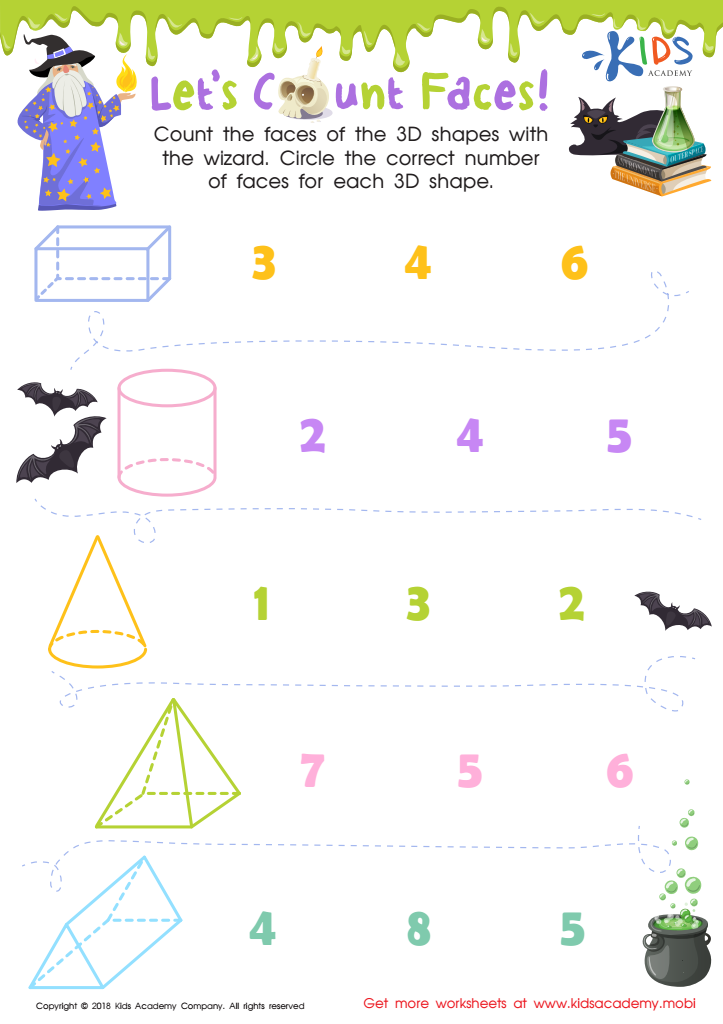
Let's Count Faces! Worksheet
 Assign to My Students
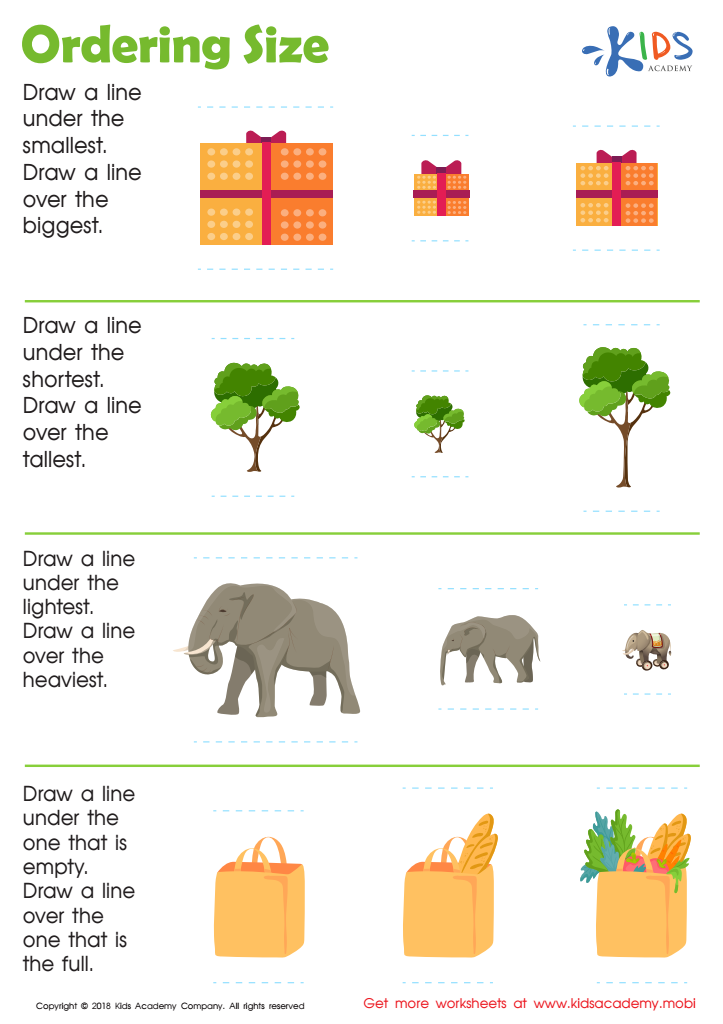
Ordering Size Worksheet
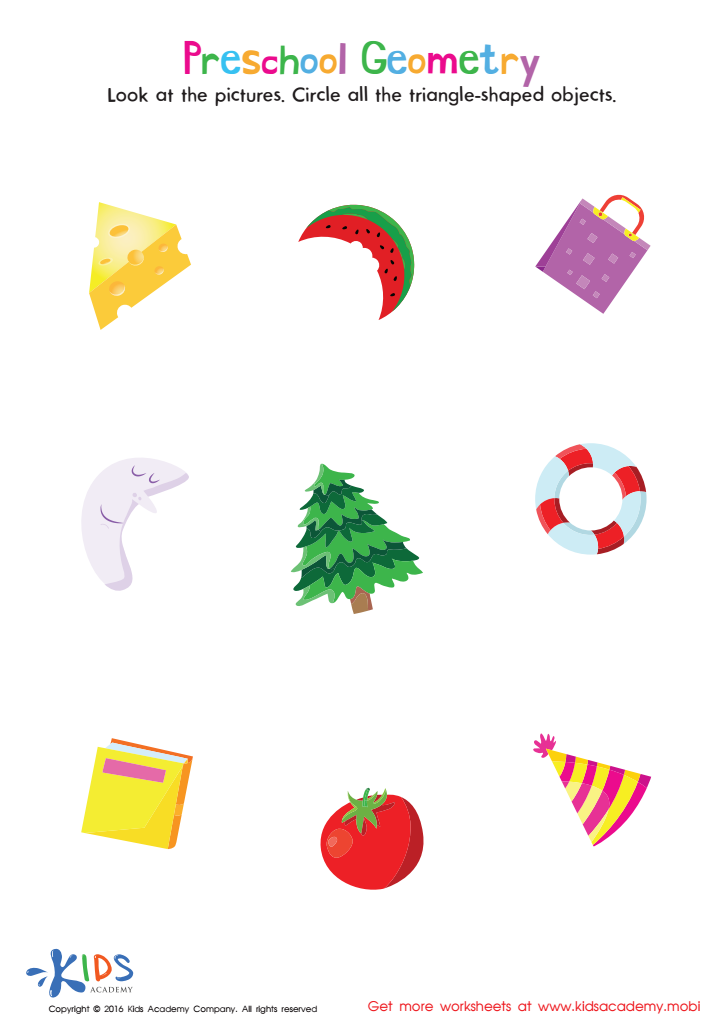
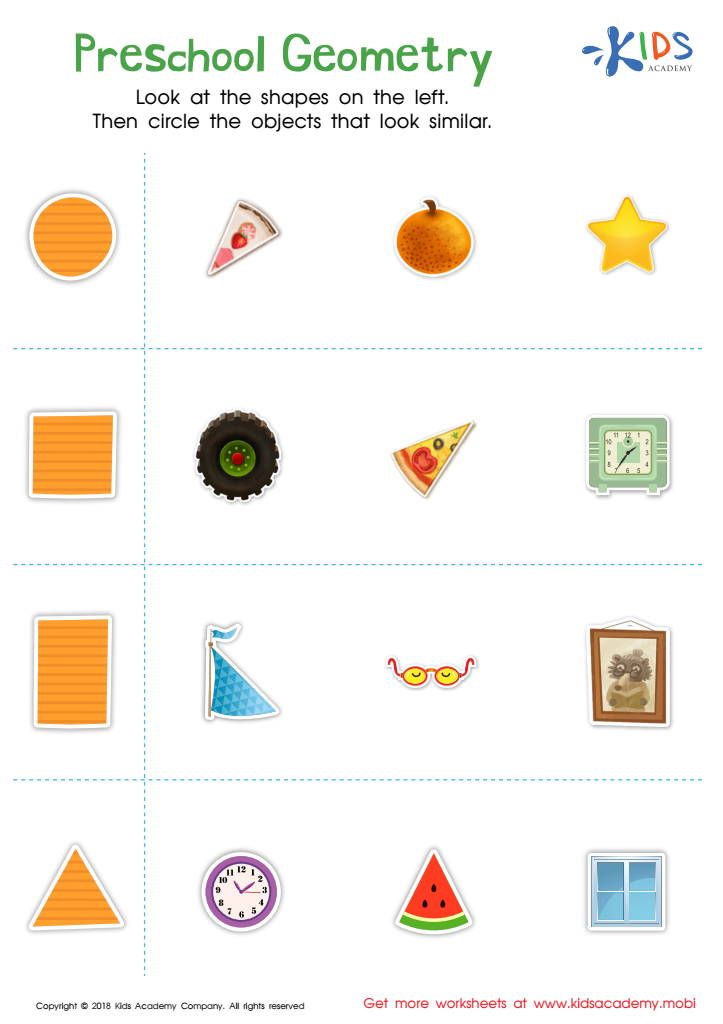
Preschool Geometry Worksheet








Basic geometry understanding is crucial for children aged 4-9 as it lays the foundation for their future academic success and cognitive development. At this developmental stage, kids are naturally curious and are eager to explore their surroundings. Introducing basic geometric concepts like shapes, sizes, and spatial understanding helps in fostering this curiosity and enables them to make sense of the world around them.
First, geometry enhances problem-solving and reasoning skills. Children learn to recognize patterns, compare shapes, and understand spatial relationships, which stimulates critical thinking and decision-making abilities. These skills are not just essential for advanced mathematics but are also applicable in daily life situations.
Second, a sound understanding of geometry strengthens visual-spatial skills, which are vital for activities like reading and writing. For instance, recognizing different letter shapes and their spatial arrangement in words helps with literacy development. Moreover, geometry is the basis of many Play-based learning activities that nurture creativity, such as building blocks or drawing various shapes, making learning fun and engaging.
Lastly, early exposure to geometry builds confidence and a positive attitude towards mathematics. When children grasp basic concepts easily, they are more likely to enjoy and excel in math later in their school years.
Therefore, parents and teachers should prioritize early geometry education to ensure comprehensive cognitive and academic growth in children.








