Welcome to our "Enhancing Logical Thinking Normal Worksheets" for children aged 4 to 9! Our engaging and fun worksheets are designed to develop critical thinking skills in early learners. By tackling a variety of puzzles, patterns, and problem-solving activities, kids will improve their reasoning abilities while enjoying the learning process. These worksheets encourage independent thinking and promote cognitive growth through interactive exercises tailored to this age group. Perfect for home or classroom use, our resources are an excellent way to help children build a strong foundation in logical reasoning. Download and start your child's journey towards enhanced logical thinking today!

Check out this FREE "Enhancing logical thinking" Trial Lesson for age 4-9!

Bishop

Favorites
With answer key
Interactive
  • 4-9
  • Enhancing logical thinking
  • Normal
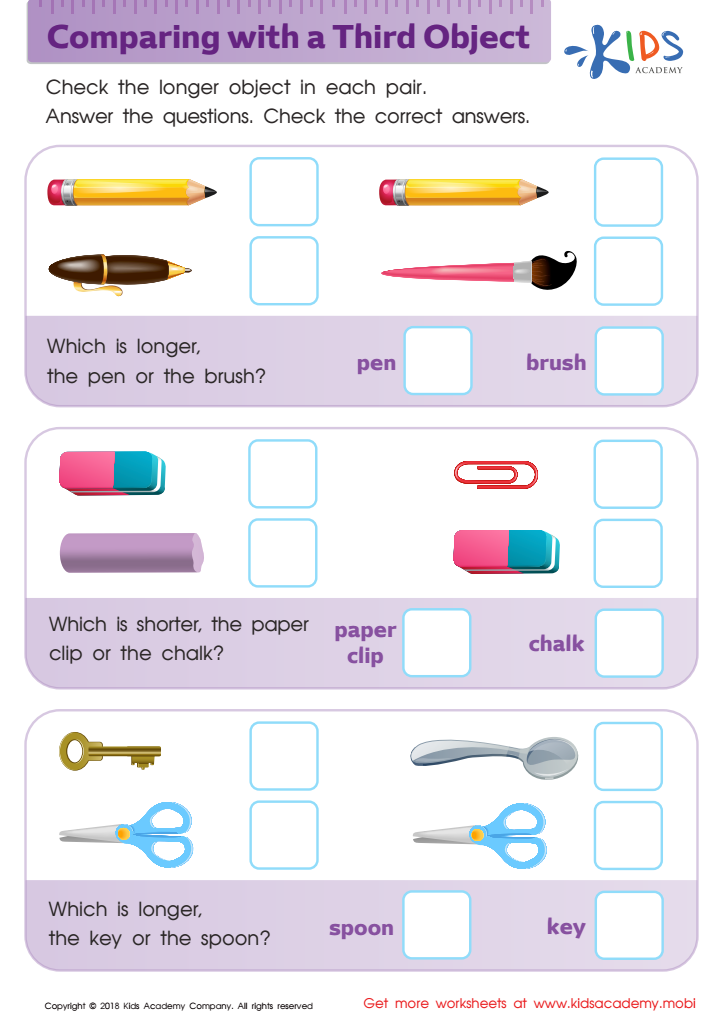
Comparing with a Third Object Worksheet

Comparing with a Third Object Worksheet

Help your child master measurement skills with this free downloadable math worksheet! Ask them to compare each pair of objects, checking the box for the longer one. Then, read the question and compare the objects across the pairs before ticking the box and continuing to the next group of pictures.
Comparing with a Third Object Worksheet
Worksheet
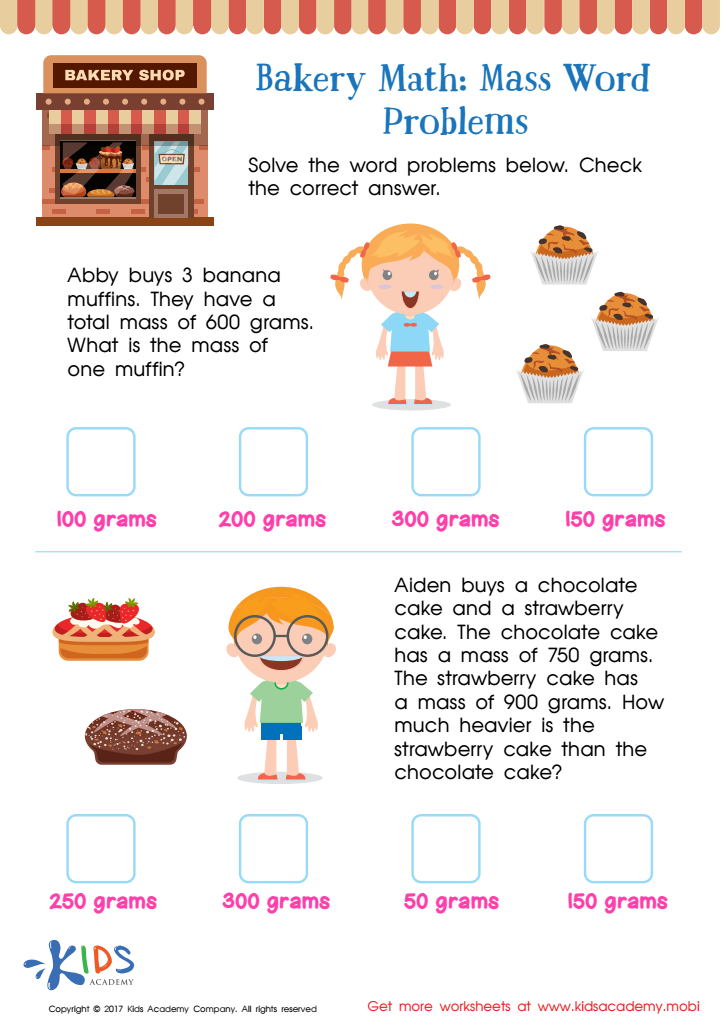
Mass Word Problems Worksheet

Mass Word Problems Worksheet

This worksheet challenges kids with tricky mass word problems. It offers valuable practice with grams. Through division and subtraction, children gain experience handling mass.
Mass Word Problems Worksheet
Worksheet
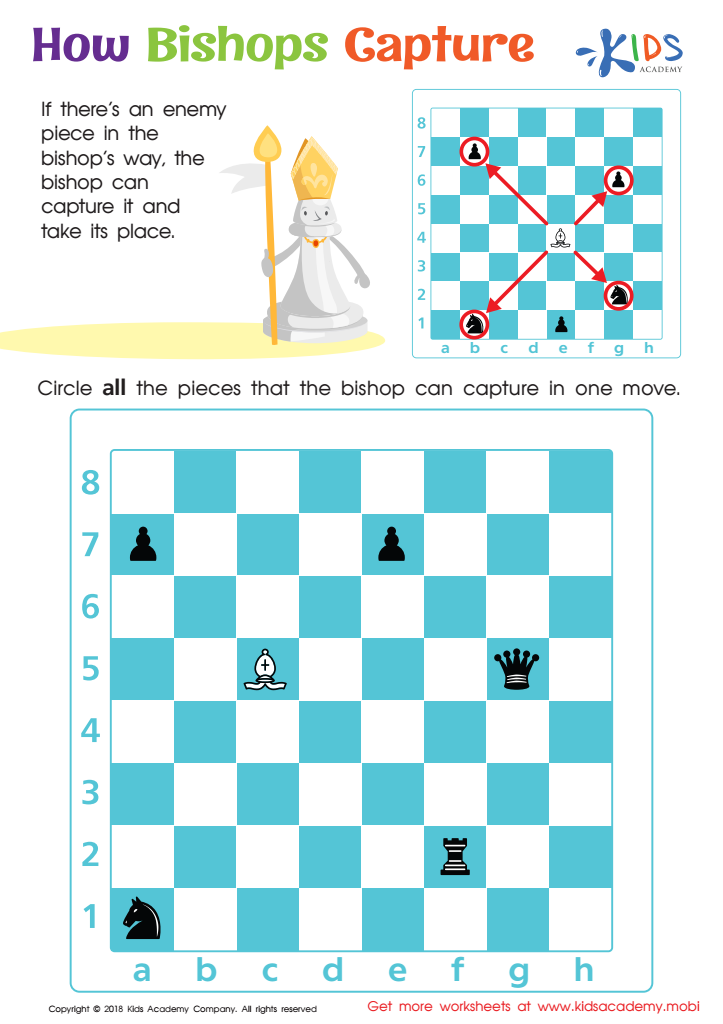
How Bishops Capture Worksheet

How Bishops Capture Worksheet

Players in chess aim to capture enemy pieces, culminating in checkmate of the king. In this worksheet, children learn how the bishop can capture pieces by checking which pieces it can capture in one move.
How Bishops Capture Worksheet
Worksheet
Subtractions words problems free printable

Subtraction Word Problems Free Printable
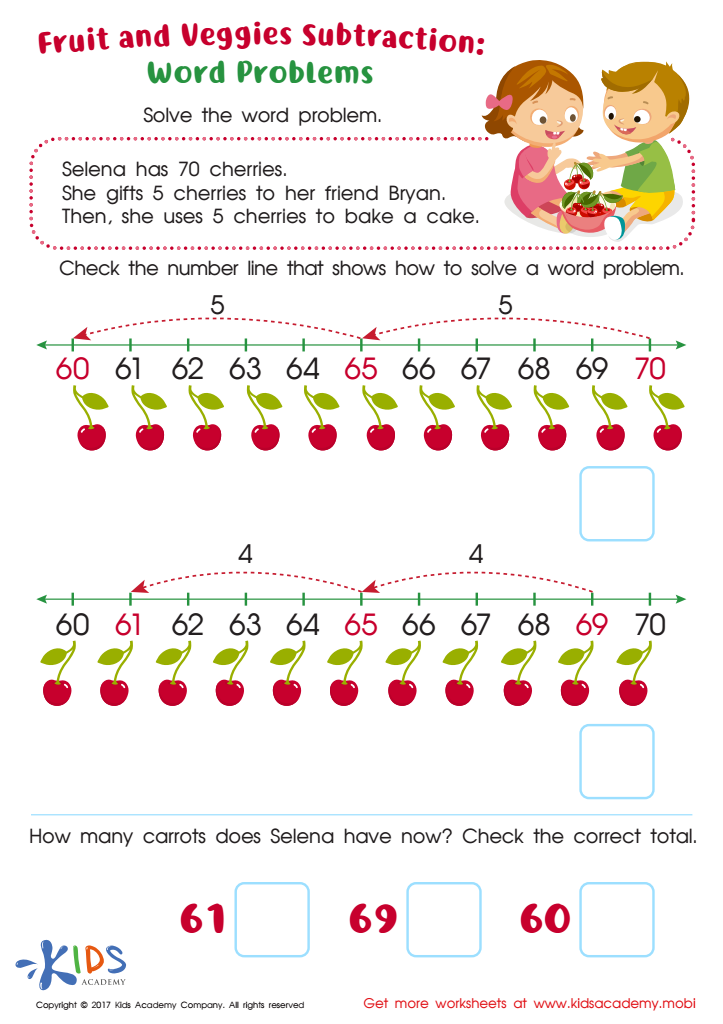
Try out this free printable subtraction worksheet! Your child can use number lines to solve challenging word problems – it's a great way to boost their problem-solving skills.
Subtraction Word Problems Free Printable
Worksheet
Sequencential Order Worksheet

Sequencential Order Worksheet

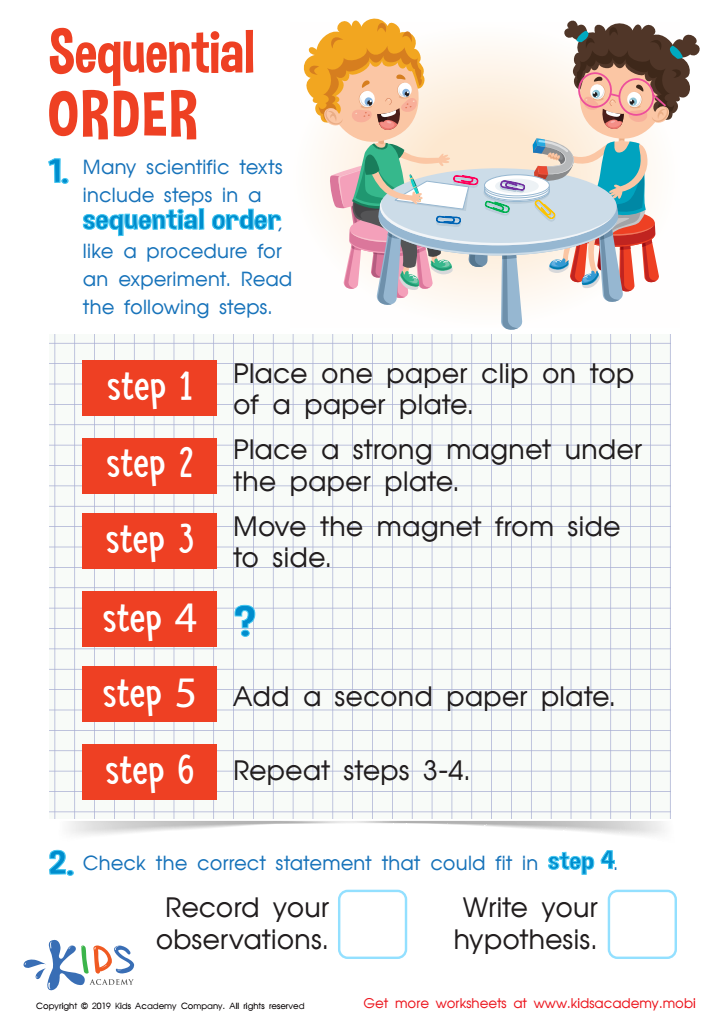
This worksheet is perfect for science-lovers: it'll test how good your child is at following instructions by asking them to complete the steps in the right order. Have them read the steps and then choose the statements that correctly fill in the blanks. It's more than just fun experiments and results - science also requires careful procedure.
Sequencential Order Worksheet
Worksheet
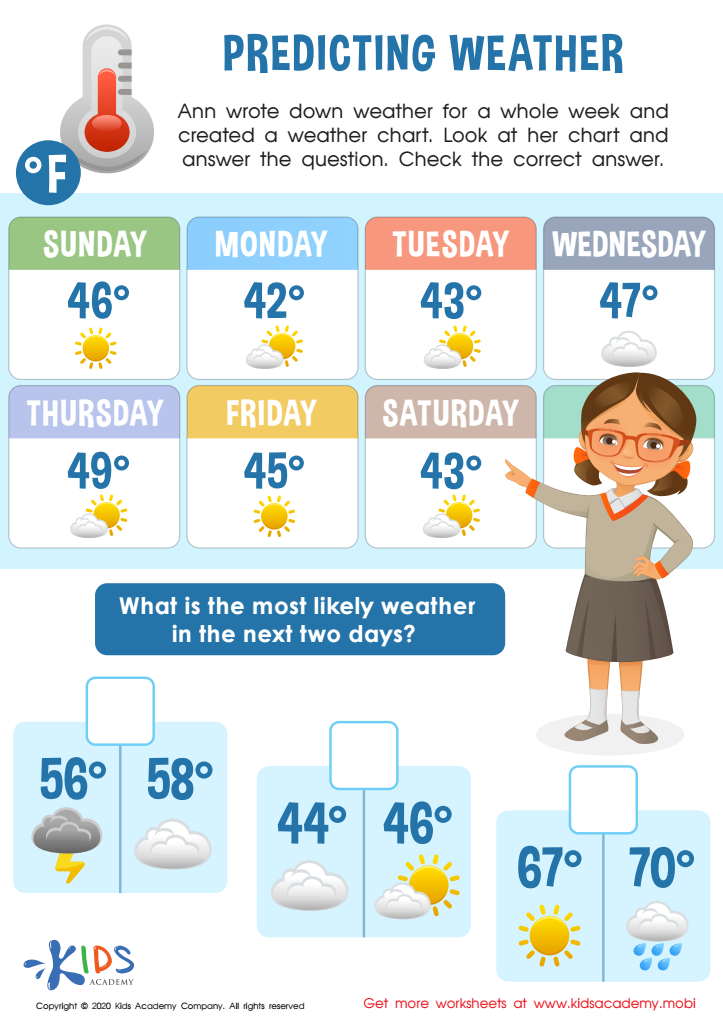
Predicting Weather Worksheet

Predicting Weather Worksheet

Observe weather patterns to make a prediction! Use this worksheet to help your little scientist. Kids will analyze data, make a scientific prediction, and explain their responses. Colorful and fun, this activity will bring the lesson home.
Predicting Weather Worksheet
Worksheet
Bugs and Legs Fact Families Worksheet


Bugs and Legs Fact Families Worksheet

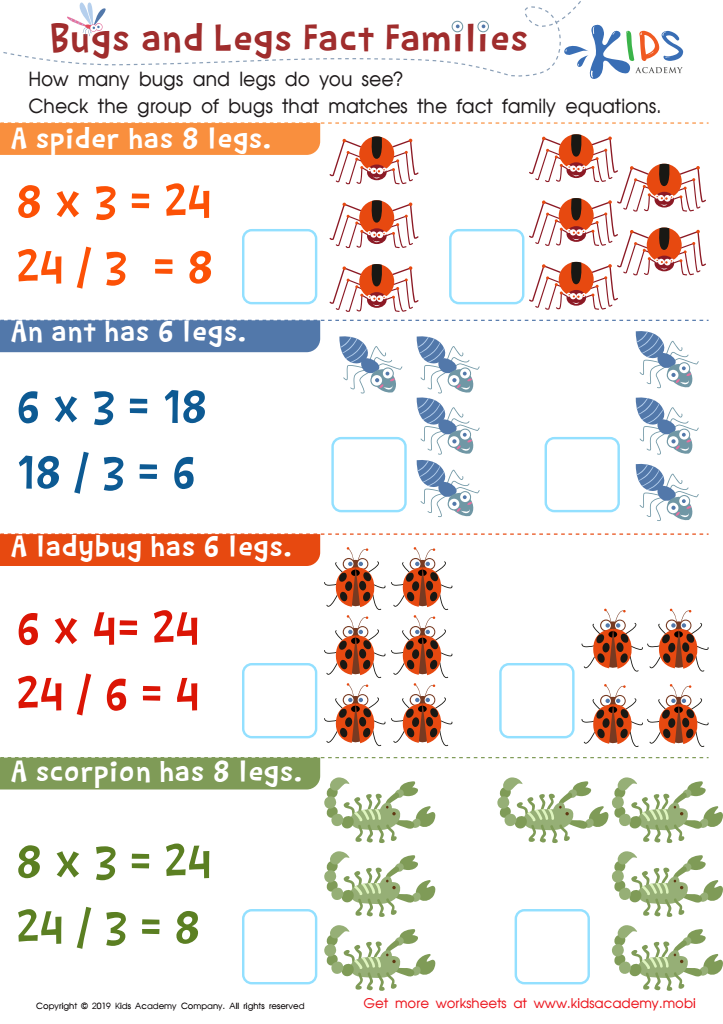
This free worksheet uses bugs and insects to help young math students learn about fact families and recognize patterns in multiplication and division. It's a fun and colorful way to gain automaticity and efficiency in computation skills, without even realizing it's math!
Bugs and Legs Fact Families Worksheet

Worksheet


Enhancing logical thinking skills in children aged 4-9 is crucial for their overall development and future success. This stage is a formative period, where kids are naturally curious, eager to learn, and begin to form the foundational skills for problem-solving, reasoning, and critical thinking. Engaging in activities that foster logical thinking helps children recognize patterns, draw conclusions, and make connections between ideas, laying a groundwork for academic learning in subjects like math and science.

Parents and teachers should care about fostering these skills because logical thinking enhances cognitive abilities essential for navigating everyday challenges. This cultivation encourages children to ask questions, experiment, and think independently, all of which boost self-confidence and encourage a love for learning. Furthermore, strong logical thinking skills can aid children in emotional development, allowing them to interpret social cues and resolve conflicts more effectively.

In today’s fast-paced, information-rich environments, these skills are essential not just for academic achievement, but also for lifelong skills necessary to succeed in the future workforce. By prioritizing logical thinking in early education, parents and teachers can empower children to become adaptable, strategic thinkers ready to face a complex world.