
Grammar skills improvement Normal Worksheets for Ages 4-9
6 filtered results
Difficulty Level
Grade
Age
-
From - To
Subject
Activity
Standards
Boost your child's language proficiency with our "Grammar Skills Improvement Normal Worksheets" designed specifically for ages 4-9. These engaging and educational worksheets help young learners develop a strong foundation in grammar, covering key concepts like sentence structure, punctuation, verb tenses, and more. Each worksheet is crafted to be age-appropriate, ensuring children stay motivated and challenged. With a variety of fun and interactive activities, your child will enhance their grammar skills in an enjoyable way, laying the groundwork for successful communication and writing abilities. Start building your child's linguistic confidence today with our expertly designed resources!
Favorites
With answer key
Interactive
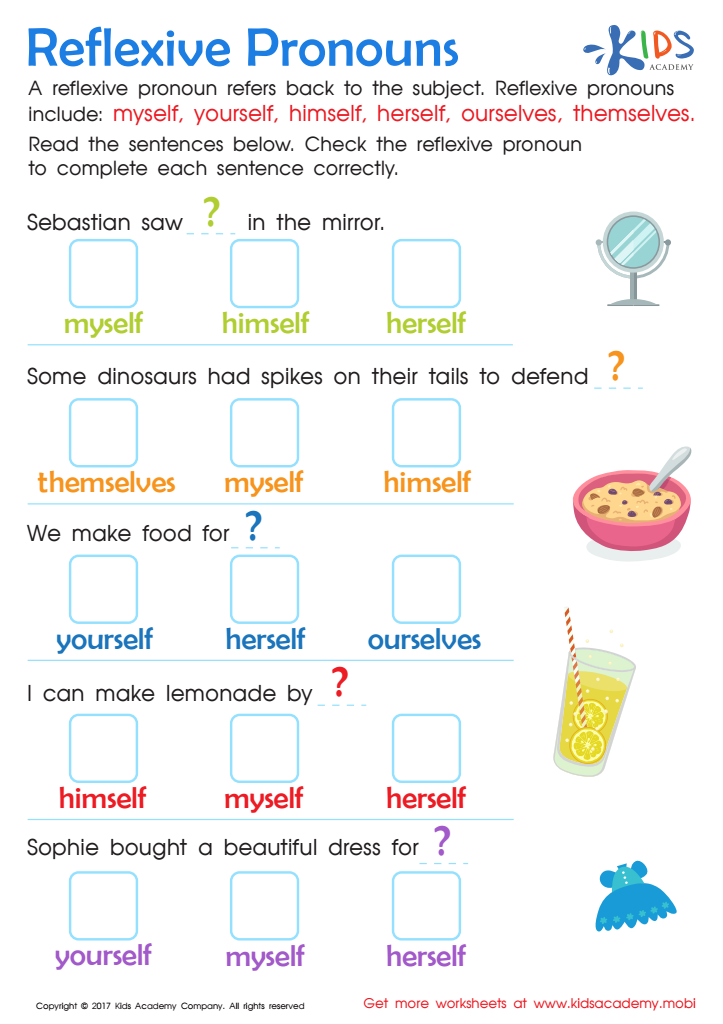
Reflexive Pronouns Worksheet
The 2nd grade reflexive pronouns worksheet by Kids Academy offers clear explanations and fun activities to help master reflexive pronouns.
Kids Academy's 2nd grade reflexive pronouns worksheet has everything you need to brush up on reflexive pronouns. It includes a brief explanation and fun activities with sentences and pictures to check your understanding. Master reflexive pronoun usage in no time!
 Assign to My Students
Reflexive Pronouns Worksheet
Worksheet
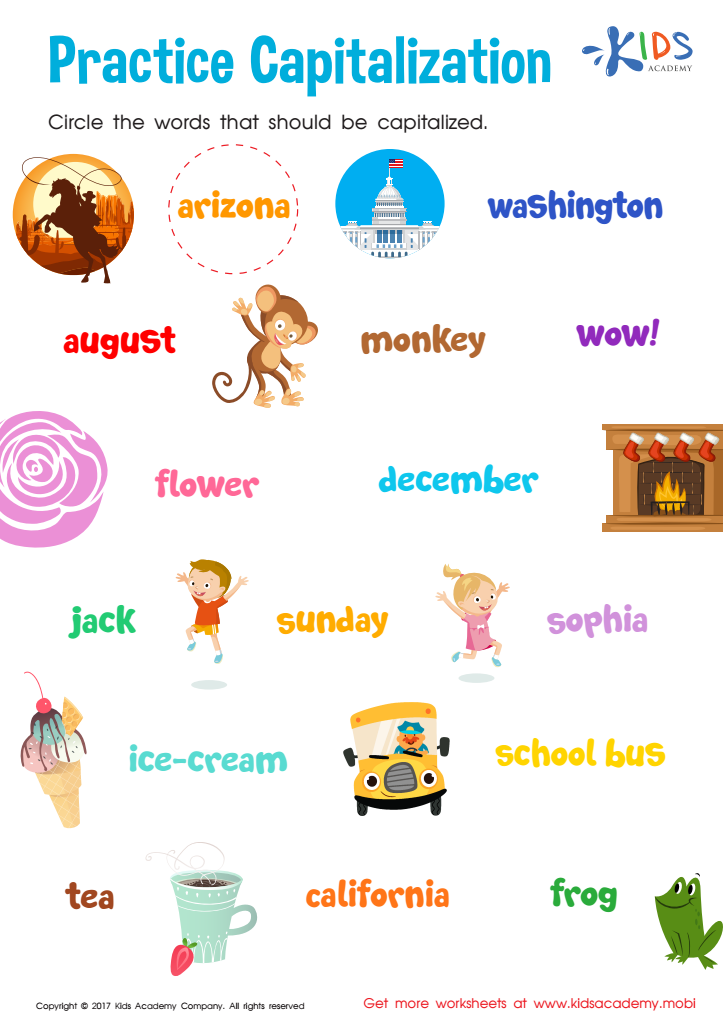
Practice Capitalization Printable
Test your child's knowledge of capitalization with this fun worksheet! It's up to them to choose which words need to be capitalized and which don't. Get your printable Practice Capitalization worksheet today! (80 words)
Practice Capitalization Printable
Worksheet
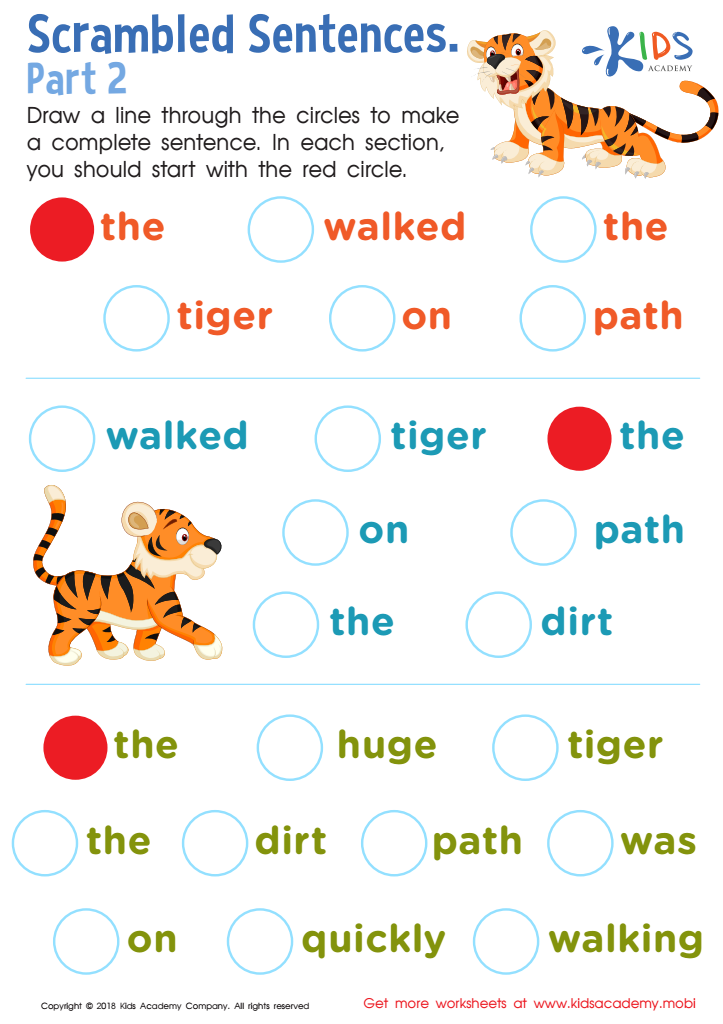
Scrambled Sentences Part 2 Worksheet
This printable worksheet helps kids construct simple, correct sentences. Introduce them to making sentences if they're new to it. Have them draw a line through the circles to form a sentence, starting with the red circle. After completing this exercise, they'll be able to craft short sentences with confidence.
Scrambled Sentences Part 2 Worksheet
Worksheet
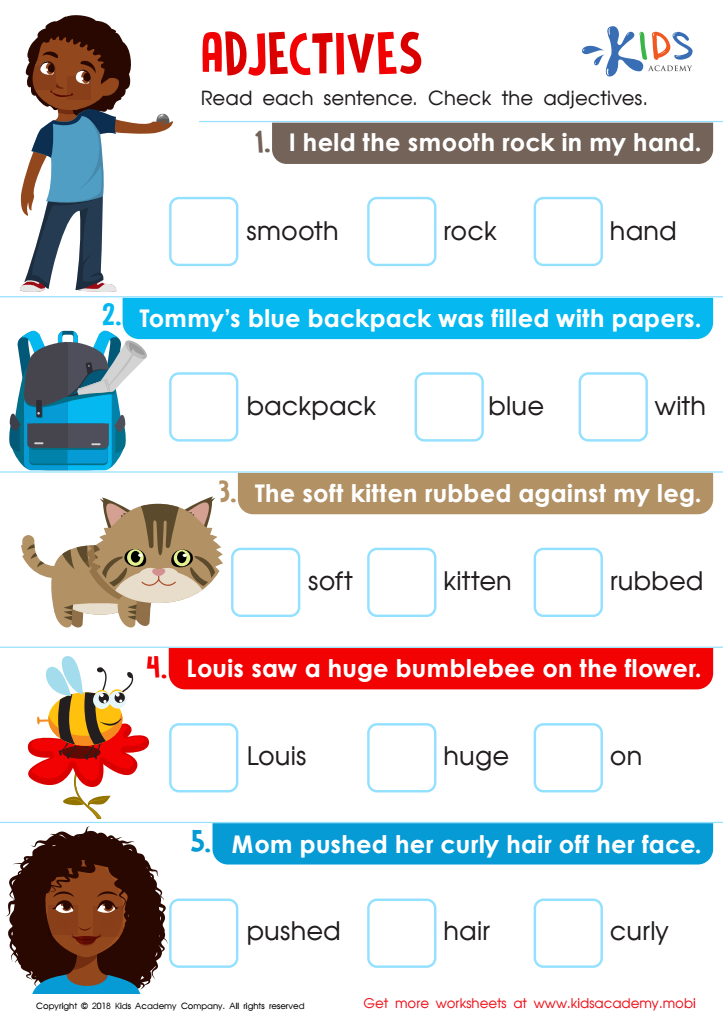
Adjectives Worksheet
Adjectives are words that describe a noun. Examples include "beautiful" and "good". Ask your students to use these adjectives in a sentence and have them identify the adjectives in five sentences on a worksheet. Point out that adjectives are essential to understand, and have them check their answers.
Adjectives Worksheet
Worksheet
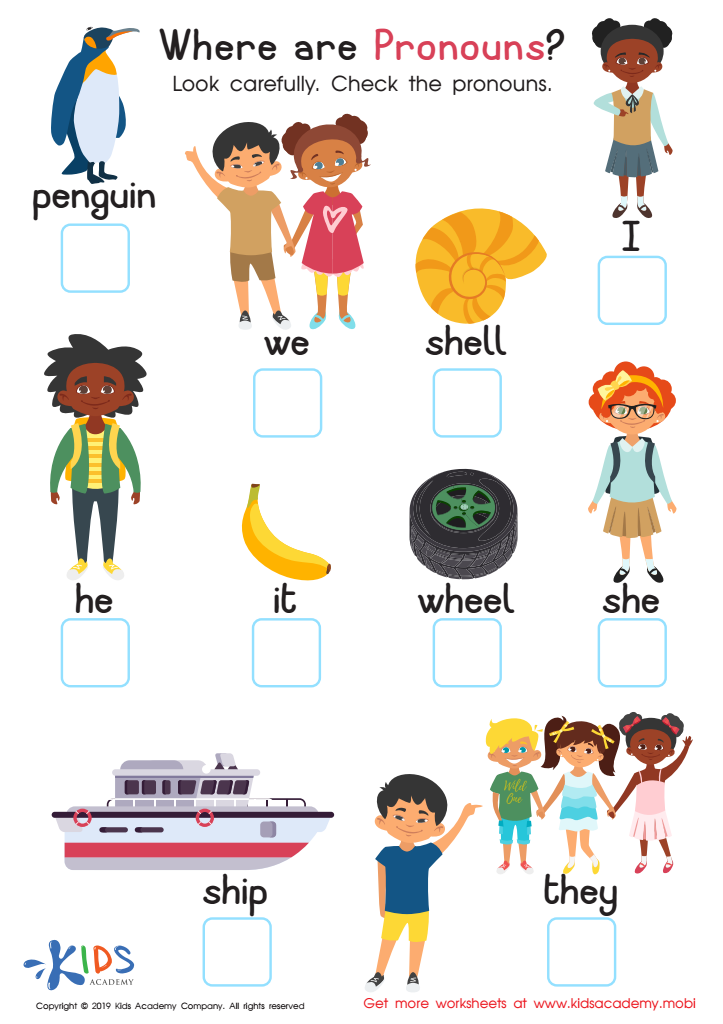
Where Are Pronouns? Worksheet
Pronouns make language flow, substituting "he" or "she" for names. Kids know and use them in their speech, but identifying pronouns in grammar helps build writing skills. This worksheet challenges kids to pick out pronouns from other nouns. Go through the worksheet, view the pictures and read the words. Ask kids to check boxes in front of pronouns to mark answers.
Where Are Pronouns? Worksheet
Worksheet
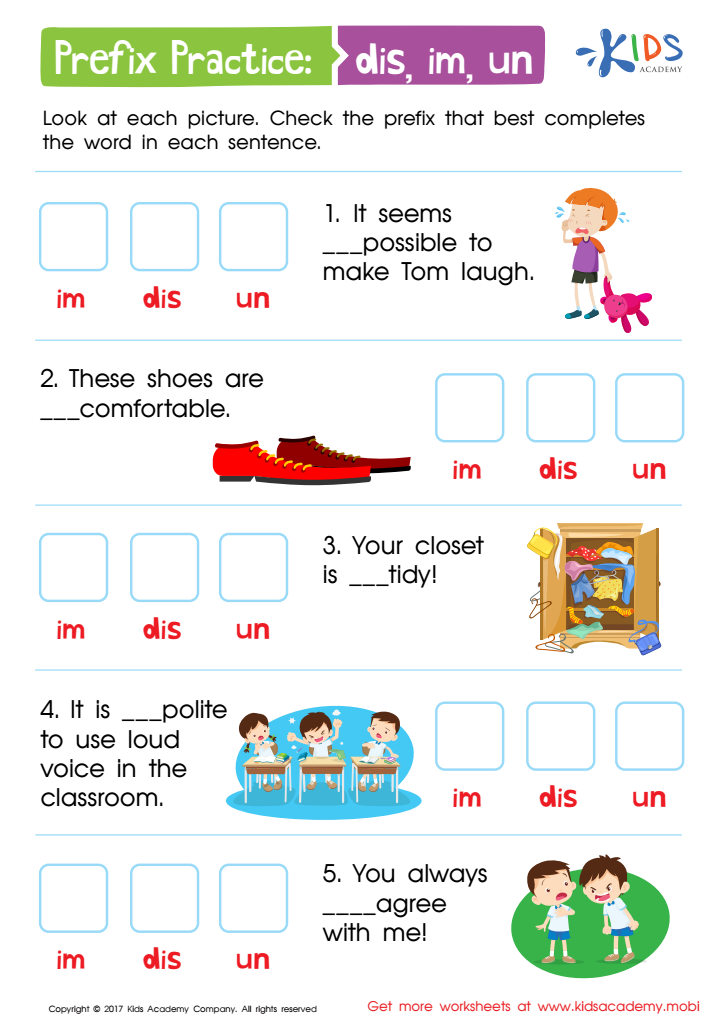
Prefix Practice Worksheet: DIS, IM, UM
This PDF worksheet entertains while helping kids build language skills! Using funny illustrations and context clues, they'll pick the right prefix (DIS, IM, UN) to complete the root words. It's a fun way to practice and expand your child's vocabulary.
Prefix Practice Worksheet: DIS, IM, UM
Worksheet
Join Kids Academy for Free
Who is primarily going to use this learning content?




Parents and teachers should care about grammar skills improvement for children ages 4-9 because it is foundational to their overall communication ability and academic success. During the early years, children are incredibly receptive to language learning. Building strong grammar skills at a young age helps children express their thoughts clearly and effectively, which is essential for both personal interactions and classroom participation.
Good grammar is also directly correlated to reading comprehension and writing abilities. When children understand how sentences are structured, they can better decode the text and construct their own narratives. This ability facilitates a smoother transition from learning to read to reading to learn, impacting other subjects as well.
Moreover, grasping grammar rules early on prevents the formation of bad habits that can be hard to break later. Early intervention can address issues before they become ingrained problems, making subsequent learning phases more effective and less frustrating.
Socially, competent communication reduces misunderstandings and helps children build confidence in expressing themselves, fostering better relationships with peers and adults. By emphasizing grammar skills in the ages of 4-9, parents and teachers lay a solid foundation for future academic achievements and social interactions, setting children up for long-term success in both school and life.








