
Identifying differences Normal Worksheets for Ages 4-9
3 filtered results
Difficulty Level
Grade
Age
-
From - To
Subject
Activity
Standards
Discover our engaging "Identifying Differences Normal Worksheets" designed specifically for children aged 4-9. These worksheets encourage young learners to sharpen their observation and analytical skills by challenging them to spot variations between two seemingly similar images. Perfect for enhancing visual discrimination, these activities promote critical thinking and attention to detail. With colorful illustrations and fun themes, kids will enjoy exploring their creativity while developing essential cognitive skills. Ideal for at-home learning or classroom activities, our worksheets provide a playful yet educational experience that caters to diverse learning styles. Inspire a love for learning and watch your child's confidence grow!
Favorites
With answer key
Interactive
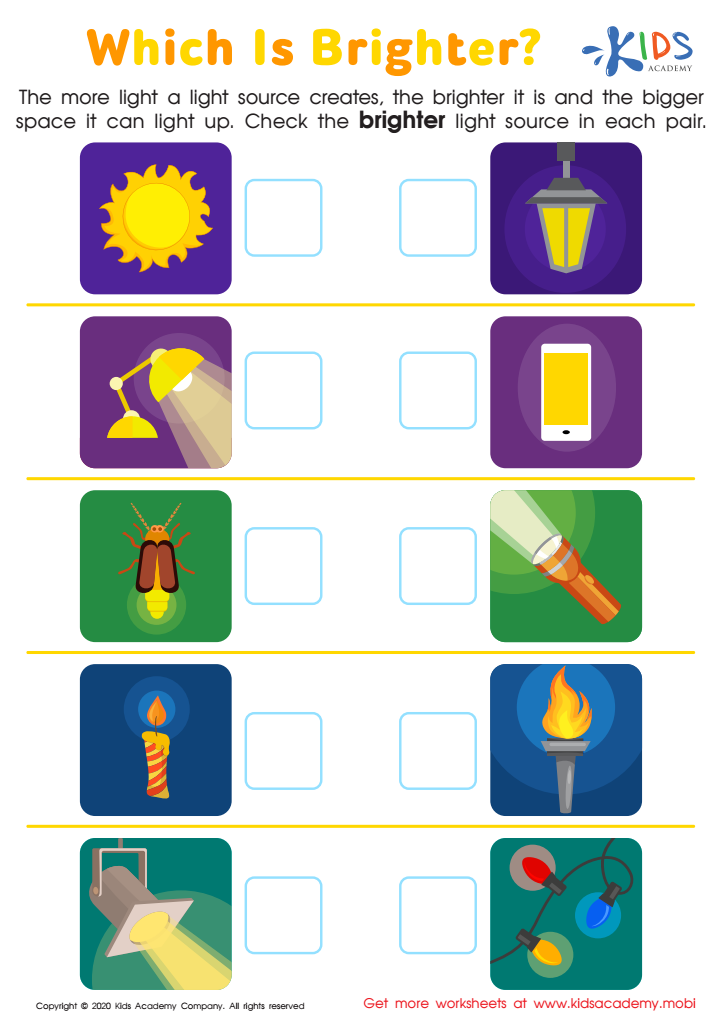
Which Is Brighter? Worksheet
Before the exercise, ask students to recall sources of light. Use this worksheet to explain that the brighter the light source, the more space it can light up. Identify the different light sources in the pictures, then check the brighter light source in each pair. The biggest natural source of light is the sun.
 Assign to My Students
Which Is Brighter? Worksheet
Worksheet
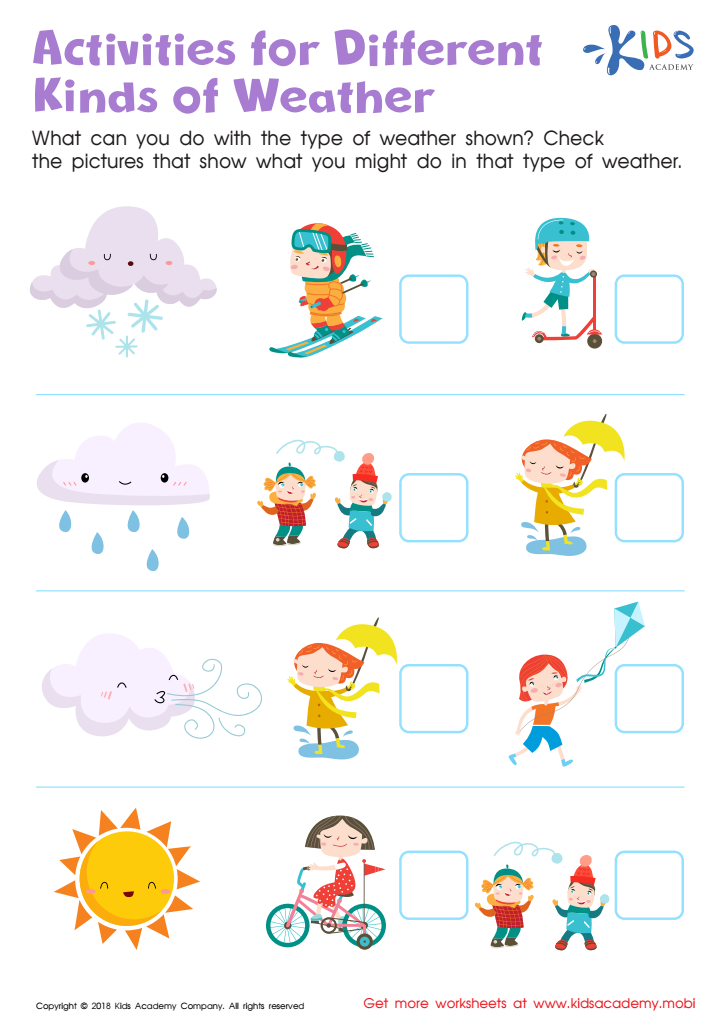
Activities for Different Kinds of Weather Worksheet
Help your child explore the changing seasons with this interactive worksheet. Ask them to name the different seasons and activities associated with each type of weather. Show the pictures and explain what they can do in that kind of weather. Have them check off the activities to help them learn and enjoy the changing seasons.
Activities for Different Kinds of Weather Worksheet
Worksheet

Take a Look - Part 1 Worksheet
Young learners gain understanding when using picture clues when reading. Looking at illustrations can help students learn the meaning of key vocabulary when reading fiction or informational text. Ask your students to look at the worksheet and observe what they can learn from the picture. It's a great comprehension strategy for early readers.
Take a Look - Part 1 Worksheet
Worksheet
Join Kids Academy for Free
Who is primarily going to use this learning content?








Identifying differences, or fostering the ability to recognize contrasts, is crucial for children aged 4-9 as it enhances their cognitive, social, and emotional development. At this age, children are naturally curious and are forming foundational thinking skills. When parents and teachers encourage the identification of differences—whether it’s contrasting colors, feelings in peers, or outcomes in activities—they boost critical thinking and observational skills. This plays a vital role in developing analytical abilities and promotes problem-solving strategies.
Moreover, understanding differences fosters empathy and inclusiveness. Children learn to appreciate diversity among their peers, recognizing that everyone has unique strengths and challenges. This ability can reduce bullying and promote healthier social interactions, essential for emotional growth.
Additionally, identifying differences is closely linked to early literacy and numeracy skills. Recognizing patterns, shapes, or variations scheme lays the groundwork for future academic success.
In conclusion, proactive engagement in helping children identify differences paves the way for a well-rounded education and development. Parents and teachers serve as key facilitators in this journey, ensuring that children are not only academically prepared but also socially competent and emotionally intelligent. Encouraging this skill is an investment in a child's holistic development.








