Letter-sound association Normal Worksheets for Ages 4-9
7 filtered results
-
From - To
Our "Letter-Sound Association Normal Worksheets for Ages 4-9" provide engaging, age-appropriate activities to help young learners build essential reading skills. These expert-designed worksheets support children in understanding the relationship between letters and their corresponding sounds, making early literacy fun and effective. Perfect for classroom or home use, each worksheet encourages phonemic awareness and strengthens foundational reading abilities, paving the way for future academic success. Start your child's reading journey with our interactive and child-friendly resources, crafted to foster a love for reading and boost confidence in young readers. Explore and download now at Kids Academy!
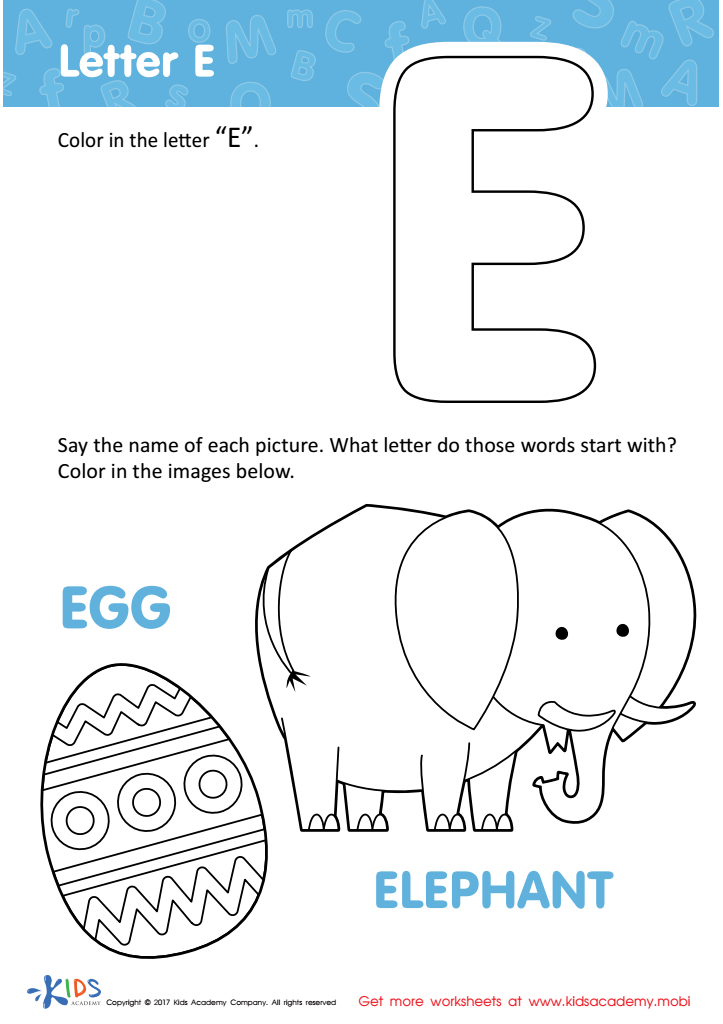
Letter E Coloring Sheet
 Assign to My Students
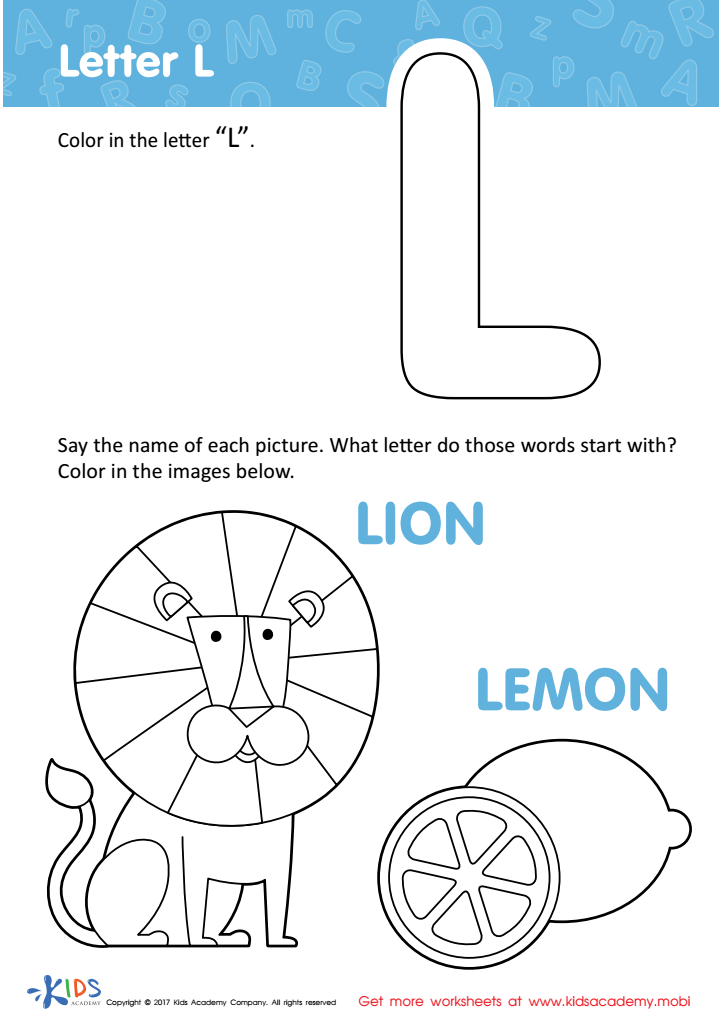
Letter L Coloring Sheet
Assign to My Students

Lowercase Letters m n o Worksheet
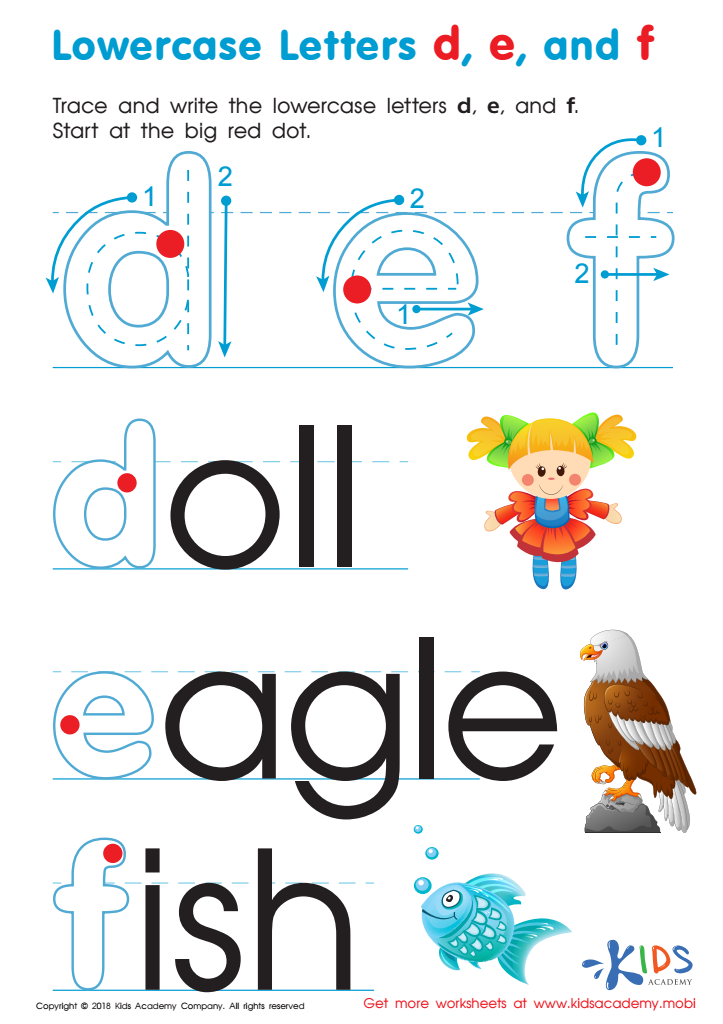
Lowercase Letters d e f Worksheet
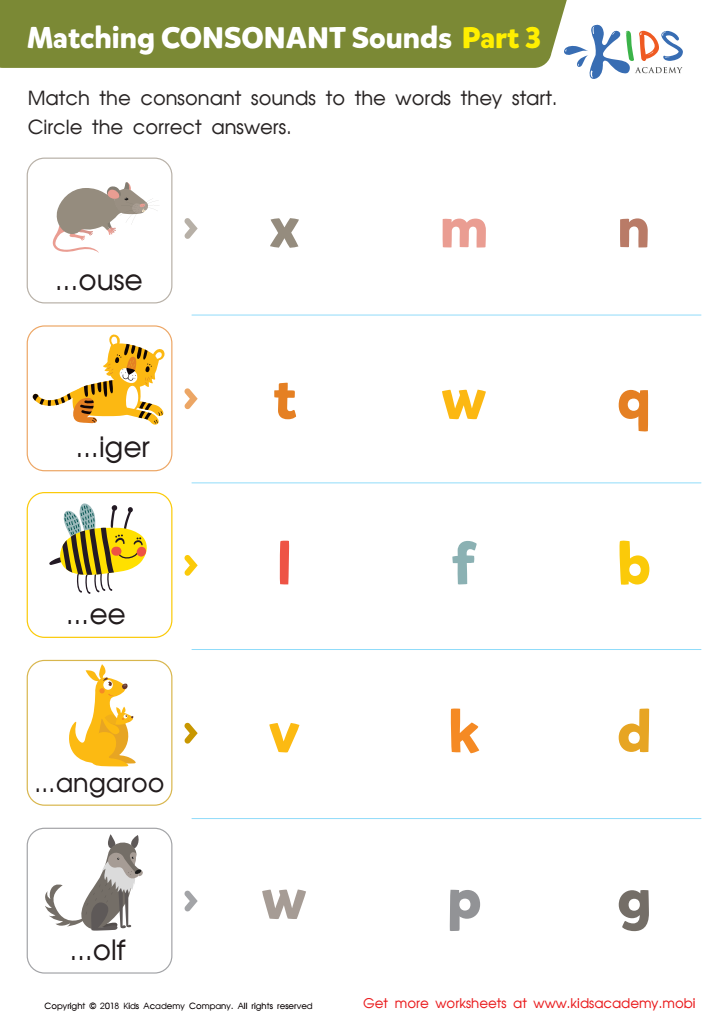
Matching Consonant Sounds: Part 3 Worksheet
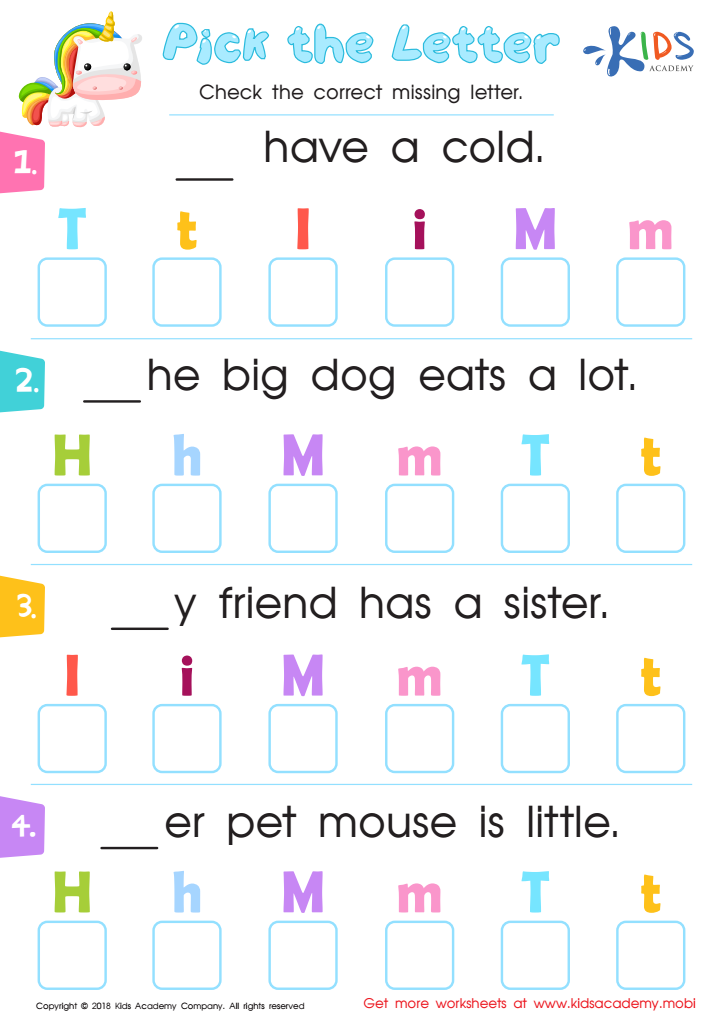
Pick the Letter Worksheet
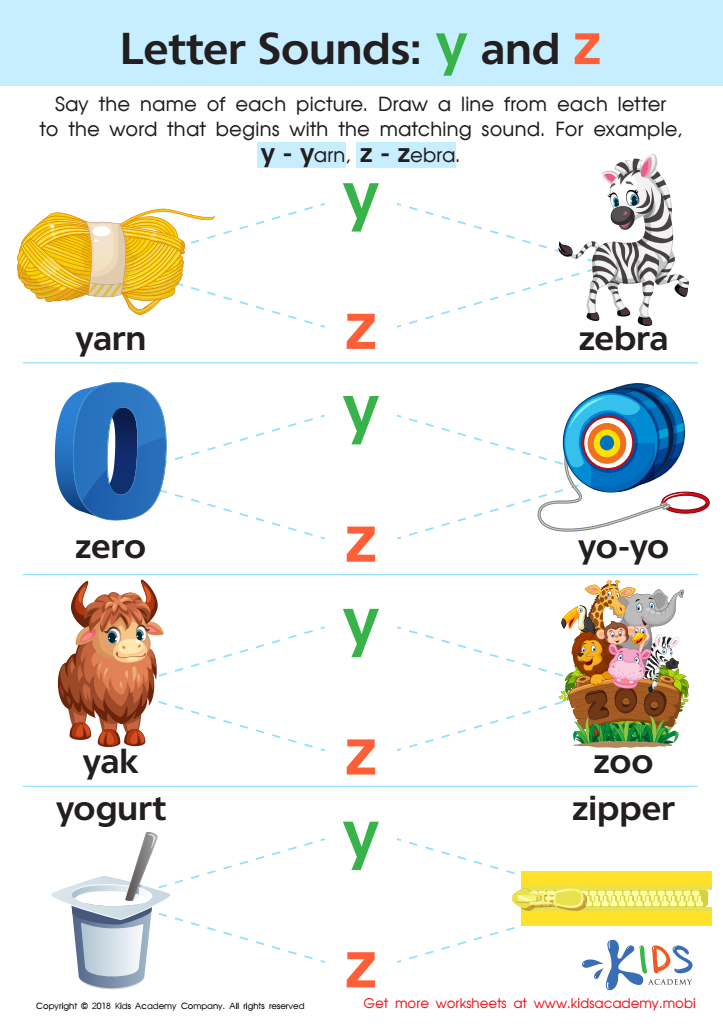
Letter Y and Z Sounds Worksheet








Understanding letter-sound associations is crucial for children ages 4-9 because it lays the foundational skills required for reading and writing. For both parents and teachers, focusing on this aspect is essential for several key reasons.
Firstly, letter-sound knowledge directly impacts a child's ability to decode words, a fundamental skill for fluent reading. When children can connect letters with their corresponding sounds, they can more easily blend these sounds to read familiar and new words. This ability significantly boosts their confidence and contributes to a positive attitude toward reading.
Secondly, strong letter-sound associations enhance a child's spelling capabilities. By understanding that specific sounds correspond to certain letters or groups of letters, children can begin to spell words more accurately and develop better writing skills.
Furthermore, early proficiency in letter-sound recognition supports overall language development. When children comprehend the relationship between letters and sounds early on, they are better equipped to understand and use language more effectively, leading to improved communication skills.
Lastly, early intervention in building these skills can dramatically decrease the likelihood of future reading difficulties. Early readers who master letter-sound associations are often more successful in academic and social settings, as reading comprehension plays a critical role across all subjects and aspects of learning.
In summary, parents and teachers should prioritize letter-sound associations for young children because it is a cornerstone of literacy development that promotes reading fluency, accurate spelling, language acquisition, and long-term academic success.








