Letter-sound recognition Normal Worksheets for Ages 4-9
4 filtered results
-
From - To
Boost early literacy skills with our engaging Letter-Sound Recognition Normal Worksheets designed for children aged 4-9. These worksheets offer a fun and interactive way for young learners to master the foundational skill of associating letters with their corresponding sounds. Each printable activity is crafted to enhance phonemic awareness through vibrant illustrations and adaptive exercises. Ideal for classrooms or at-home learning, our worksheets cater to various learning styles, ensuring every child can thrive. Encourage your child's reading journey with these thoughtfully curated resources that lay the groundwork for future literacy success. Start their adventure in letters and sounds today!
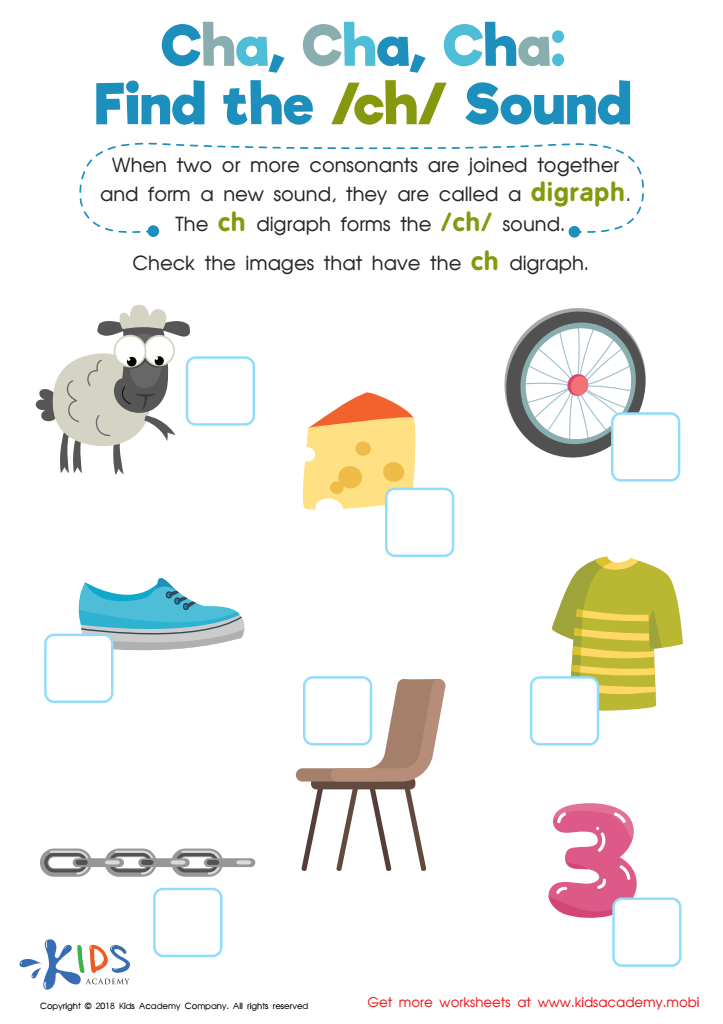
Cha, Cha, Cha: Find the /Ch/ Sound Worksheet
 Assign to My Students
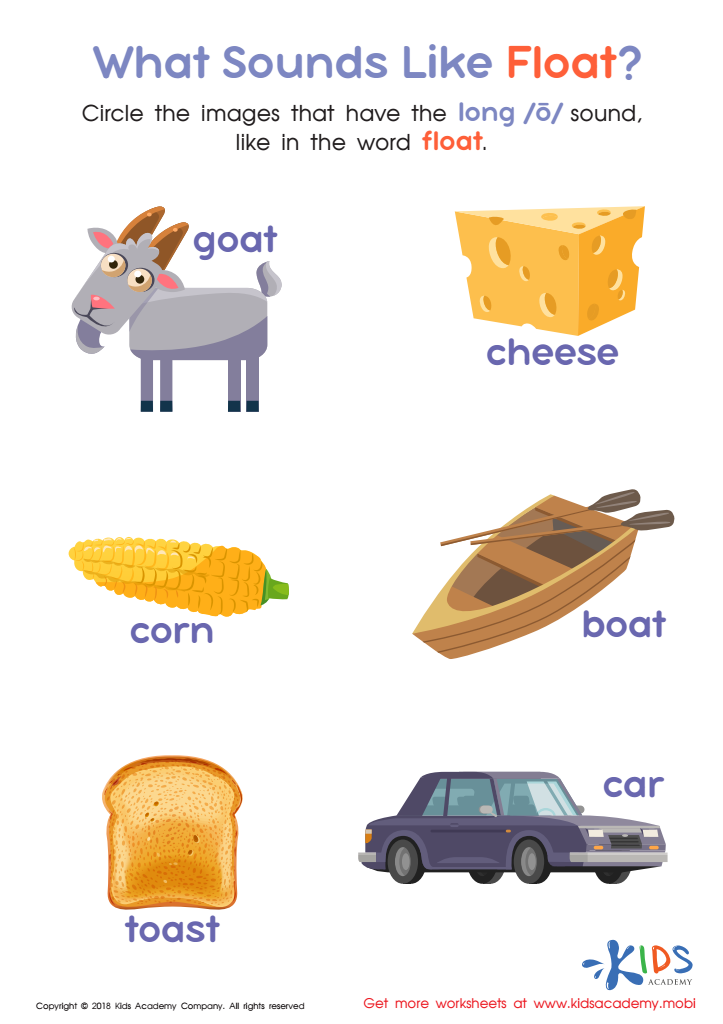
What Sounds Like Float? Worksheet
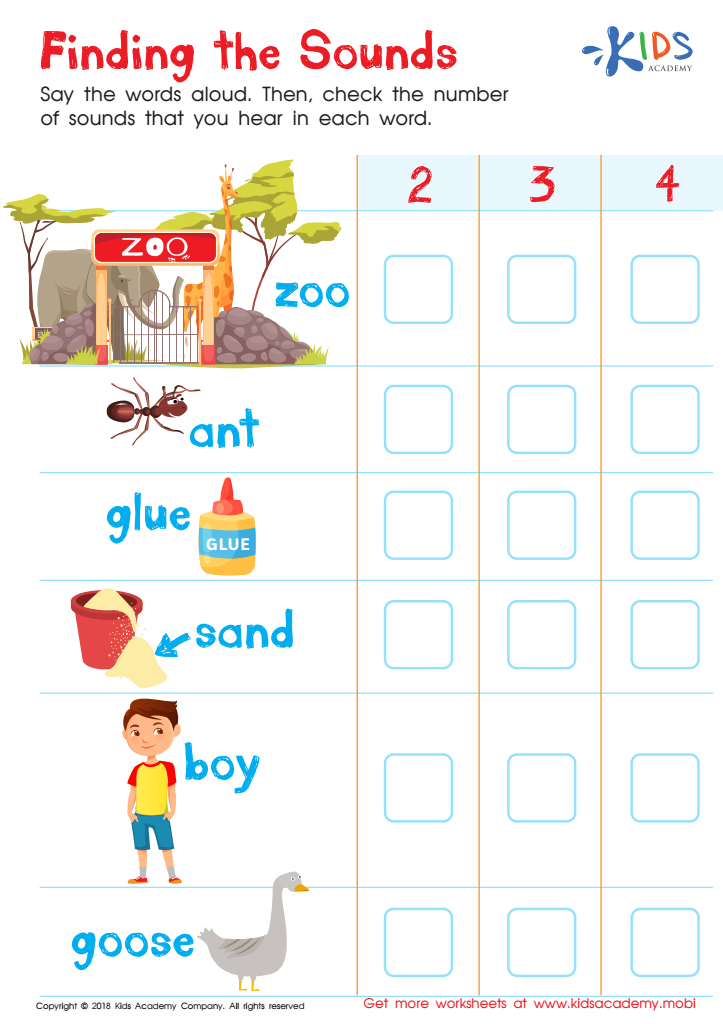
Finding the Sounds Worksheet
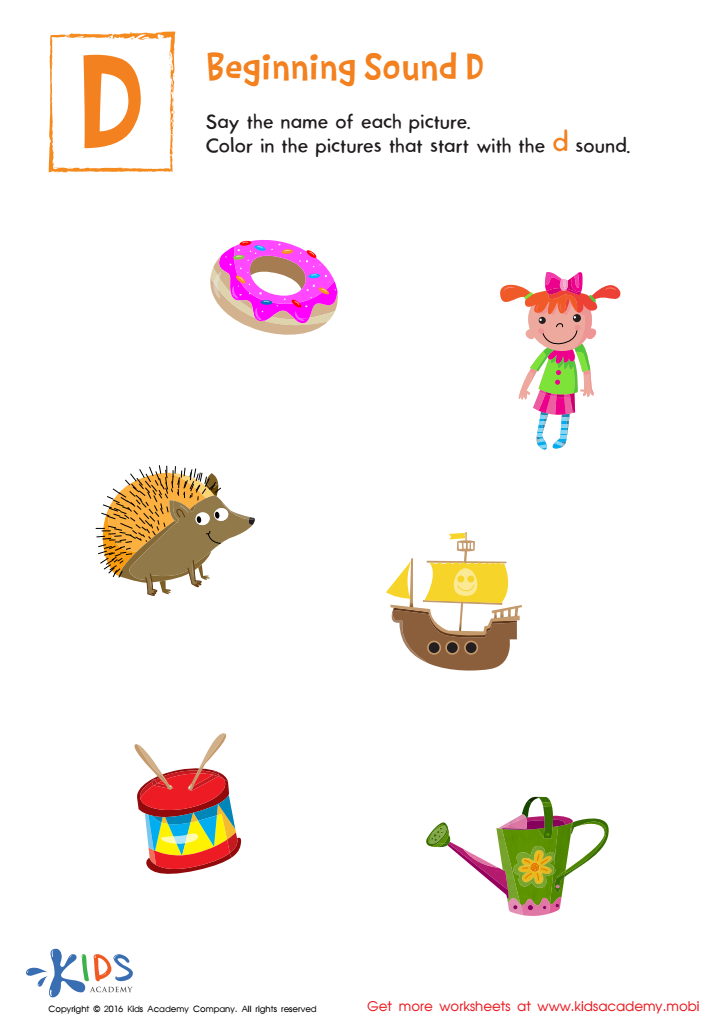
Beginning Sound D Worksheet





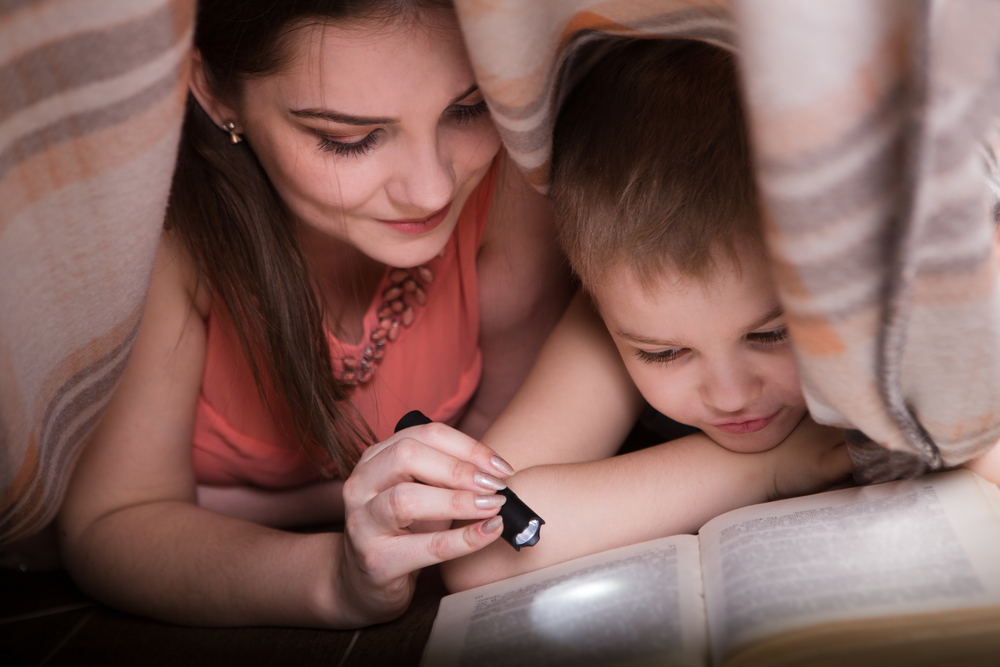


Letter-sound recognition is a foundational skill in early literacy, and it is crucial for children aged 4-9 as it directly impacts their reading and writing abilities. Understanding that letters represent specific sounds allows children to decode words, facilitating reading fluency and comprehension. When parents and teachers prioritize this skill, they help set the stage for successful learning experiences.
Firstly, letter-sound recognition enhances vocabulary development and spelling; children learn to identify phonemes, which are essential for constructing words. This understanding fosters confidence in children as they navigate books and written tasks, encouraging a love for reading.
Moreover, in the increasingly digitized learning environment, potent literacy skills are essential for academic achievement. Research shows that early mastery of letter-sound associations correlates with better performance in later grades.
Additionally, when parents and teachers emphasize this crucial milestone, they create opportunities for interactive learning using games and activities that engage children. Such investment not only boosts children’s skills but also strengthens the bond between them and their caregivers, creating a supportive learning environment. Ultimately, fostering letter-sound recognition prepares children for lifelong academic success and enhances their overall cognitive development.








