Moral understanding Normal Worksheets for Ages 4-9
5 filtered results
-
From - To
Enhance your child's moral understanding with our engaging worksheets designed for ages 4-9! These thoughtfully crafted activities aim to teach essential values such as empathy, sharing, and kindness. Perfect for early learners, our worksheets utilize colorful illustrations and relatable scenarios, making learning enjoyable and accessible. Parents and educators can easily incorporate these resources into home or classroom settings, fostering vital social-emotional skills. Promote critical thinking and discussion around everyday moral dilemmas, helping children navigate their feelings and develop their understanding of right and wrong. Explore our collection to empower the next generation of compassionate, informed individuals ready to make positive choices!
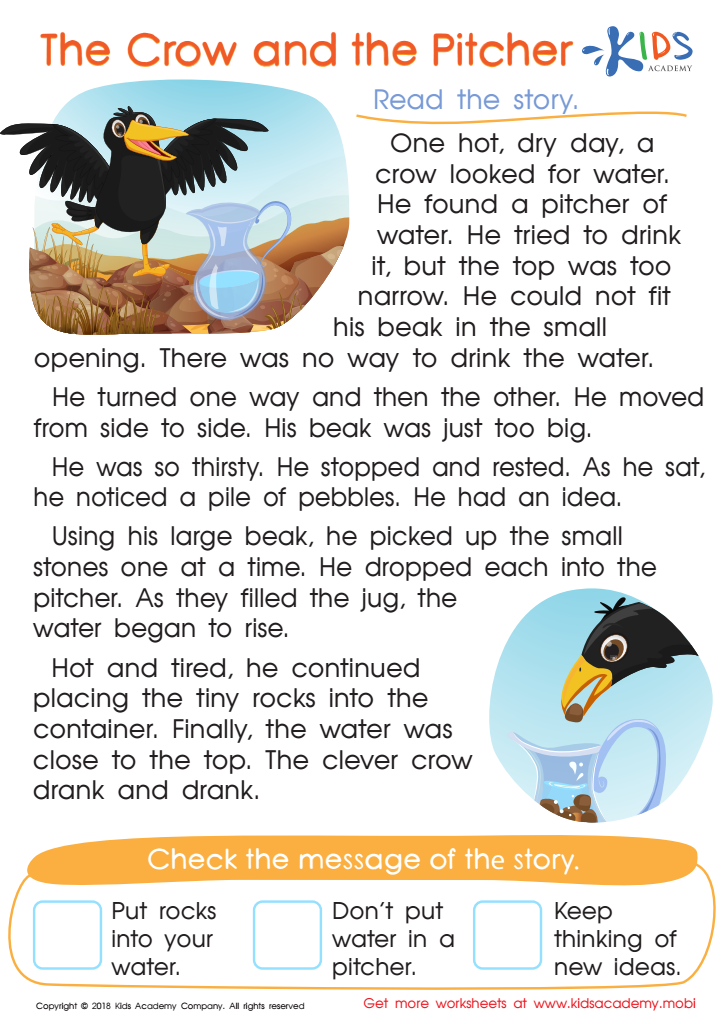
The Crow and the Pitcher Worksheet
 Assign to My Students
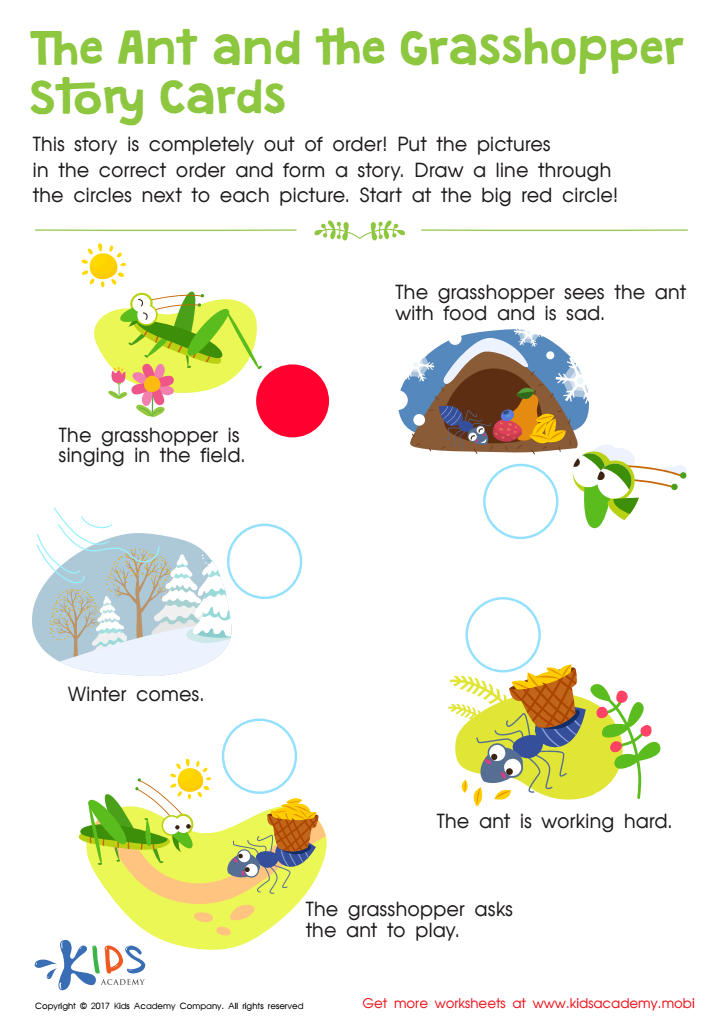
The Ant and The Grasshopper Worksheet
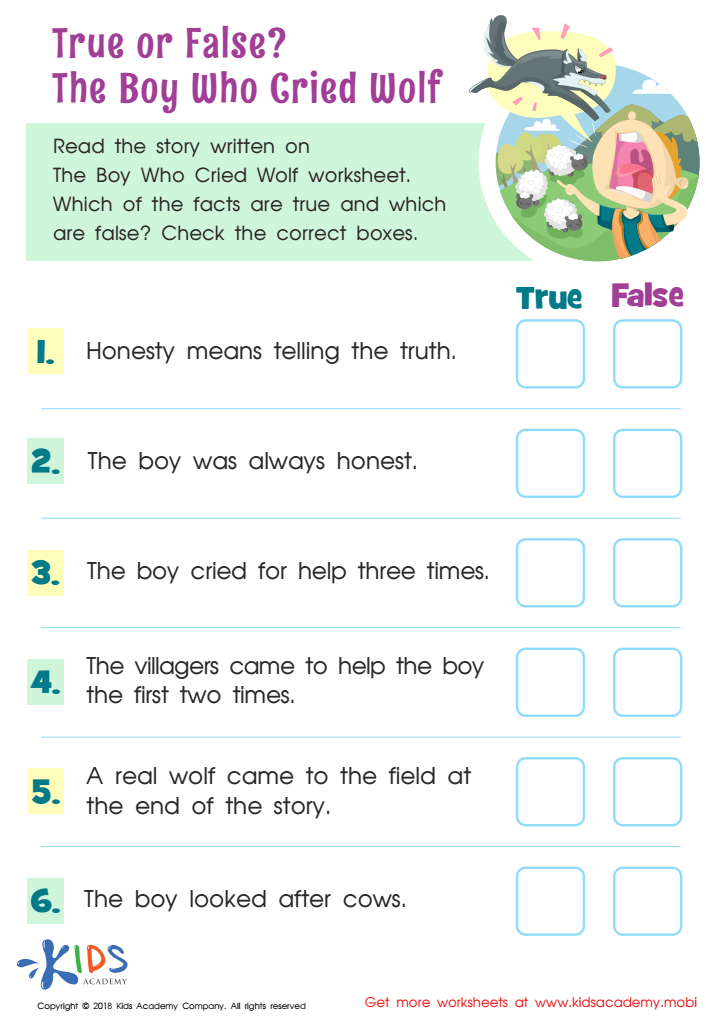
True or False? The Boy Who Cried Wolf Worksheet
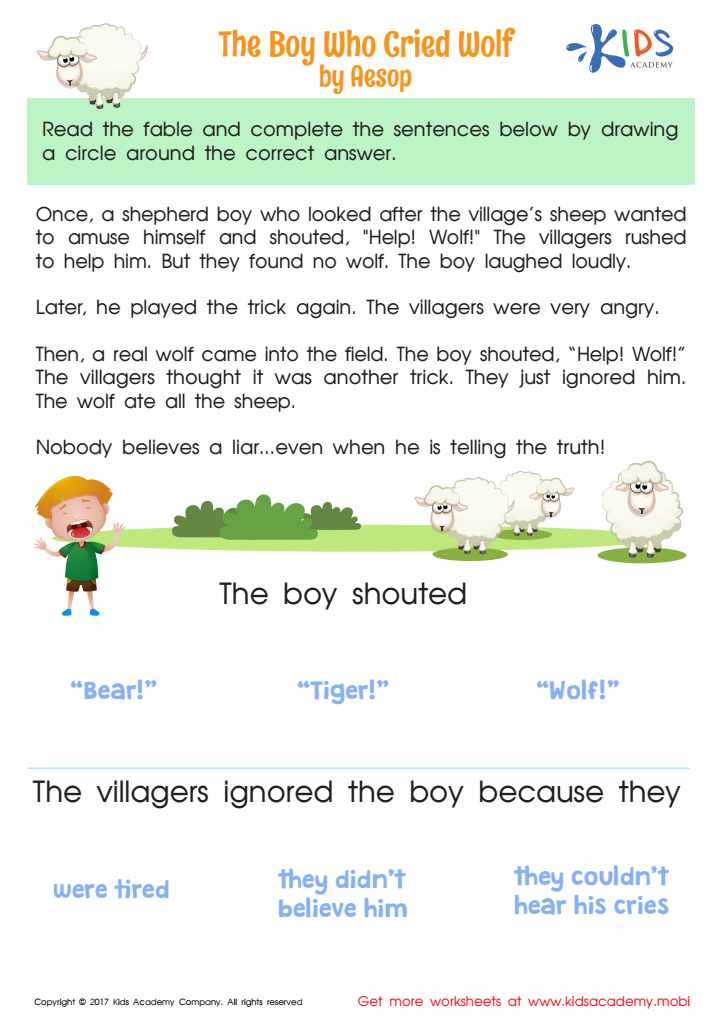
The Boy Who Cried Wolf Worksheet
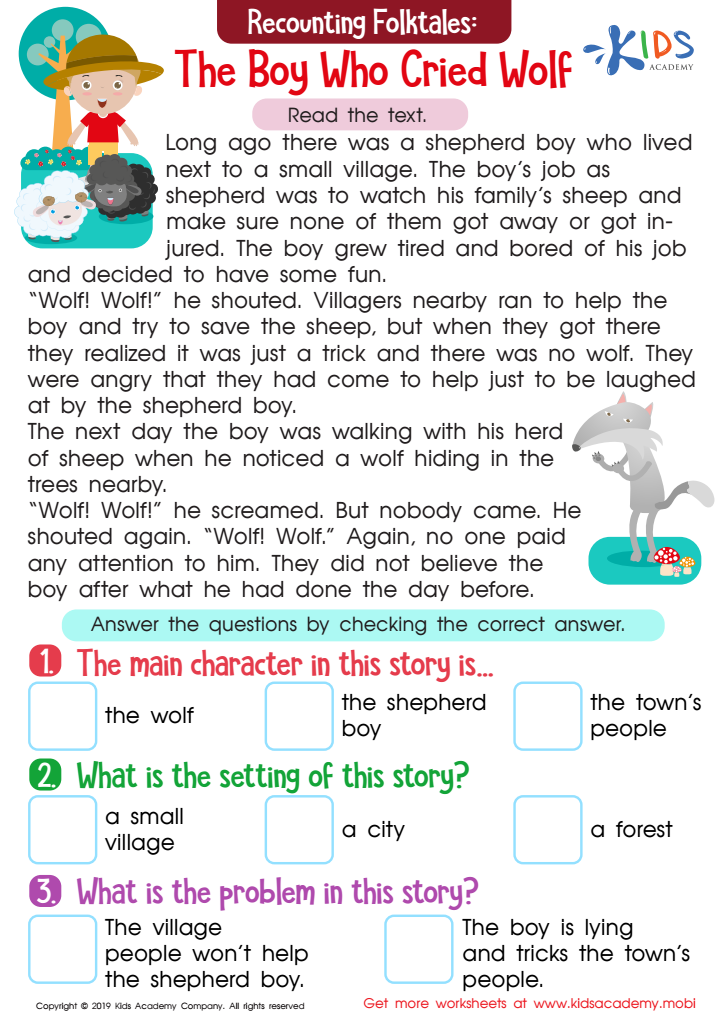
The Boy Who Cried Wolf Part 1 Worksheet




.jpg)

Moral understanding is crucial for children ages 4-9 as it lays the foundation for their interpersonal relationships, decision-making, and social behavior. During this developmental stage, children begin to distinguish between right and wrong, learn to empathize with others, and establish a sense of fairness. Parents and teachers play a vital role in nurturing this moral growth by providing guidance and modeling appropriate behaviors.
Supporting moral understanding fosters a sense of belonging and community among children. When they gain the skills to navigate social situations—such as sharing, cooperating, and resolving conflicts—they are more likely to cultivate positive relationships with peers. This ongoing social development enhances emotional intelligence, enabling them to better understand their feelings and those of others.
Encouraging discussions around moral dilemmas—whether at home or in classrooms—helps children engage critical thinking and develop their ethical reasoning. As they grapple with questions of justice and empathy, they learn to make thoughtful choices rather than follow impulsive reactions.
Overall, fostering moral understanding enhances not only a child's character but also contributes to a favorable classroom and home environment, promoting harmony and respect among all individuals involved.








