Syllable identification Normal Worksheets for Ages 4-9
7 filtered results
-
From - To
Discover our engaging Syllable Identification Worksheets ideal for children ages 4-9! These meticulously designed resources help young learners develop essential phonemic awareness skills. Through fun activities like counting and clapping syllables, kids will easily grasp the concept of syllables in words. Our worksheets feature vibrant illustrations and clear instructions, making learning enjoyable and effective. Perfect for home or classroom settings, these worksheets cater to diverse learning styles, ensuring every child can succeed. Boost your child’s reading skills with our comprehensive collection of syllable identification exercises. Visit us and explore the joy of learning through play today!
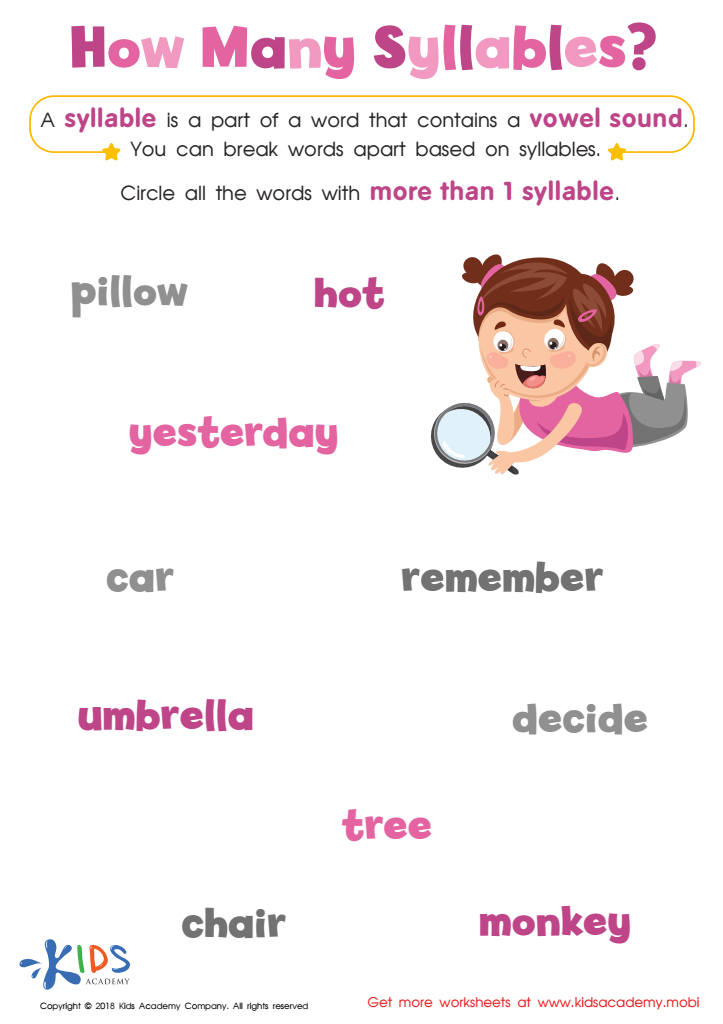
Reading: How Many Syllables Worksheet
 Assign to My Students
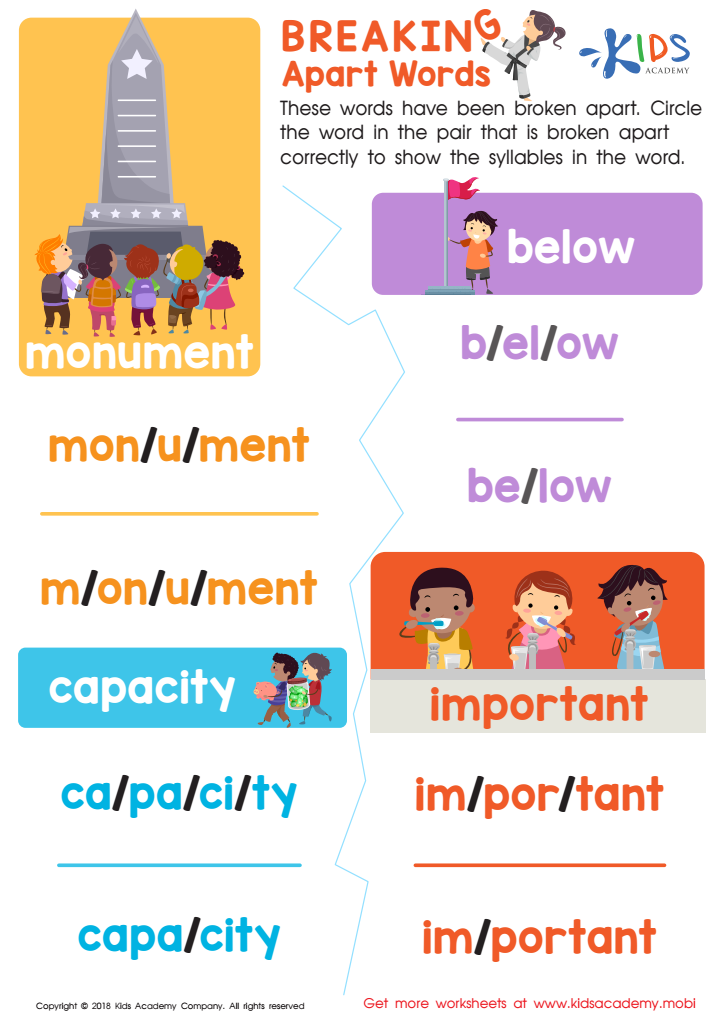
Breaking Apart Words Worksheet
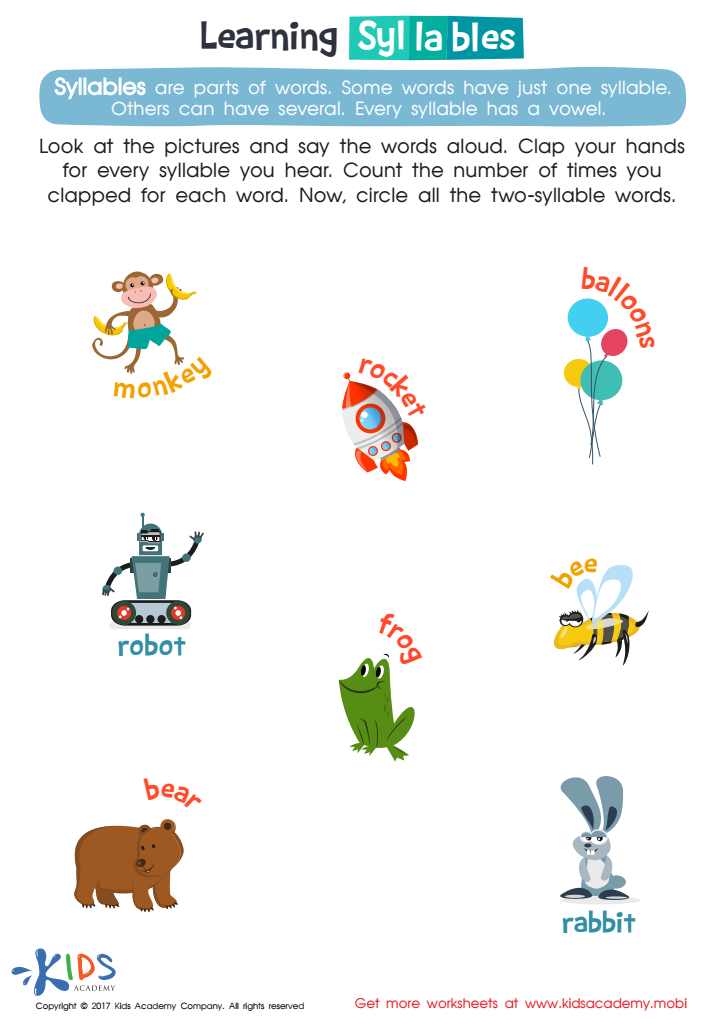
Learning Syllables Word Structure Worksheet
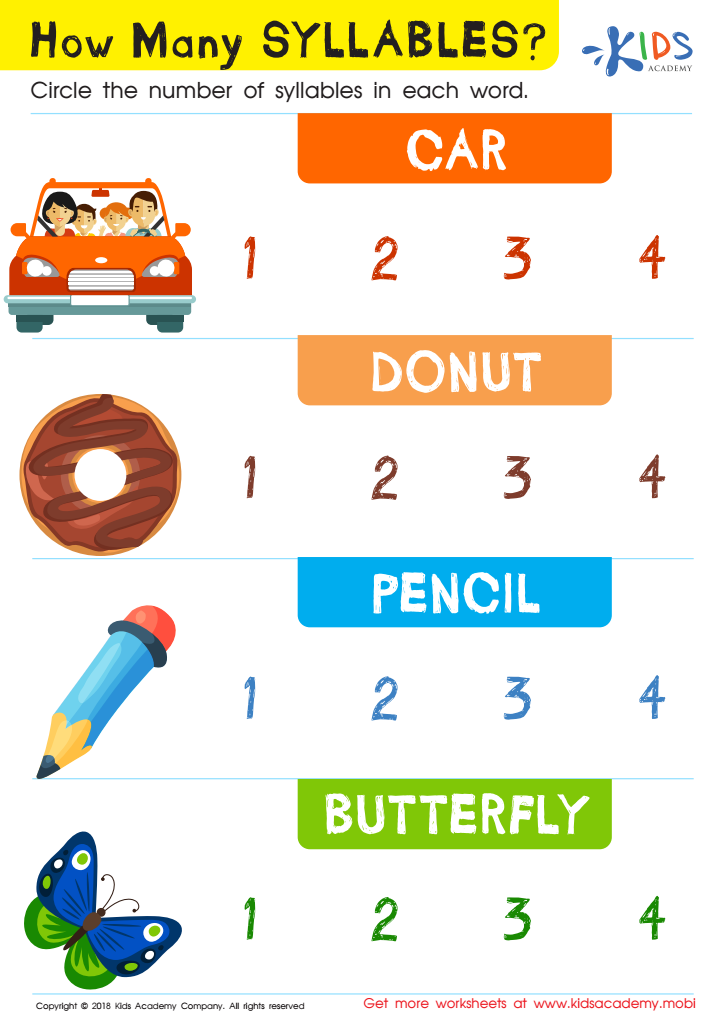
How Many Syllables? Worksheet
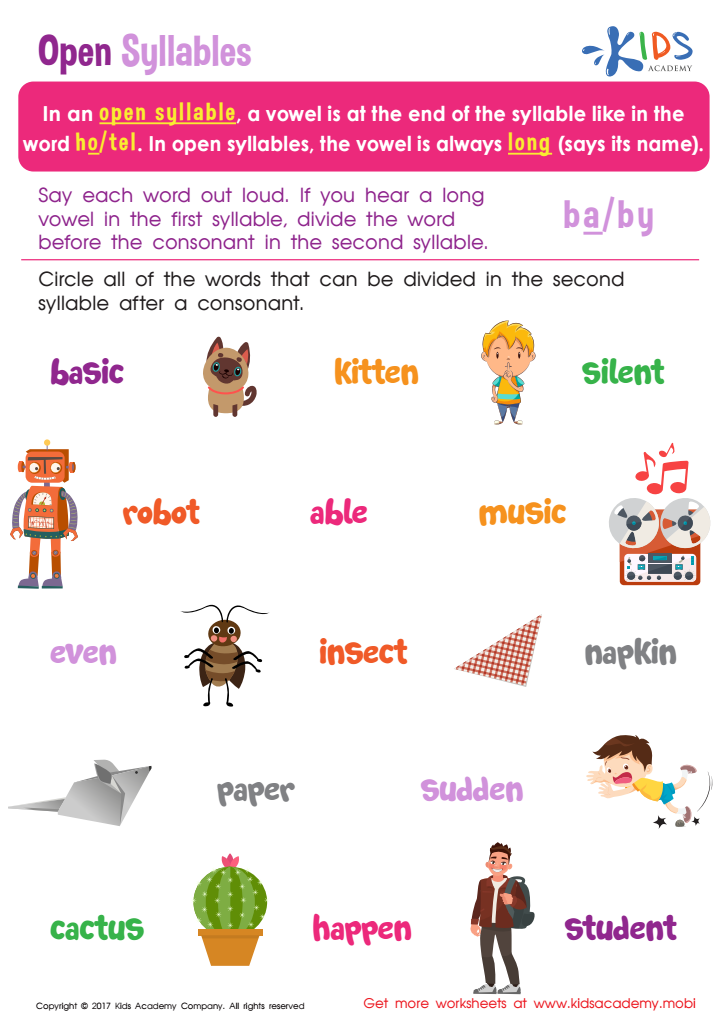
Open Syllable Printable Worksheet
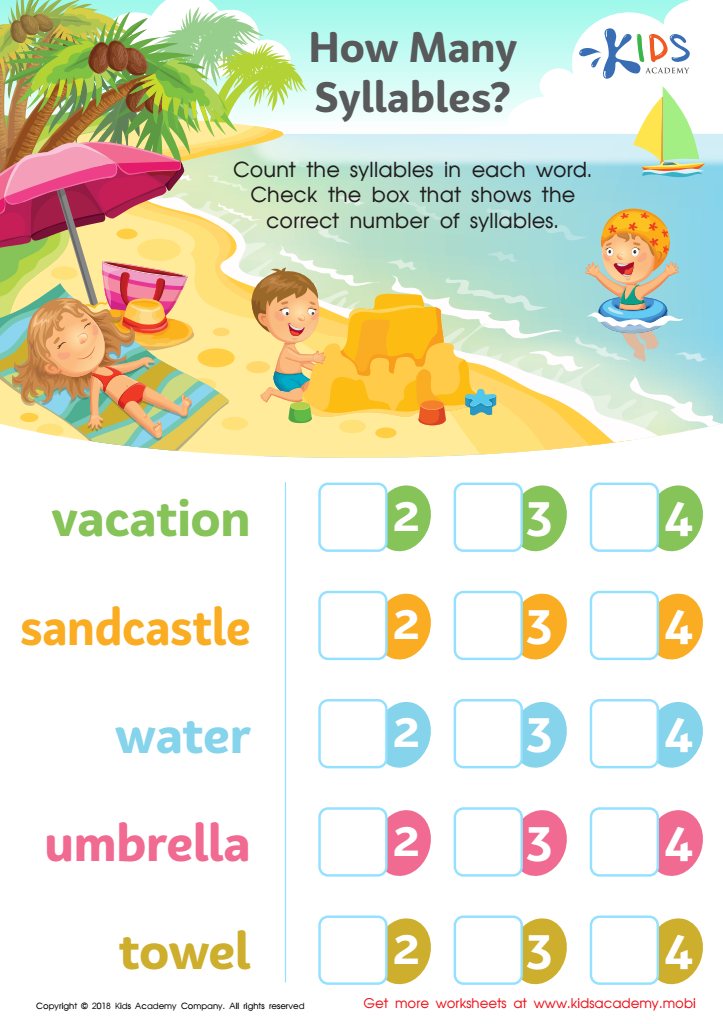
How Many Syllables Worksheet
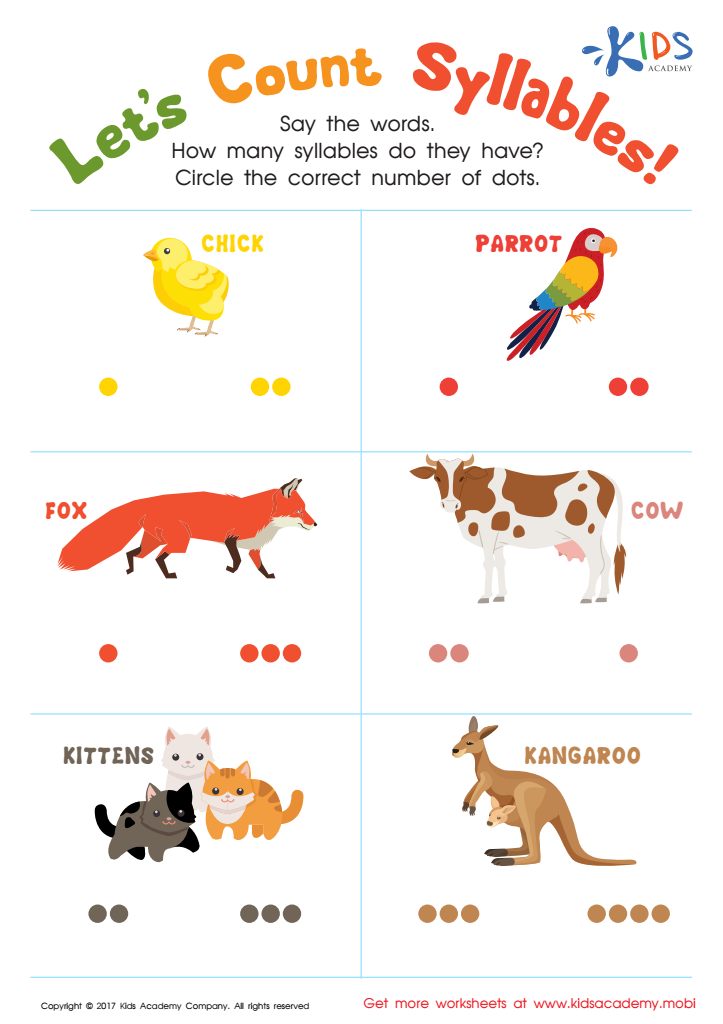
Lets Count Syllables Worksheet







Syllable identification is a critical foundational skill for children aged 4-9 that significantly influences their reading and writing abilities. As parents and teachers, recognizing the importance of this skill is essential for fostering literacy development. Syllables serve as building blocks of words, helping children understand how to segment and blend sounds effectively, which is vital for reading fluency and comprehension.
When children learn to identify syllables, they begin to grasp the rhythm and structure of language, aiding their pronunciation and spelling. This skill also enhances their ability to decode unfamiliar words, boosting confidence as they explore new texts. Parents and teachers can create engaging activities, like clapping or tapping for each syllable in a word, making learning fun and interactive.
Furthermore, mastering syllable identification supports vocabulary growth by encouraging children to experiment with word formation, leading to enhanced communication skills. In a supportive learning environment, children become active participants in their literacy journey, paving the way for academic success. Ultimately, investing time in syllable identification creates a solid linguistic foundation that empowers children, promotes a love for reading, and fosters lifelong learning. Helping children thrive in this area is a crucial responsibility for both parents and educators.








