Critical Thinking Normal Addition & Subtraction Worksheets for Ages 4-9
6 filtered results
-
From - To
Enhance your child's mathematical skills with our engaging Critical Thinking Normal Addition & Subtraction Worksheets, designed specifically for ages 4-9. These worksheets not only reinforce fundamental math concepts but also promote critical thinking by encouraging children to analyze, question, and solve problems in fun and interactive ways. With a variety of thoughtfully designed exercises, young learners will develop mastery in addition and subtraction while cultivating essential cognitive skills. Perfect for home or classroom use, our worksheets provide a supportive and enriching environment that fosters confidence and enjoyment in math. Download now to inspire and empower your little mathematicians!
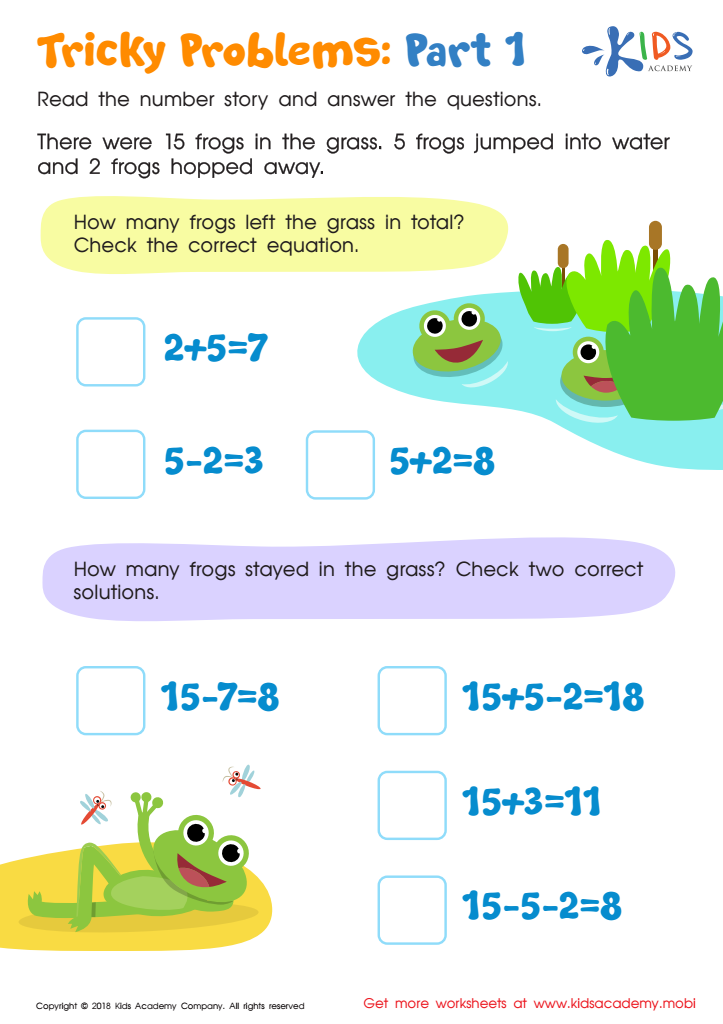
Tricky Problems Worksheet: Part 1
 Assign to My Students
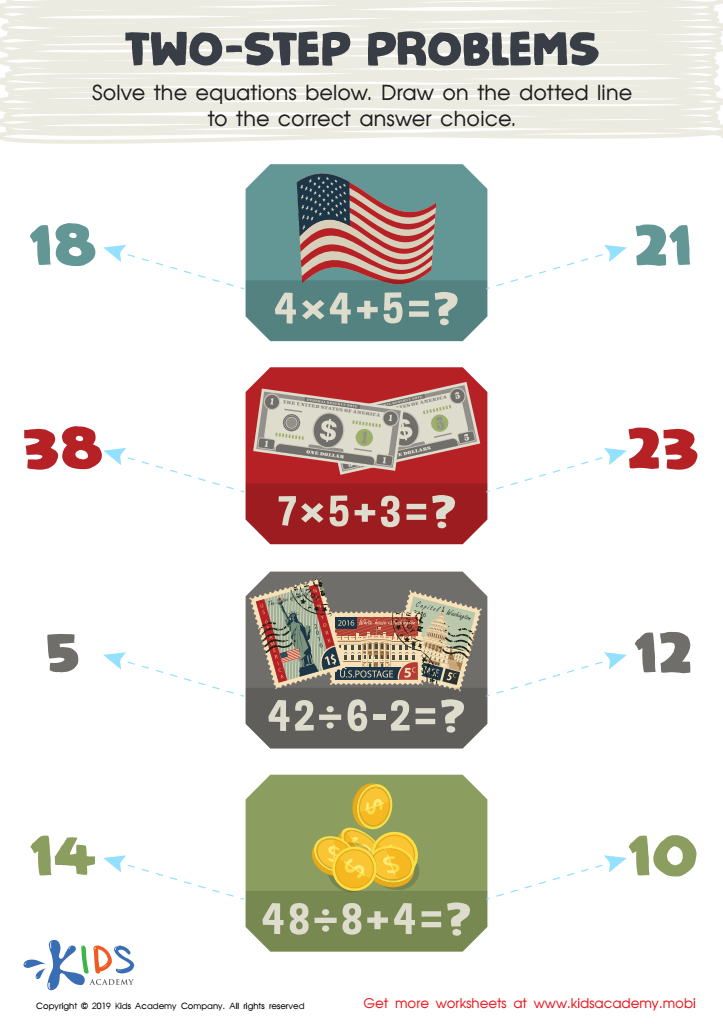
Two-Step Problems Worksheet
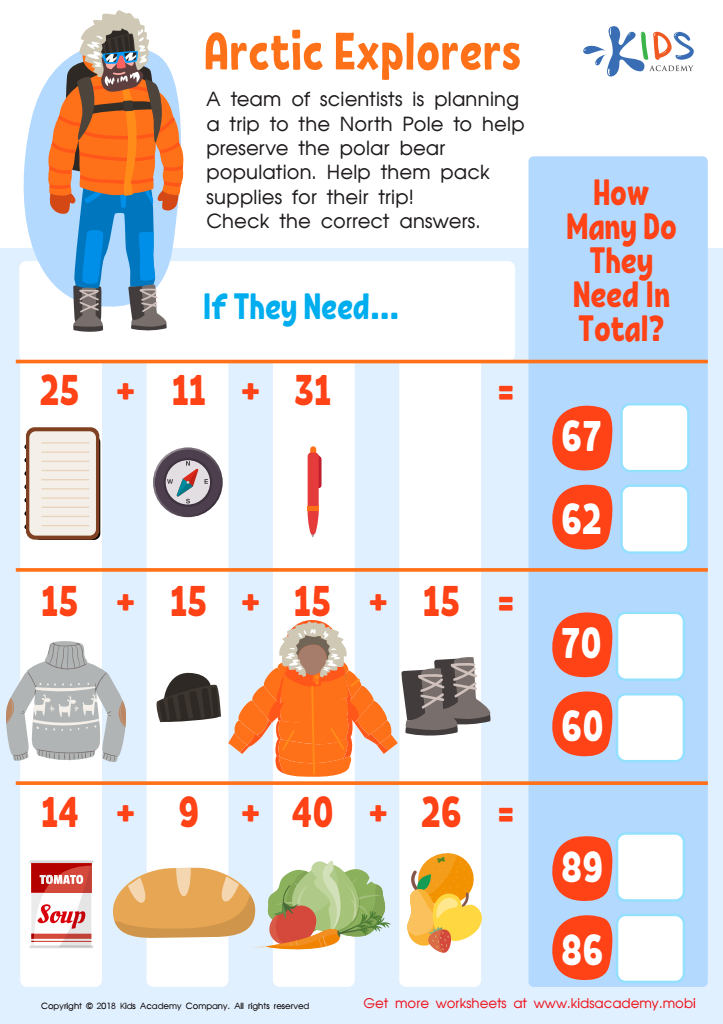
Arctic Explorers Worksheet
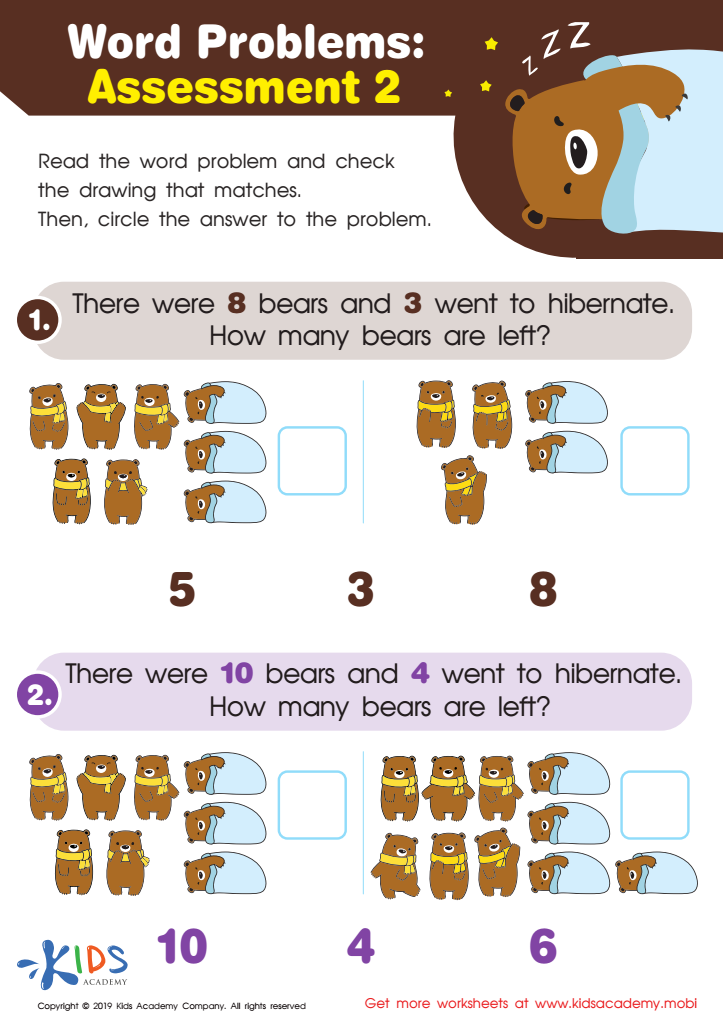
Word Problems: Assessment 2 Worksheet
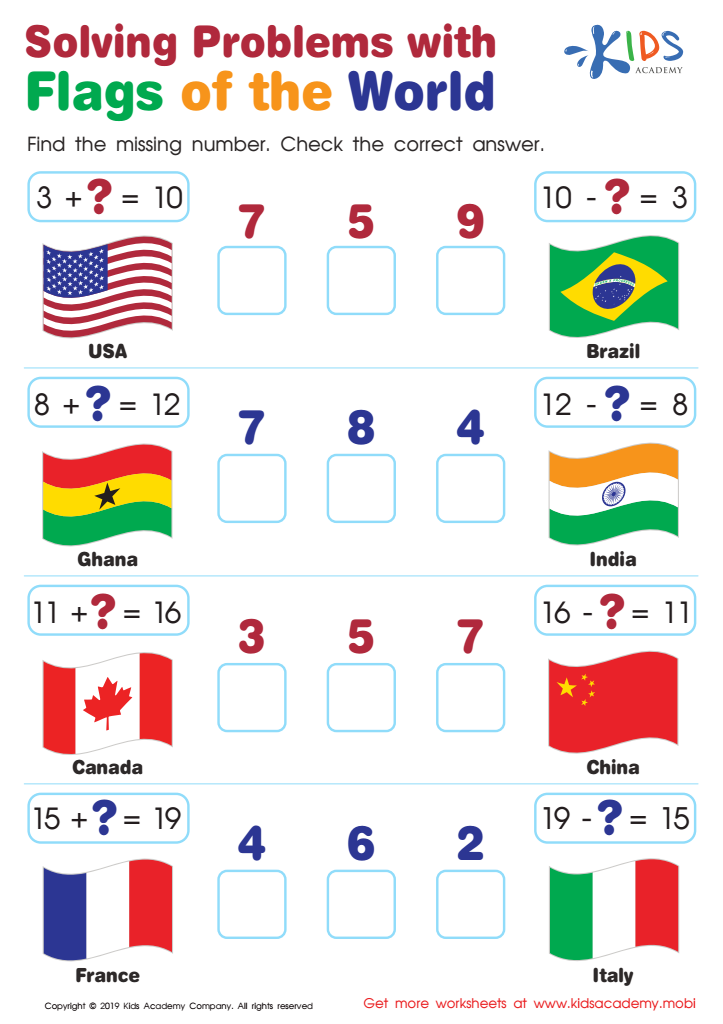
Solving Problems with Flags of the World Worksheet
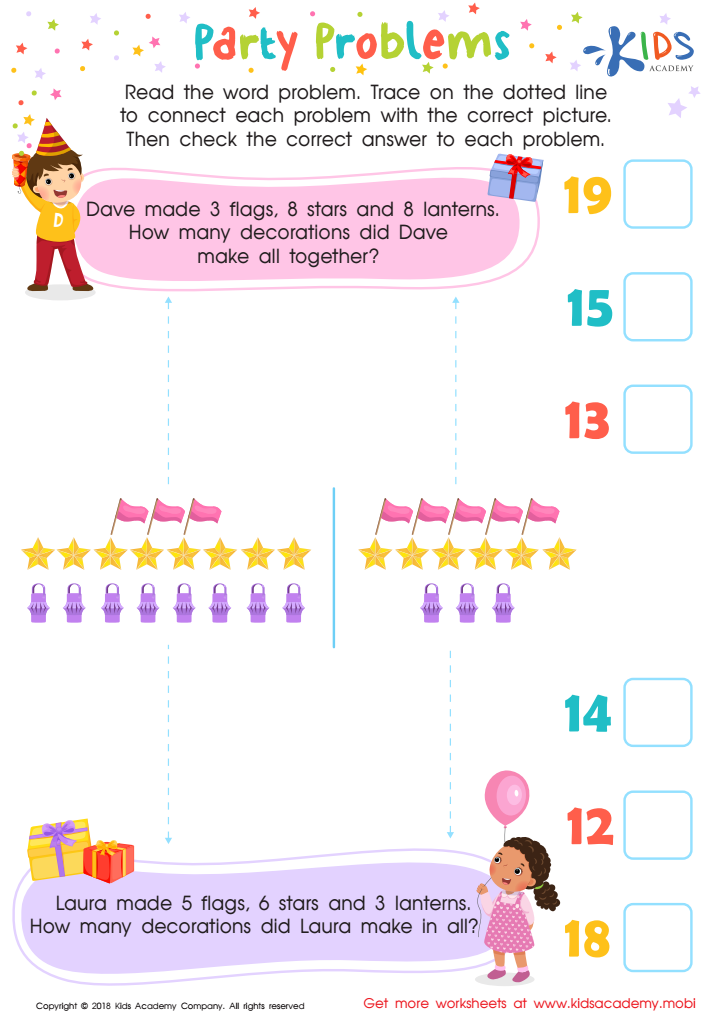
Party Problems Worksheet








Critical thinking in math, particularly in normal addition and subtraction, is vital for children aged 4-9 as it lays the foundation for their future academic success. During these formative years, children are attuned to developing essential skills that extend beyond basic computation. Critical thinking encourages them to understand concepts instead of rote memorization, fostering deeper engagement with mathematical principles.
Teaching children to critically approach addition and subtraction helps them solve problems creatively and effectively. For instance, instead of merely relying on counting, children learn to decipher patterns, make connections, and use logical reasoning to arrive at their answers. This nurtures their ability to think independently and tackle complex challenges as they progress in their education.
Moreover, critical thinking enhances children's confidence and motivation in learning. When students own their problem-solving processes, they feel more empowered and enthusiastic about math. This resilience developed through critical thinking skills contributes to a positive attitude toward learning and a lifelong love for mathematics.
Ultimately, supporting critical thinking in normal addition and subtraction equips children with the cognitive tools they need to thrive, not just in math but across all subjects, establishing a strong foundation for their future learning journeys.








