Understanding addition Normal Addition & Subtraction Worksheets for Ages 4-9
8 filtered results
-
From - To
Discover our "Understanding Addition" worksheets tailored for children ages 4-9, designed to build a solid foundation in basic math skills. These fun and engaging worksheets introduce young learners to essential addition and subtraction concepts through a variety of exercises and activities. Each worksheet is crafted to enhance understanding, boost confidence, and foster a love for math. Ideal for both classroom and home use, these printable resources can be easily incorporated into daily learning routines. Give your child the tools they need for math success with our expertly designed "Understanding Addition" worksheets.
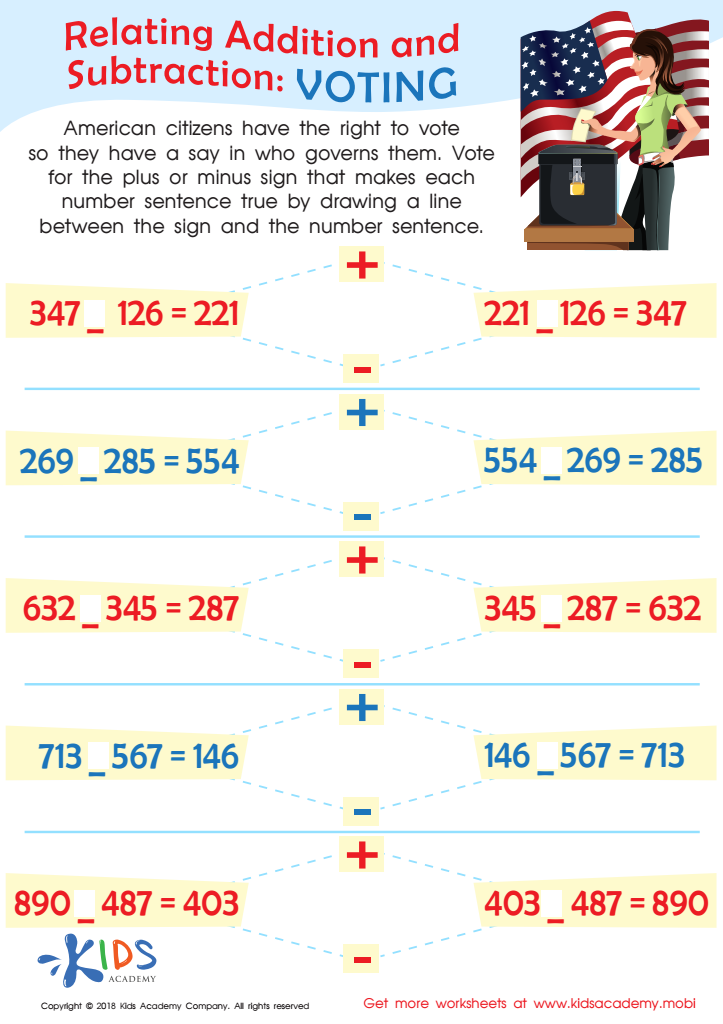
Voting Worksheet
 Assign to My Students
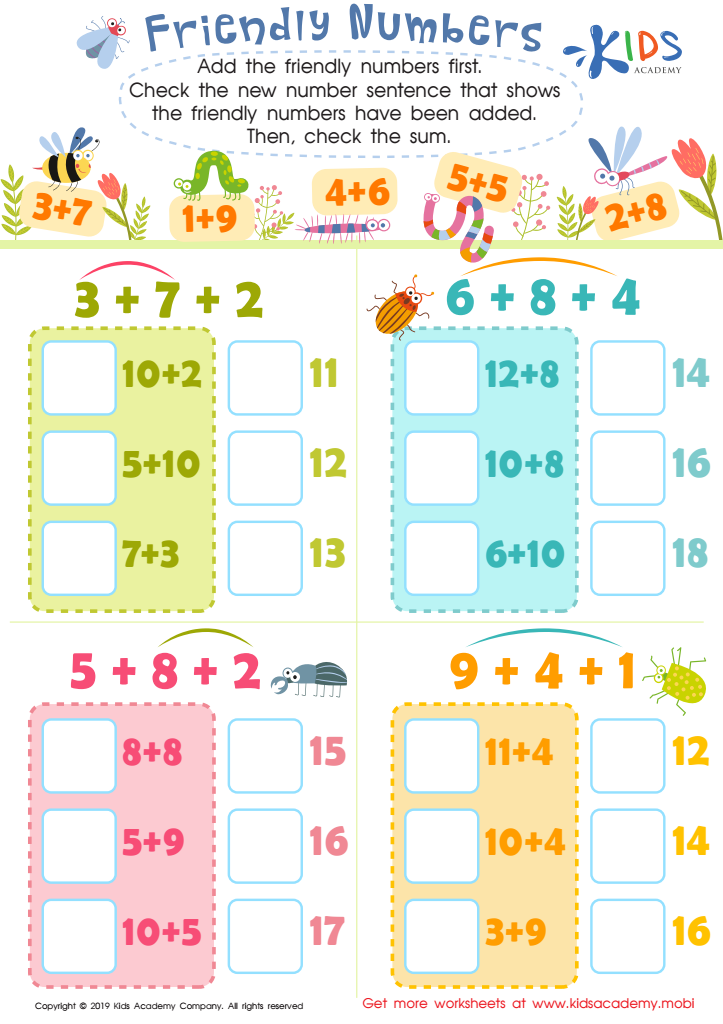
Friendly Numbers Worksheet
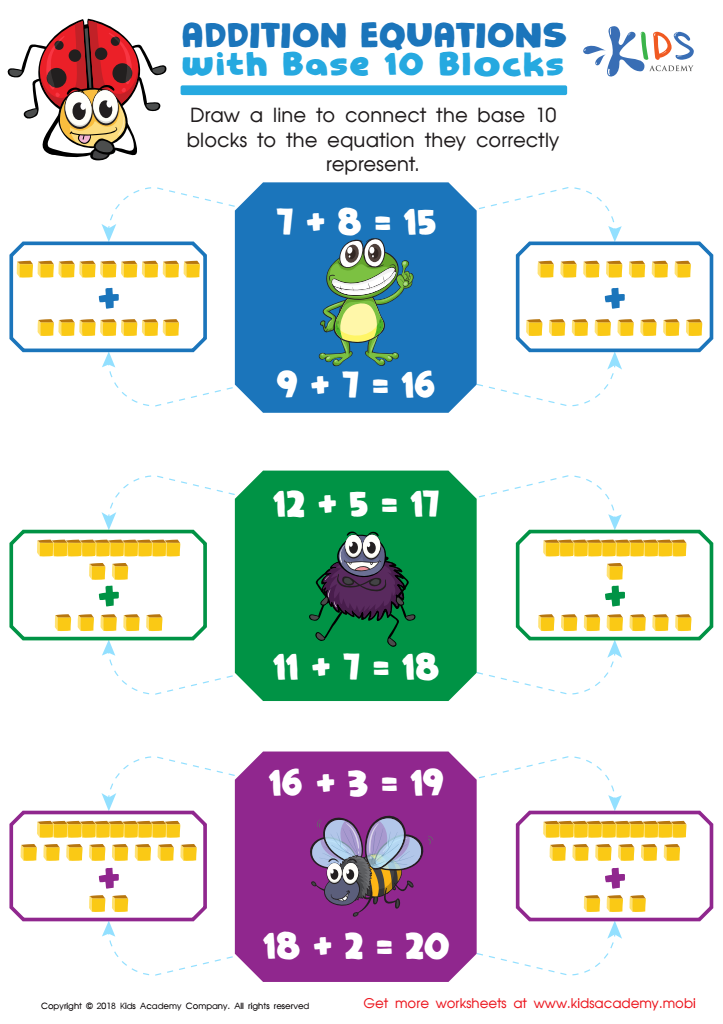
Addition Equations With Base 10 Blocks Worksheet
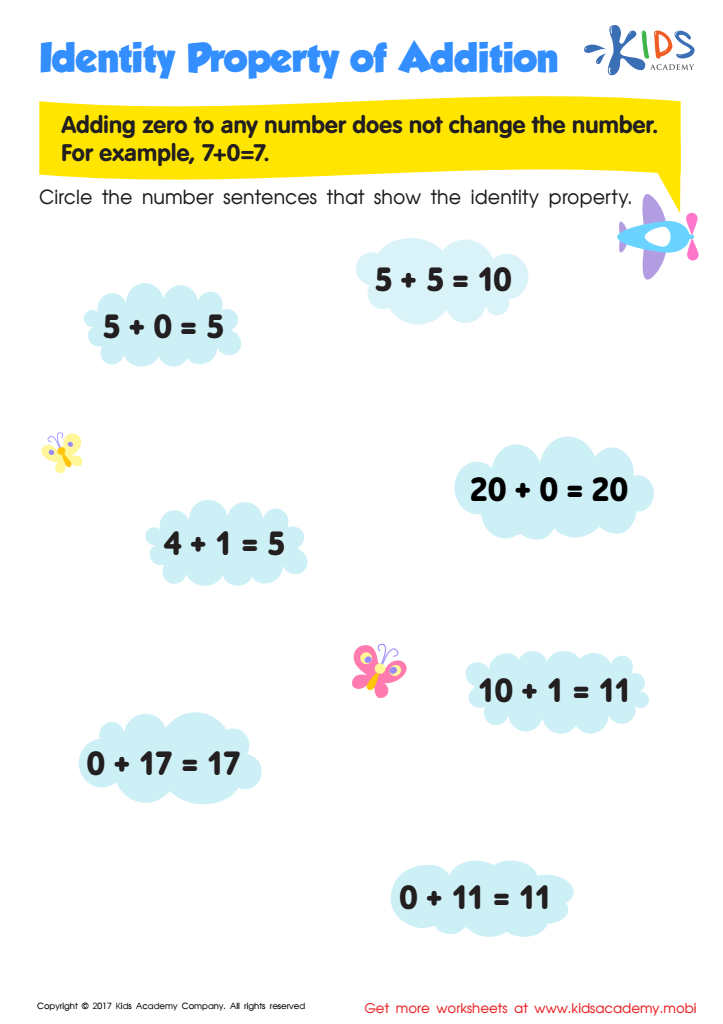
Identity Property of Addition Worksheet
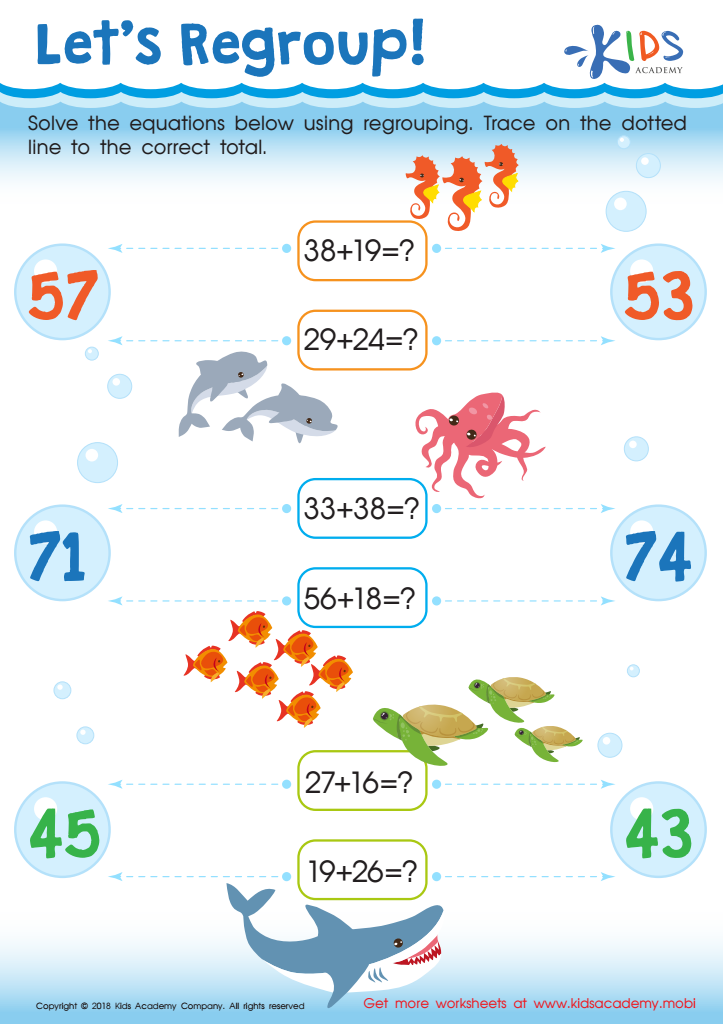
Let's Regroup! Worksheet
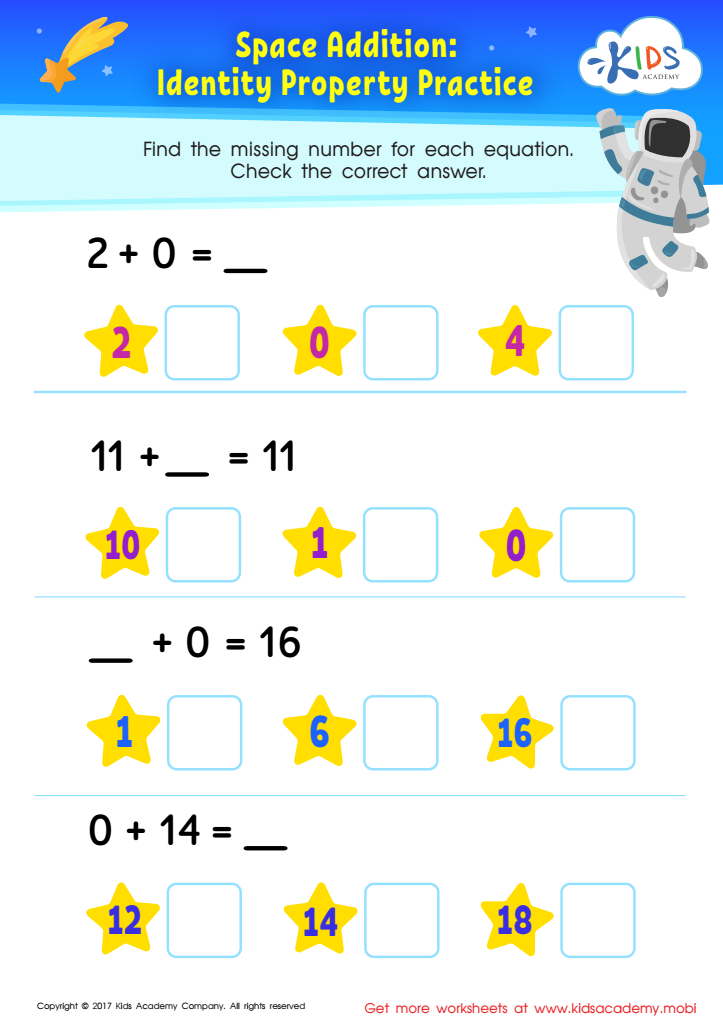
Space Addition: Identity Property Practice Worksheet
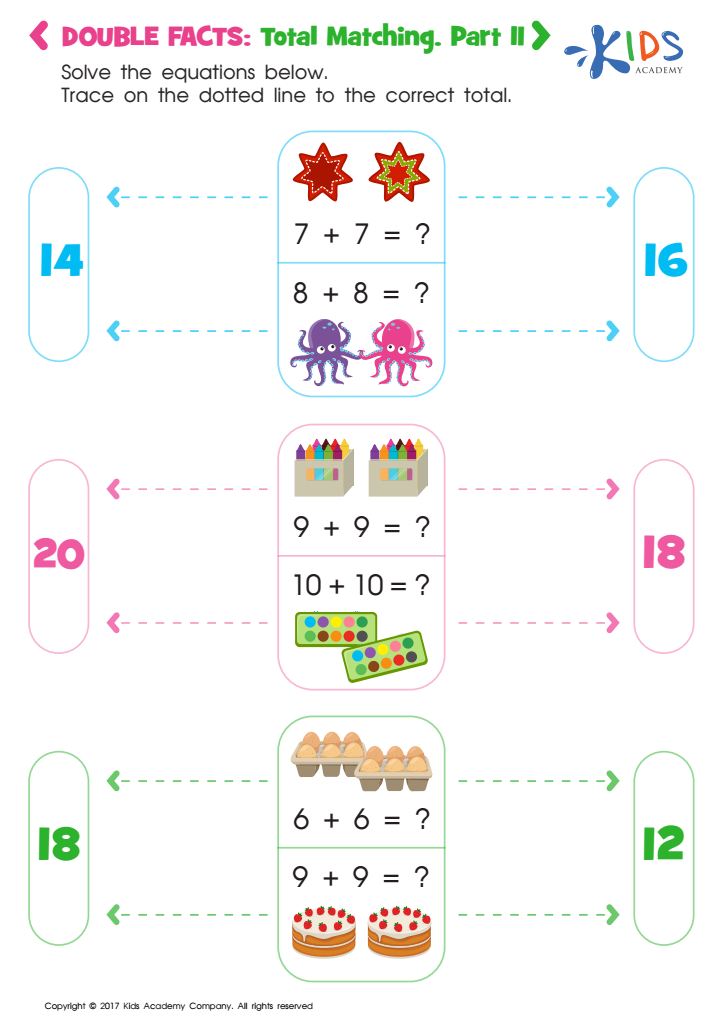
Double Facts: Total Matching 2 Worksheet
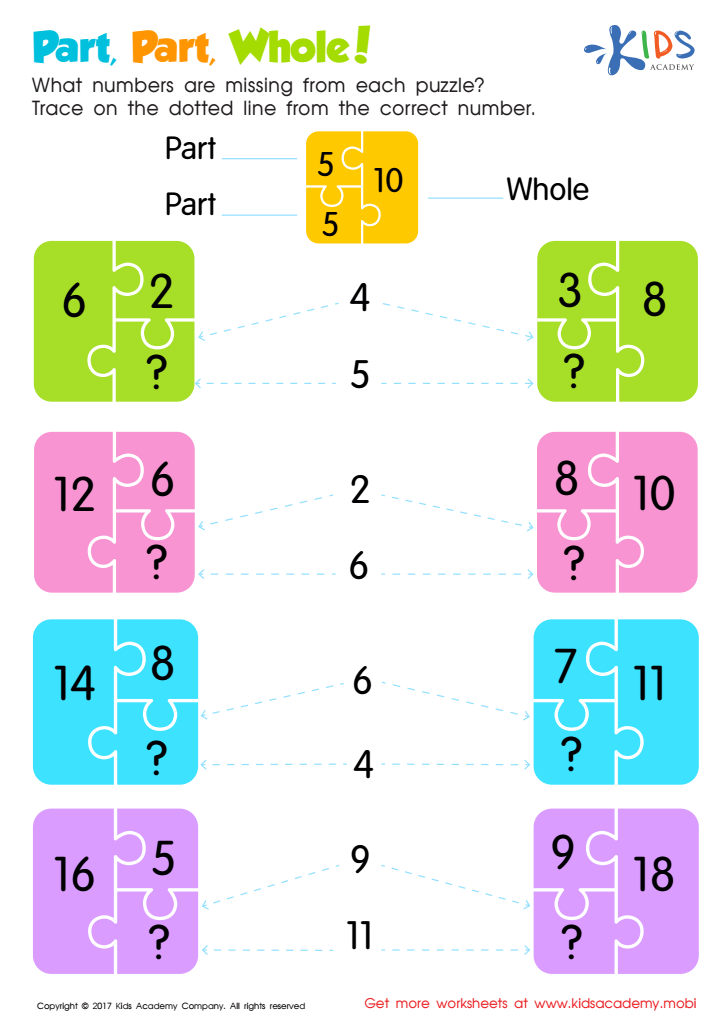
Part, Part, Whole Worksheet








Parents and teachers should prioritize understanding normal addition and subtraction for children aged 4-9 to lay a crucial foundation for their future mathematical development and problem-solving abilities. At this formative stage, children develop core cognitive skills that underpin all advanced mathematical concepts. Grasping the basic principles of addition and subtraction enhances their numeracy, an essential life skill for real-world applications like shopping, cooking, and managing time.
Early comprehension of these basic operations fosters confidence and enthusiasm in young learners. This enthusiasm can set a lifelong positive attitude toward mathematics and analytical thinking. Moreover, early success in these concepts can be a motivating factor, encouraging children to approach more complex mathematical concepts with eagerness and resilience.
Additionally, mastery of addition and subtraction integrates into more extensive educational curriculum strands, including place value comprehension, pattern recognition, and spatial awareness. When children practice addition and subtraction regularly, these activities stimulate brain regions involved in reasoning and logical thought, which are crucial for academic progress in all subjects.
Caring about and supporting this aspect of a child's education involves engaging them in fun, interactive activities, such as games and practical applications, reinforcing their learning in a relatable and meaningful context. Investing time and resources in teaching these essential skills nurtures independent, confident, and adept young learners ready to tackle more challenging mathematical problems.








