Problem-solving practice Normal Addition Worksheets for Ages 4-9
3 filtered results
-
From - To
Discover our engaging "Problem-Solving Practice Normal Addition Worksheets" tailored for children aged 4-9. These worksheets are designed to enhance young learners' mathematical skills through fun, interactive problems that promote critical thinking and creativity. Each worksheet presents a variety of scenarios that challenge students to apply their addition knowledge in practical situations, fostering a deeper understanding of math concepts. Ideal for classroom use or at-home practice, these resources empower children to build confidence in problem-solving while developing essential math skills. Download today and watch your child's math abilities flourish with our easy-to-use, visually stimulating worksheets!
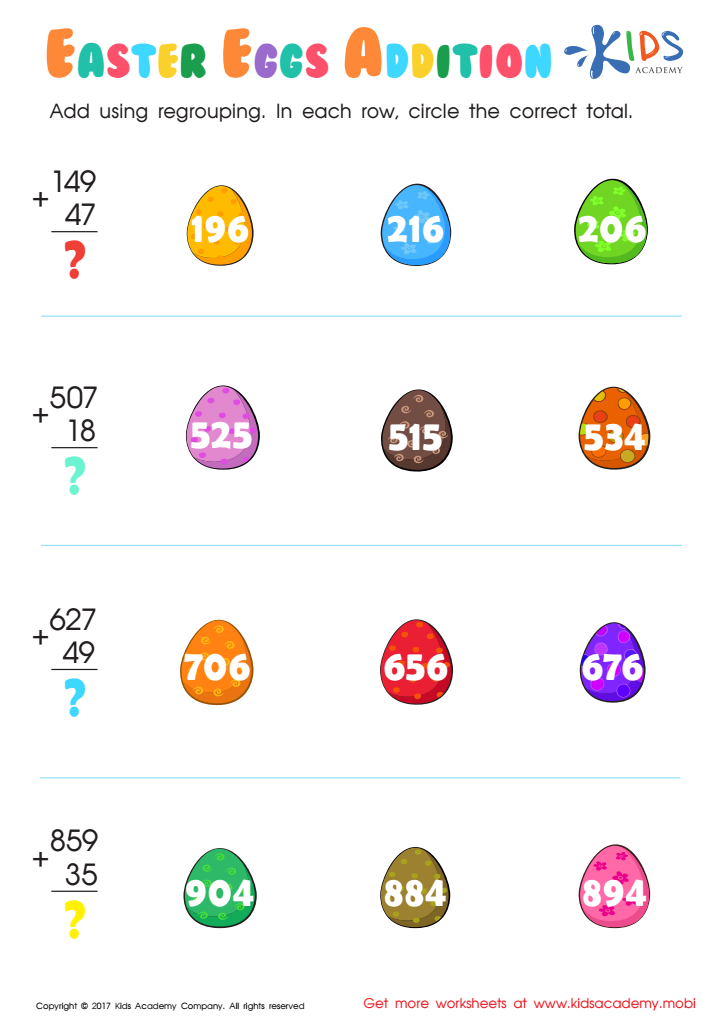
Addition with Regrouping Worksheet
 Assign to My Students
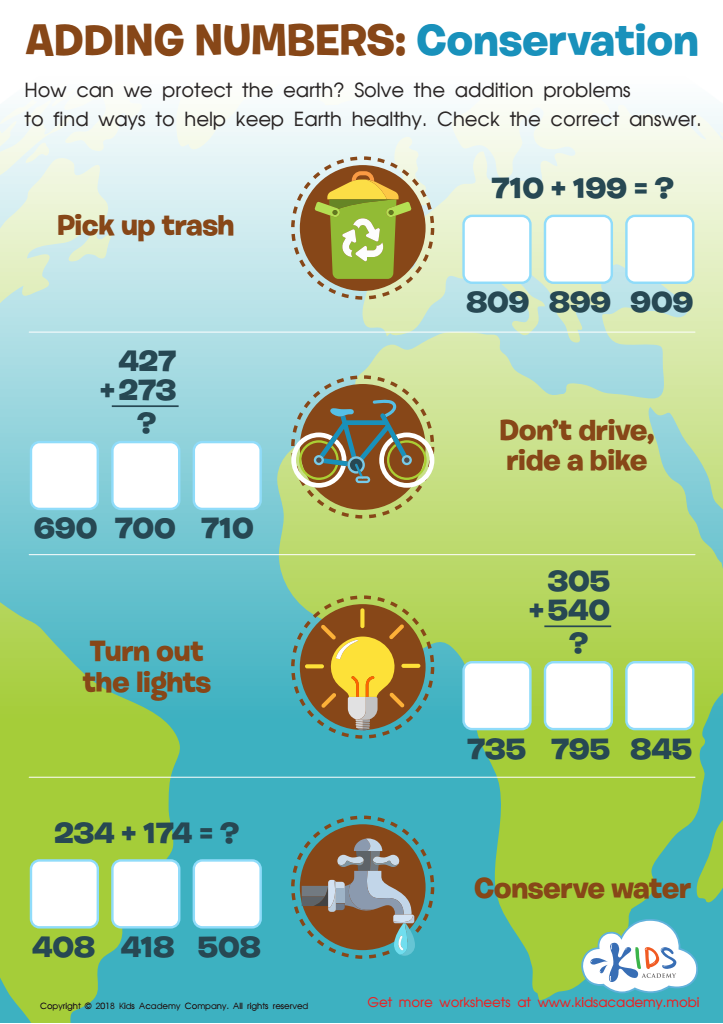
Adding Numbers: Conservation Worksheet
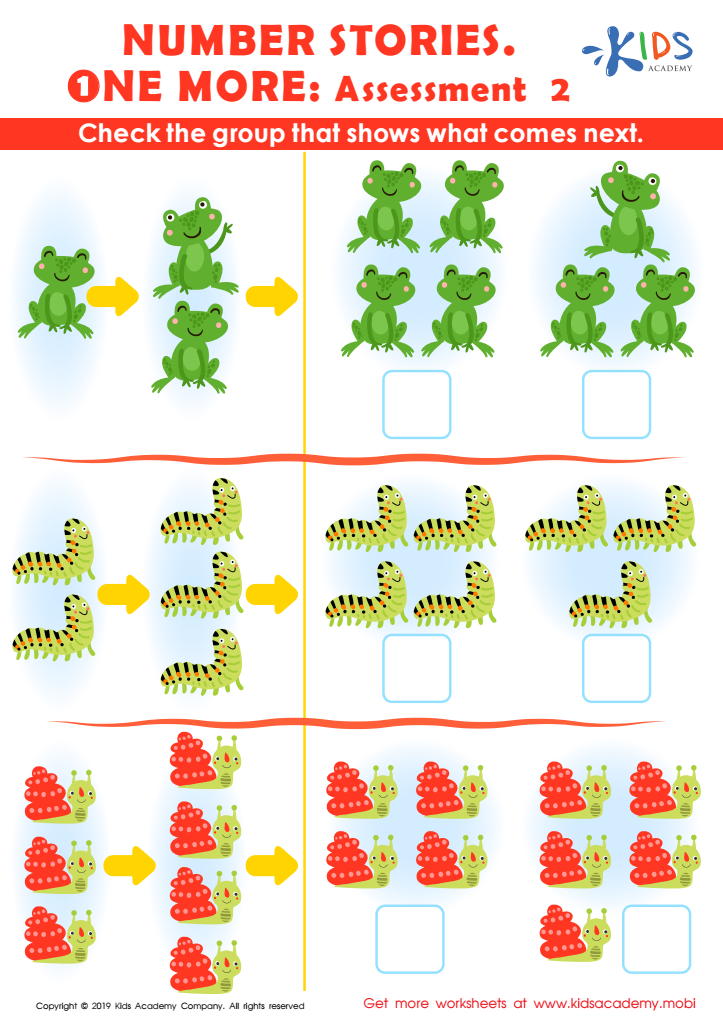
Number Stories One More – Assessment 2 Worksheet








Problem-solving practice, specifically in normal addition, is crucial for children ages 4-9 due to its foundational role in their mathematical development. At this age, children are developing cognitive skills and learning to apply their knowledge to real-world situations. Understanding addition is not just about numbers; it's about mastering the concept of combining quantities and recognizing patterns, which are key skills they will use throughout their education.
Parents and teachers should care because effective problem-solving strategies foster critical thinking and analytical skills. When children learn to approach addition problems through various methods—such as using objects, drawings, or verbal reasoning—they develop resilience and confidence in tackling challenges. This process encourages a growth mindset, making them more willing to attempt complex tasks as they progress in school.
Additionally, mastering normal addition early helps children excel in future math concepts, making advanced topics less daunting. When parents and teachers prioritize problem-solving practice, they empower children not only to succeed academically but also to cultivate a love for learning. Engaging learners during these formative years lays a strong foundation for their mathematical abilities and overall intellectual development, enabling them to navigate a world increasingly defined by quantitative information.