Understanding addition Normal Addition Worksheets for Ages 4-9
3 filtered results
-
From - To
Discover engaging and effective ways to introduce addition to children aged 4-9 with our "Understanding Addition" worksheets. These thoughtfully designed activities allow young learners to grasp the basics of addition through fun, hands-on practice. Our worksheets feature bright visuals and relatable scenarios to keep kids captivated while reinforcing critical math skills. Step-by-step exercises build confidence and promote a deep understanding of combining numbers, preparing children for more advanced concepts. Ideal for parents, teachers, and tutors, our addition worksheets support varied learning styles and set the foundation for academic success in mathematics. Empower your child's math journey today!
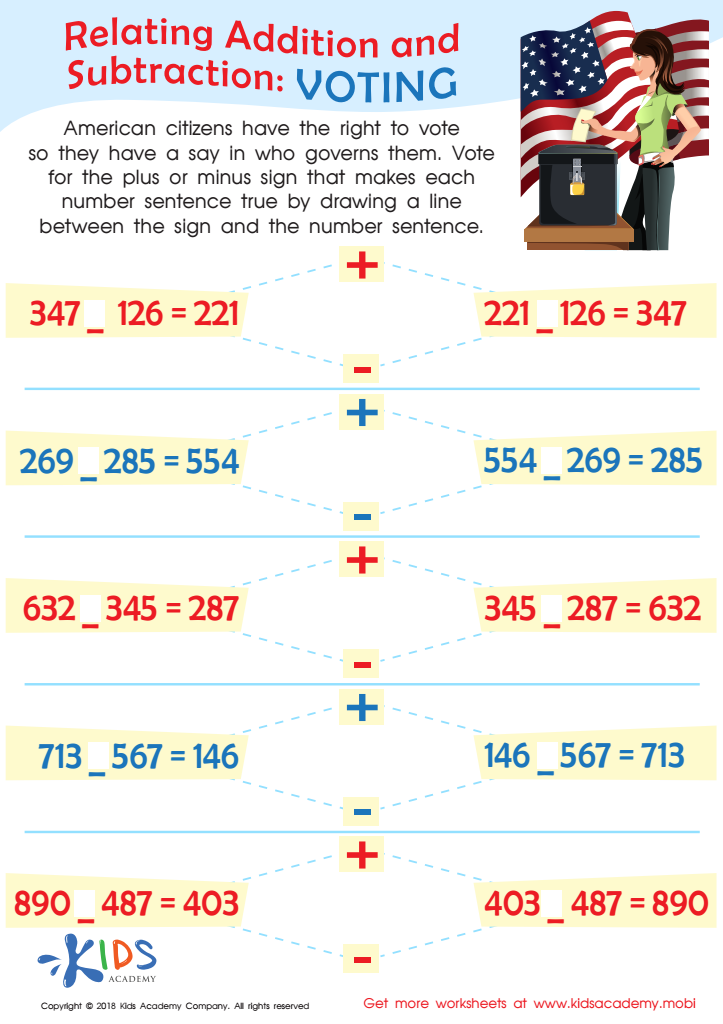
Voting Worksheet
 Assign to My Students
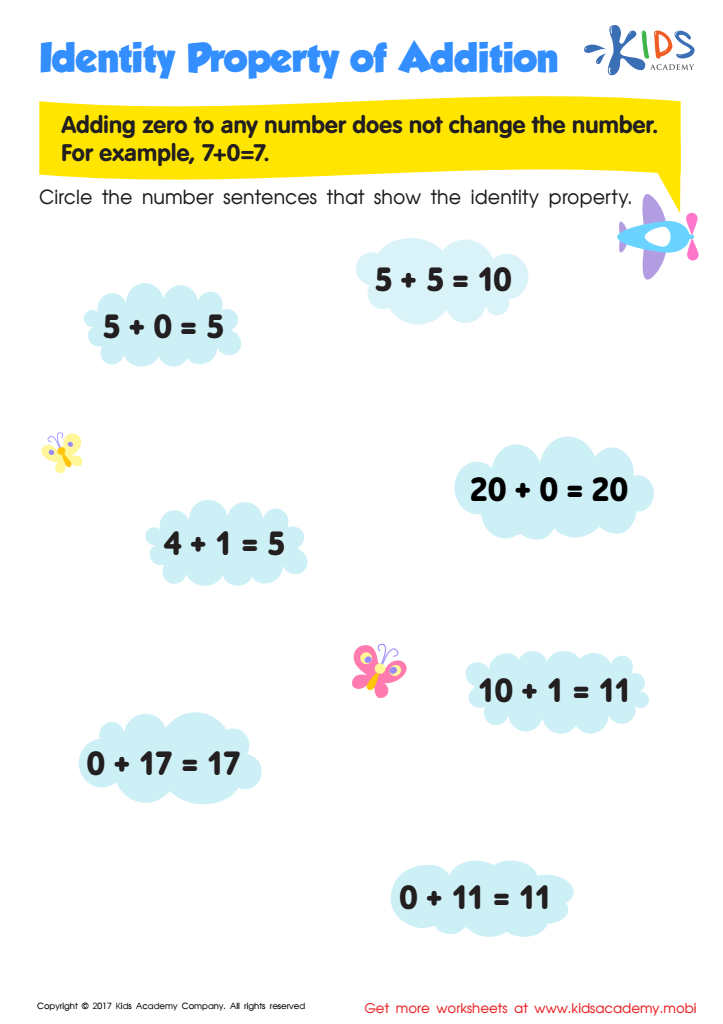
Identity Property of Addition Worksheet
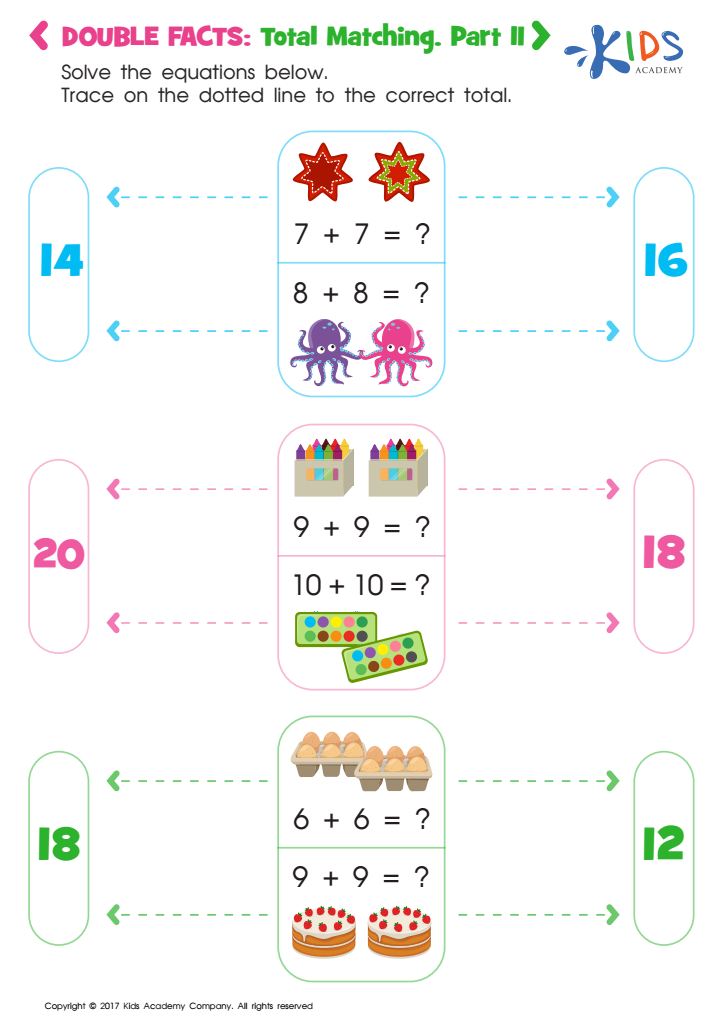
Double Facts: Total Matching 2 Worksheet








Understanding addition in early childhood lays the foundation for future academic success, making it crucial for parents and teachers to care about this fundamental math skill. For children ages 4-9, mastering addition doesn't just improve their math abilities; it enhances critical thinking, problem-solving, and logical reasoning that are essential for overall intellectual development.
At this age, children are naturally curious and ready to absorb new concepts. Introducing them to addition helps them grasp the idea of combining quantities, a skill they will use daily, both at school and in real-life situations like sharing toys, understanding time, or even during shopping trips.
Moreover, early competence in addition builds confidence in children. When they realize they can solve problems independently, it boosts their self-esteem and encourages a positive attitude toward learning. This enthusiasm for learning can transfer to other subjects and create well-rounded, eager students.
For teachers and parents, fostering a solid understanding of addition through engaging, age-appropriate activities ensures that children will feel less intimidated by more complex math concepts in the future. Providing a strong mathematical foundation helps prevent learning gaps that can impede academic progress later on. In summary, investing time and effort into teaching addition to young children sets them on a path toward long-term educational and personal achievement.