Counting skills Normal Geometry Worksheets for Ages 4-9
6 filtered results
-
From - To
Unlock your child’s potential with our Counting Skills and Normal Geometry Worksheets designed for ages 4 to 9. These engaging worksheets help young learners build essential math foundations through fun, interactive exercises. Children will enhance their counting abilities while exploring basic geometric shapes, fostering a deep understanding of numbers and spatial relationships. Our worksheets are tailored to different skill levels, ensuring every child can grow at their own pace. Perfect for classrooms or at-home learning, our resources make counting and geometry captivating. Start your child’s learning journey today, and watch them thrive in math with our proven educational tools!
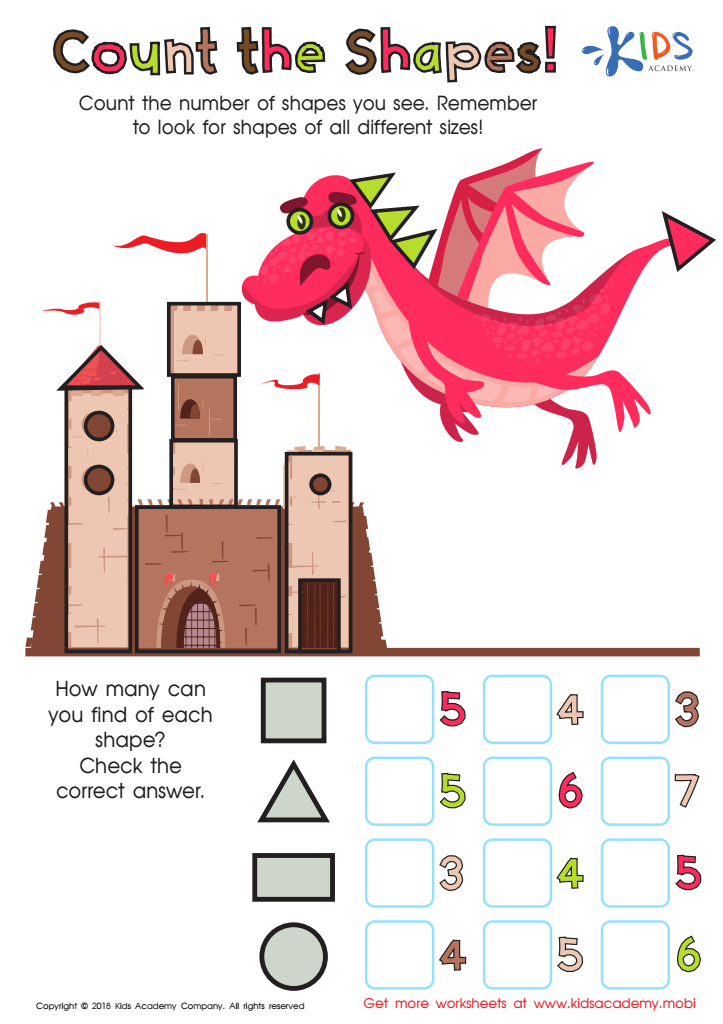
Count the Shapes Worksheet
 Assign to My Students











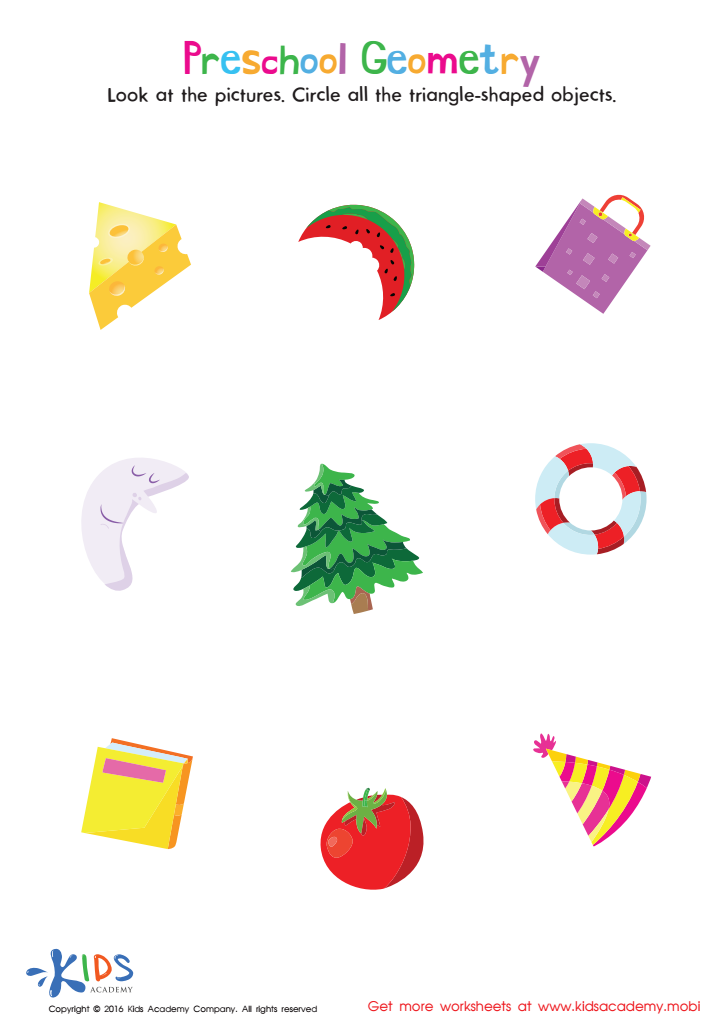
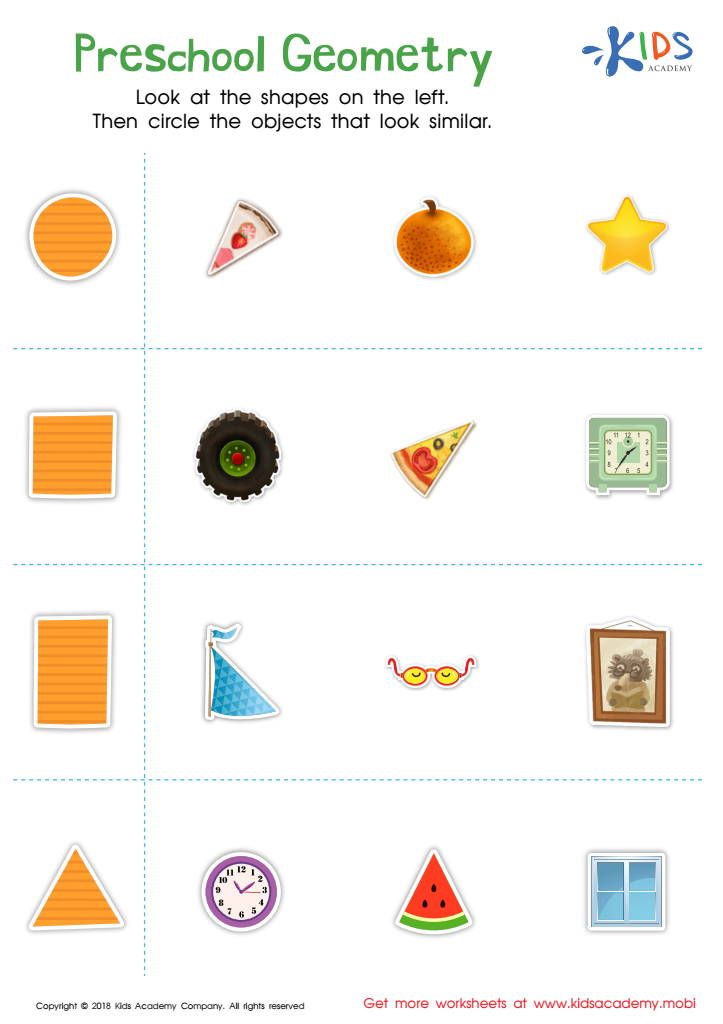
Preschool Geometry Worksheet
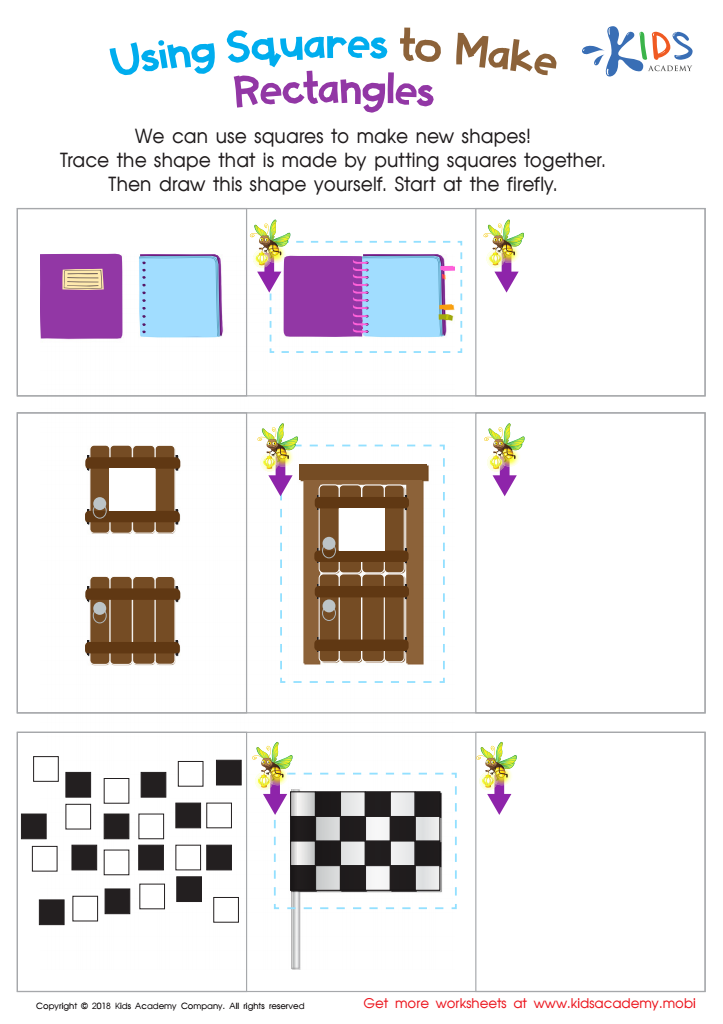
Using Squares to Make Rectangles Worksheet
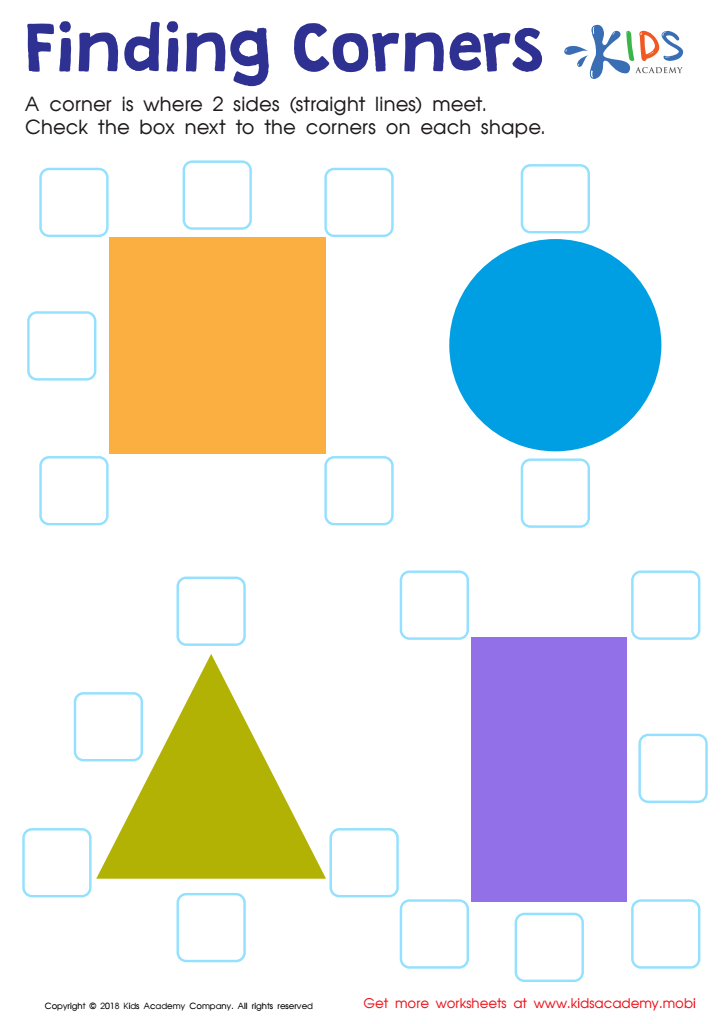
Finding Corners Worksheet
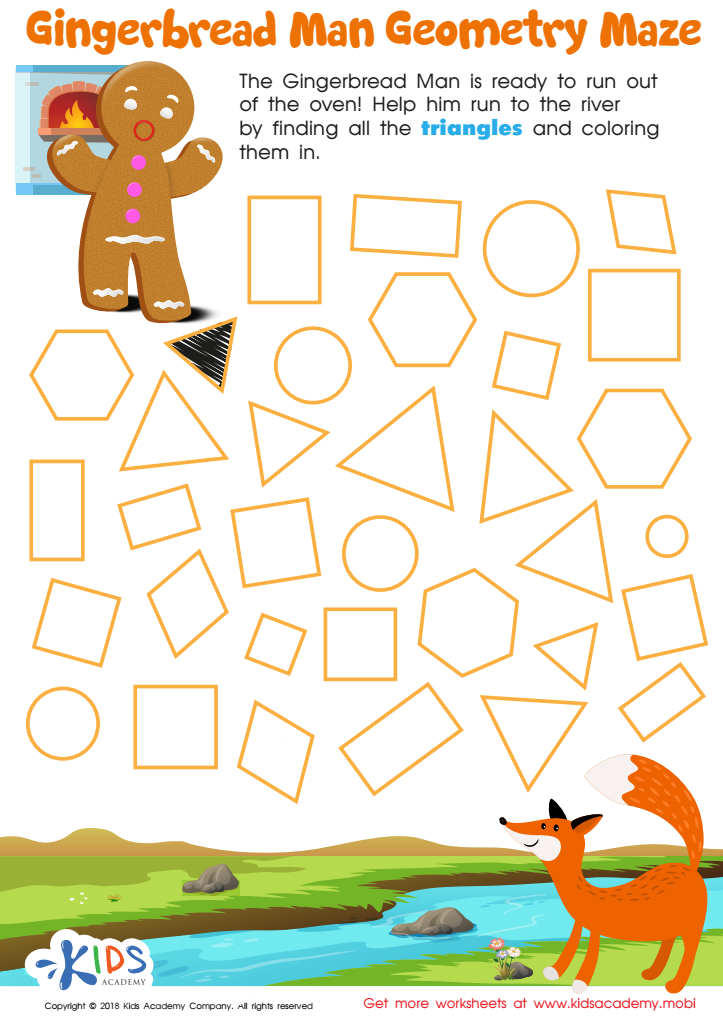
Gingerbread Man Geometry Maze Worksheet








Counting skills and basic geometry are essential foundational skills for children ages 4-9, and both parents and teachers should prioritize their development. Counting serves as the basis for numerical literacy, which is crucial for everyday tasks, problem-solving, and advanced math understanding in later years. As children learn to count, they also develop skills in number recognition, one-to-one correspondence, and an understanding of quantity, all of which are vital for academic success.
On the other hand, normal geometry introduces children to spatial awareness and shapes, fostering their ability to identify, describe, and categorize objects in their environment. This understanding is not only important in mathematics but also enhances critical thinking and creativity as children learn to visualize and manipulate shapes and spaces.
Moreover, mastering counting skills and basic geometry at a young age lays the groundwork for future learning in more complex mathematical concepts, which become increasingly important in higher grades. Parents and teachers play a key role in engaging children with fun, interactive activities, games, and puzzles that incorporate these skills, making learning both enjoyable and impactful. Early investment in these skills ensures children are well-prepared for academic challenges, enhancing their confidence and fostering a lifelong appreciation for mathematics.








