
Matching skills Normal Geometry Worksheets for Ages 4-9
3 filtered results
Difficulty Level
Grade
Age
-
From - To
Subject
Activity
Standards
Enhance your child's learning journey with our engaging Matching Skills Normal Geometry Worksheets, designed specifically for ages 4-9! These worksheets help young learners develop geometric recognition and matching abilities, promoting essential math skills in a fun and interactive way. Perfect for home or classroom use, our colorful and visually appealing activities capture children's attention while encouraging critical thinking and problem-solving. With a variety of exercises, from matching shapes to identifying patterns, your child will build a solid foundation in geometry. Start exploring our collection today to support your child's educational growth and confidence in math!
Favorites
With answer key
Interactive
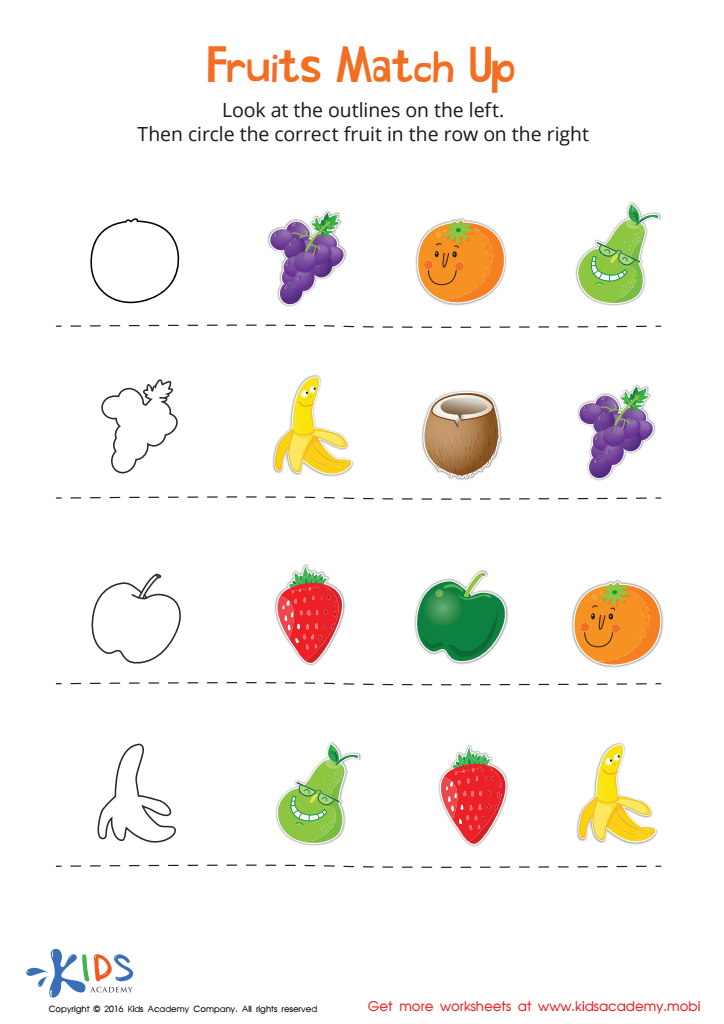
Fruits Match Up Worksheet
Motivate your child to count and sharpen their spatial reasoning skills with this vivid fruit worksheet.
 Assign to My Students
Fruits Match Up Worksheet
Worksheet











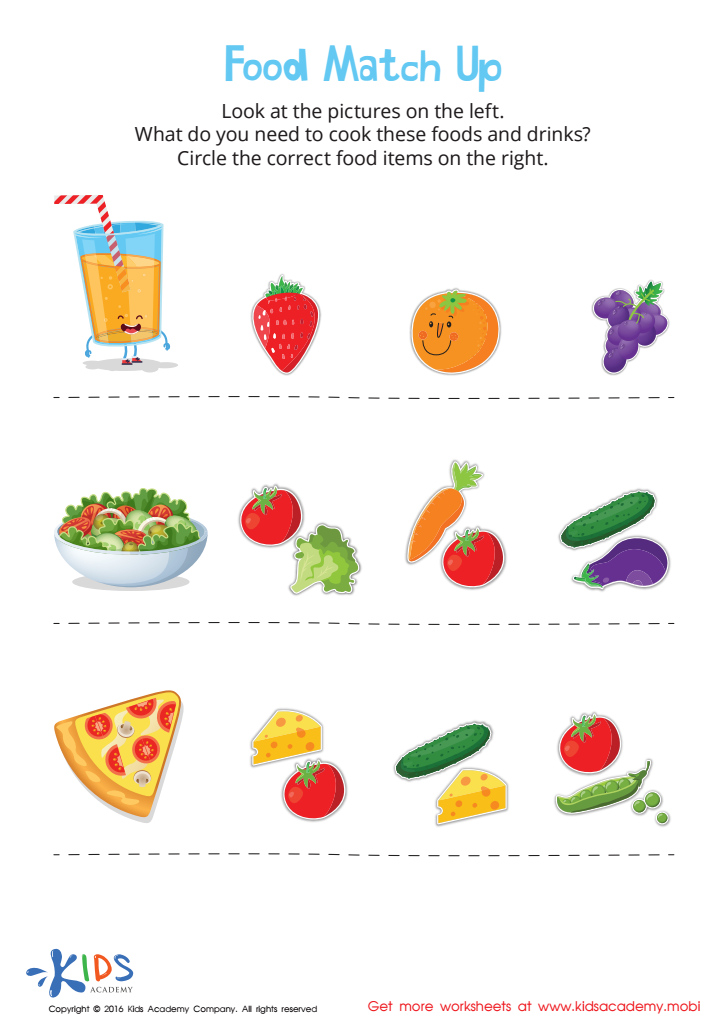
Food Match Up Worksheet
This worksheet will help your preschooler develop early math and cognitive skills. It challenges them to pay attention to details, understand how smaller parts make a whole, and increase important matching skills. Use it to give them a hands-on learning experience in the kitchen, and watch them understand how ingredients come together to make something delicious!
Food Match Up Worksheet
Worksheet
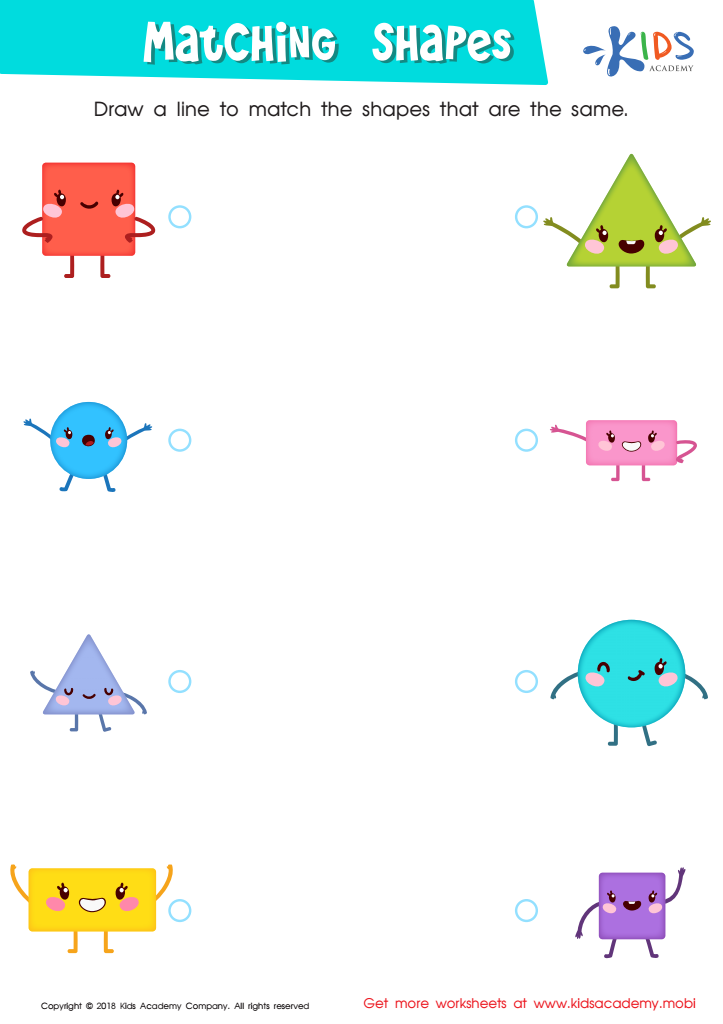
Matching Shapes Worksheet
Introduce your students to the 4 most common shapes: squares, triangles, rectangles and circles. When they progress, show them other shapes like rhombuses and parallelograms. Use this matching shapes worksheet to help them match two identical shapes. Print out the worksheet and instruct them to draw lines connecting them.
Matching Shapes Worksheet
Worksheet
Join Kids Academy for Free
Who is primarily going to use this learning content?








Matching skills in normal geometry are essential for children aged 4-9 as they form the foundation for understanding shapes, spatial awareness, and problem-solving. During these formative years, kids are naturally curious and eager to explore their surroundings. Introducing geometric concepts through matching activities enhances their cognitive development, helping them recognize and categorize shapes like circles, triangles, squares, and rectangles.
Educational research emphasizes that early exposure to geometry fosters critical thinking and analytical skills, which are vital for later success in mathematics and science. When children identify and match shapes, they develop the ability to discern differences and similarities, which sharpens their observational skills. Furthermore, these activities promote fine motor skills through sorting and manipulating geometric figures.
Engaging children in matching geometry is also beneficial for reinforcing language development as parents and teachers can introduce specific terminology and encourage discussions about dimensions and properties. Moreover, such activities can be easily integrated into play, making learning enjoyable! This form of learning encourages collaboration among peers, promoting social skills as they work together to solve geometric challenges. Overall, caregivers should prioritize matching skills in normal geometry to prepare children for a successful educational journey ahead.








