Visual Learning Normal Geometry Worksheets for Ages 4-9
3 filtered results
-
From - To
Explore our exciting collection of Visual Learning Normal Geometry Worksheets, designed specifically for young learners aged 4-9. These engaging activities prioritize hands-on learning, helping children grasp fundamental geometric concepts through colorful visuals and interactive exercises. Each worksheet fosters creativity while developing essential skills such as shape recognition, spatial awareness, and problem-solving. Perfect for homeschool or classroom settings, these resources make geometry fun and accessible. Encourage your child's love for math as they navigate through circles, squares, triangles, and more with confidence! Discover the joy of visual learning with our carefully crafted worksheets that ignite curiosity and enhance educational growth.
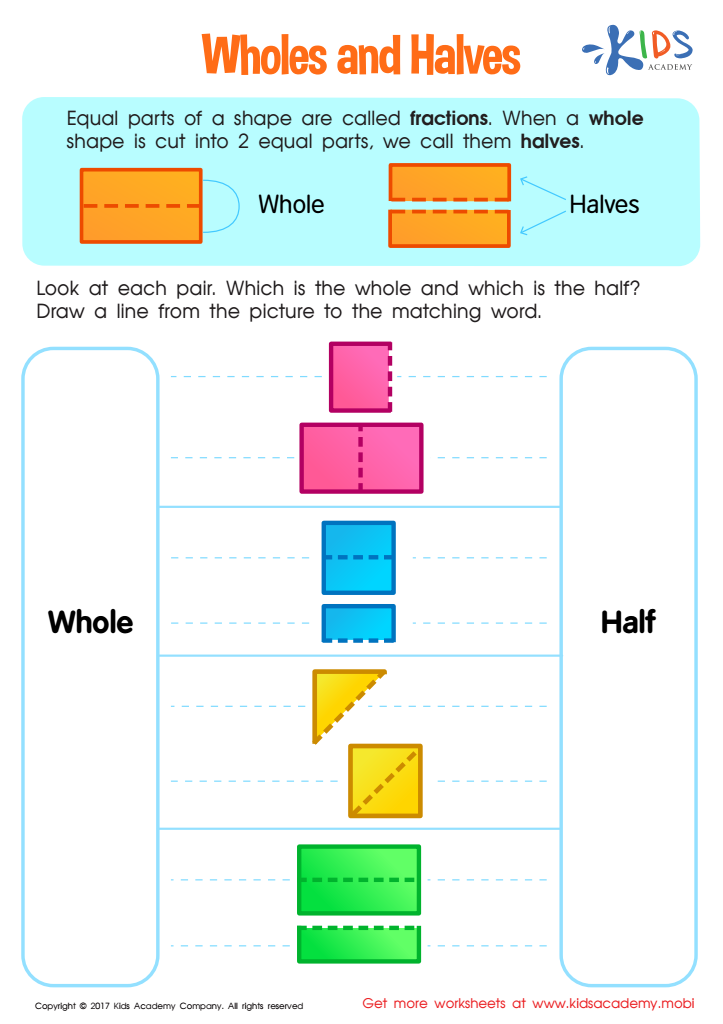
Wholes and Halves Worksheet
 Assign to My Students











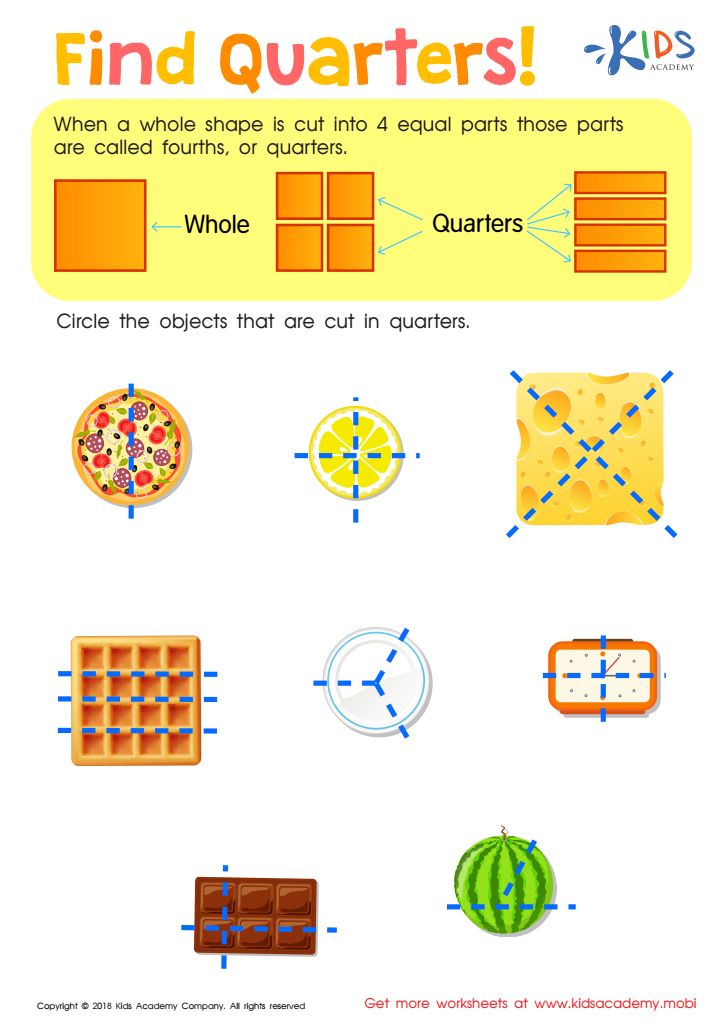
Find Quarters Worksheet
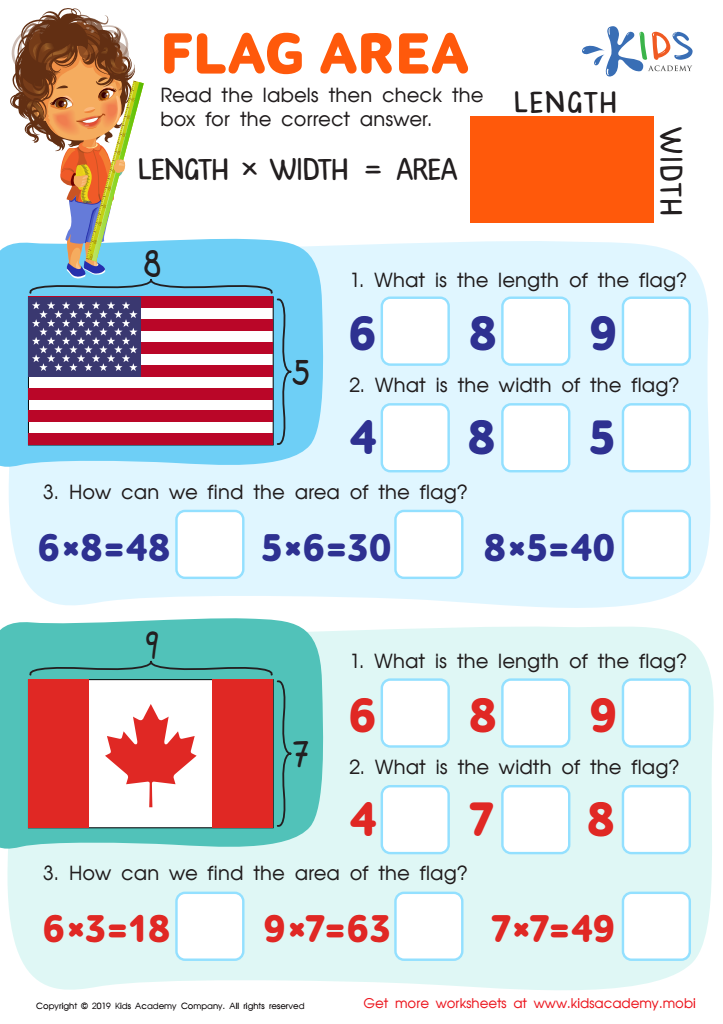
Flag Area Worksheet








Parents and teachers should prioritize visual learning in the context of geometry for children aged 4-9 because it taps into the natural developmental stages of young learners. Visual learning engages multiple senses, helping children to better understand and retain geometric concepts through observation, manipulation, and exploration. At this formative age, children benefit immensely from tangible experiences that help them grasp spatial relationships and understand shapes, sizes, and patterns.
Utilizing visual aids such as drawings, models, and real-world objects enhances children's ability to visualize and conceptualize geometric principles, which forms the foundation for more complex mathematically reasoning in later years. By introducing geometric concepts visually, educators can cater to diverse learning styles, ensuring that all children can grasp and appreciate mathematical ideas.
Moreover, engaging students in hands-on geometry through activities like building with blocks or drawing shapes fosters critical thinking and problem-solving skills. This foundational knowledge not only supports academic success but also boosts confidence and enthusiasm toward learning. As a result, visual learning in geometry enriches children's understanding of their world while providing vital skills that will serve them throughout their educational journey and beyond. Thus, supporting visual learning in geometry is an investment in a well-rounded, enriching educational experience.








