
Animal recognition Normal Numbers Worksheets for Ages 4-9
4 filtered results
Difficulty Level
Grade
Age
-
From - To
Subject
Activity
Standards
Discover our engaging Animal Recognition Normal Numbers Worksheets, specially designed for children aged 4-9. These fun and educational worksheets combine the joy of animal recognition with essential number learning skills. Each activity focuses on helping young learners identify and understand numbers through interactive exercises featuring their favorite animals. Ideal for building foundational math skills, our worksheets make learning enjoyable and accessible. Perfect for at-home practice or classroom use, these resources are crafted to captivate children’s interest while promoting numerical literacy. Boost your child’s confidence in numbers today with our innovative animal-themed worksheets!
Favorites
With answer key
Interactive
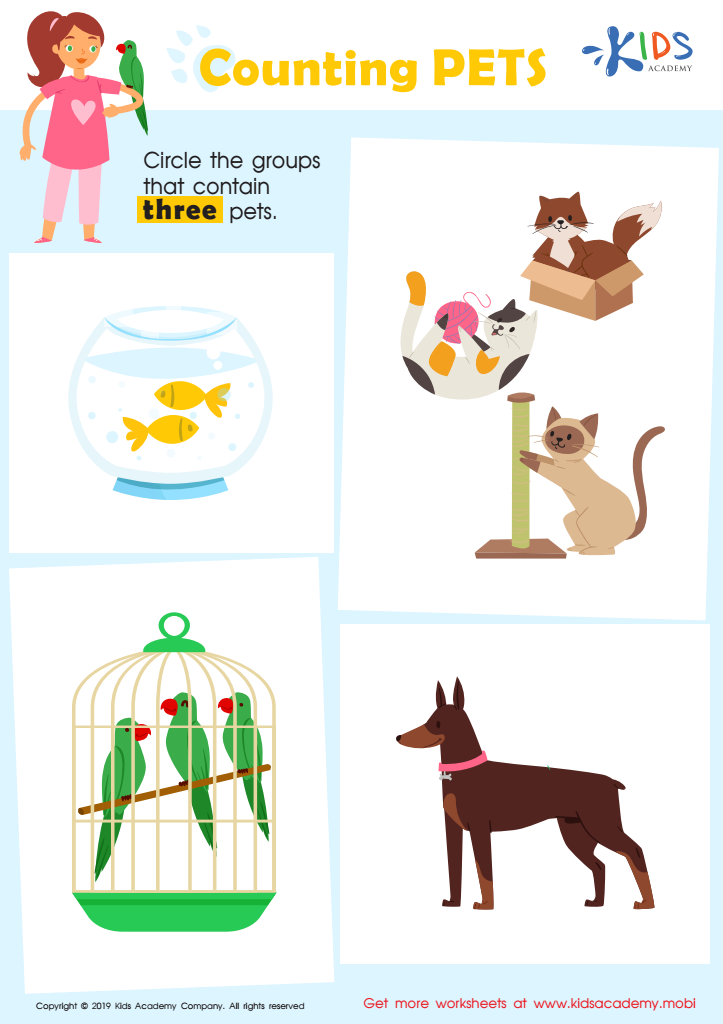
Counting Pets Worksheet
Kids adore their pets, making this free pet counting worksheet the perfect way to combine something they love with math skills. They'll count the number of pets, circle the pictures with three pets, and use one-to-one picture representation to help. This exercise will cultivate their learning and reinforce their love of animals!
 Assign to My Students
Counting Pets Worksheet
Worksheet
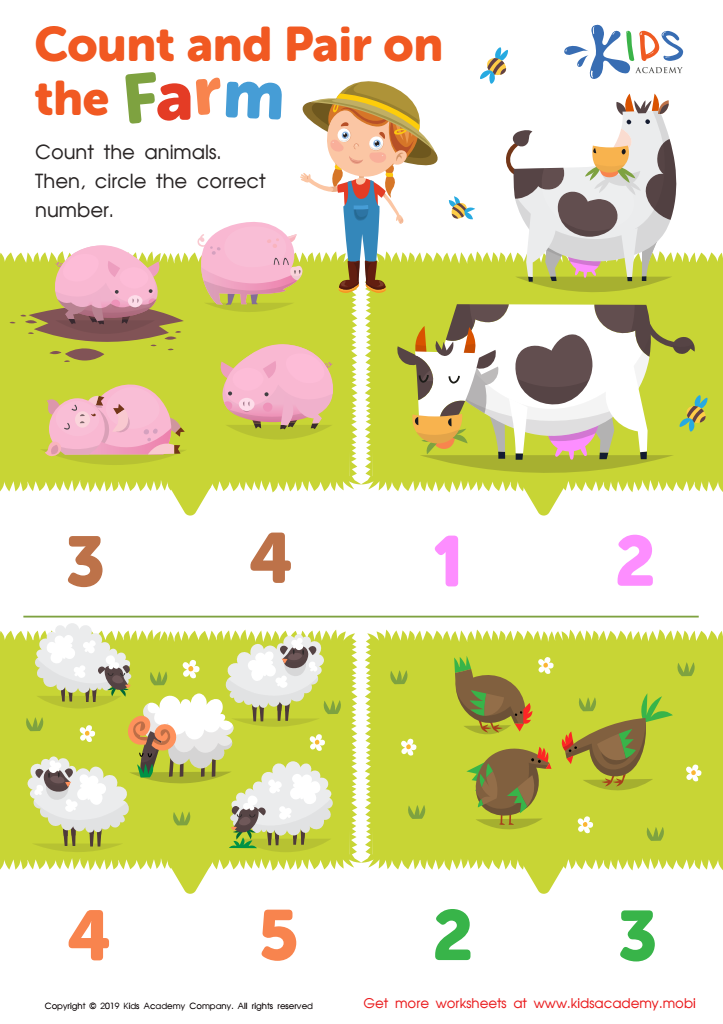
Count and Pair on the Farm Worksheet
Farms are essential to our society: they grow food and crops, and raise animals for us to use. Kids can have a great time at a farm, engaging in activities like identifying animals, counting them, and circling the correct number. On this worksheet, ask your kids to try all three!
Count and Pair on the Farm Worksheet
Worksheet
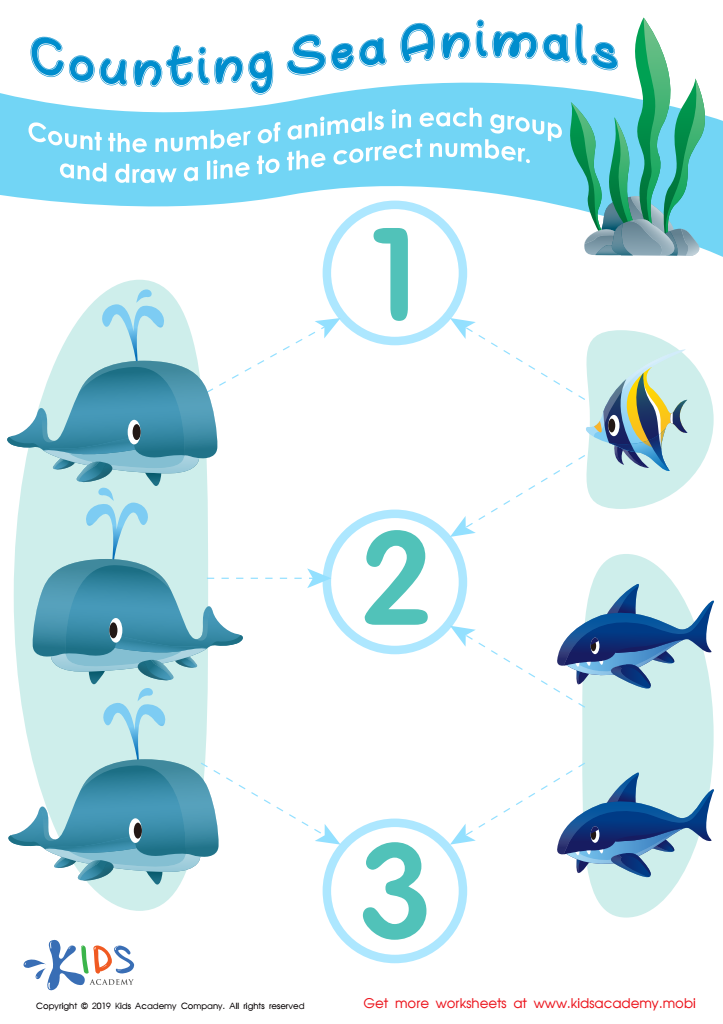
Counting Sea Animals Worksheet
Kids adore sea creatures for their captivating, unknown nature. Let them use this free worksheet to practice counting, where they match numbers to groups of animals. Through traceable lines, they'll easily connect numbers to sea creatures and learn math with vibrant, underwater fun!
Counting Sea Animals Worksheet
Worksheet
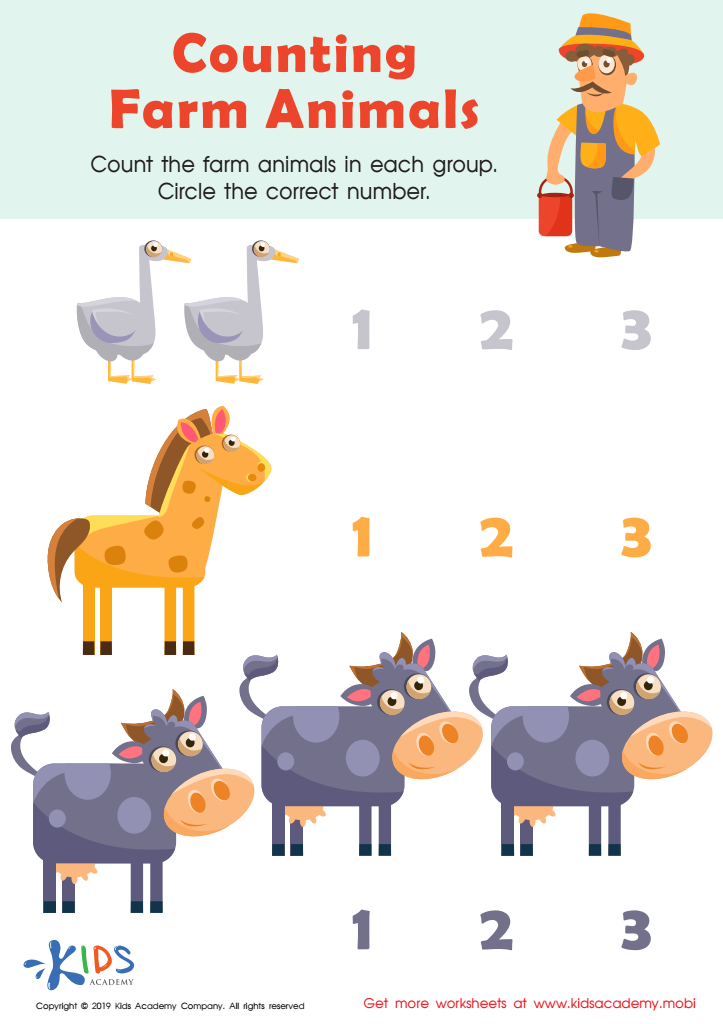
Counting Farm Animals Worksheet
Kids love farms! That's why this free farm animals counting worksheet is great for building number sense and counting skills. Have your young mathematician count the pictures, then circle the corresponding number. It's a fun and meaningful way to practice counting.
Counting Farm Animals Worksheet
Worksheet
Join Kids Academy for Free
Who is primarily going to use this learning content?








Animal recognition and understanding normal numbers are crucial developmental milestones for children aged 4-9, playing significant roles in cognitive and educational growth. Parents and teachers should prioritize these skills for several key reasons.
Firstly, recognizing animals helps children improve their observational abilities and knowledge of the natural world. It fosters curiosity and learning about biodiversity, ecosystems, and environmental conservation. These early connections with nature can foster a lifelong appreciation and sense of responsibility towards the environment.
Numbers form the foundation of mathematical learning. Grasping normal (whole) numbers is essential as it underpins a child’s ability to progress in math, including counting, addition, subtraction, and later complex concepts like multiplication and division. These basic arithmetic skills are critical for academic success not only in mathematics but also in science, technology, and daily life.
Moreover, learning about animals and numbers aids in developing cognitive skills such as memory, classification, and pattern recognition. Animals and numbers are frequently themes in children's books, games, and educational media, making learning engaging and practical.
Teachers and parents thus nurture both a child’s intellect and a healthy relationship with the world they inhabit by prioritizing animal recognition and numerical understanding. These foundational skills contribute holistically to their overall development and future educational achievements.








