Animal Classification Normal Math Worksheets for Ages 4-9
4 filtered results
-
From - To
Discover our engaging Animal Classification Normal Math Worksheets, perfect for ages 4-9. These fun, educational worksheets integrate essential math skills with intriguing animal facts, making learning enjoyable. Kids will explore various animal groups, sharpen their counting, addition, and subtraction skills, and enhance their problem-solving abilities. Ideal for busy parents and educators striving to make learning interactive and captivating. Foster an enthusiasm for math and animals simultaneously with our expertly designed, age-appropriate resources. Transform your child's learning journey today with Kids Academy's Animal Classification Worksheets—where math and nature meet!
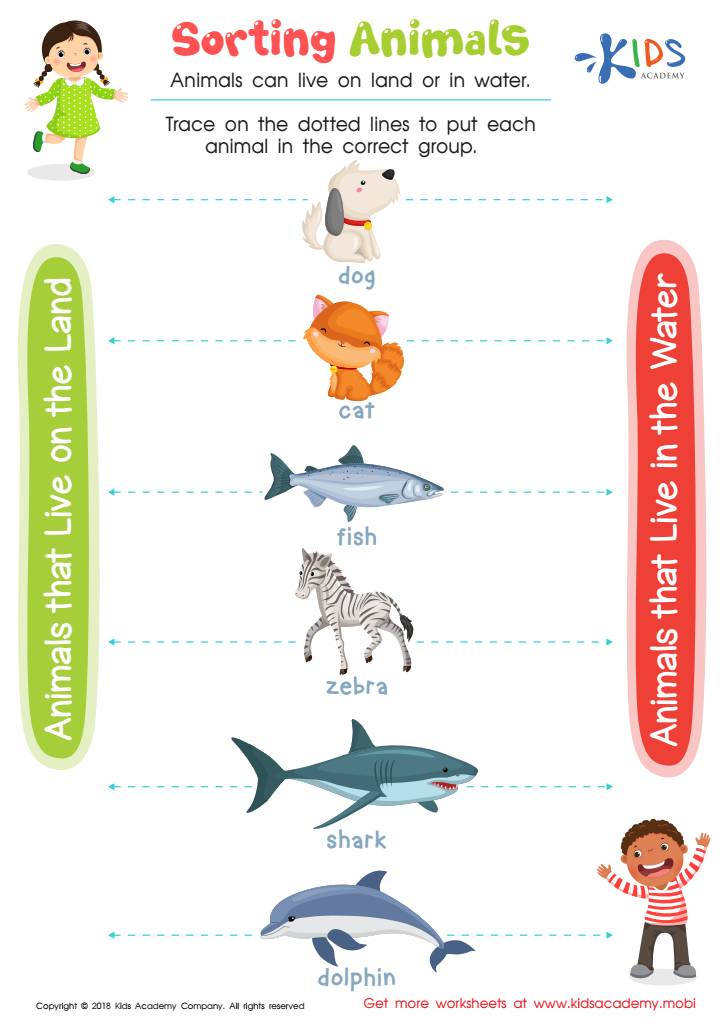
Sorting Animals Worksheet
 Assign to My Students
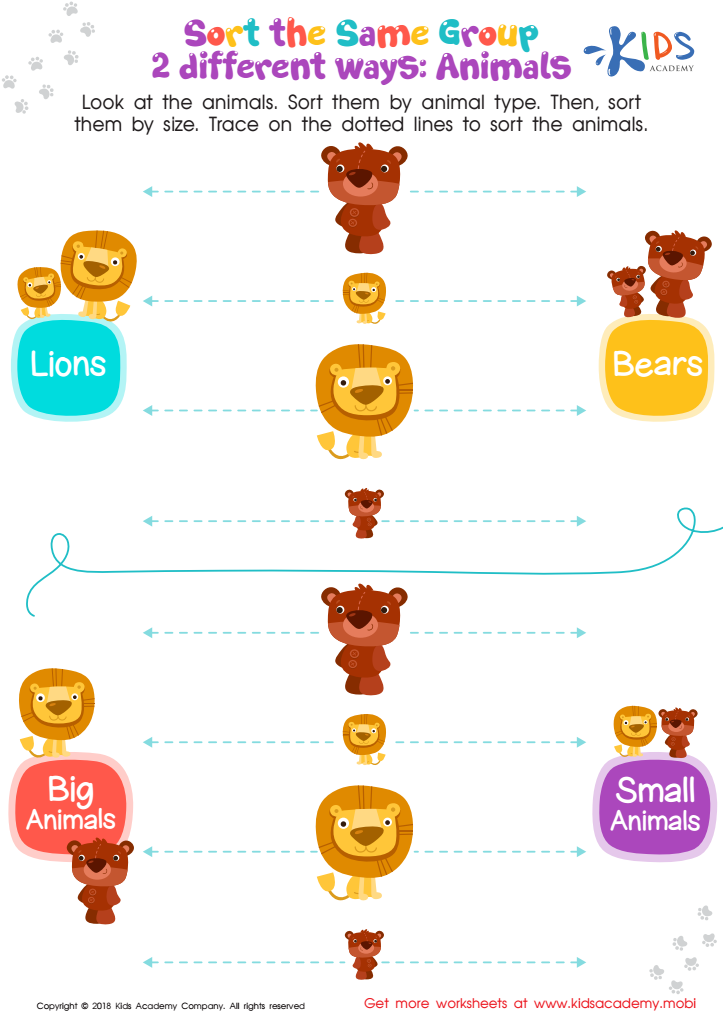
Sort the Same Group 2 Different Ways: Animals Worksheet
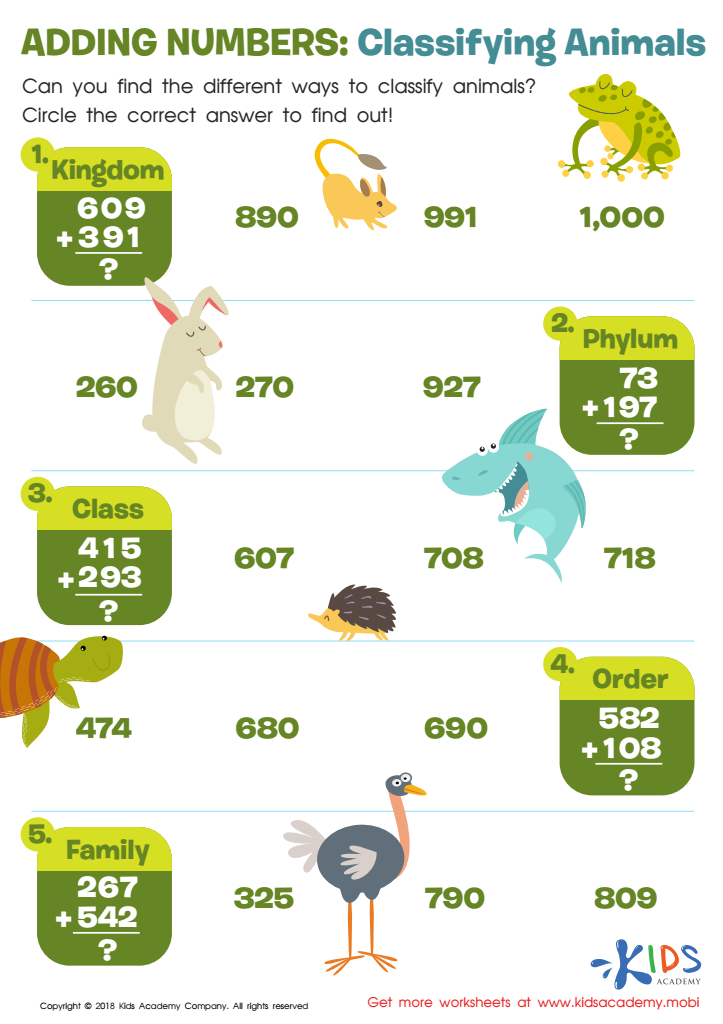
Adding Numbers: Classifying Animals Worksheet
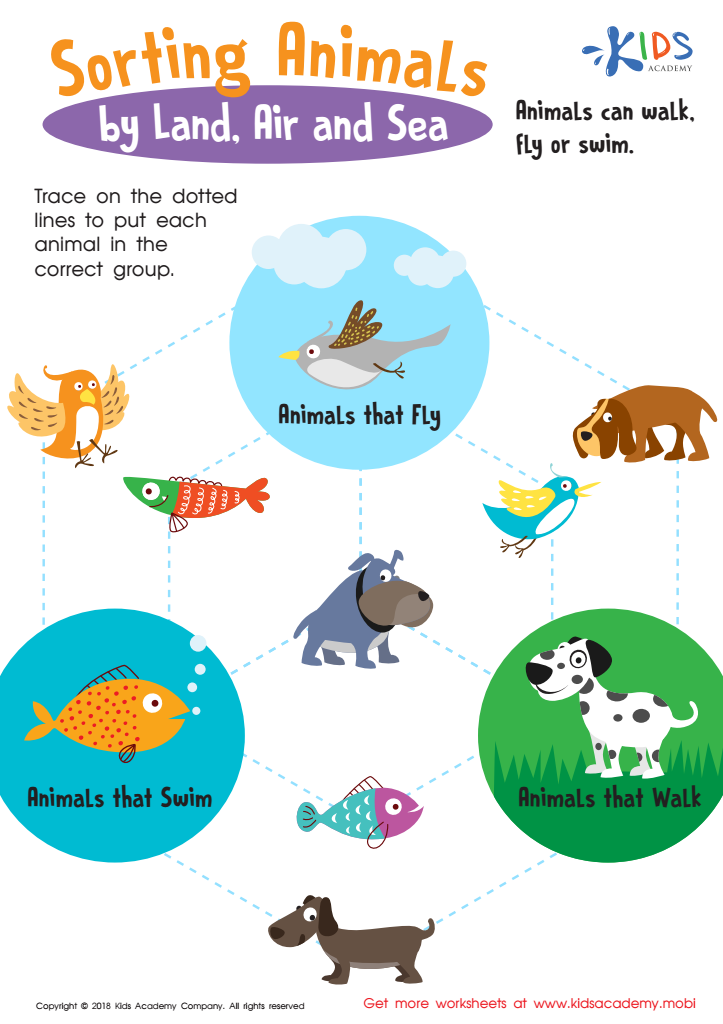
Sorting Animals by Land, Air and Sea Worksheet






Animal classification and numeracy are essential concepts for children's intellectual development, even at an early age between 4-9 years. Exposing kids to animal classification at a young age fosters their curiosity and wonder about the natural world. Classifying animals into various groups—such as mammals, reptiles, birds, fish, and amphibians—teaches children critical thinking skills. They learn to observe, compare, contrast, and categorize, which are fundamental to cognitive growth and scientific understanding.
Moreover, integrating "Normal Math" into daily lessons can significantly enhance a child's numeracy skills. Handling numbers, recognizing patterns, and seeing the relationships between animal traits can foster a positive attitude towards mathematics. For instance, counting legs, sorting by size, or analyzing habitat populations can seamlessly blend numerical concepts with science learning.
This age group is particularly receptive to engaging, hands-on activities. Interactive lessons that combine animal classification with numeracy—like counting the legs on animals or grouping animals based on the number of limbs—make learning vividly tangible. This approach ensures a well-rounded educational foundation, addressing multiple areas of development while keeping the learning process fun and engaging.
Caring about these subjects lays the groundwork for a broad and integrative learning experience, equipping children with the tools they need to navigate more complex scientific and mathematical concepts in the future. Communication with parents ensures the knowledge is reinforced at home, enhancing educational continuity and solidifying foundational skills.








