Counting practice Normal Math Worksheets for Ages 4-9 - Page 2
28 filtered results
-
From - To
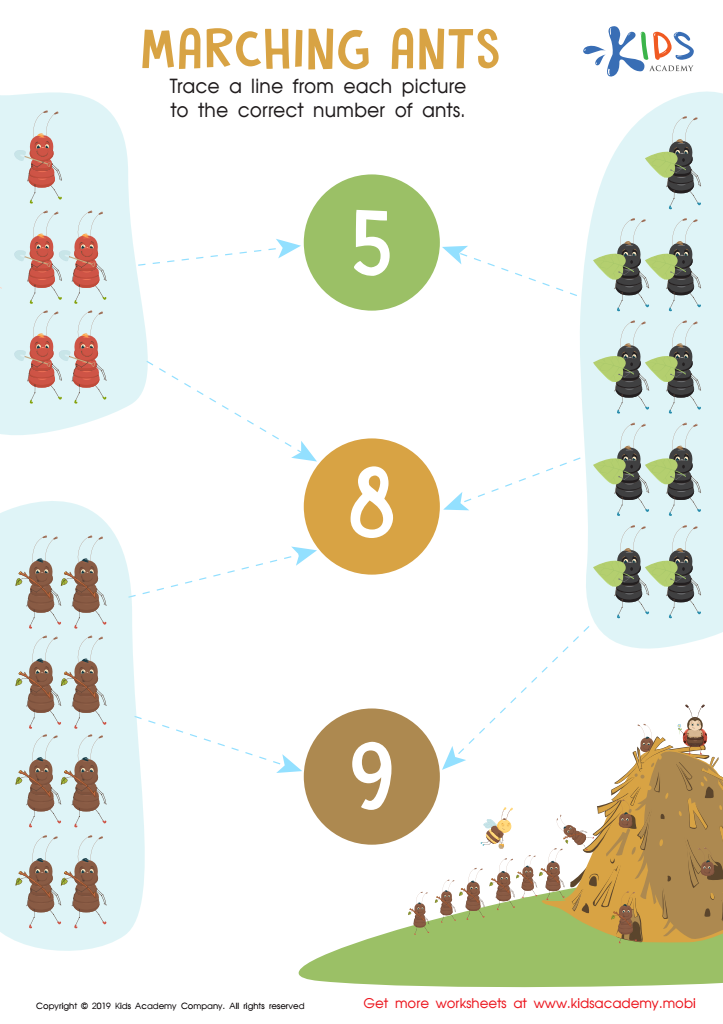
Marching Ants Worksheet
 Assign to My Students
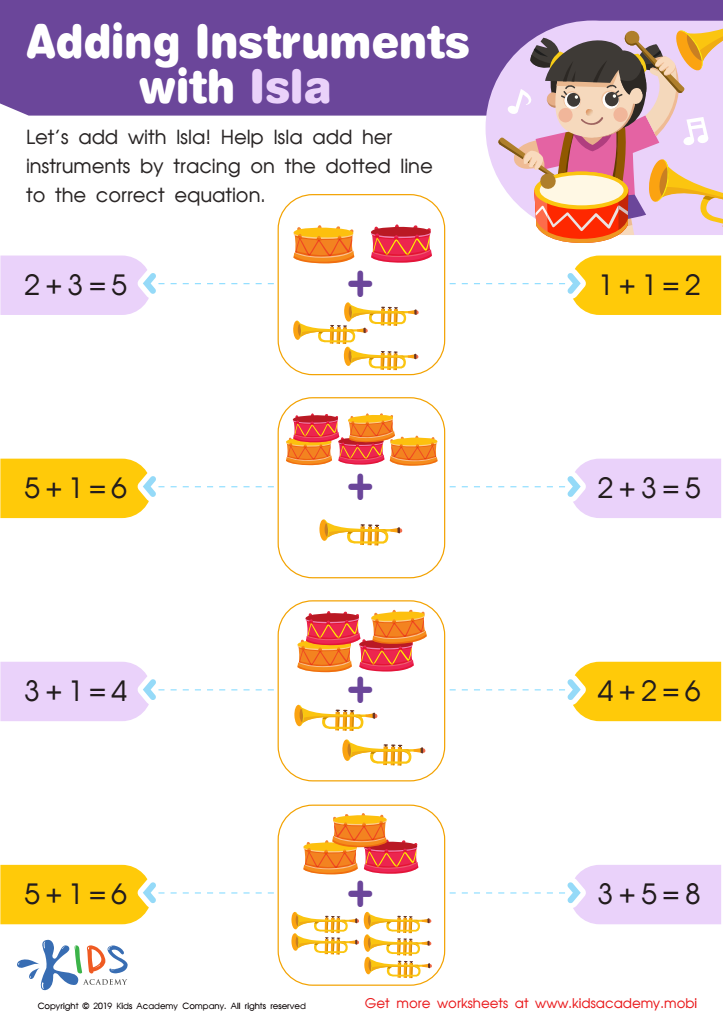
Adding Instruments with Isla Worksheet
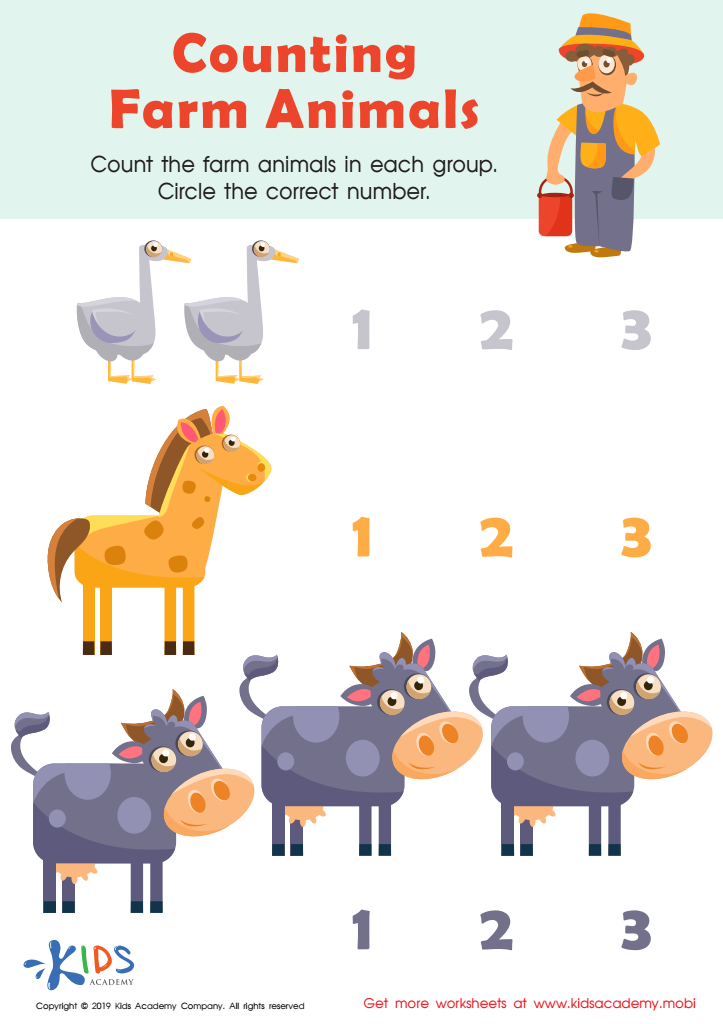
Counting Farm Animals Worksheet
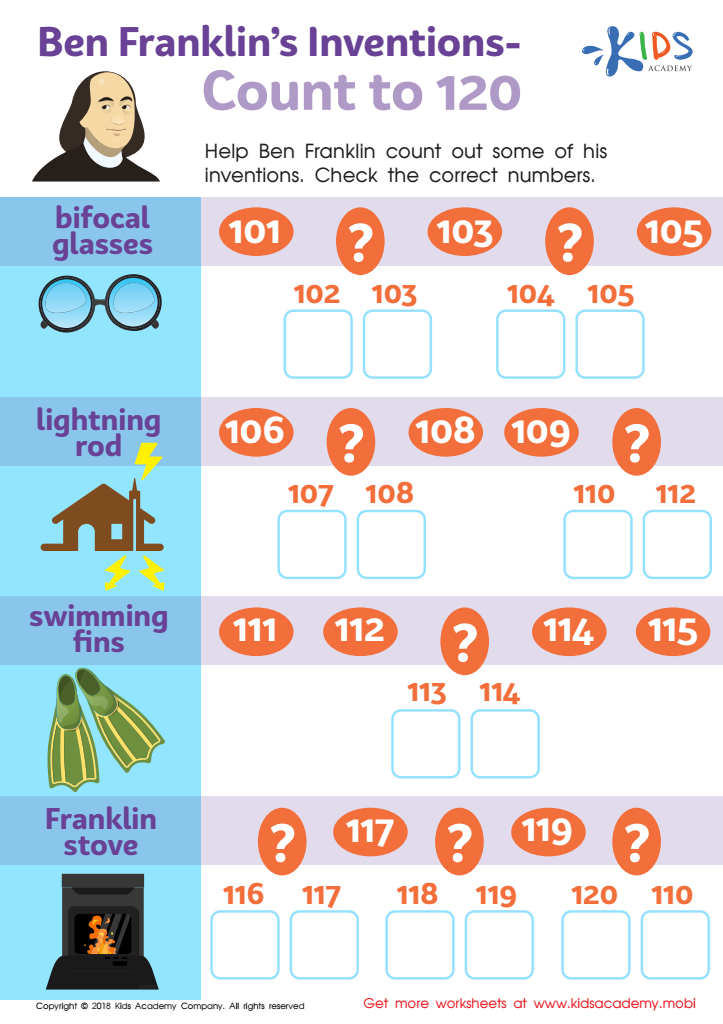
Ben Franklin’s Inventions – Count to 120 Worksheet








Counting practice in early mathematics is crucial for children aged 4 to 9 as it lays the foundational skills needed for later learning. It enhances numerical fluency, enabling children to recognize numbers, understand quantities, and develop confidence in their mathematical abilities. Engaging in regular counting activities helps refine their cognitive skills, including memory, attention, and problem-solving.
For teachers and parents, fostering counting practice encourages collaboration and communication. Simple activities like counting objects during play or incorporating numbers into daily routines make learning fun and relatable. This approach nurtures a positive attitude towards mathematics, reducing anxiety surrounding the subject as children progress.
Moreover, early counting experiences contribute to critical thinking skills, allowing children to engage in more complex mathematical concepts such as addition and subtraction later on. By developing a strong counting foundation, children are better equipped to tackle future academic challenges.
Finally, as essential for overall cognitive development, counting practice reinforces parents' and teachers’ roles in early education. Supporting children in achieving their numerical milestones ultimately leads to higher academic success and lifelong skills—embracing mathematics with enthusiasm and resilience. Therefore, prioritizing counting practice is a vital investment in a child's educational journey.








