Historical Knowledge Normal Math Worksheets for Ages 4-9
6 filtered results
-
From - To
Discover our engaging Historical Knowledge Normal Math Worksheets tailored for children aged 4-9! These interactive worksheets seamlessly blend math skills with captivating historical themes, making learning fun and meaningful. Designed to inspire curiosity, our resources cover various math concepts while introducing young learners to intriguing historical events and figures. Each worksheet promotes critical thinking and enhances problem-solving abilities, providing a comprehensive educational experience. Perfect for both home and classroom settings, these worksheets encourage kids to connect mathematical principles with the rich tapestry of history. Equip your child with essential math skills while fostering a love for learning. Explore our collection today!
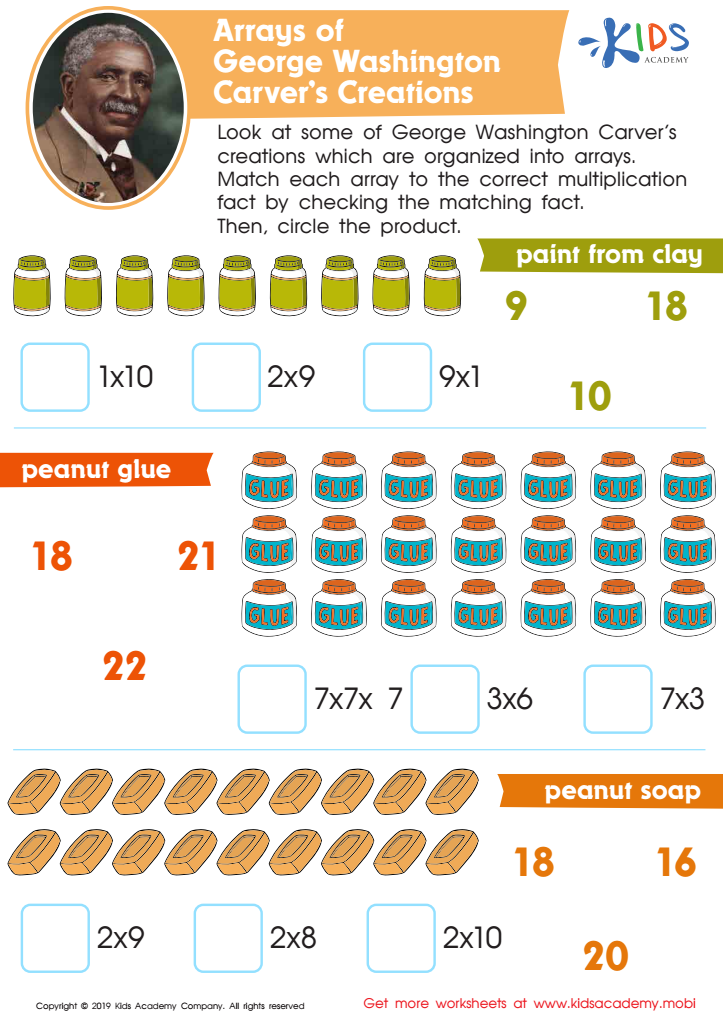
Arrays of George Washington Carver’s Creations Worksheet
 Assign to My Students
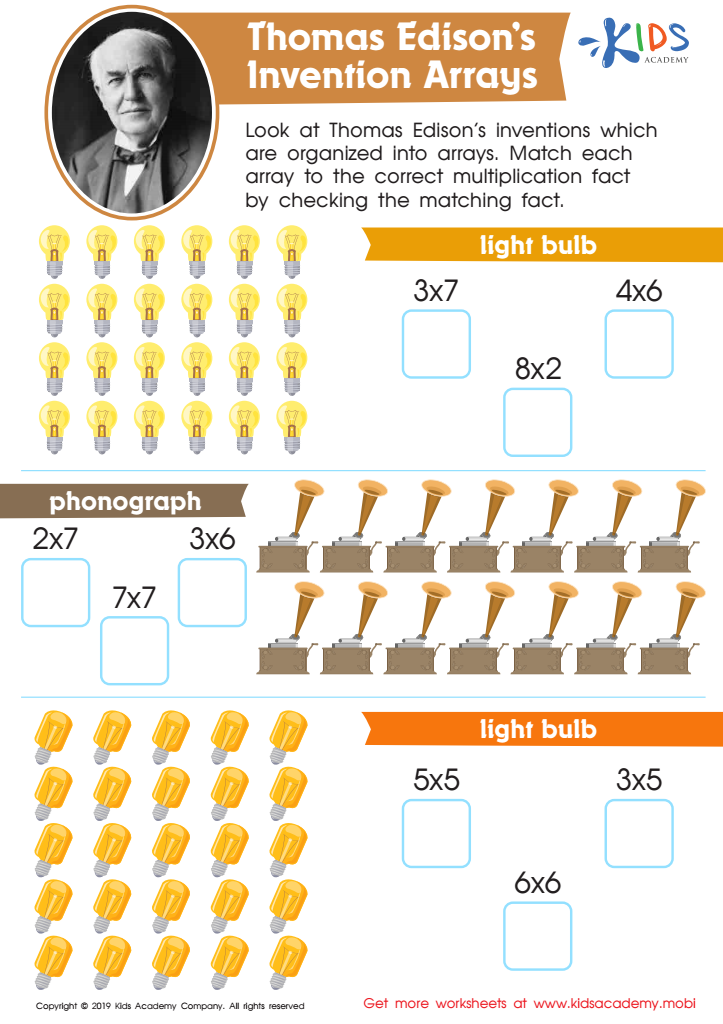
Thomas Edison’s Invention Arrays Worksheet
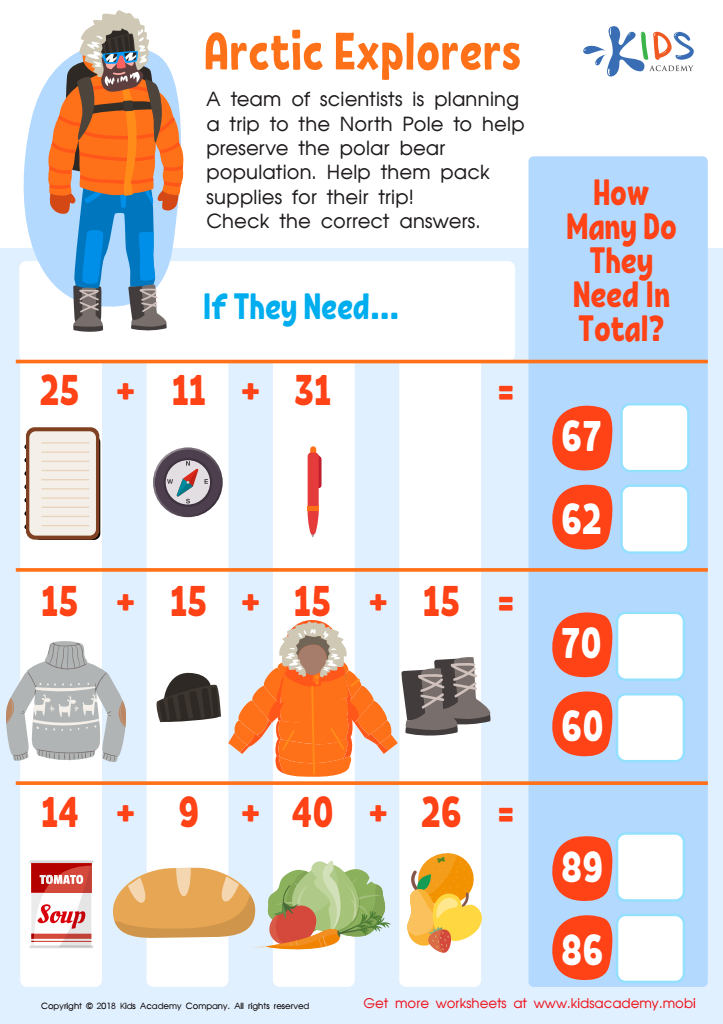
Arctic Explorers Worksheet
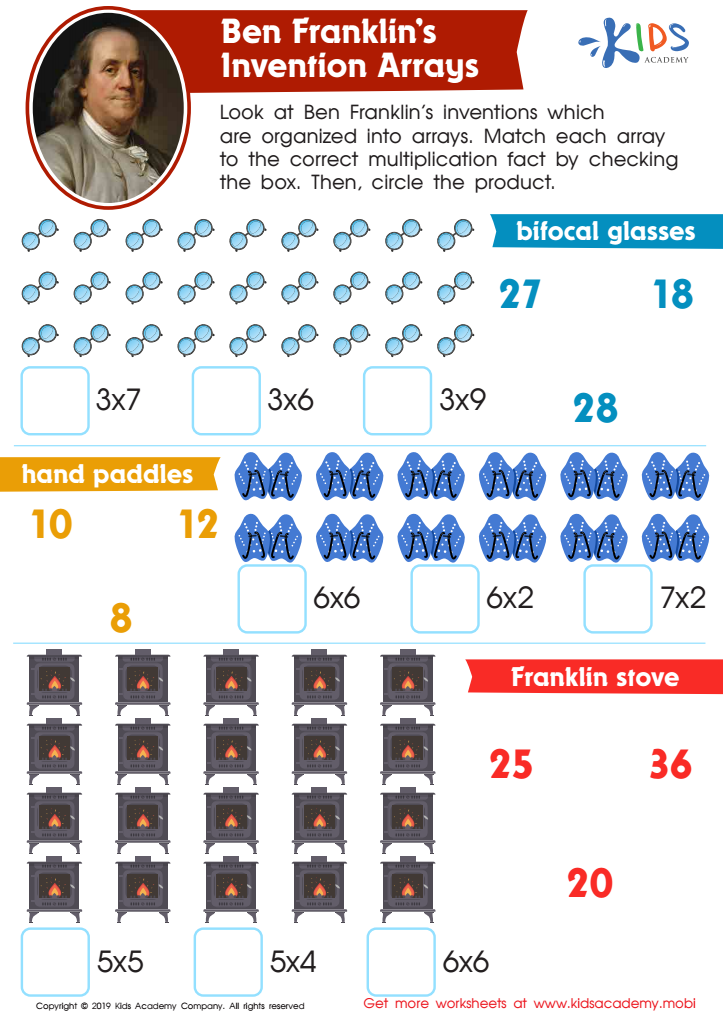
Ben Franklin’s Invention Arrays Worksheet
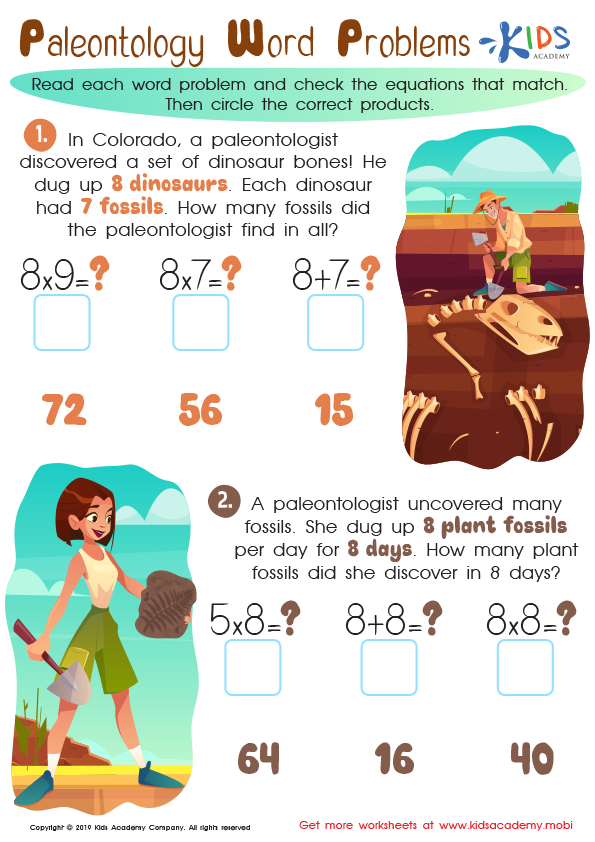
Archeology Word Problems Worksheet
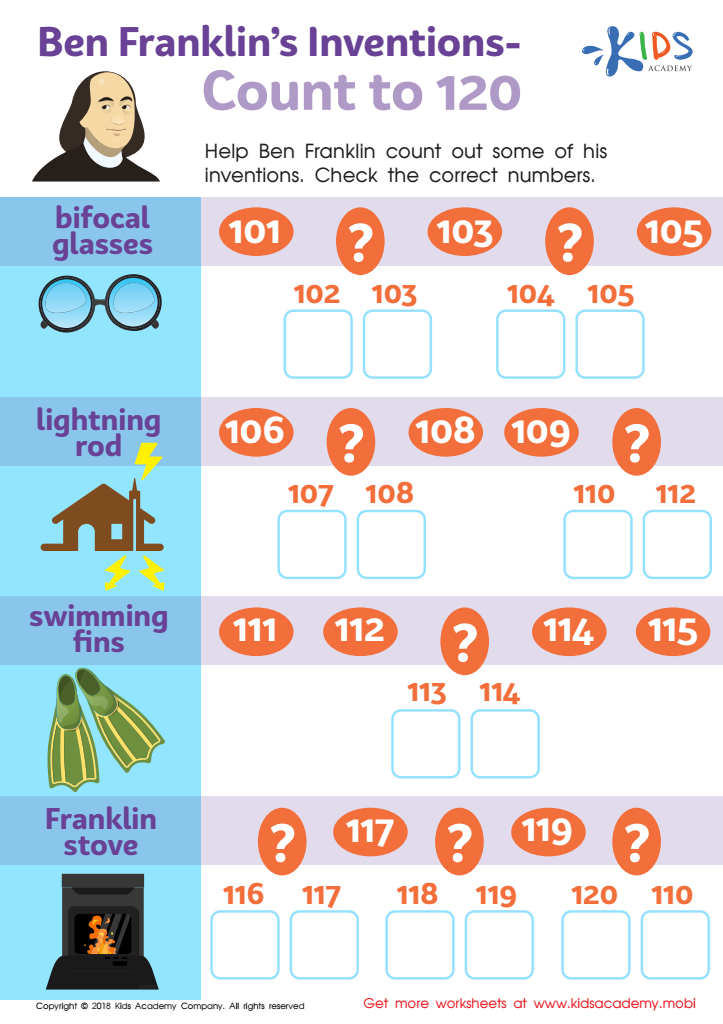
Ben Franklin’s Inventions – Count to 120 Worksheet






%20(1).jpg)

Parents and teachers should care about integrating Historical Knowledge Normal Math for ages 4-9 because it fosters a well-rounded development in young learners. Understanding historical contexts not only enriches students' knowledge of math but also allows them to appreciate the evolution of mathematical concepts over time. Children can learn to recognize patterns and relationships within math, while also drawing connections to significant historical events or figures that helped shape mathematical thought.
This interdisciplinary approach can cultivate curiosity, engagement, and a deeper comprehension of both subjects. For example, discussing how ancient civilizations used math in trade or astronomy makes the subject more relatable and relevant, helping to demystify complex ideas.
Moreover, incorporating historical narratives can aid in the development of critical thinking and problem-solving skills. When children are taught to view math through a historical lens, they can better understand that math is not just a set of abstract rules but a living discipline that has evolved with humanity.
Promoting Historical Knowledge Normal Math equips children with a broader perspective, enhances their learning experience, and fosters a lifelong appreciation for both history and mathematics. As they build foundational skills, they also cultivate analytical, reflective, and empathetic thinking essential for their future educational journey.








