
Interpreting data Normal Math Worksheets for Ages 4-9
3 filtered results
Difficulty Level
Grade
Age
-
From - To
Subject
Activity
Standards
Introduce your child to the exciting world of data interpretation with our engaging Normal Math Worksheets tailored for ages 4-9. Designed to develop comprehension and analytical skills, these worksheets provide fun activities that encourage young learners to explore and interpret graphs, charts, and tables. Each worksheet incorporates vibrant visuals and age-appropriate exercises, making data interpretation enjoyable and accessible. Whether at home or in the classroom, our resources aim to foster a love for math while building foundational skills in data analysis. Support your child’s educational journey and watch them gain confidence as they learn to interpret information in meaningful ways!
Favorites
With answer key
Interactive
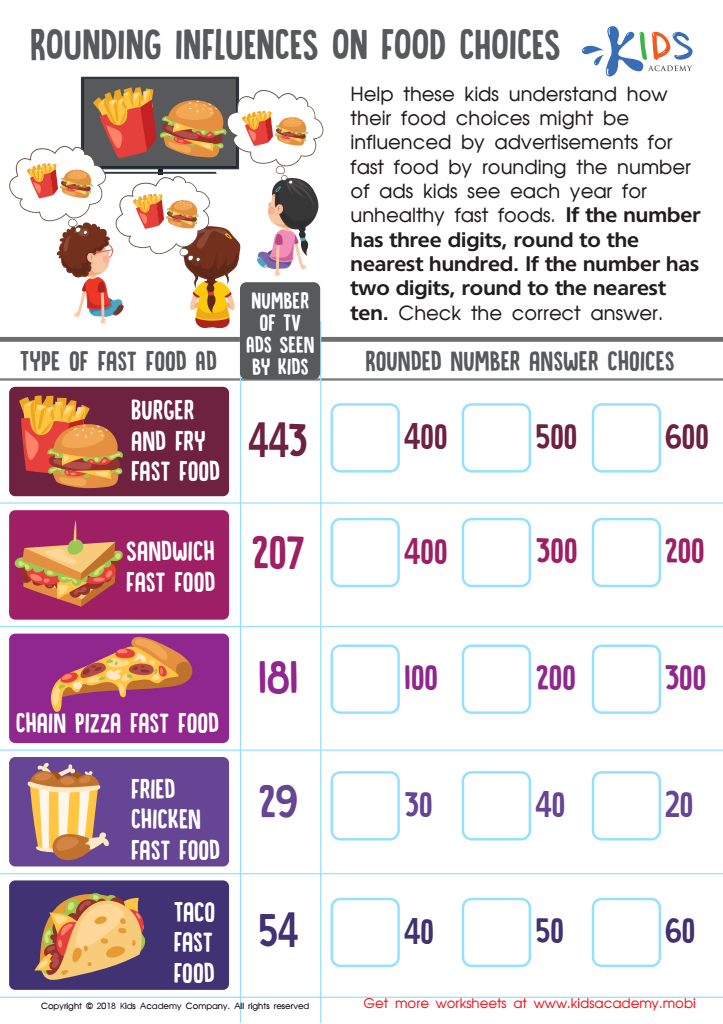
Rounding Influences Food Choices Worksheet
Kids find math more enjoyable when it reflects real-life scenarios. This free worksheet combines math and health! Kids view data on the number of ads they're exposed to in a year and must round the numbers to the nearest ten or hundred. Solve and check the correct answers to finish.
 Assign to My Students
Rounding Influences Food Choices Worksheet
Worksheet
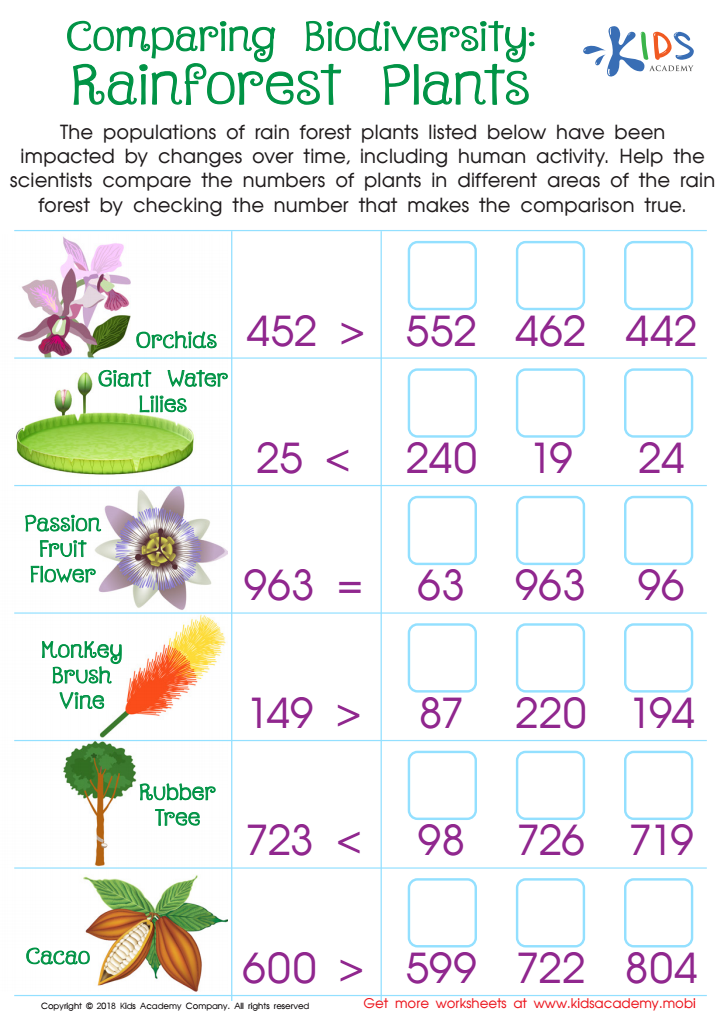
Comparing Biodiversity: Rainforest Plants Worksheet
Have your students learn about biodiversity in the rainforest and practice number sense and reasoning with this colorful PDF worksheet. Comparing the numbers of plants found in different areas of the rainforest, they'll combine eco-friendly science and math to make the number comparisons true.
Comparing Biodiversity: Rainforest Plants Worksheet
Worksheet
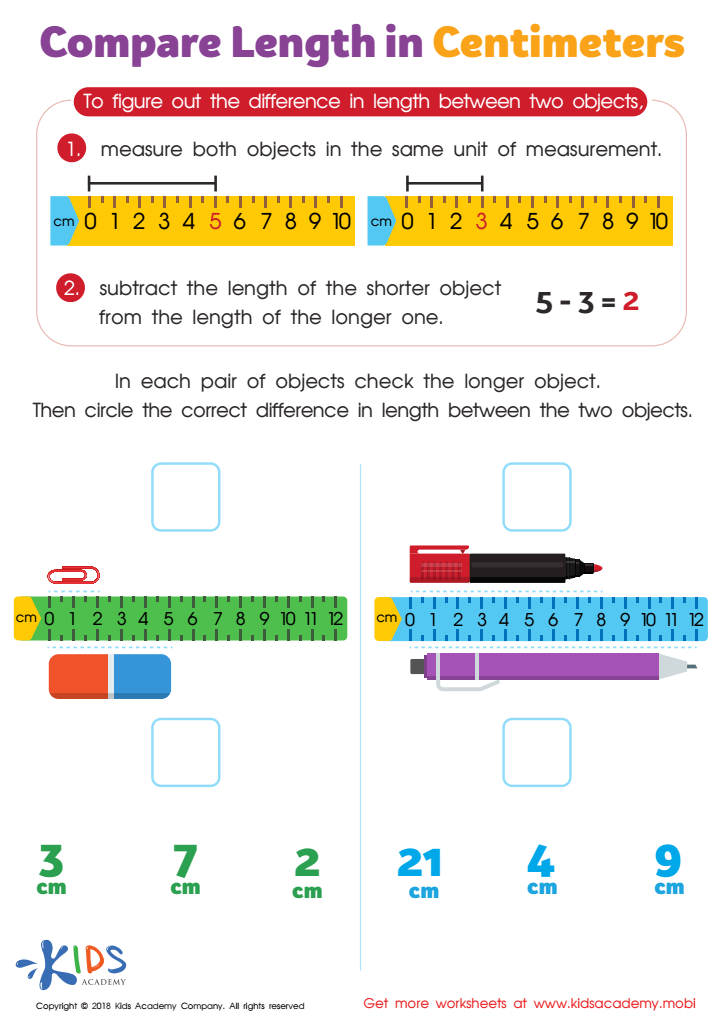
Compare Length in Centimeters Worksheet
To do this worksheet, your child needs to be able to measure accurately, add and subtract. They must measure both items and subtract the shorter from the longer to work out the difference in length.
Compare Length in Centimeters Worksheet
Worksheet
Join Kids Academy for Free
Who is primarily going to use this learning content?




.jpg)



Interpreting data in early math education is crucial for children aged 4-9 as it lays the foundation for critical thinking and problem-solving skills. At this developmental stage, children begin to explore numerical concepts, patterns, and relationships, which are essential for their cognitive growth. By engaging with data interpretation, children learn to make sense of quantitative information, recognize trends, and draw conclusions based on evidence.
Parents and teachers should care about this process because it encourages early numeracy skills that are transferrable across various subjects and real-world situations. These skills not only enhance children’s academic performance but also foster their ability to collaborate, communicate, and make informed decisions. Additionally, the ability to interpret data cultivates curiosity, encouraging children to ask questions and seek answers, which is integral to lifelong learning.
Moreover, proficient data interpretation skills can help identify students’ learning needs. By analyzing student performance data, educators can tailor their teaching strategies to better support individual learning paths. Thus, promoting data interpretation in math not only supports children’s individual growth but also contributes to a well-rounded educational experience. Ultimately, nurturing these skills during early years creates a robust foundation for future academic success and informed citizenship.








