
Mathematical operations Normal Math Worksheets for Ages 4-9
3 filtered results
Difficulty Level
Grade
Age
-
From - To
Subject
Activity
Standards
Welcome to our "Mathematical Operations Normal Math Worksheets" designed for children ages 4-9. These engaging and interactive worksheets focus on foundational math skills, such as addition, subtraction, multiplication, and division, ensuring a well-rounded understanding of mathematical operations. Tailored for young learners, our resources help develop critical thinking, problem-solving, and number sense in a fun and accessible way. Each worksheet features colorful illustrations and easy-to-follow instructions that will captivate your child’s attention and reinforce essential skills. Perfect for home or classroom use, our worksheets provide a valuable tool for nurturing a lifelong love of math. Download and start exploring today!
Favorites
With answer key
Interactive
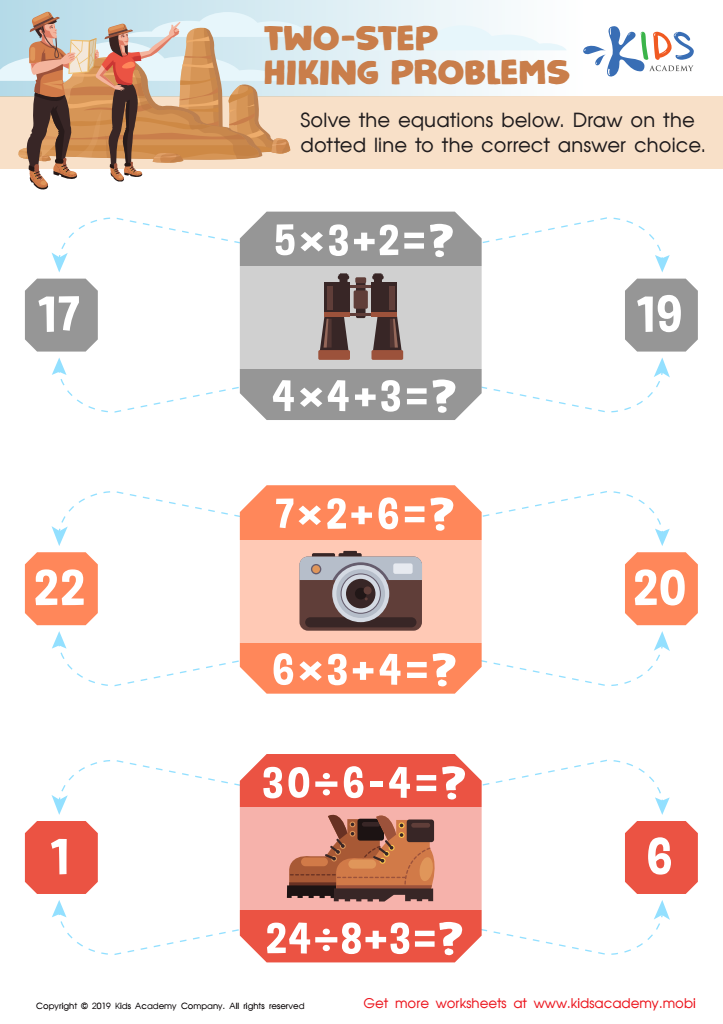
Two-Step Hiking Problems Worksheet
Help your kids ease into math with this worksheet. Solve the three basic equations, then draw on the dotted line to the correct answer. You can help your kids make their journey smoother by guiding them through it.
 Assign to My Students
Two-Step Hiking Problems Worksheet
Worksheet
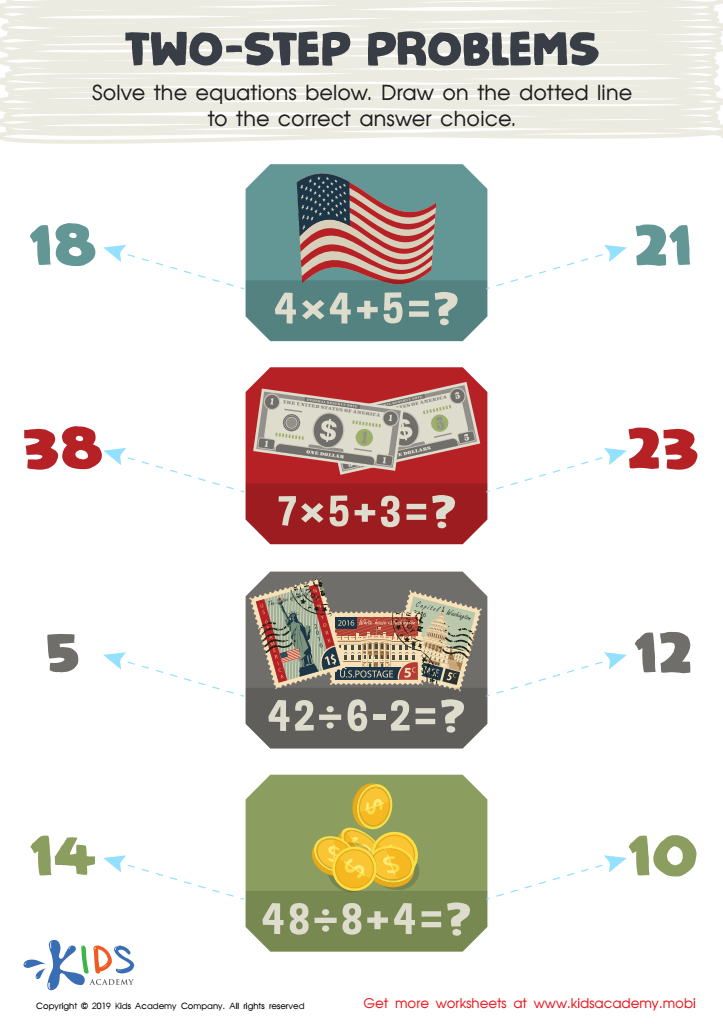
Two-Step Problems Worksheet
Help your child practice their math problem-solving skills with this worksheet. It covers the basics of subtractions, additions, multiplications, and divisions. With four simple equations, your kids can solve them and draw the correct answer on the dotted line. Reduce their strain and give them the help they need.
Two-Step Problems Worksheet
Worksheet
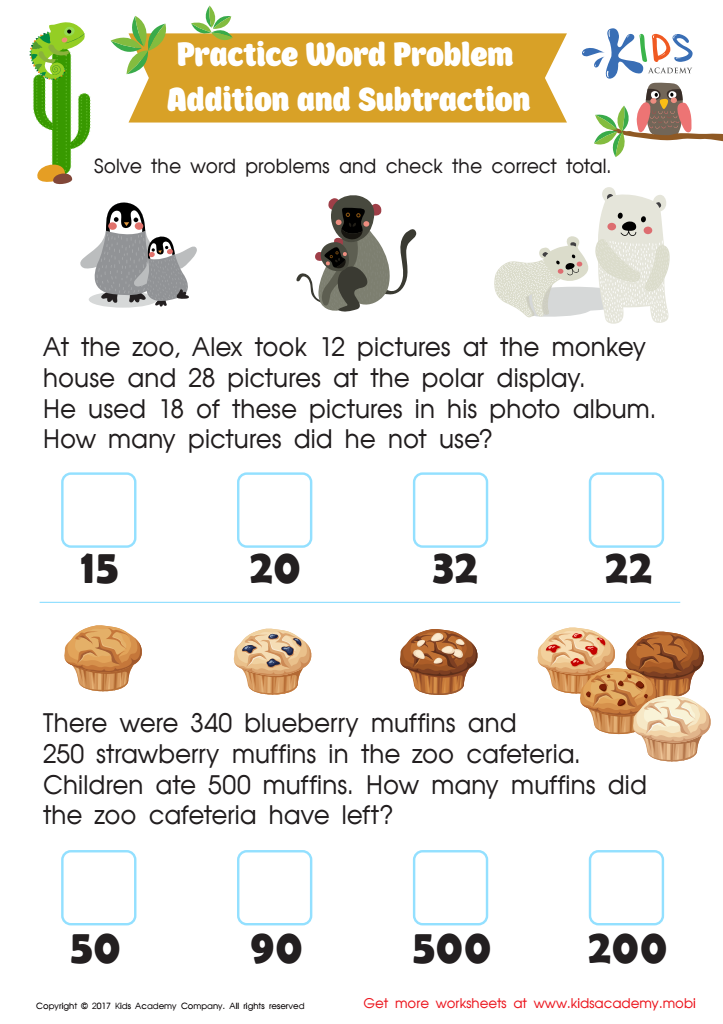
Addition and Subtraction: Word Problems Worksheet
Word problems can be difficult, but they offer another way to understand math. Our 3rd grade worksheet takes your child to the zoo; two intriguing word problems will test their thinking skills and help them find the total.
Addition and Subtraction: Word Problems Worksheet
Worksheet
Join Kids Academy for Free
Who is primarily going to use this learning content?








Mathematical operations form the foundation of critical thinking and problem-solving skills. For children aged 4-9, learning "Normal Math" – basic operations like addition, subtraction, multiplication, and division – is crucial for cognitive development. At this stage, children are naturally curious and capable of grasping abstract concepts, making it an optimal time to introduce them to math.
Understanding these operations builds confidence and nurtures a positive attitude toward math, reducing anxiety and aversion to the subject as they progress in their education. Parents and teachers play a vital role in creating an engaging and supportive environment that fosters a love for learning.
Moreover, early mastery of mathematical operations is essential for future academic success; it sets the stage for more complex topics like fractions, decimals, and algebra. Beyond academics, these skills are valuable in everyday life – from budgeting to cooking or measuring. By focusing on building a strong mathematical foundation, educators and parents equip children for personal and academic growth. In summary, nurturing early mathematical skills is an investment in a child's future, promoting independence, critical thinking, and preparedness for life's challenges. Therefore, it's crucial for educators and parents to prioritize these learning experiences.








