Basic Math Skills Normal Measurement Worksheets for Ages 4-9
3 filtered results
-
From - To
Introduce your child to the world of measurements with our engaging Basic Math Skills Normal Measurement Worksheets for Ages 4-9 from Kids Academy! These fun and educational worksheets are carefully designed to help young learners develop essential math skills, such as understanding lengths, weights, and capacities. Perfect for kids aged 4 to 9, our printables make learning interactive and enjoyable. Each worksheet offers a variety of tasks aimed at enhancing your child's ability to measure accurately and compare different dimensions. Start building a strong mathematical foundation with our expertly crafted measurement worksheets today.
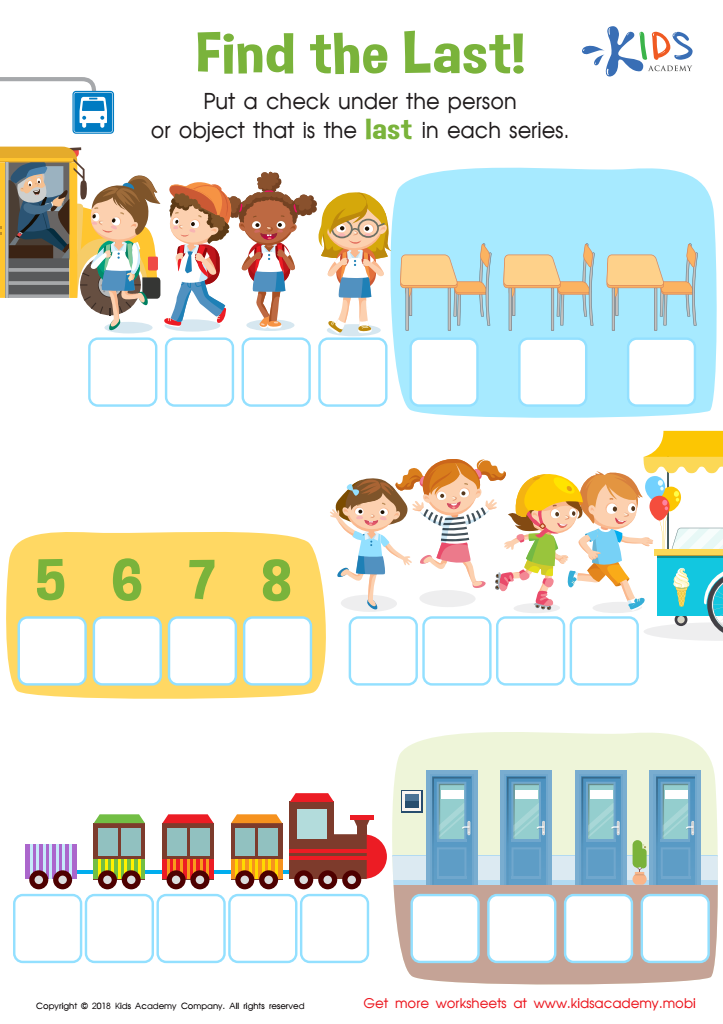
Find the Last! Worksheet
 Assign to My Students
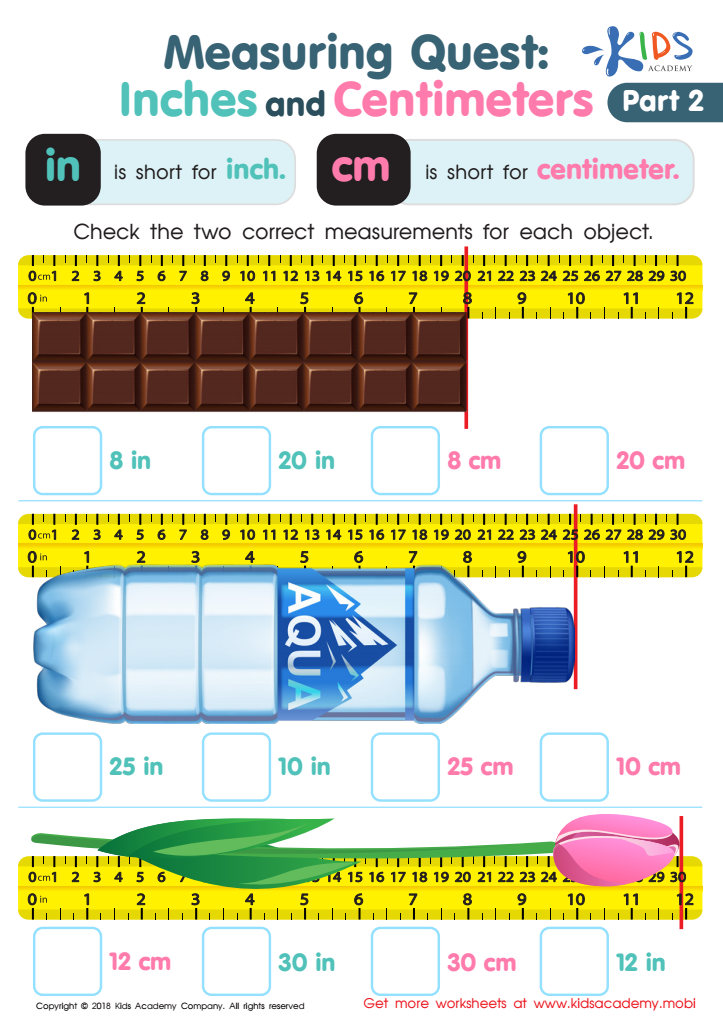
Measuring Quest: Inches and Centimeters - Part 2 Worksheet
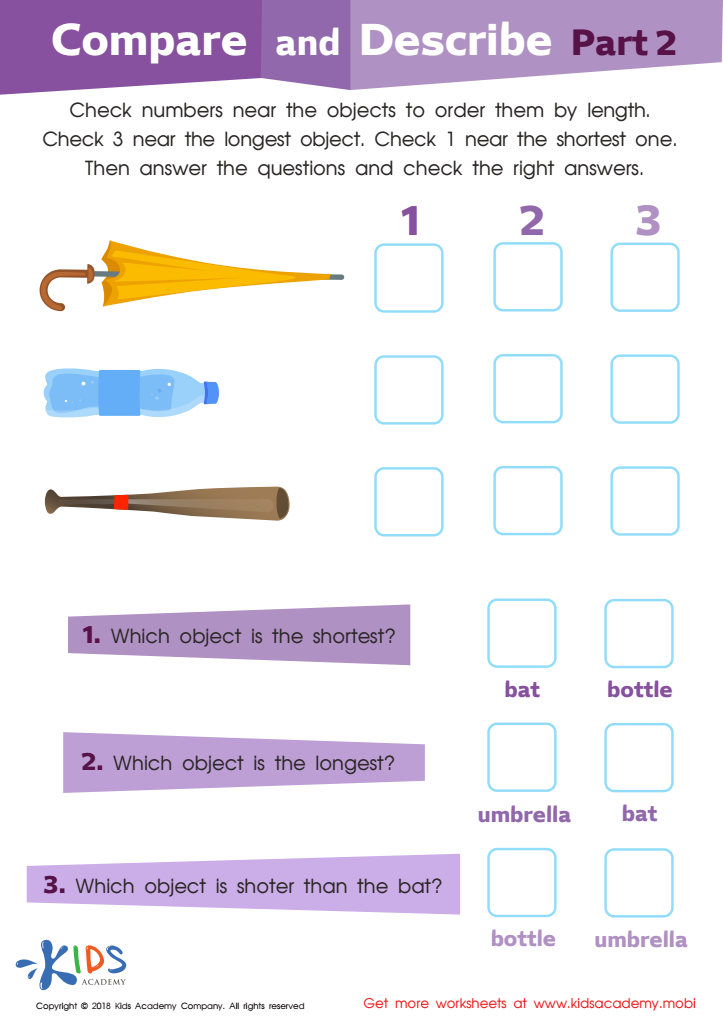
Compare and Describe: Part 2 Worksheet








Parents and teachers should care deeply about developing basic math skills in children aged 4-9 because these early years are critical for laying a strong foundation for future learning. During this developmental period, young minds are exceptionally sponge-like, making them highly receptive to new information and concepts. Basic math skills such as counting, recognizing numbers, understanding shapes, and grasping patterns form the cornerstone for more advanced mathematical thinking.
When a child masters these essential skills, it boosts not only their arithmetic abilities but also their problem-solving skills, logical reasoning, and cognitive development. Moreover, success in early math is strongly linked to higher academic achievement in later years. For instance, children who enter kindergarten with a good grasp of numbers and counting tend to perform better in subsequent grades where math becomes more complex.
Beyond academics, basic math skills foster essential life skills. Understanding numbers and measurements helps children manage time, recognize spatial relationships, and engage in activities like cooking or sports that require mathematical reasoning.
Finally, nurturing these skills builds confidence and reduces anxiety around math, setting a positive tone for lifelong learning. Early intervention ensures that minor struggles don't become substantial obstacles, making it easier for children to keep pace with their peers and feel competent in their abilities.








