Problem-Solving Skills Normal Multiplication Worksheets for Ages 4-9
8 filtered results
-
From - To
Enhance your child's problem-solving skills with our engaging Normal Multiplication Worksheets designed specifically for ages 4-9. These worksheets provide a vibrant and interactive way for young learners to grasp multiplication concepts while developing critical thinking abilities. With a variety of fun exercises, children can practice multiplication in diverse contexts, making learning both effective and enjoyable. Our resources adapt to different learning styles, ensuring every child can excel in mastering essential math skills. Whether at home or in the classroom, these worksheets promote confidence and competence in mathematics, helping students lay a strong foundation for future success in problem-solving and quantitative reasoning.

Sightseeing 2-Step Word Problems Worksheet
 Assign to My Students
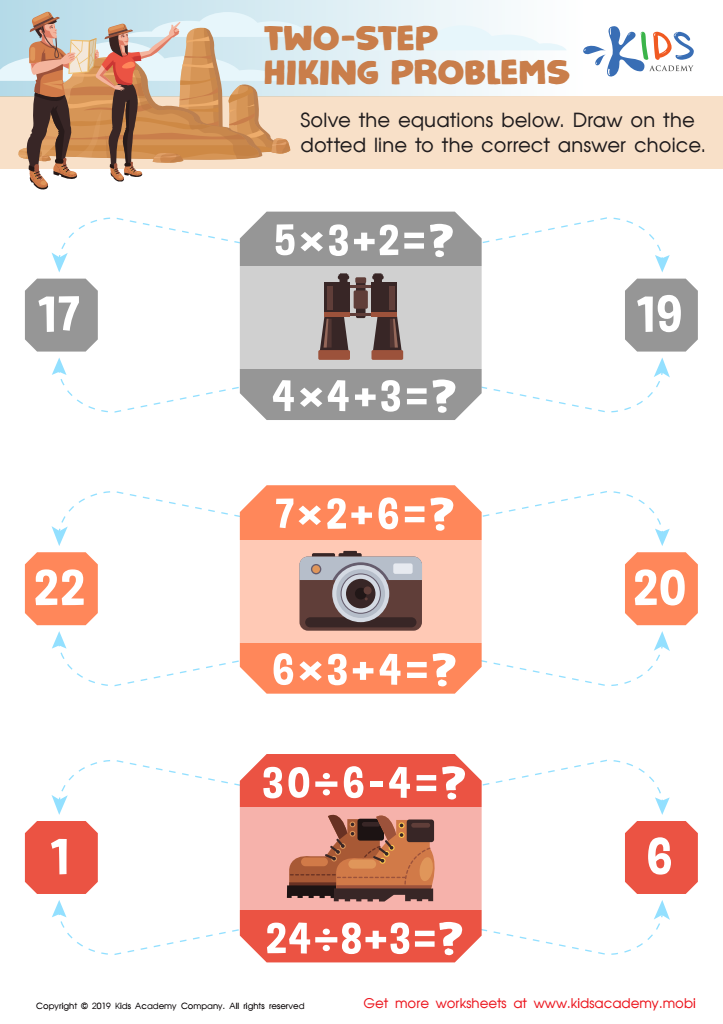
Two-Step Hiking Problems Worksheet
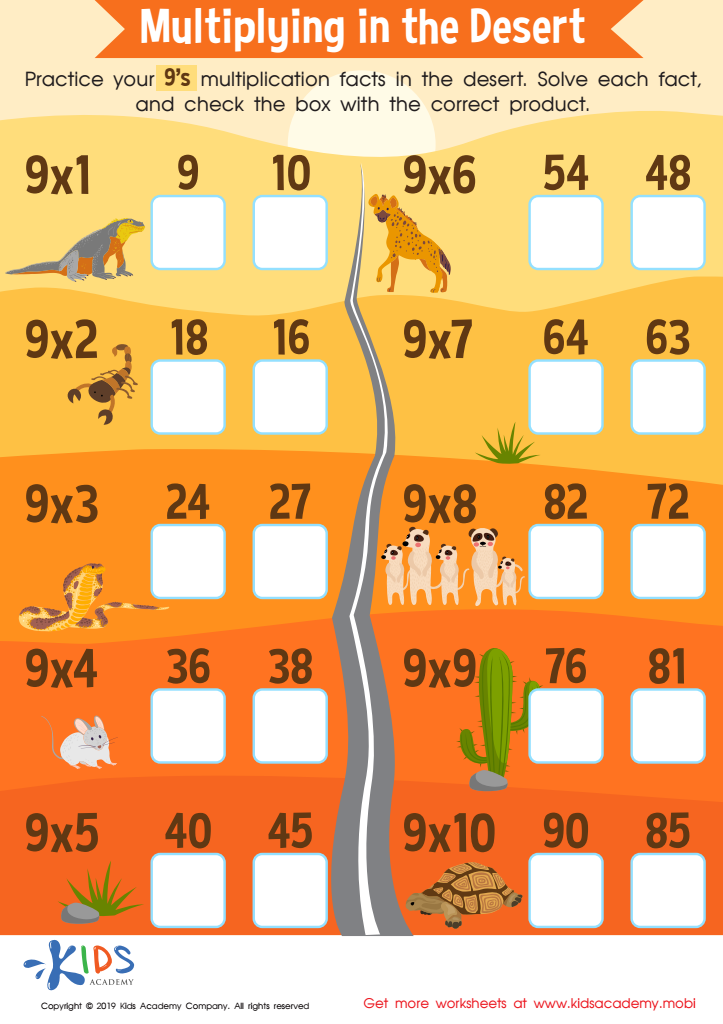
Multiplying in the Desert Worksheet
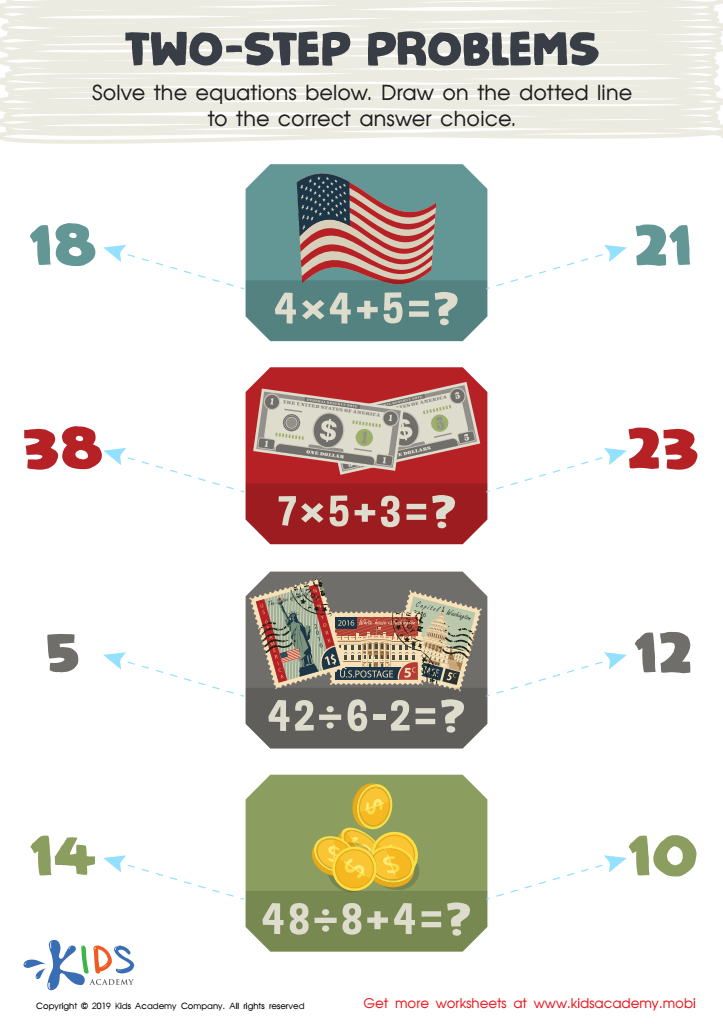
Two-Step Problems Worksheet
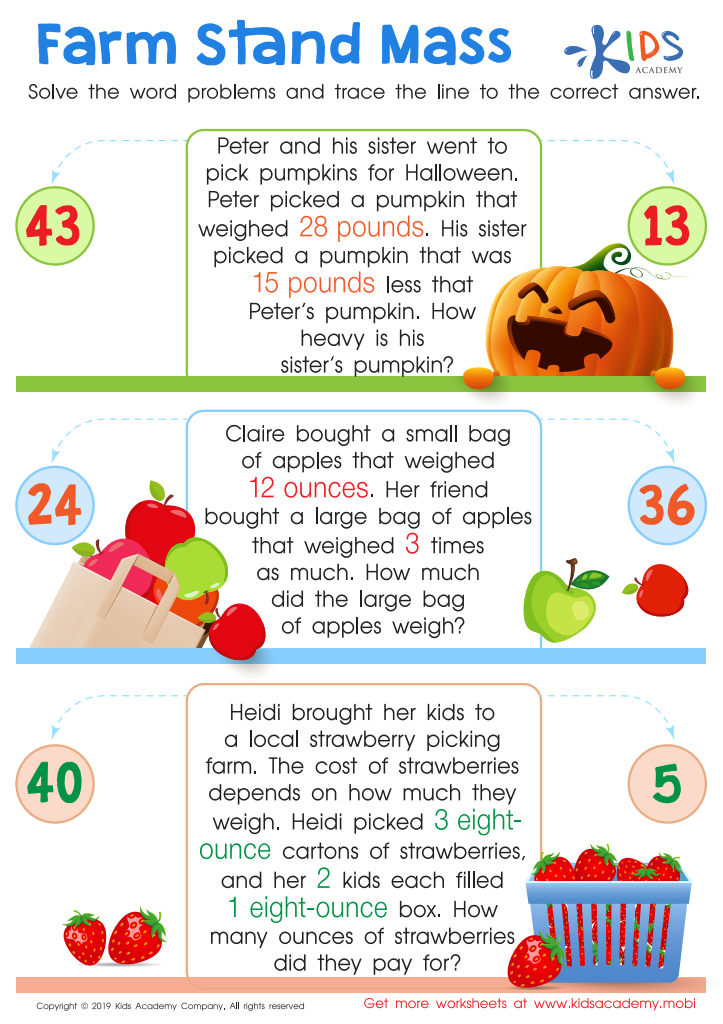
Farm Stand Mass Worksheet
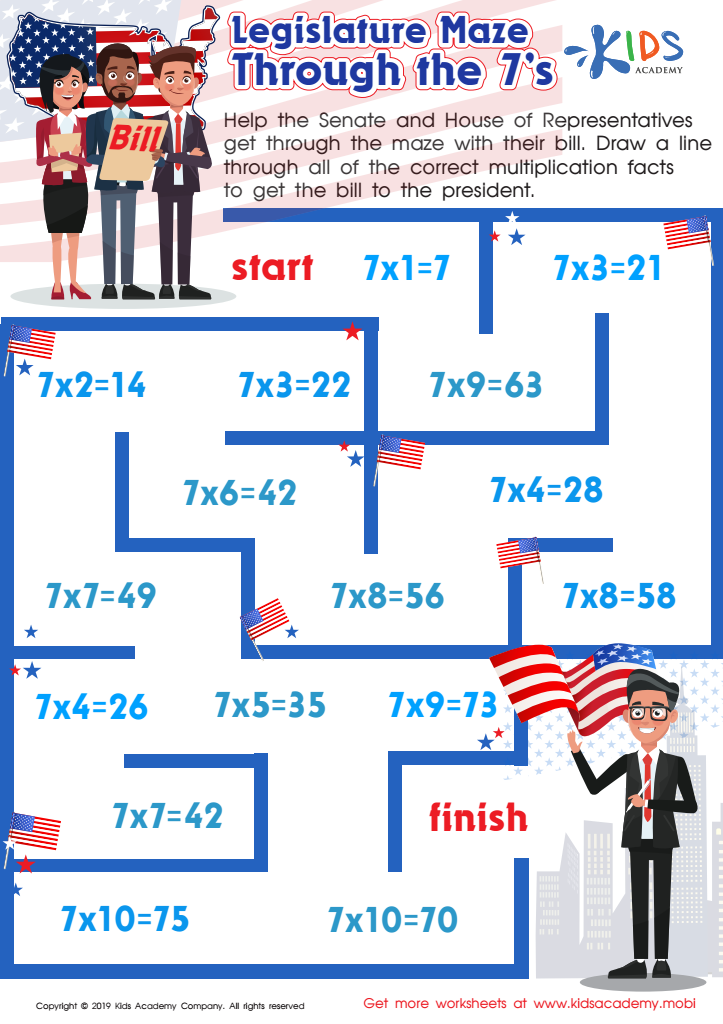
Legislature Maze Through the 7’s Worksheet
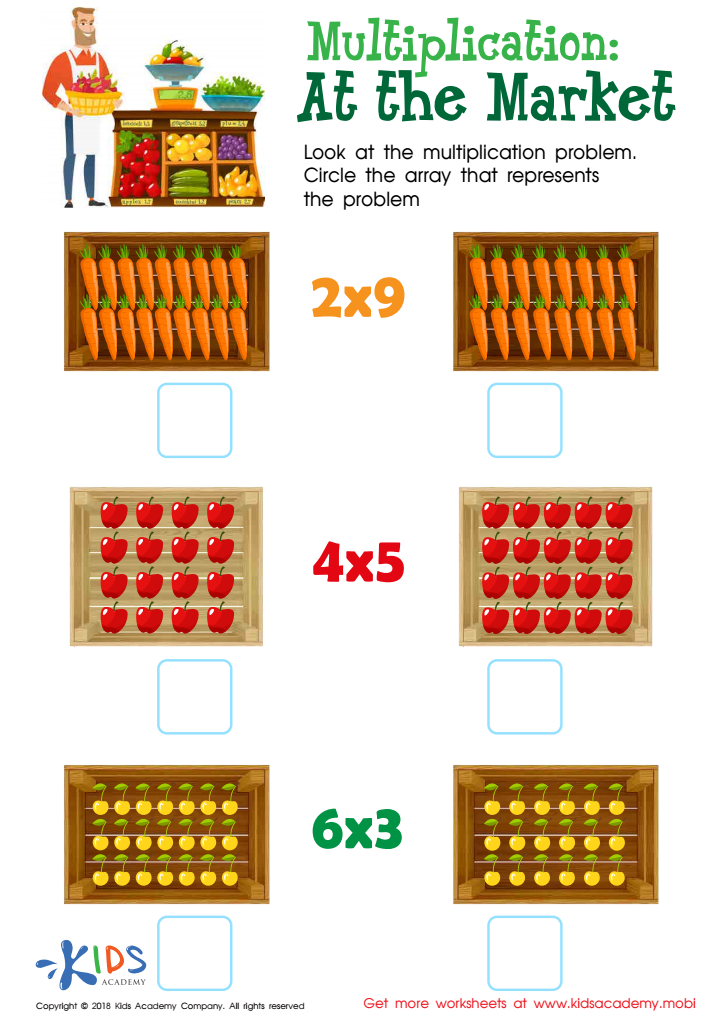
At the Market Worksheet
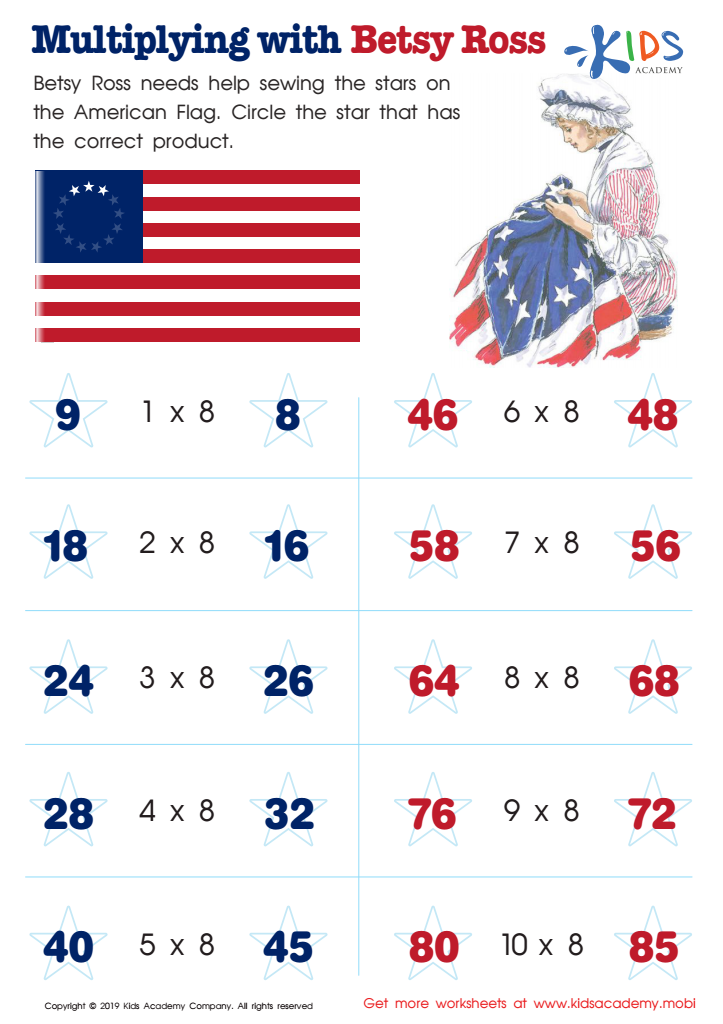
Multiplying with Betsy Ross Worksheet








Problem-solving skills are fundamental for children aged 4-9, particularly when it comes to understanding normal multiplication. During these formative years, children develop critical thinking abilities and mathematical reasoning through hands-on experiences with numbers. Teaching problem-solving in the context of multiplication helps kids grasp the concept of grouping and repeated addition, forming a solid base for future math skills.
Parents and teachers should care about nurturing these skills because they encourage children to approach challenges with confidence and resilience. By engaging students in problem-solving activities, educators can facilitate deeper comprehension of multiplication terms and operations, enabling them to apply concepts in various contexts. This learning not only enhances mathematical ability but also supports cognitive development, teaching children to communicate their thought processes and collaborate with peers.
Additionally, strong problem-solving skills foster a love for learning and pave the way for academic success across subjects. By embedding these skills in everyday activities, such as relationships with numbers during play, parents and teachers create a rich learning environment that promotes curiosity and lifelong learning. Investing in these skills now equips children with essential tools for future academic challenges and real-world decision-making scenarios.








