Phonics recognition Normal Reading Worksheets for Ages 4-9
4 filtered results
-
From - To
Discover our engaging Phonics Recognition Normal Reading Worksheets designed for children aged 4-9! These worksheets foster essential reading skills through fun, interactive activities that focus on letter sounds, recognition, and blends. Perfect for early learners, each worksheet is crafted to enhance phonemic awareness, making reading a joyful experience. Ideal for use at home or in the classroom, our materials align with educational standards, ensuring a solid foundation in literacy. Whether your child is a beginner or looking to sharpen their skills, our worksheets offer a perfect blend of learning and enjoyment, paving the way for confident, lifelong readers.
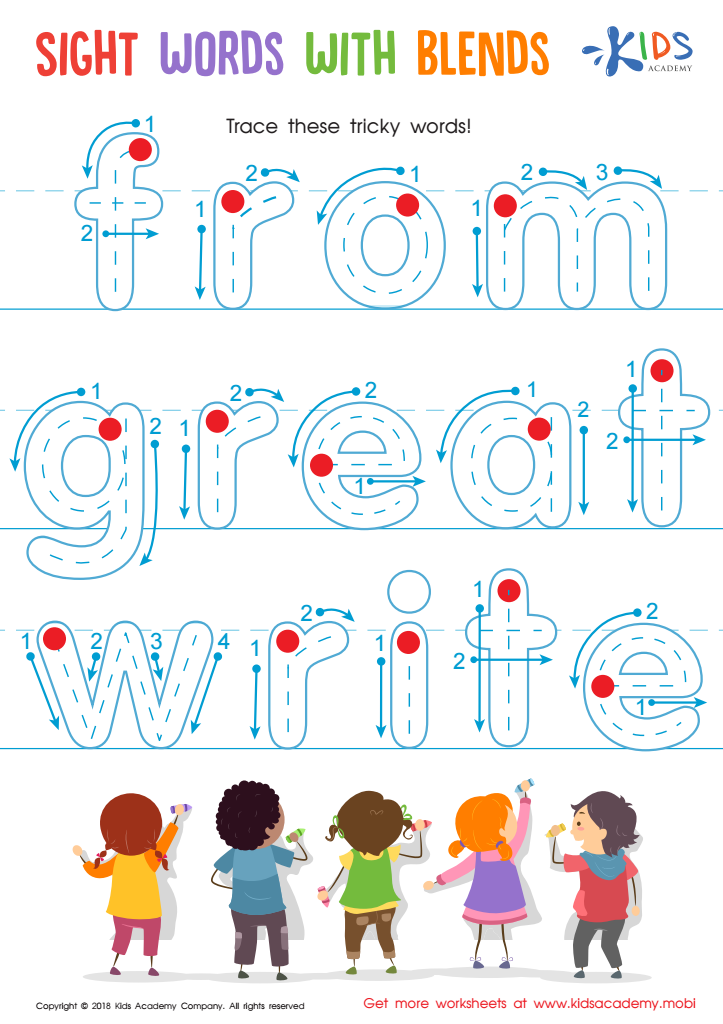
Sight Words with Blends Worksheet
 Assign to My Students
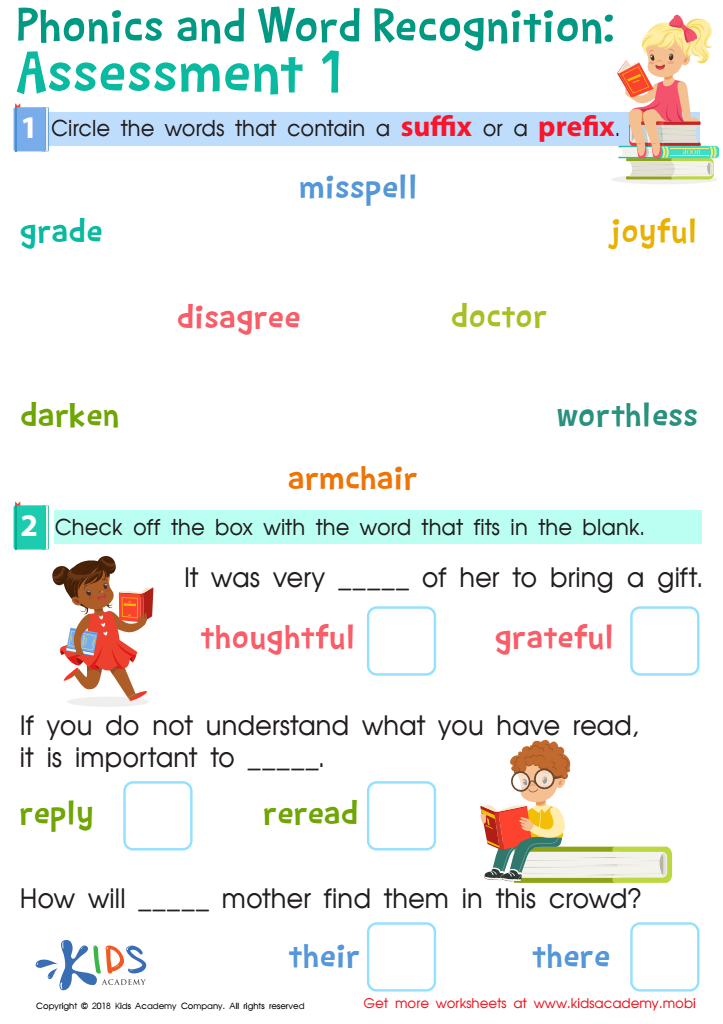
Phonics and Word Recognition: Assessment 1 Worksheet
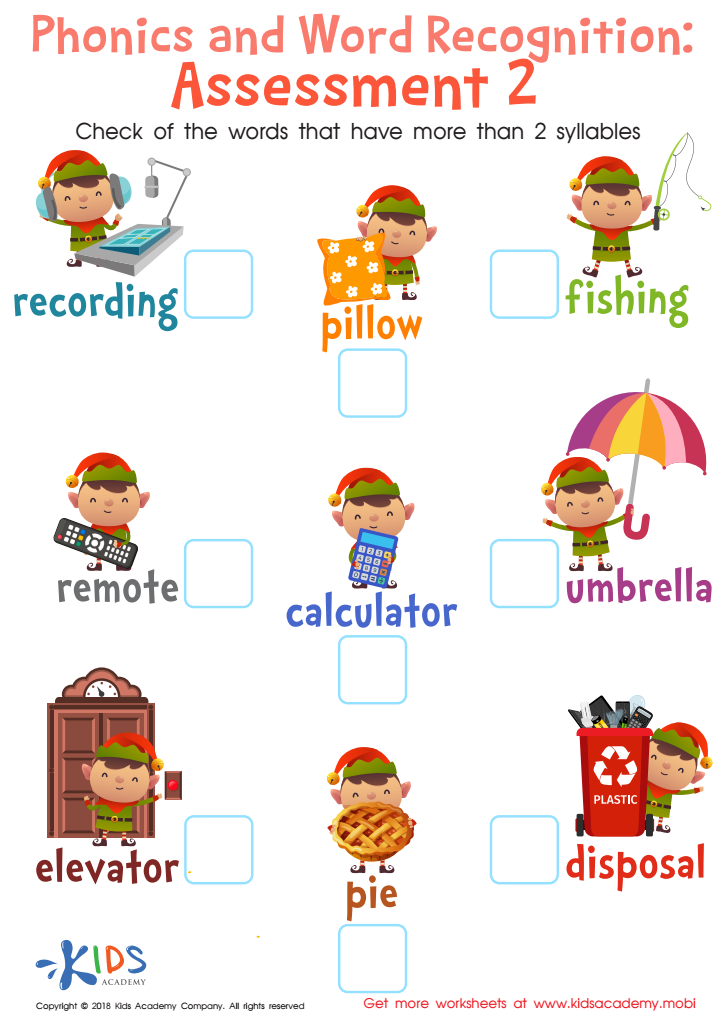
Phonics and Word Recognition: Assessment 2 Worksheet
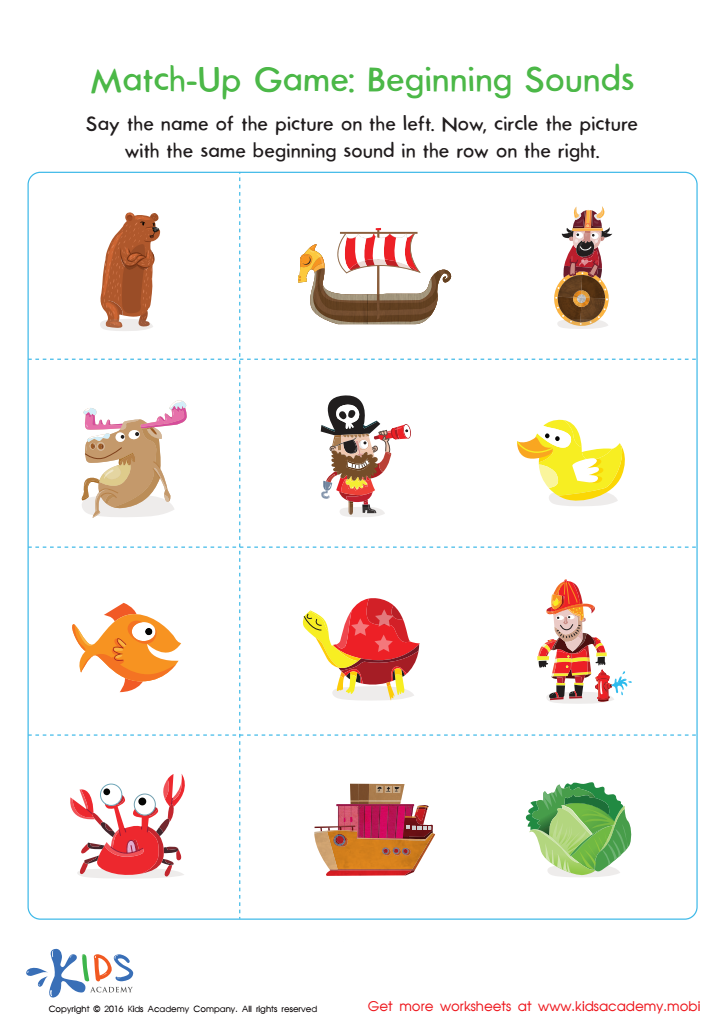
Match–Up Game: Beginning Sounds Worksheet





.jpg)


Parents and teachers should care deeply about phonics recognition in children aged 4-9 because it serves as a foundational skill for reading development. Phonics involves understanding the relationship between letters and the sounds they represent, which is essential in helping children decode words. As early readers, children develop critical literacy skills through phonics, which not only boosts their confidence but also fosters a love for reading.
Research shows that strong phonics skills can significantly improve reading comprehension, enabling children to grasp more complex texts as they advance. This understanding aids in their academic success across subjects, as reading is integral to learning. Furthermore, early phonics instruction provides a structured way for children to engage with language, enhancing their vocabulary and writing skills.
Engaging parents and teachers in promoting phonics recognition can encourage a collaborative learning environment. Supporting children in mastering phonics lays the groundwork for lifelong reading habits. Thus, prioritizing phonics instruction ensures that children are equipped with the essential tools needed for literacy, critical thinking, and effective communication, preparing them for future academic challenges and fostering personal growth.








