Categorization skills Normal Animals Worksheets for Ages 4-9
3 filtered results
-
From - To
Boost your child's cognitive development with our "Categorization Skills Normal Animals Worksheets" tailored for ages 4-9. These printable worksheets enrich early learners by enhancing pivotal skills such as sorting and matching, vital for animal science education. Focusing on normal animals, the activities are engaging and designed to captivate young minds while fostering critical thinking and organization skills. Perfect for classroom or at-home learning, our expertly crafted resources provide a solid foundation in fundamental educational concepts. Cultivate a love for learning and sharpen your child's categorization abilities with these fun and educational animal-based worksheets.
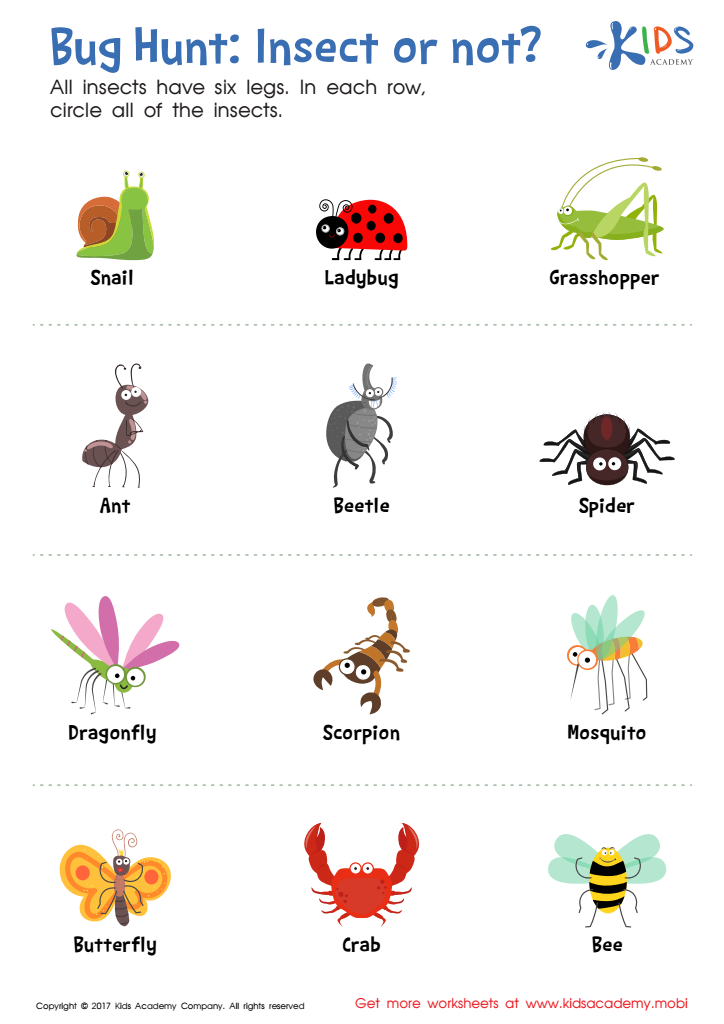
 Assign to My Students
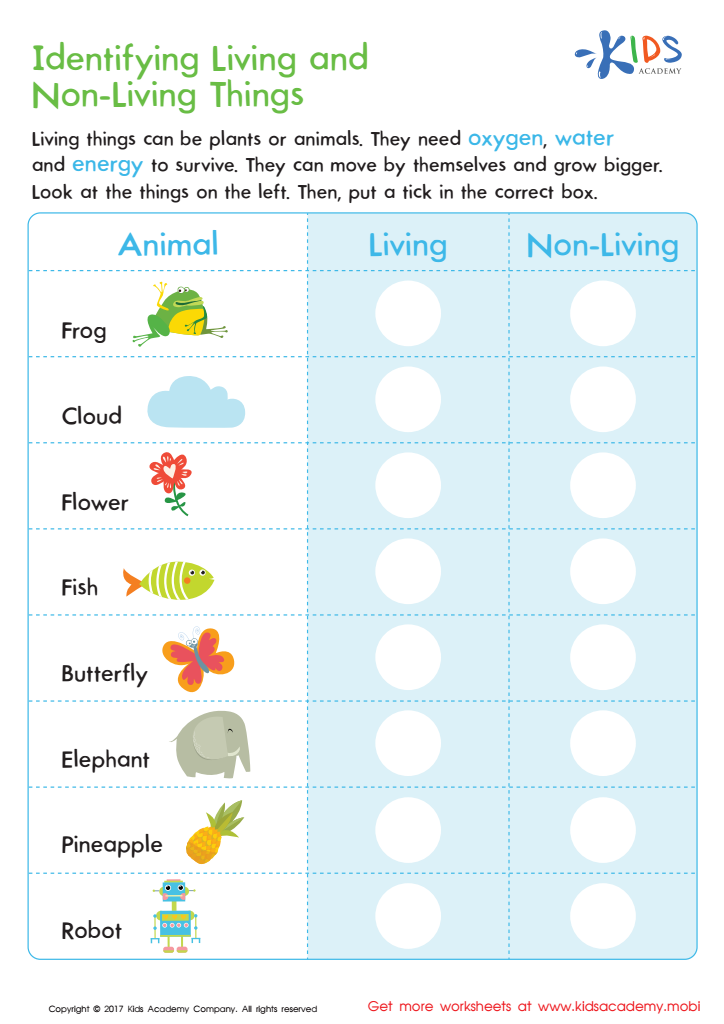
Identifying Living or Non–living Worksheet
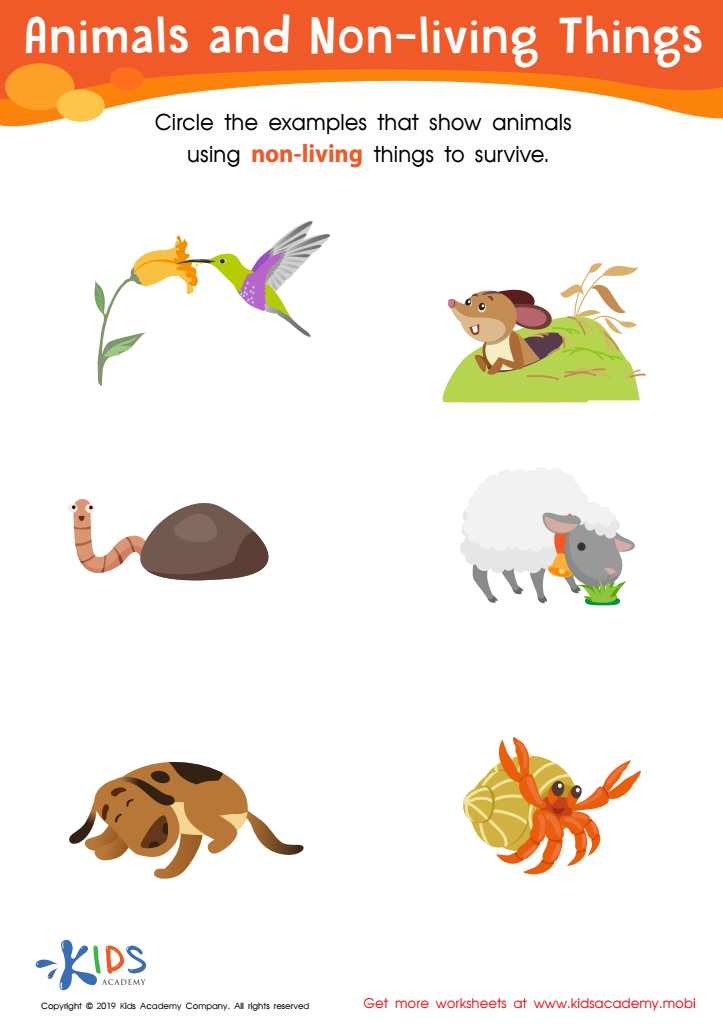
Animals and Non-Living Things Worksheet







Categorization skills are a foundational element of cognitive development in children aged 4-9. They help children organize information and make sense of the world around them. Focusing specifically on categorizing normal animals enables children to develop a range of essential skills and knowledge that have lasting effects.
Firstly, learning to categorize animals aids in cognitive processing, allowing children to sort and retrieve information more efficiently. This fundamental skill is transferable to other subjects, such as math and reading, where sorting and classifying information is critical.
Additionally, categorization encourages observational and critical thinking skills. When children learn to categorize animals based on characteristics like habitat or diet, they learn to pay attention to details and make comparisons. This not only enhances their understanding of biological concepts but also fuels curiosity and engagement with the natural world.
Socially, categorization activities can be interactive and collaborative, promoting communication and teamwork. Children often work together to group animals, sharing their thoughts and reasoning, which enhances their language and social skills.
Finally, understanding animal categories helps foster empathy and environmental awareness. Recognizing the diversity of animal life can lead to a greater appreciation for nature and a sense of responsibility to protect the environment. In sum, parents and teachers should prioritize categorization skills to support holistic development, laying a strong foundation for future learning.








