Fine Motor Skills Normal Geometry Worksheets for 4-Year-Olds
6 filtered results
-
From - To
Explore our engaging "Fine Motor Skills Normal Geometry Worksheets" designed specifically for 4-year-olds! These worksheets offer fun and creative activities that build essential fine motor skills while introducing young learners to geometric shapes and concepts. Each worksheet encourages children to practice tracing, coloring, and manipulating shapes, fostering hand-eye coordination and dexterity. Perfect for at-home learning or classroom settings, these resources support cognitive development and make learning shapes enjoyable. Give your child the tools they need to succeed in early education while they play and express their creativity! Download them today and watch your little one's skills blossom!
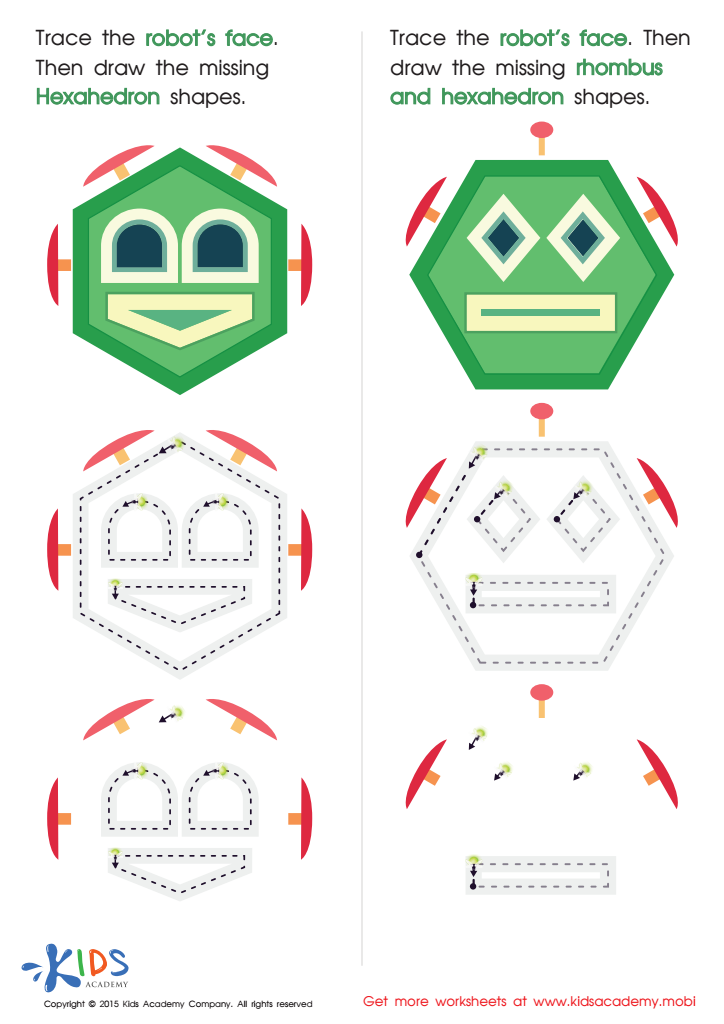
Practice Drawing Hexahedrons And a Rhombus Worksheet
 Assign to My Students











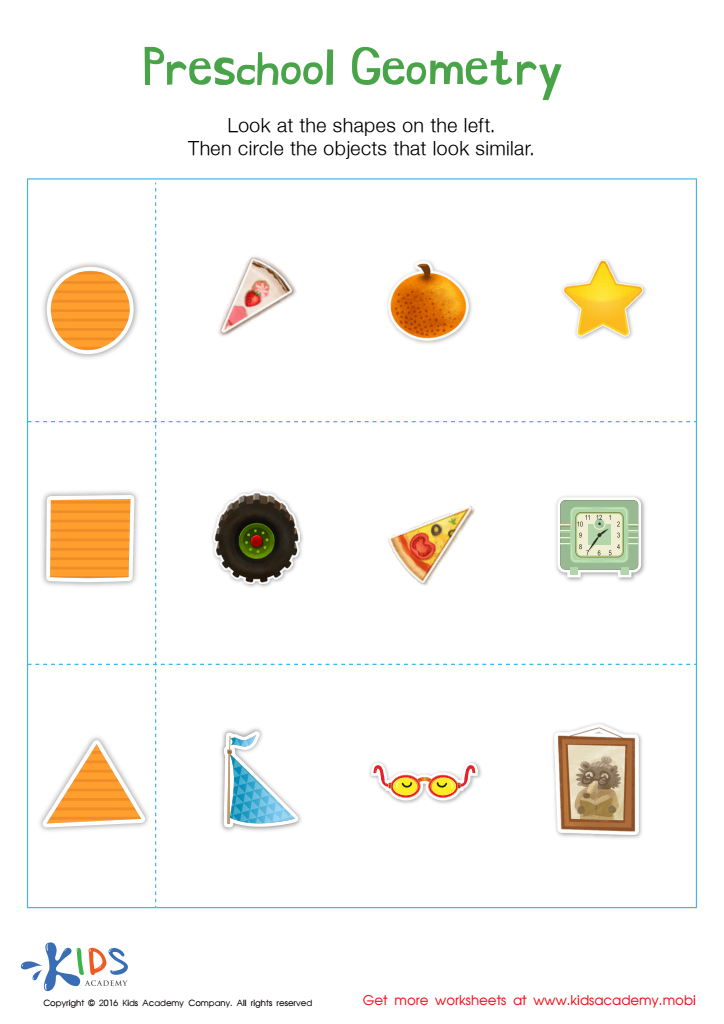
Preschool Geometry Match Up Worksheet
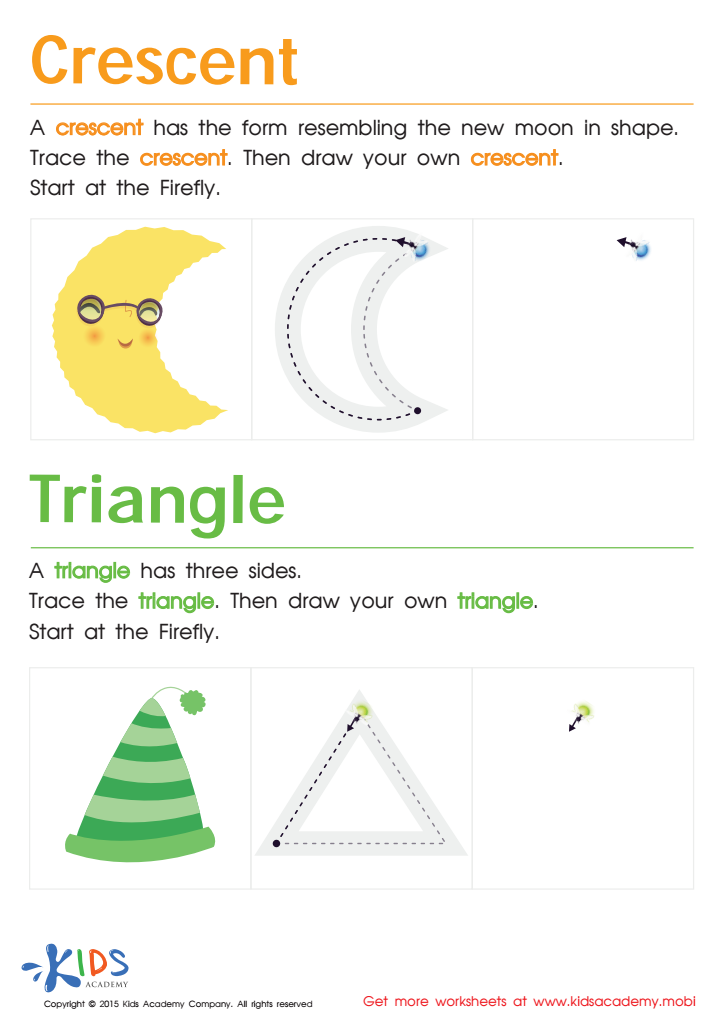
Learning to Draw Crescents And Triangles Worksheet
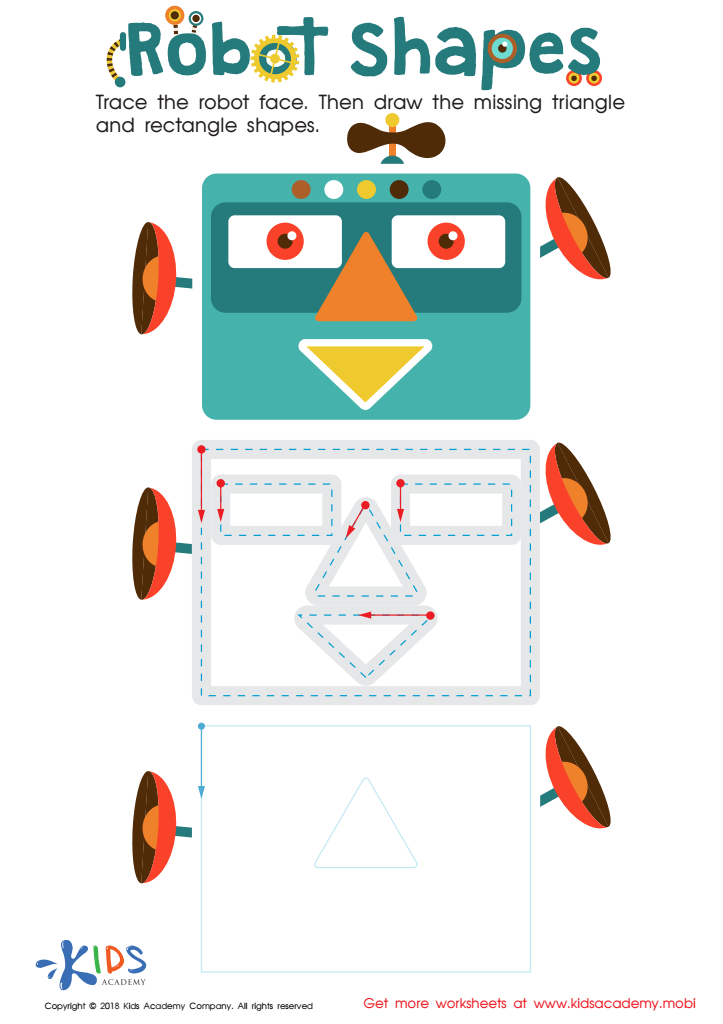
Robot Shapes Worksheet
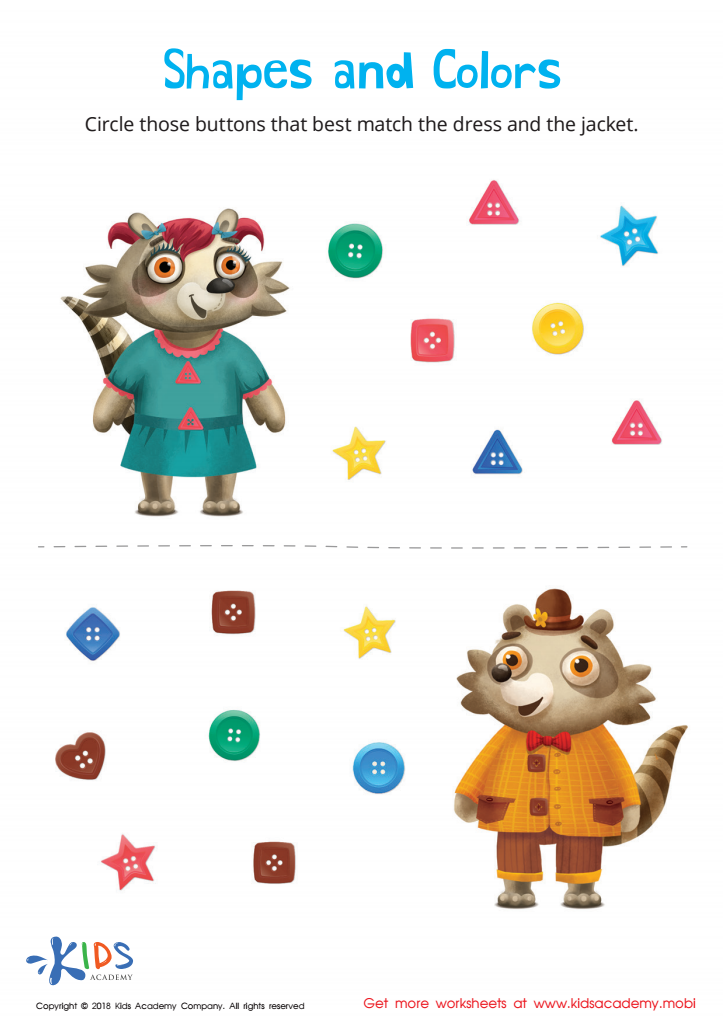
Shapes and Colors Worksheet
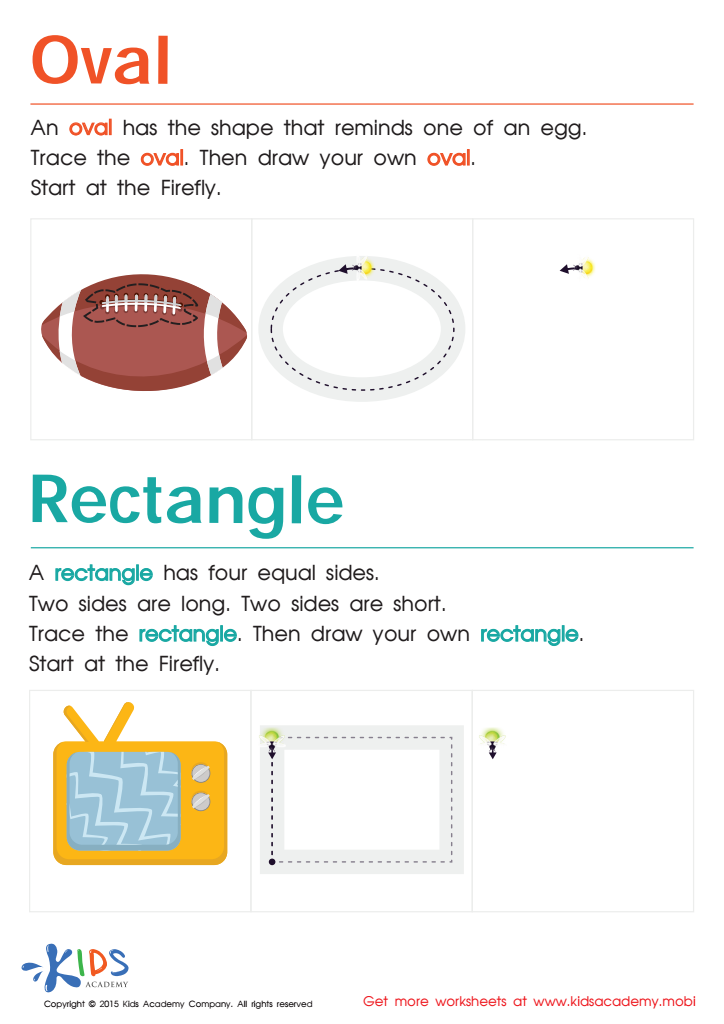
Easy Drawing of Ovals And Rectangles Worksheet








Fine motor skills (FMS) are crucial for a child's development, particularly for 4-year-olds, as they engage in activities that require precision and control. These skills involve small movements made by hands and fingers, enabling children to perform tasks like holding a pencil, turning pages, or using scissors. Developing strong fine motor skills facilitates normal geometric understanding—seeing shapes, patterns, and spatial relationships—critical for early math readiness.
Parents and teachers should prioritize fostering FMS through play-based activities, such as drawing, building, stringing beads, or playing with clay. Not only do these activities improve dexterity, but they also promote cognitive development by encouraging problem-solving and creativity.
Moreover, fine motor skills are linked to a child’s self-esteem. Successfully completing tasks builds confidence, making children more willing to engage in complex activities. As children navigate shapes and designs, they gain foundational skills that impact future learning, laying the groundwork for geometry and mathematical concepts that they will encounter in school.
Ultimately, nurturing fine motor skills through purposeful play ensures children are well-prepared for academic challenges, enhances their social interactions, and bolsters their overall growth and development. This investment in early skills pays off as they progress through their educational journey.








