Categorization skills Normal Matching Worksheets for 4-Year-Olds
6 filtered results
-
From - To
Unlock your child's potential with our Categorization Skills Normal Matching Worksheets for 4-Year-Olds. Designed to enhance early cognitive development, these engaging, age-appropriate worksheets help children strengthen their matching and sorting abilities. By exploring various themes and object groups, kids learn to identify similarities and differences, sharpening their critical thinking and problem-solving skills. Ideal for use at home or in the classroom, our printable worksheets offer a fun and interactive way to improve foundational math concepts. Start your child's learning journey with Kids Academy today!
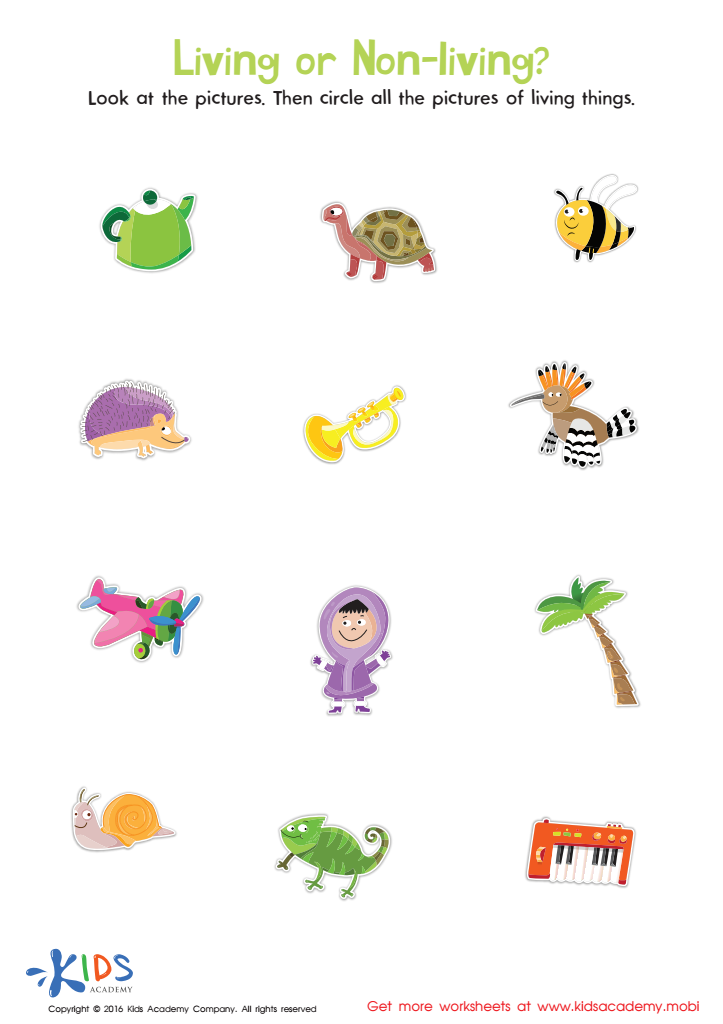
Identifying Living and Non–living Things Sorting Worksheet
 Assign to My Students
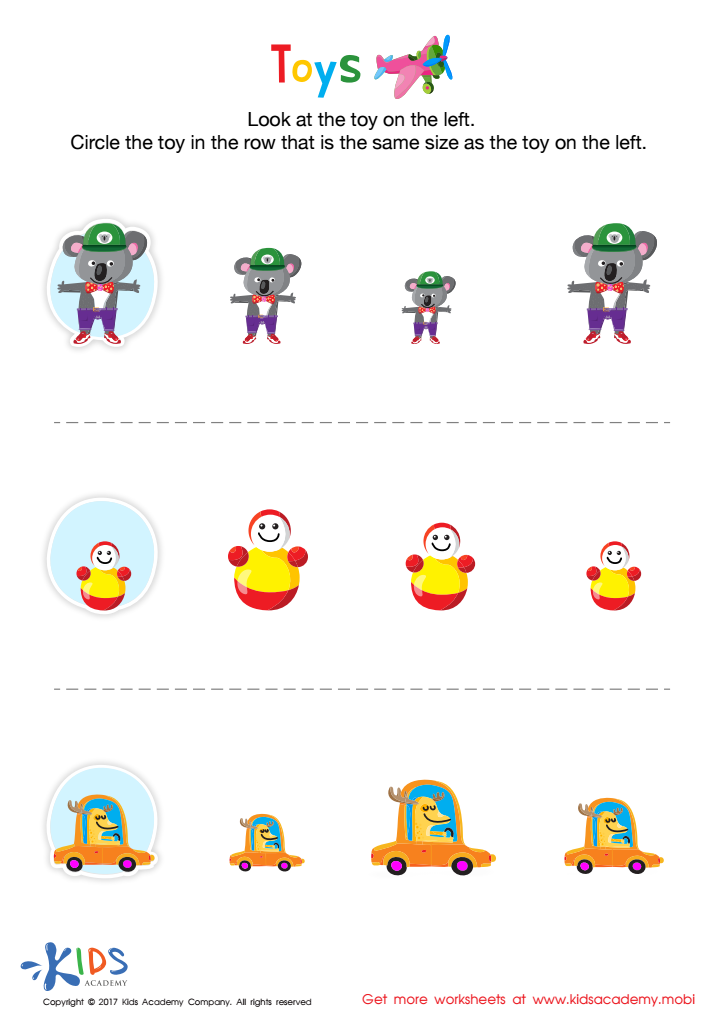
Matching: Classifying Toys by Size Worksheet
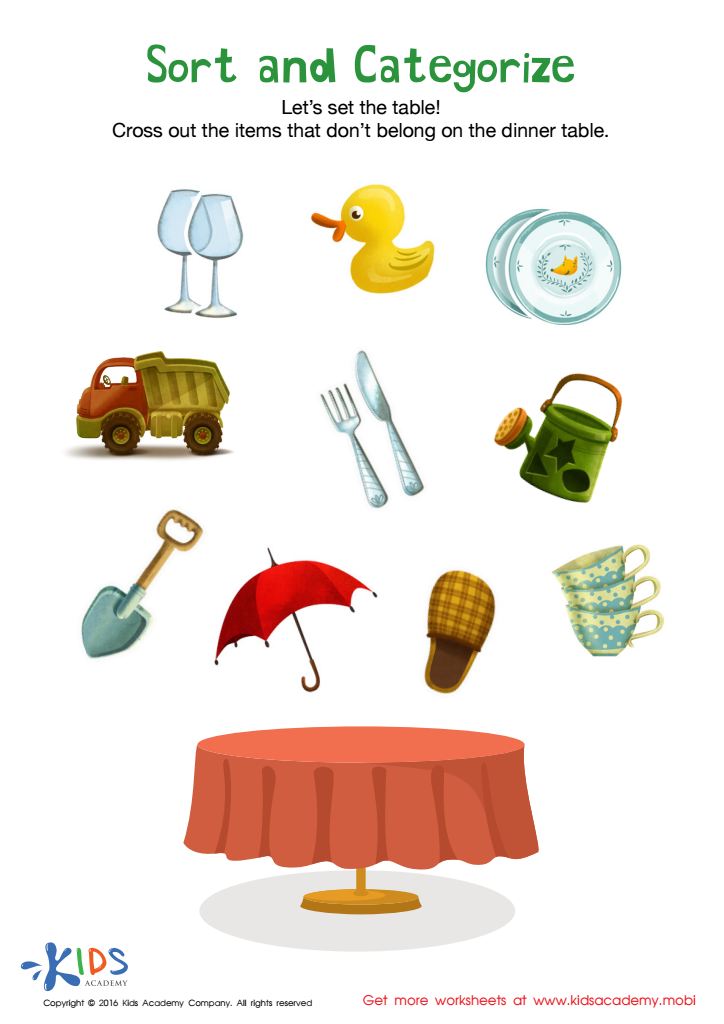
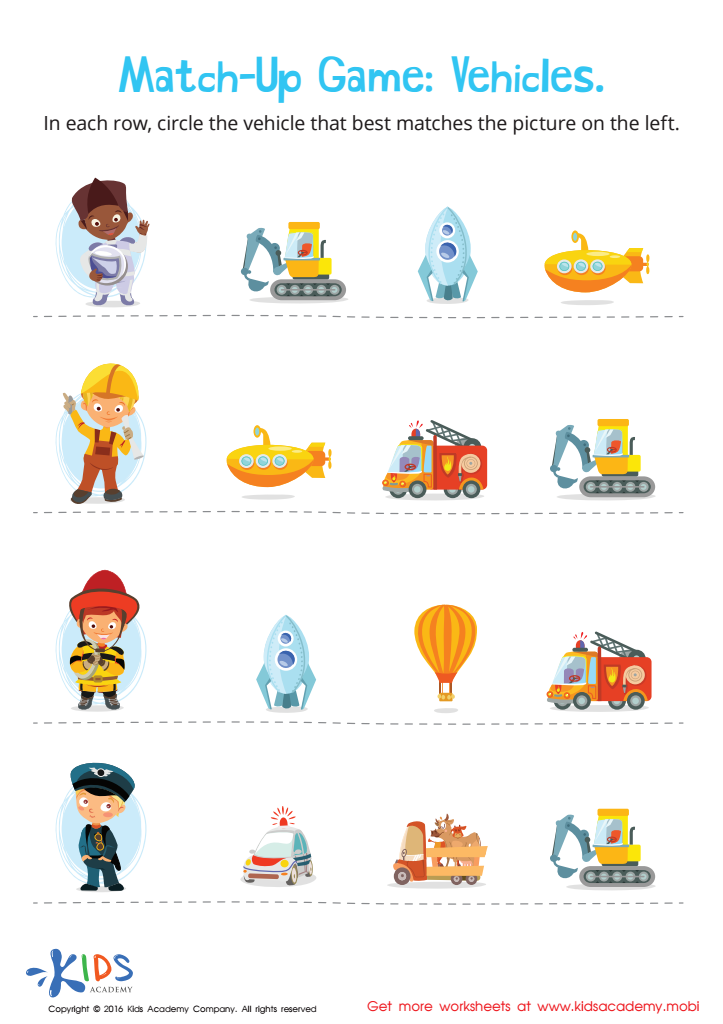
Vehicles Worksheet
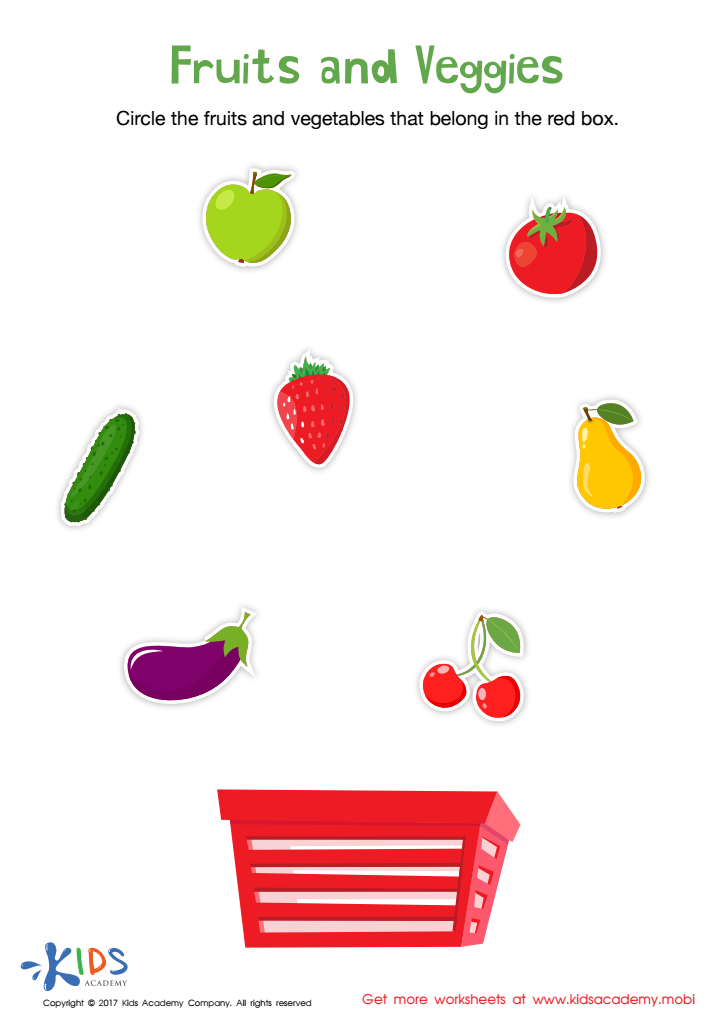
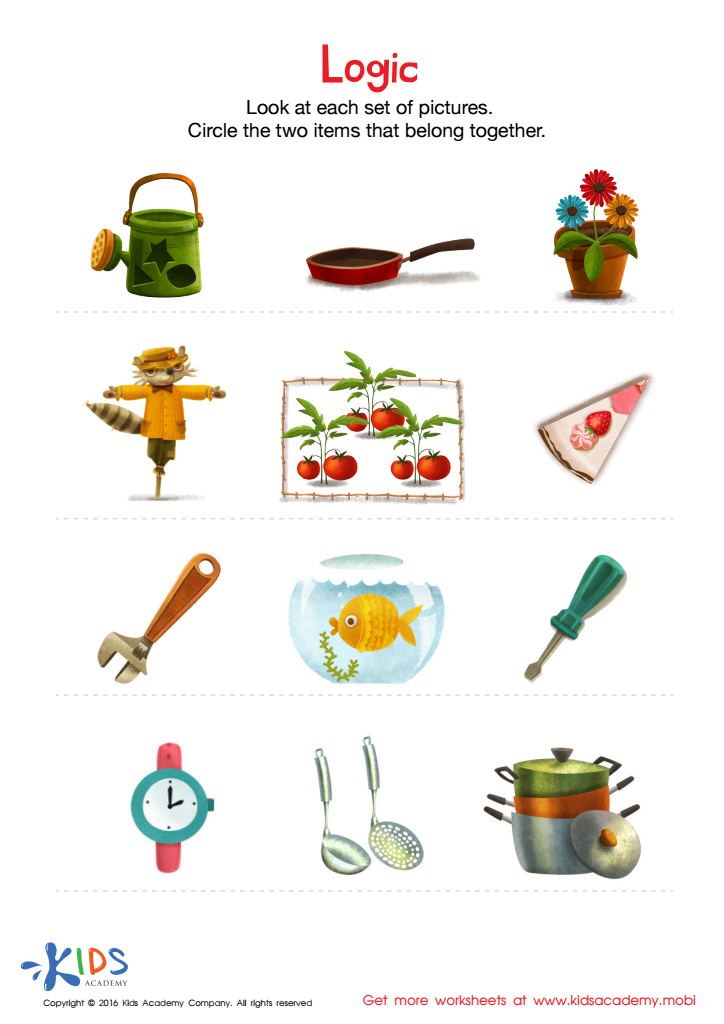
Logic Game Sorting Worksheet








Categorization skills and normal matching are fundamental cognitive abilities that form the basis for a child's academic and social development. For 4-year-olds, these skills are particularly crucial because they lay the groundwork for more complex thinking and learning in later years.
Categorization involves grouping objects, concepts, or information based on shared attributes or common characteristics. When children learn to categorize, they develop critical thinking skills such as comparison, differentiation, and abstract thinking. These abilities are essential not only for understanding mathematical concepts but also for literacy skills, as children learn to differentiate between letters, sounds, and word types.
Normal matching involves pairing items based on similarities, a basic form of categorization. This activity enhances a child's ability to recognize patterns and relationships among objects, a crucial early step toward logical reasoning and problem-solving skills.
Both categorization and matching activities also support language development. As children group objects and discuss their similarities and differences, they naturally expand their vocabulary and their ability to describe the world around them. Socially, these skills enable better organization of thoughts and clearer communication, fostering more meaningful interactions with peers and adults.
In summary, developing categorization and matching skills in young children is a fundamental aspect of early childhood education that significantly contributes to cognitive growth, language acquisition, and social interactions, building a strong foundation for future academic achievement.








