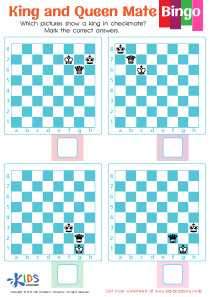
Normal Chess Worksheets for Ages 5-6 - Page 3
54 filtered results
-
From - To
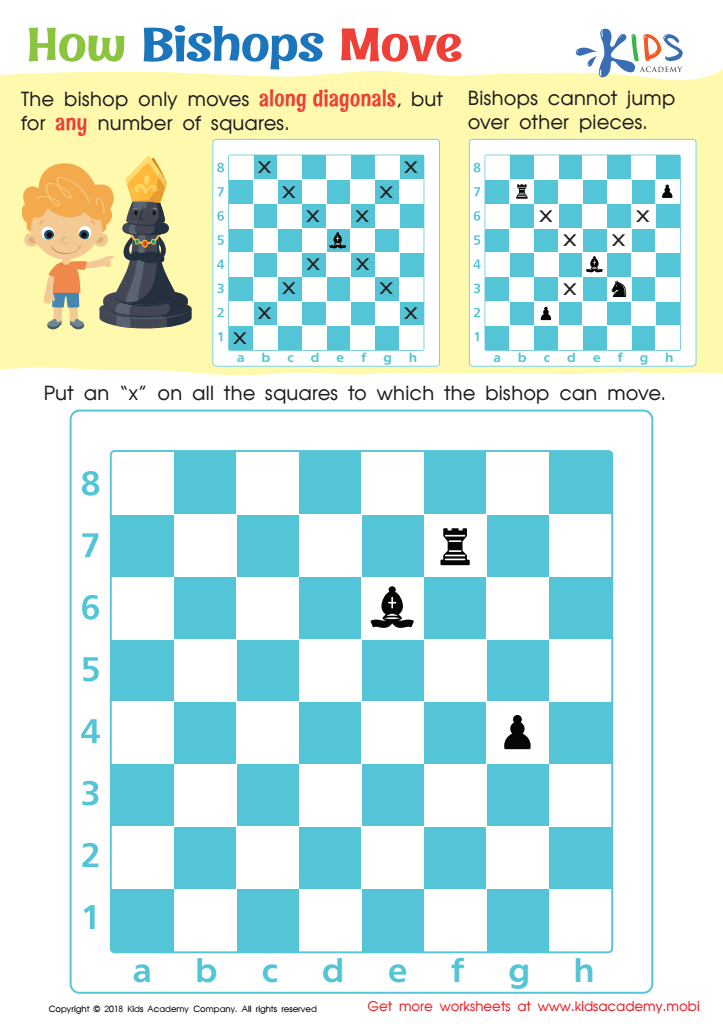
How Bishops Move Worksheet
 Assign to My Students
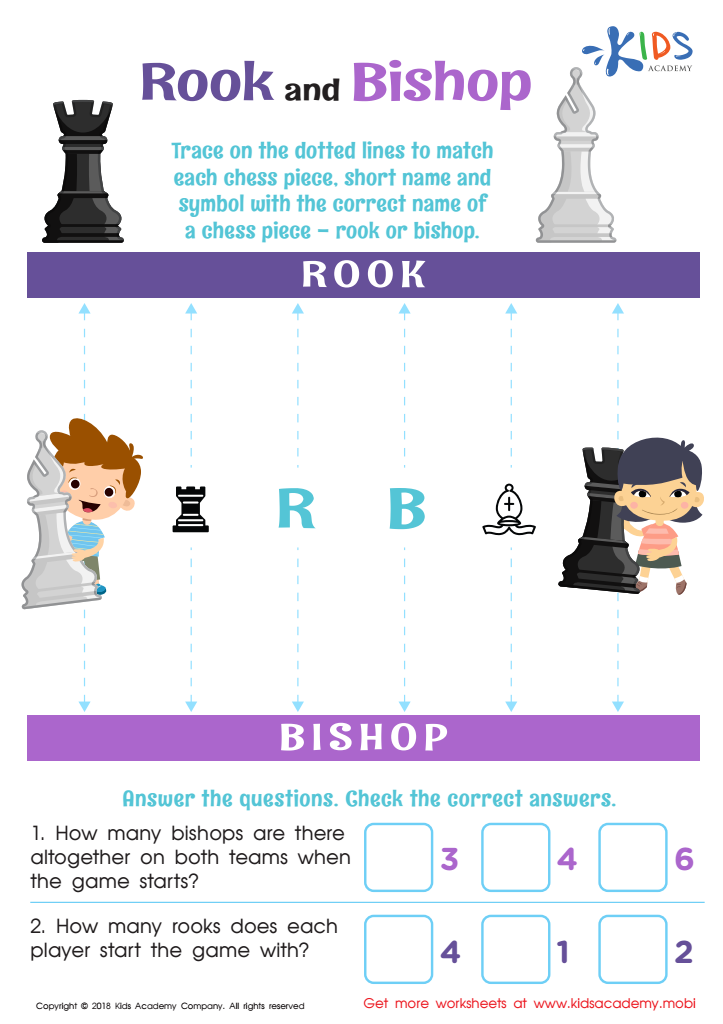
Rook and Bishop Worksheet
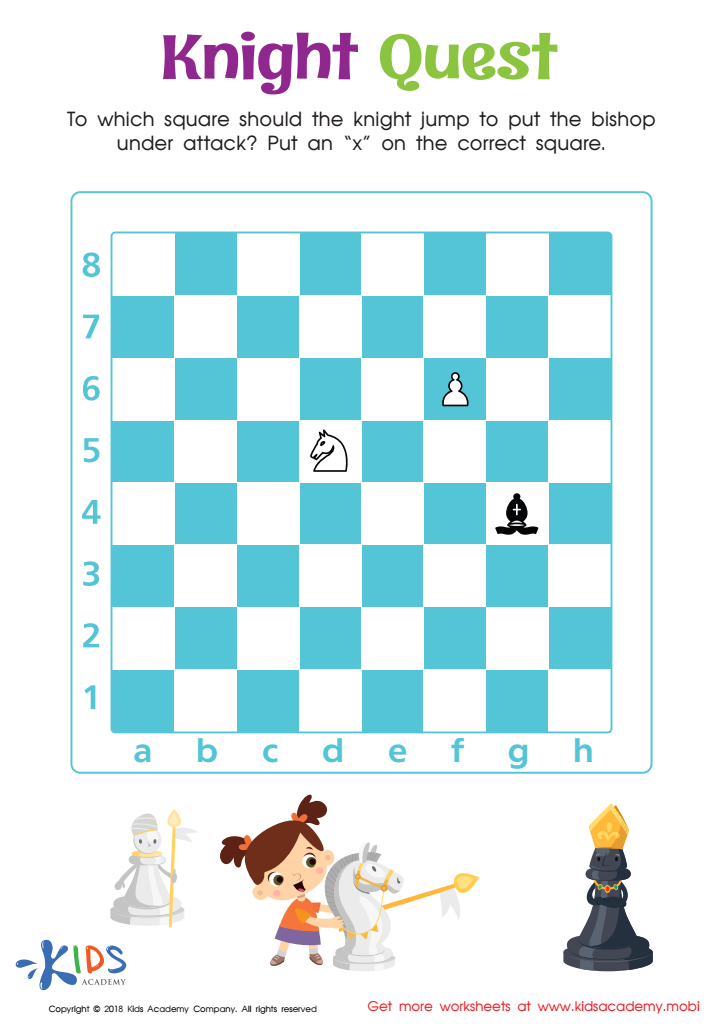
Knight Quest Worksheet
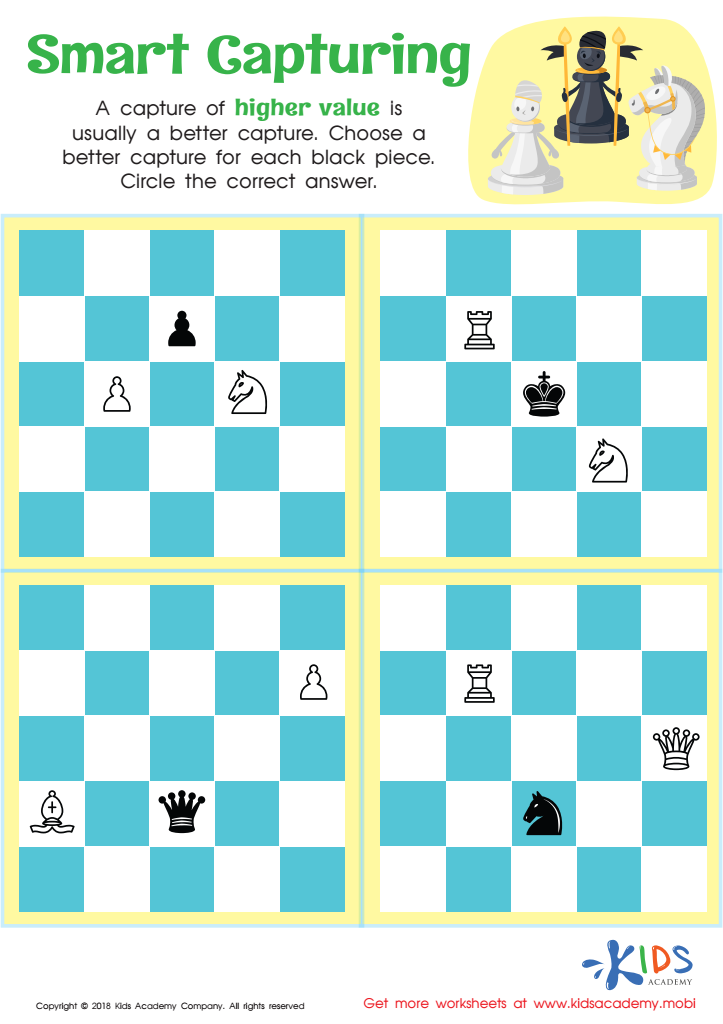
Smart Capturing Worksheet
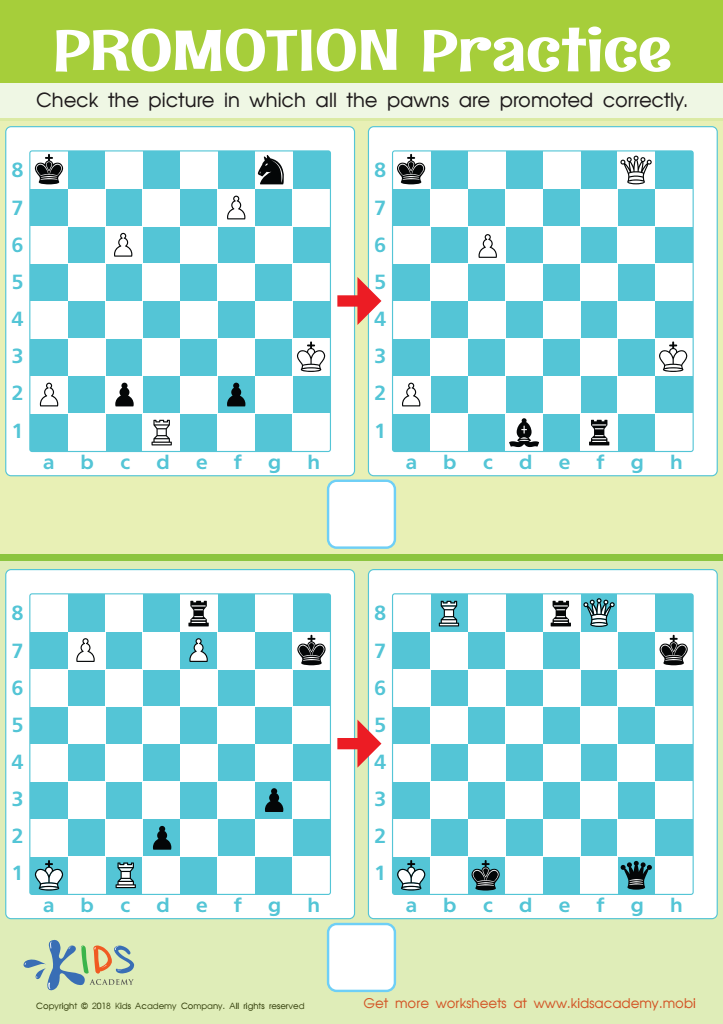
Promotion Practice Worksheet
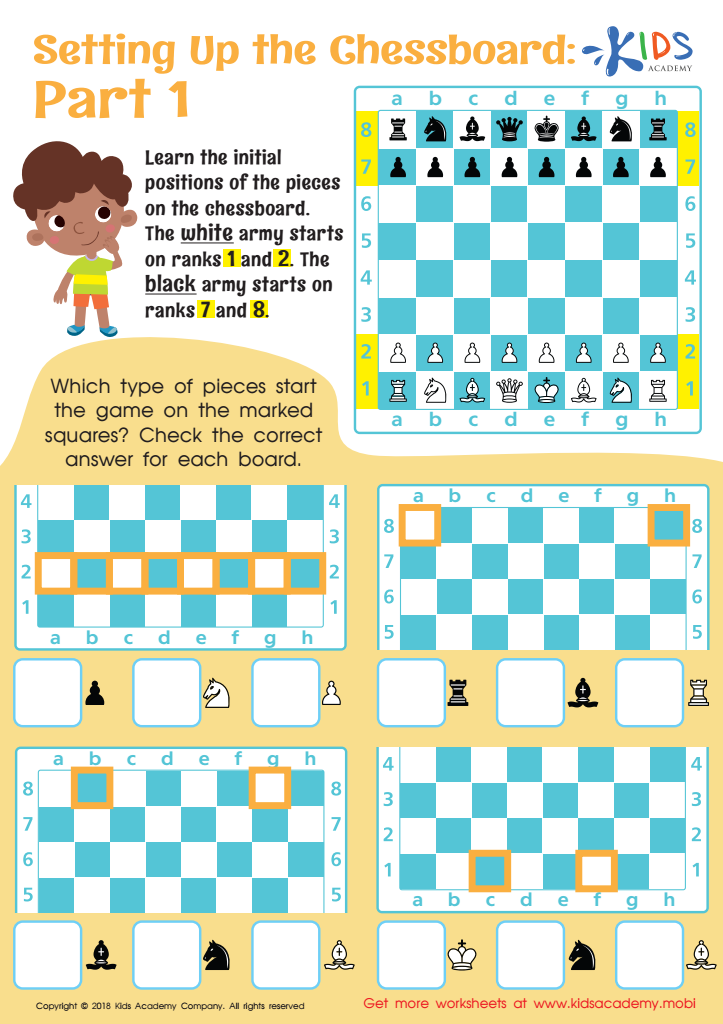
Setting up the Chessboard: Part 1 Worksheet






Normal Chess, a simplified version of the traditional game, offers numerous benefits for children ages 5-6 that parents and teachers should embrace. At this young age, children are developing critical cognitive skills, and playing chess can significantly enhance their problem-solving abilities and strategic thinking. The game encourages logical reasoning, as children learn to anticipate their opponent's moves and think several steps ahead.
Furthermore, chess promotes patience and concentration. Young players must pay attention to the board and the game's rules, fostering focus and discipline. This is invaluable in a classroom setting, where sustained attention is crucial for learning.
Chess also teaches valuable life skills such as respect for opponents, taking turns, and accepting both win and loss graciously. These social skills are essential for personal development and future teamwork situations.
Incorporating Normal Chess into early education can also make learning fun and engaging, sparking interest in critical thinking games from a young age. By supporting children in learning to play chess, parents and teachers set a foundation for intellectual growth, social interaction, and emotional resilience, thus enriching their overall developmental experience.