Normal 2D Shapes Worksheets for Ages 5-7 - Page 2
32 filtered results
-
From - To
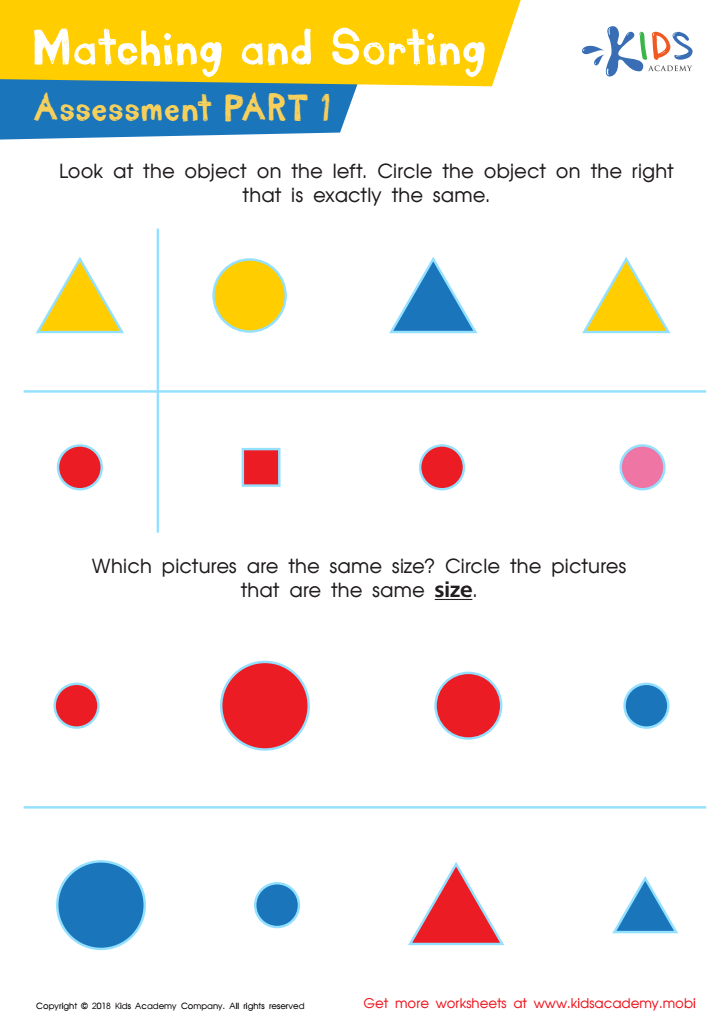
Matching and Sorting for Kindergarten: Assessment 1 Worksheet
 Assign to My Students

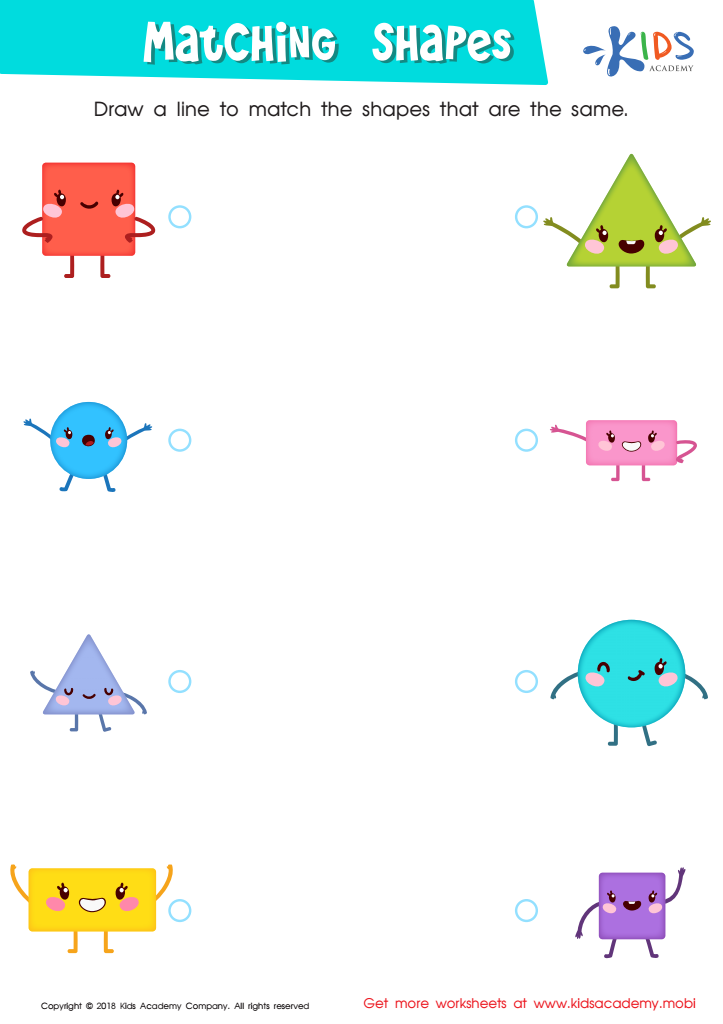
Matching Shapes Worksheet
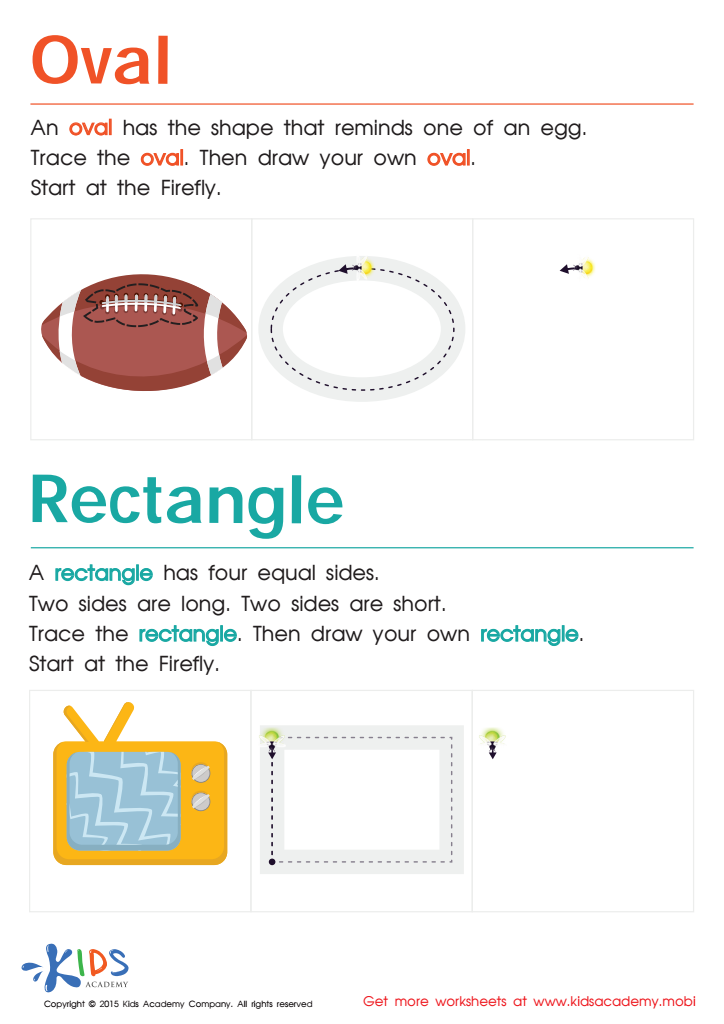
Easy Drawing of Ovals And Rectangles Worksheet
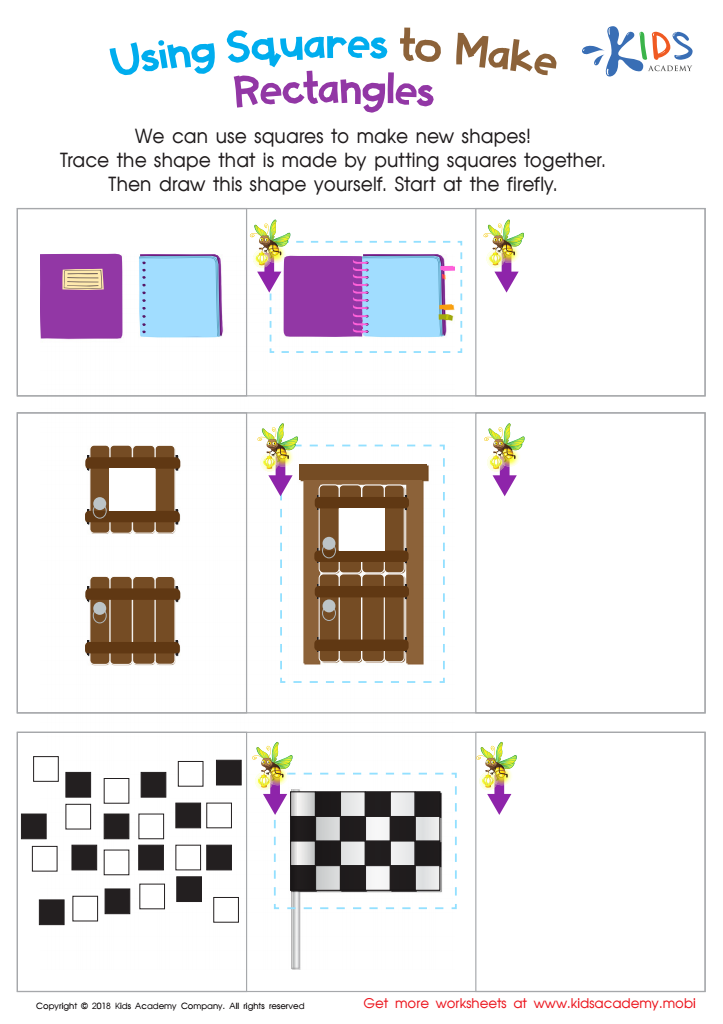
Using Squares to Make Rectangles Worksheet
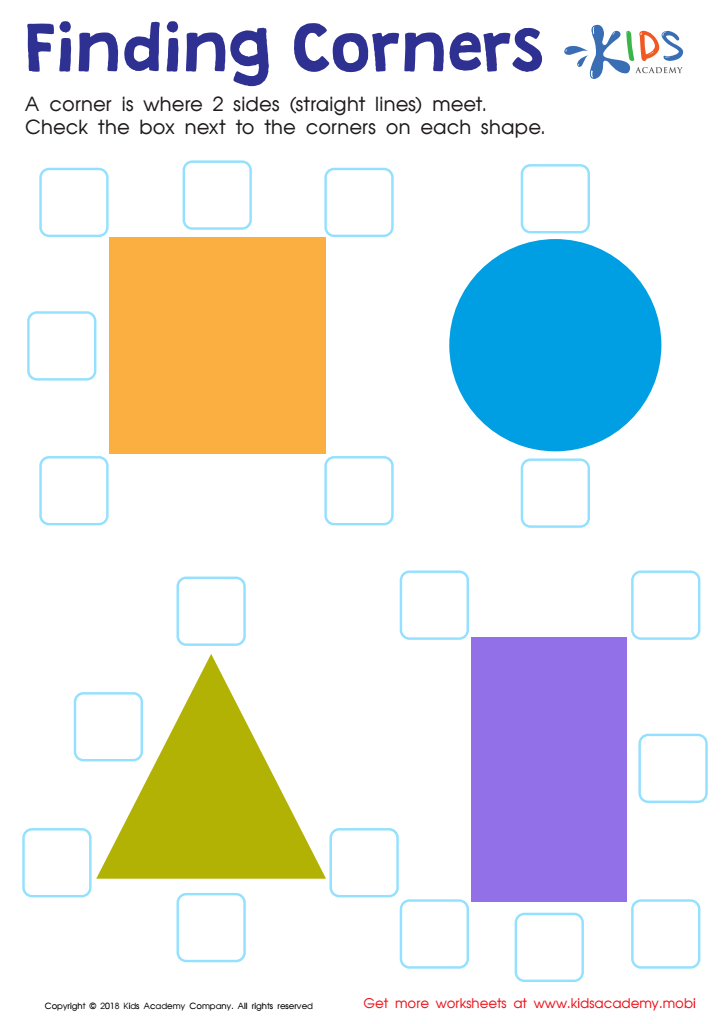
Finding Corners Worksheet
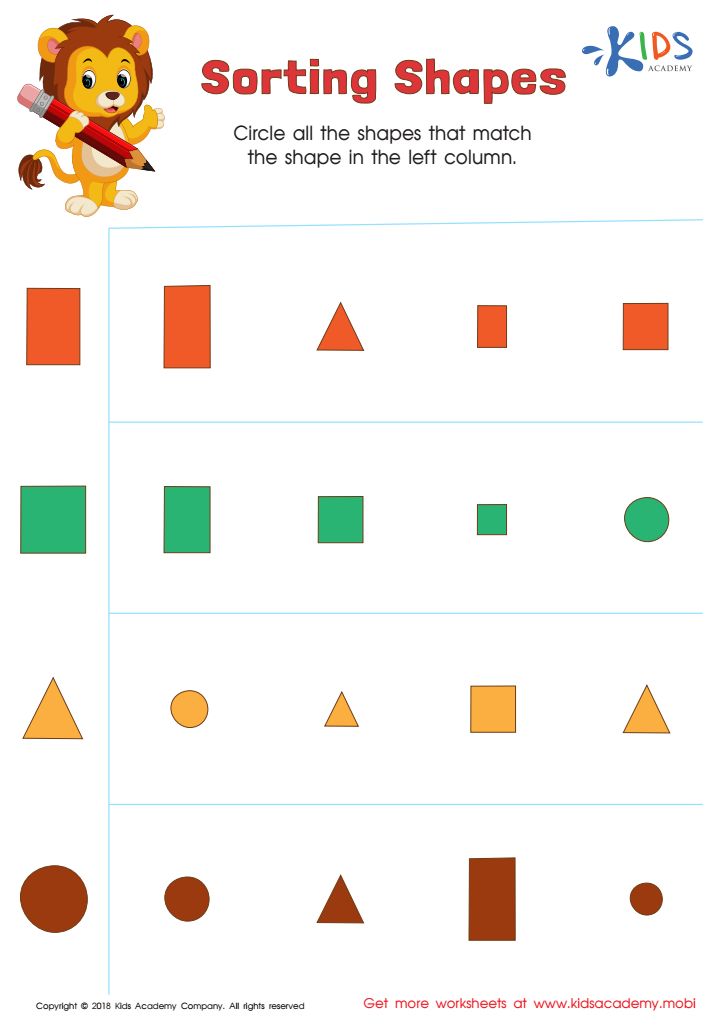
Sorting Shapes - Part 2 Worksheet
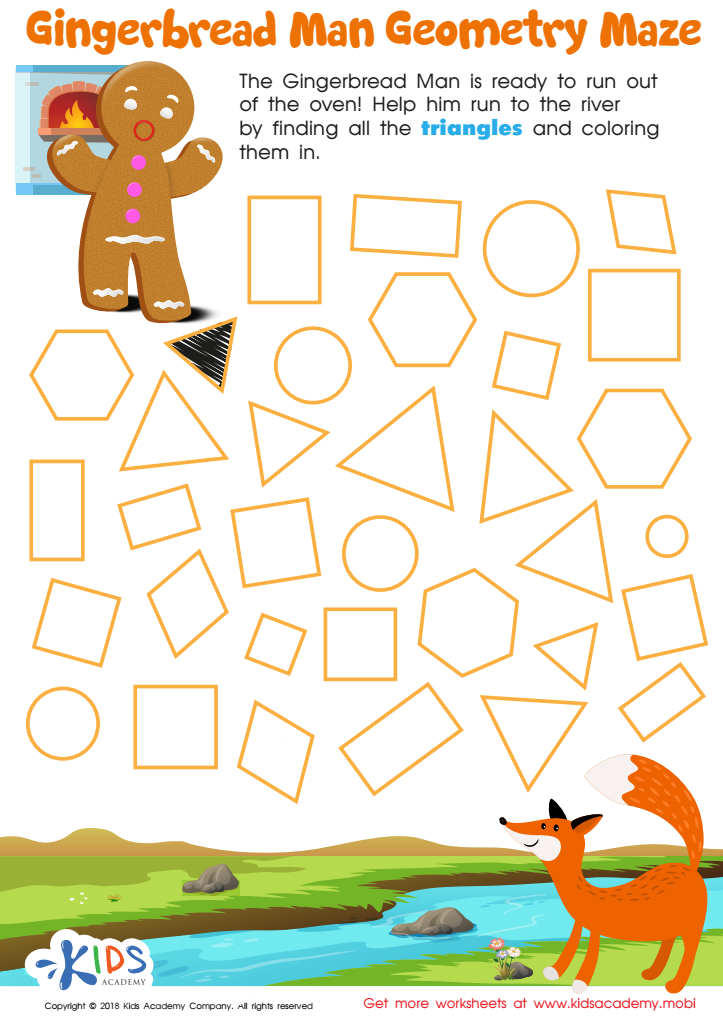
Gingerbread Man Geometry Maze Worksheet
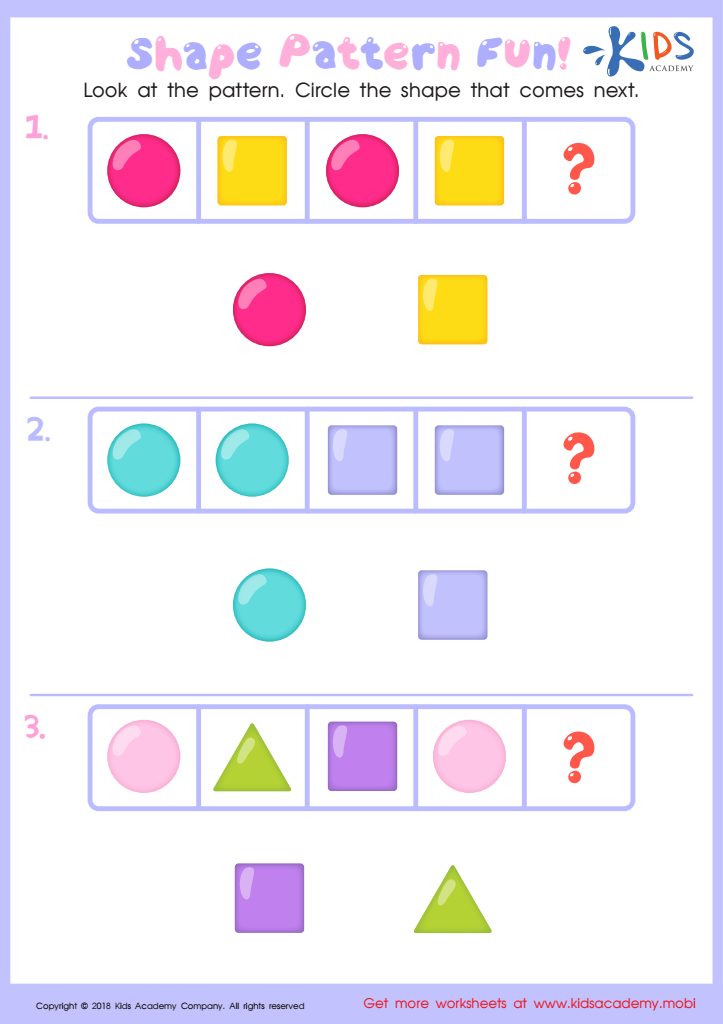
Shape Pattern Fun Worksheet








Parents and teachers should care about teaching normal 2D shapes to children ages 5-7 because it lays the foundation for essential mathematical and cognitive skills. At this developmental stage, child brains are highly receptive to learning basic concepts that will serve as building blocks for more complex subjects. Recognizing and understanding shapes like circles, squares, triangles, and rectangles helps children develop spatial awareness and reasoning skills. These skills are crucial for solving problems and understanding the world around them.
Moreover, learning about 2D shapes enhances a child's vocabulary and language skills as they discuss and describe the shapes. This practice of articulation aids in overall communication skills, which are crucial for their growth in both academic and social environments. Additionally, recognizing shapes in everyday surroundings can make learning more engaging and enjoyable for young children, providing them with a sense of discovery and confidence.
Understanding shapes is also intertwined with other crucial early learning skills including counting, sorting, and pattern recognition. When children can identify and classify shapes, they are set up for success in learning geometry, as well as related fields like art and design. Parents and teachers who prioritize this aspect of education foster a holistic development approach, ensuring that children are well-prepared for future learning milestones.