Problem-Solving Skills Normal Addition & Subtraction Worksheets for Ages 5-7 - Page 2
28 filtered results
-
From - To
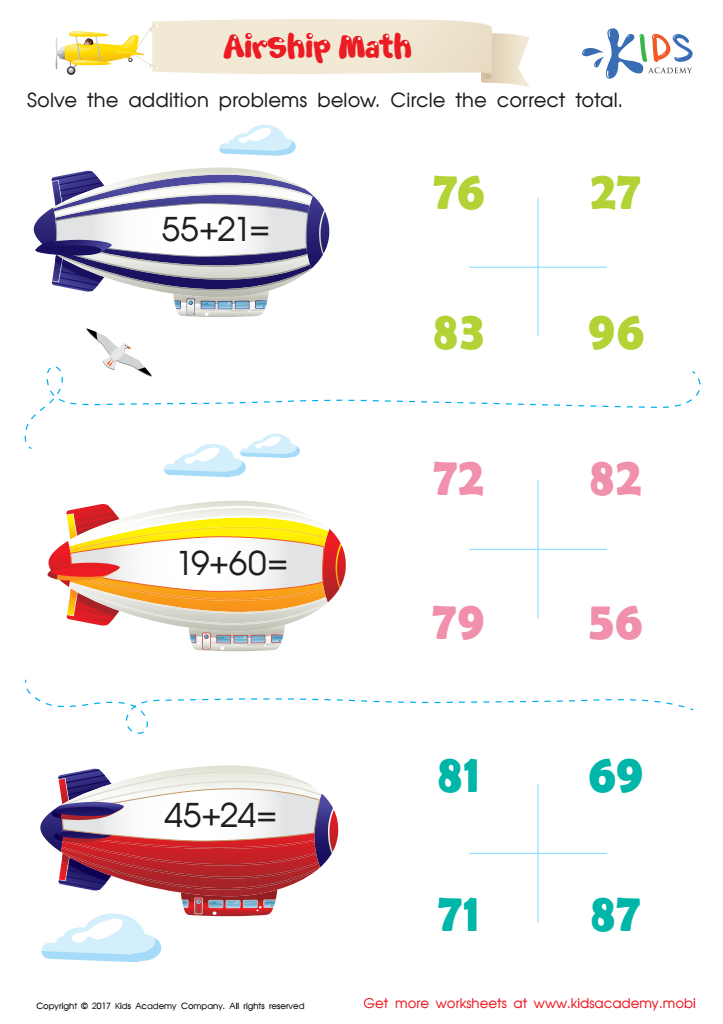
Airship Math Addition Printable
 Assign to My Students
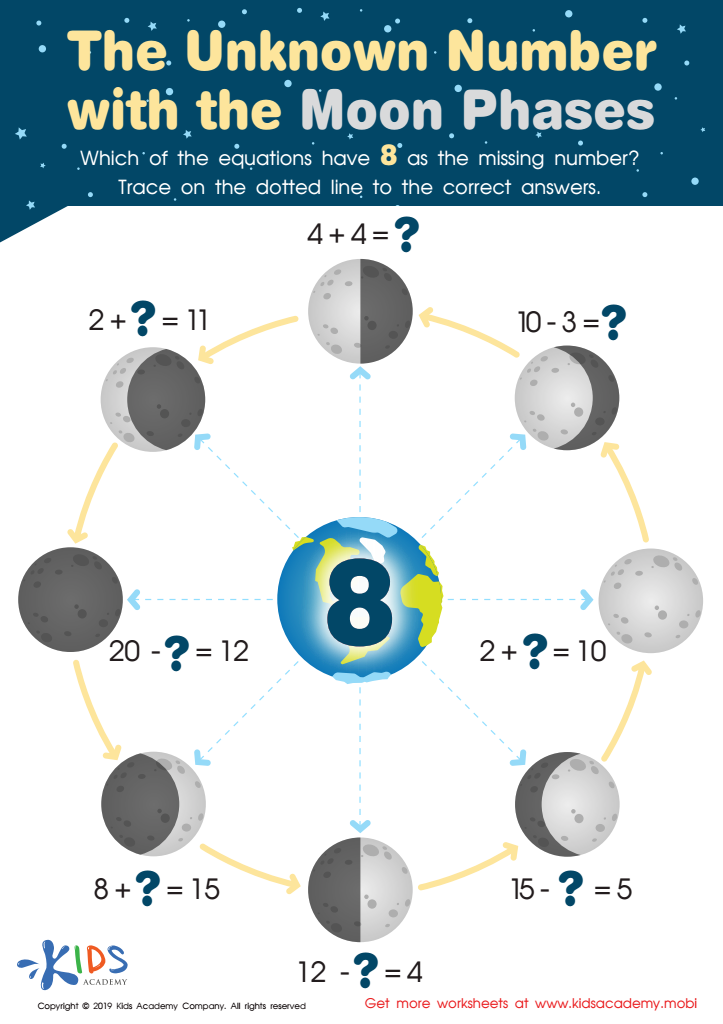
The Unknown Number with the Moon Phases Worksheet
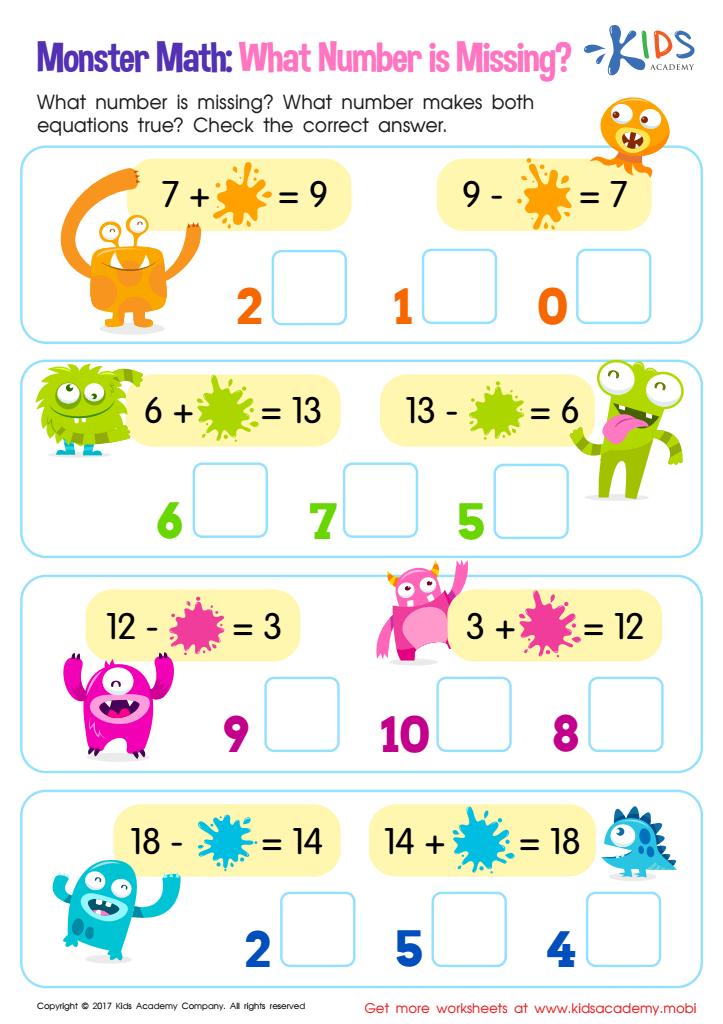
Missing Number: Monster Math Worksheet
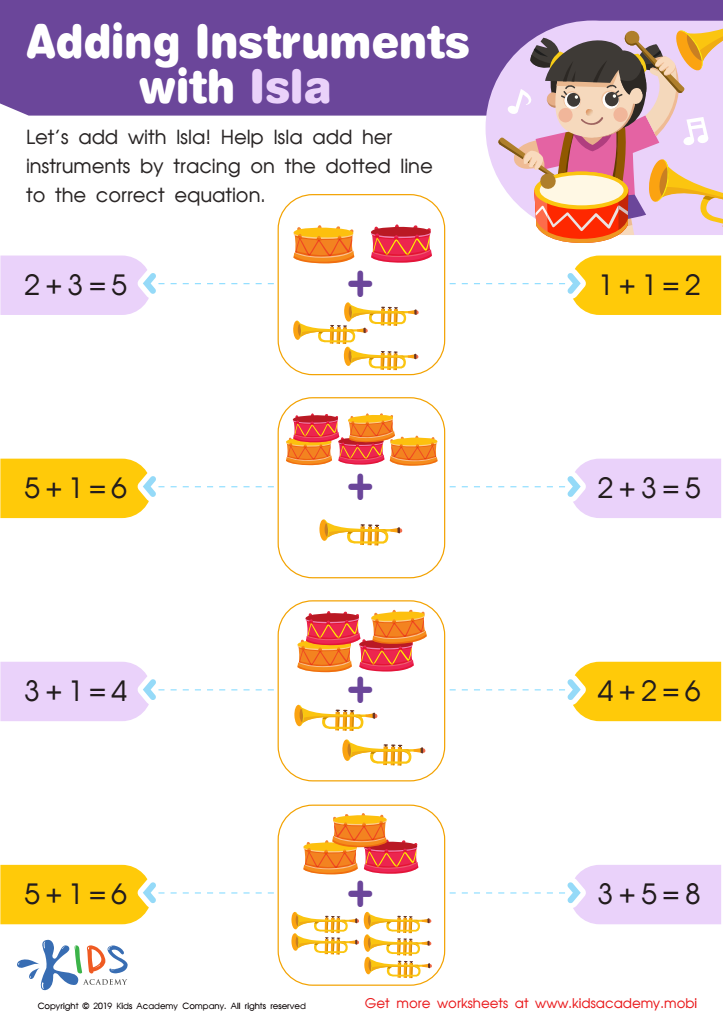
Adding Instruments with Isla Worksheet








Problem-solving skills in normal addition and subtraction for ages 5-7 form the foundation for children's mathematical understanding and higher-order thinking abilities. At this pivotal stage in their educational journey, grasping these fundamental concepts helps children develop critical thinking, logical reasoning, and decision-making skills that will be useful lifelong.
Encouraging problem-solving through basic arithmetic enhances a child's ability to approach more complex mathematical problems with confidence. It teaches them strategies such as identifying patterns, making predictions, and understanding relationships between numbers. These skills are not just essential for math; they contribute to overall cognitive development and foster an analytical mindset applicable to many other subject areas and real-life situations.
Additionally, proficiency in addition and subtraction at this age builds a good sense of numbers and operations, contributing to their numeracy skills. This solid foundation is crucial because difficulties in these early skills can impede progress in mathematics as the curriculum becomes more challenging.
Involving parents and teachers actively in nurturing these skills ensures children receive consistent support and encouragement both at school and home. This dual support system enhances learning outcomes, increases children's motivation, and builds self-confidence as they experience success in problem-solving, setting the stage for continued academic achievement.








