Normal Addition Worksheets for Ages 5-7 - Page 3
53 filtered results
-
From - To
Different Ways to Add Worksheet
 Assign to My Students
Bee Addition: Associative Property Practice Worksheet
Recycling - More or Less Worksheet
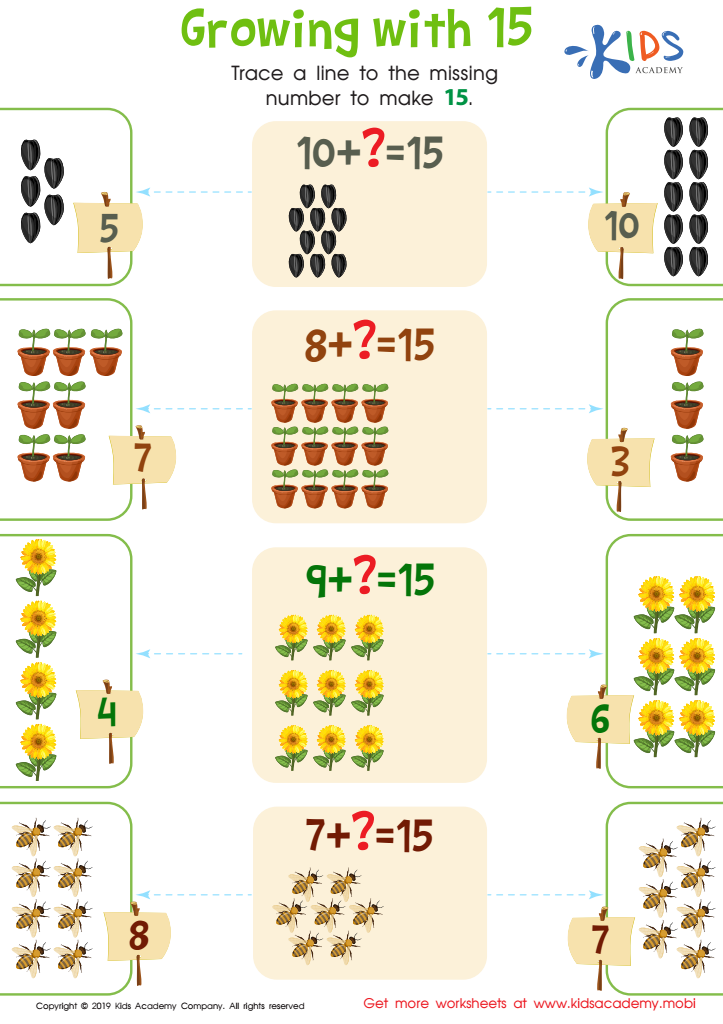
Growing with 15 Worksheet
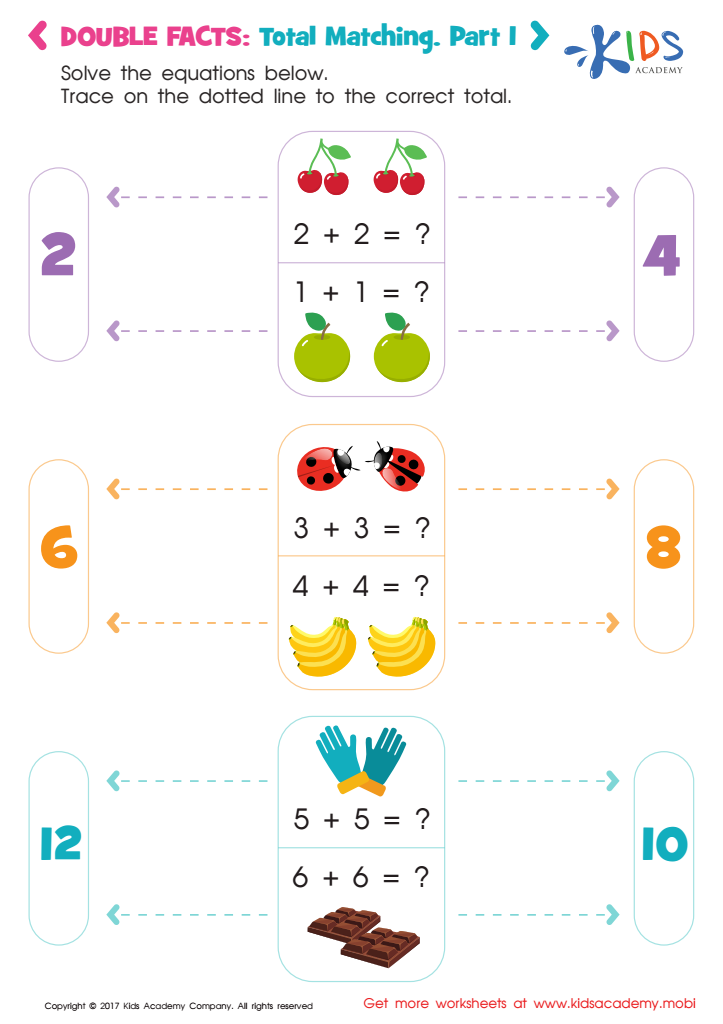
Double Facts: Total Matching Worksheet: Part 1








Normal Addition, a foundational mathematical concept, plays a crucial role in the cognitive development of children aged 5 to 7. During this stage, children are building their understanding of numbers and simple arithmetic operations. Fostering skills in Normal Addition enhances their problem-solving abilities, promotes logical thinking, and encourages a positive relationship with math.
Parents and teachers should care about Normal Addition because it lays the groundwork for more complex mathematical concepts in the future. An intuitive grasp of adding single-digit numbers can boost a child's confidence and self-esteem, making them more willing to engage with challenging mathematical tasks as they progress in school.
Additionally, incorporating Normal Addition in fun and engaging activities can stimulate a child's interest in learning. This not only aids in retention but also creates a conducive learning environment that emphasizes the joy of discovery.
Moreover, strong foundational math skills are linked to academic success across subjects. Children who excel in addition are better equipped to tackle multiplication, division, and math-related real-life problems. Ultimately, investing time and effort in helping young learners master Normal Addition groups can yield lifelong benefits in their academic and personal lives.