Cognitive Development Normal Geometry Worksheets for Ages 5-7
7 filtered results
-
From - To
Enhance your child's cognitive development with our engaging Normal Geometry Worksheets designed specifically for ages 5-7! These delightful worksheets introduce young learners to essential geometric shapes, concepts, and problem-solving skills in a fun and interactive way. Crafted by educational experts, our resources promote spatial awareness and critical thinking, laying a strong foundation for future math success. With a variety of exercises that encourage creativity and exploration, children will enjoy learning about shapes through colorful visuals and relatable real-world examples. Dive into a world of geometry today, and watch your child develop essential skills while having fun! Perfect for home or classroom use!
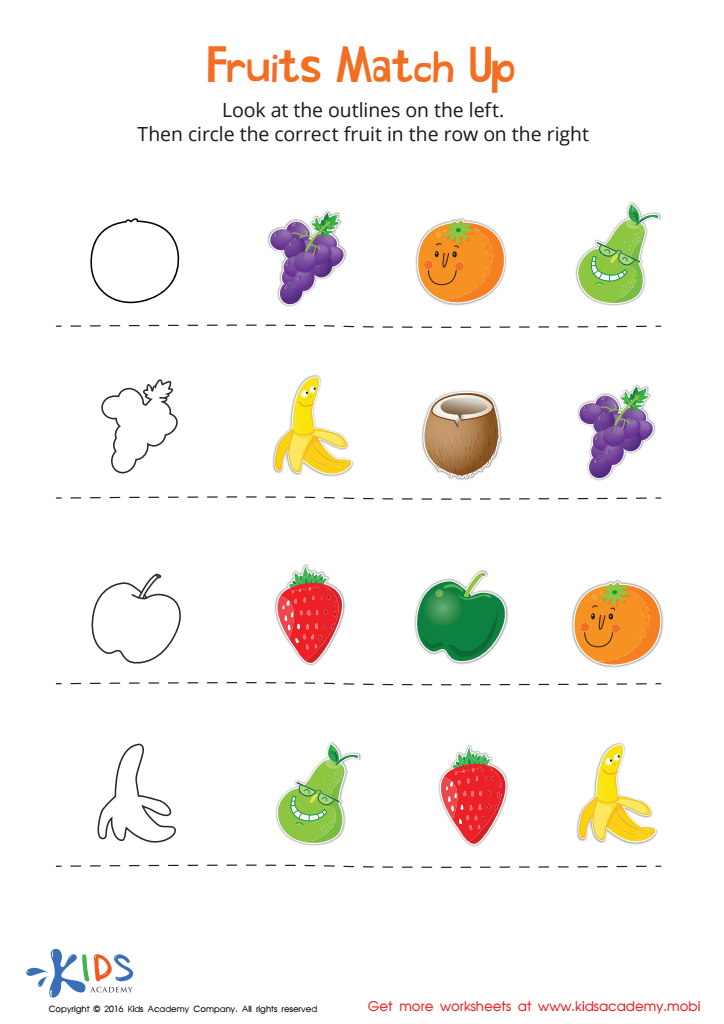
Fruits Match Up Worksheet
 Assign to My Students











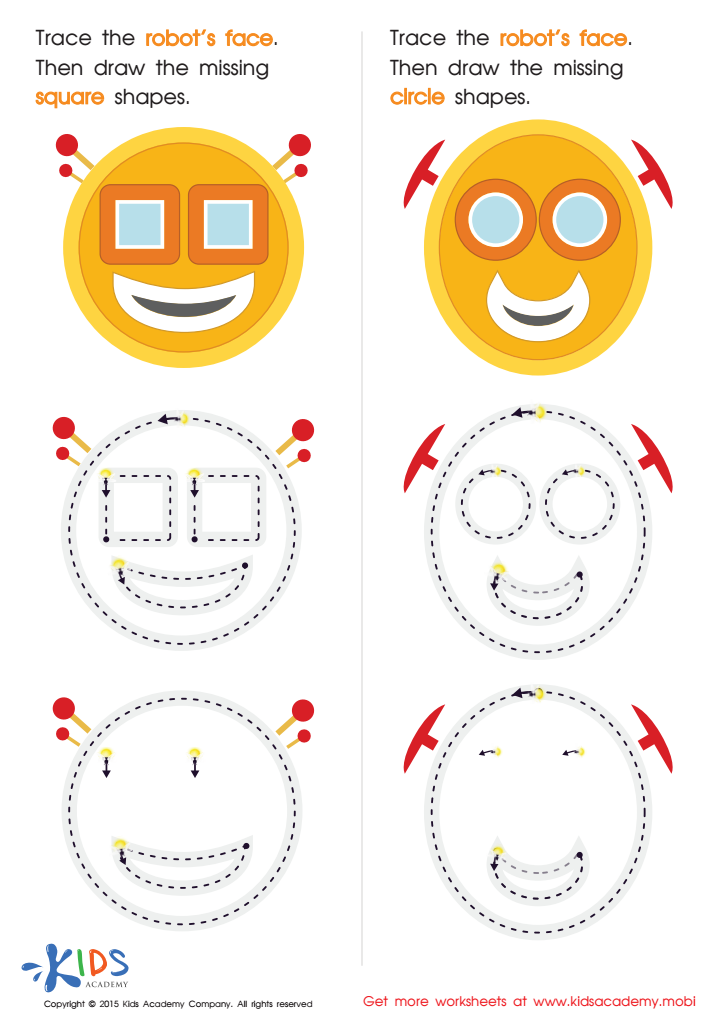
Practicing to Draw Circles And Squares Printable
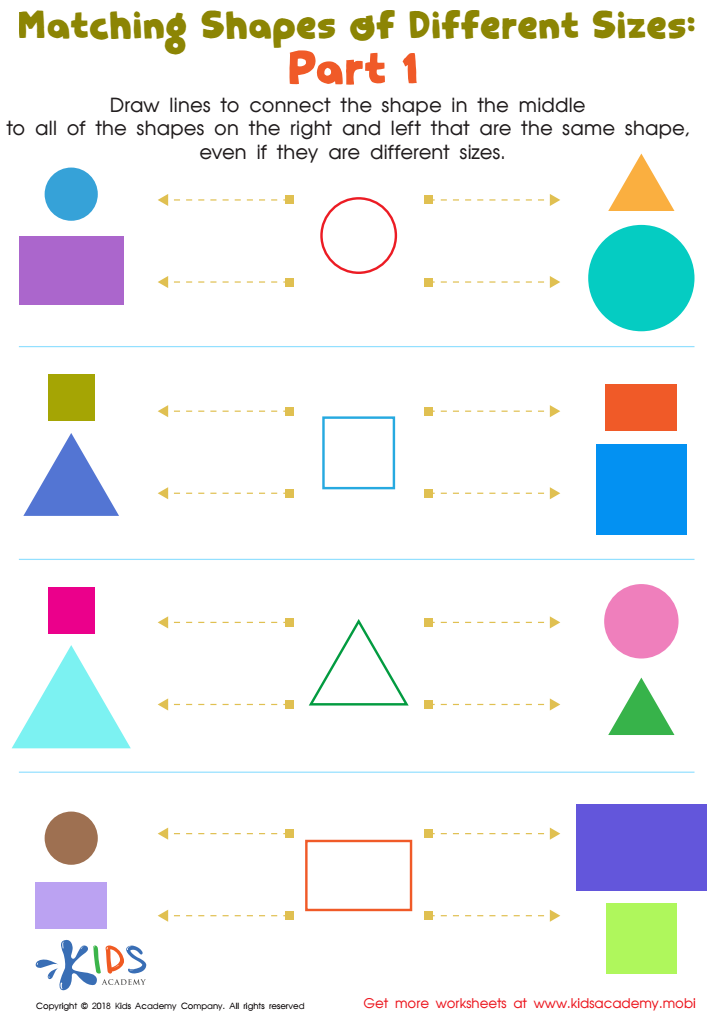
Geometry: part 1 Worksheet
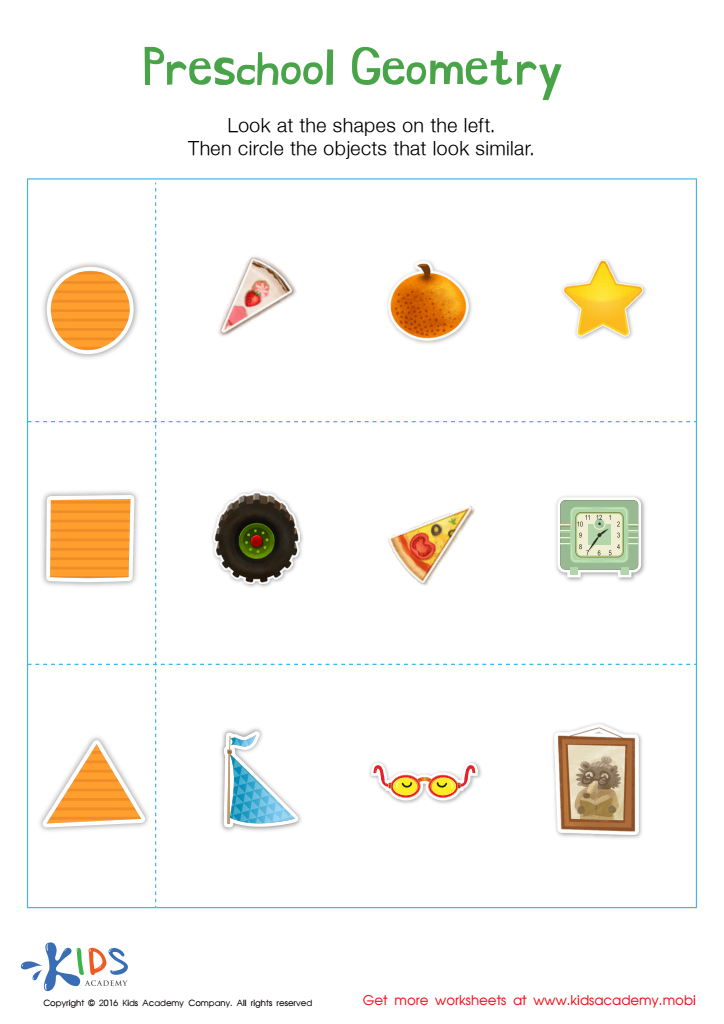
Preschool Geometry Match Up Worksheet
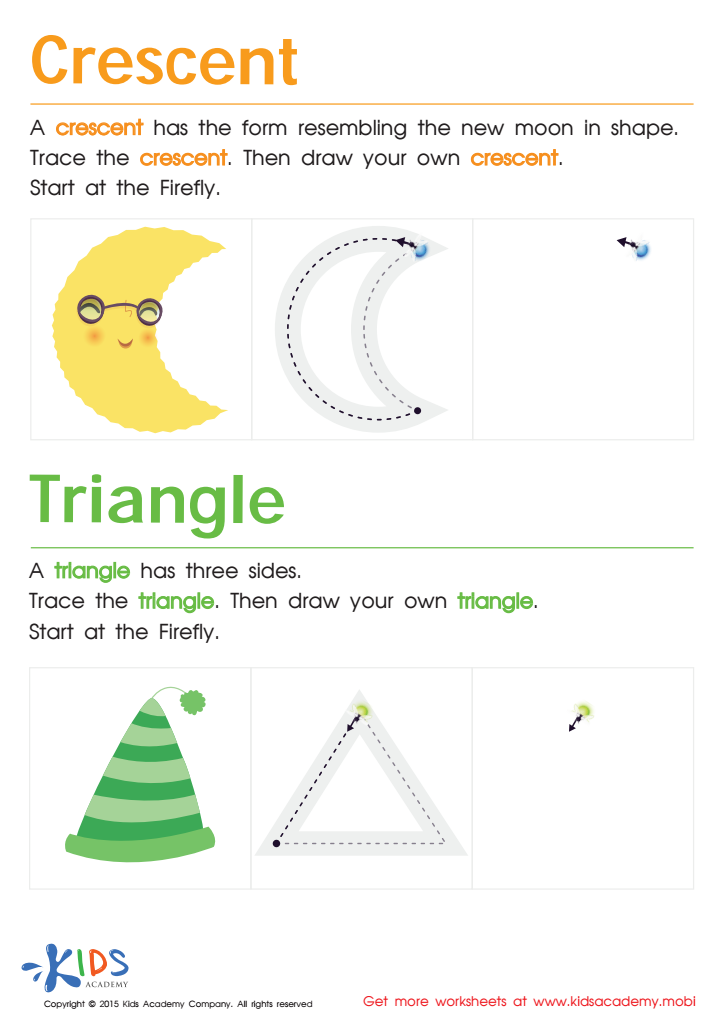
Learning to Draw Crescents And Triangles Worksheet
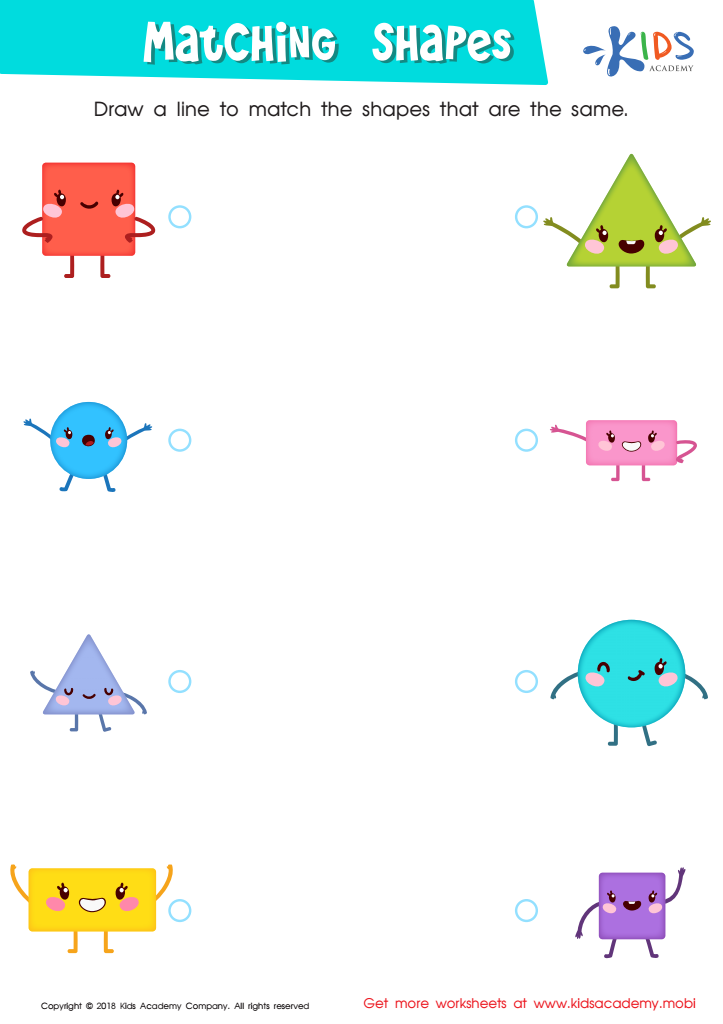
Matching Shapes Worksheet
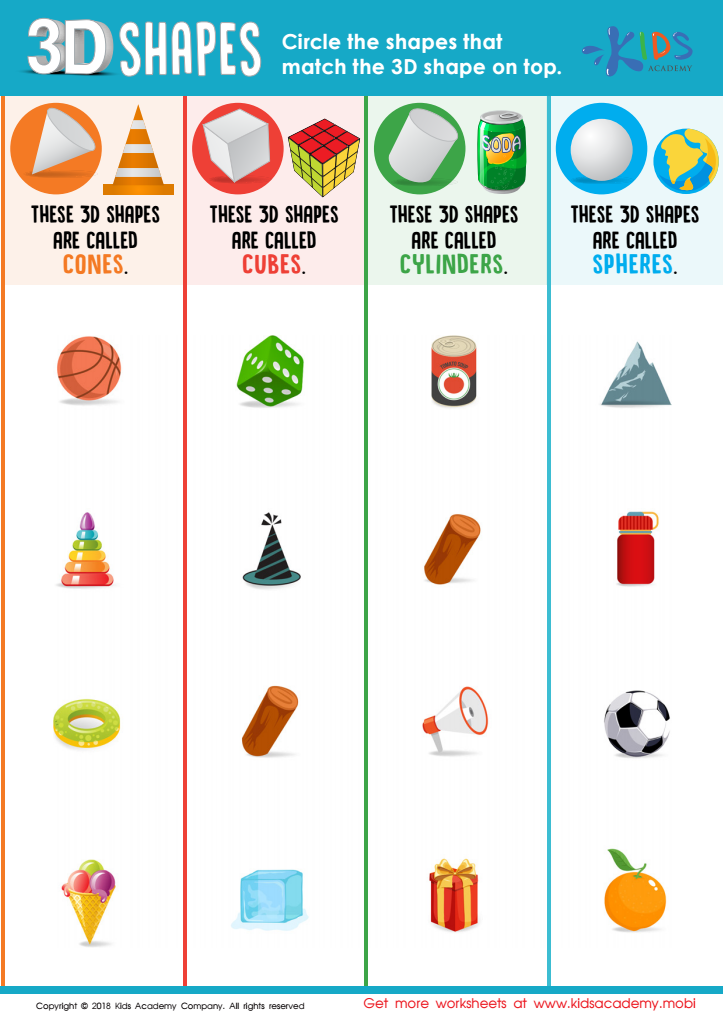
3D Shapes Worksheet








Cognitive development in early childhood is crucial for building fundamental skills that set the stage for future learning. For children ages 5-7, understanding geometry is particularly important as it enhances spatial awareness, problem-solving abilities, and critical thinking. This period is often when children start to grasp shapes, sizes, and relationships between objects, which provides a foundation for more complex mathematical concepts.
Parents and teachers should prioritize cognitive development in geometry during these years for several reasons. Firstly, it fosters a child's ability to visualize and manipulate objects mentally, which is essential in everyday tasks, from packing a bag to navigation. Secondly, it instills confidence in math-related subjects, reducing math anxiety as they progress through school. Geometry encourages children to explore, hypothesize, and reason logically, promoting overall cognitive growth.
Additionally, engaging students in geometric activities—such as building, drawing, or playing shape-based games—can make learning interactive and fun. This not only keeps them motivated but also enhances retention of concepts. Ultimately, nurturing geometric understanding during this developmental stage helps create well-rounded individuals capable of critical thinking, thus empowering them for future academic challenges. As such, the collaboration between parents and teachers is vital in supporting this essential aspect of cognitive development.








