Critical Thinking Normal Geometry Worksheets for Ages 5-7
5 filtered results
-
From - To
Discover our engaging Critical Thinking Normal Geometry Worksheets designed specifically for children aged 5-7. These resources encourage young learners to explore geometric shapes, patterns, and relationships while enhancing their problem-solving skills. Each worksheet challenges students to think critically, promoting cognitive development through fun activities tailored to their age group. Perfect for both classroom use and home learning, our worksheets help children understand fundamental geometry concepts while stimulating their creativity. With vibrant illustrations and age-appropriate exercises, these critical thinking worksheets provide a delightful way for young students to gain confidence in their math abilities and foster a lifelong love for learning.
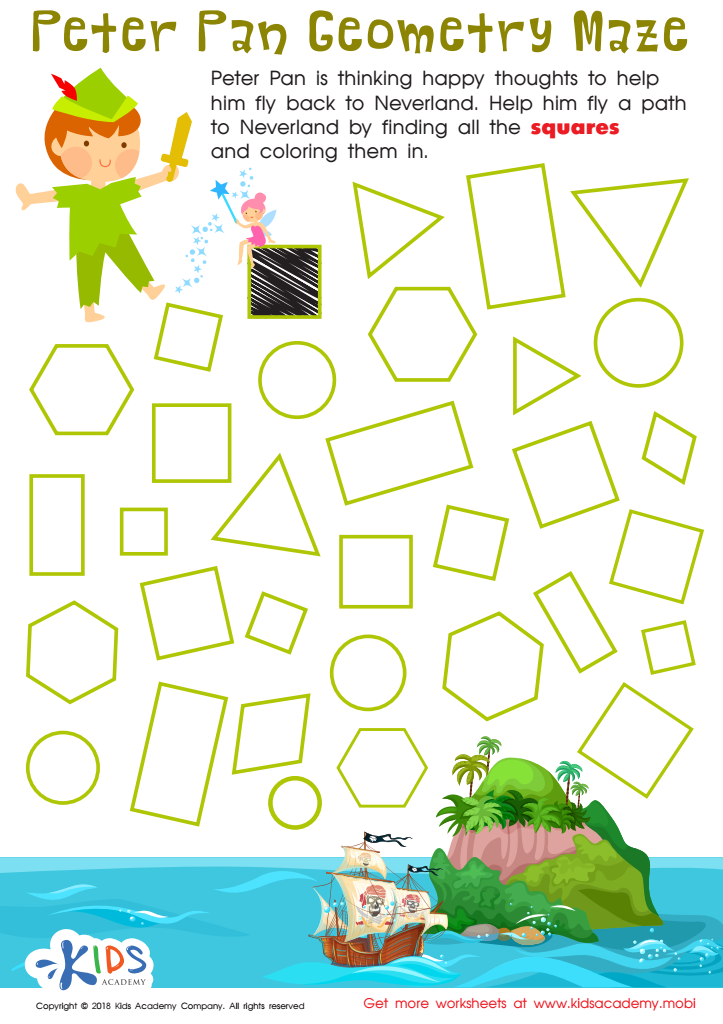
Peter Pan Worksheet
 Assign to My Students











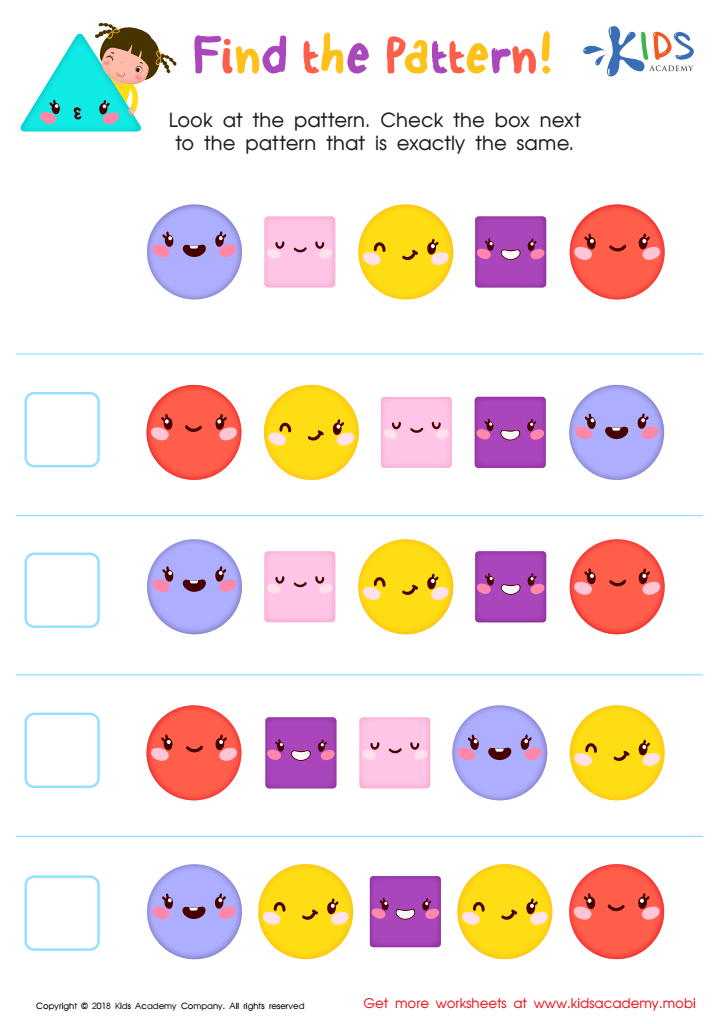
Find the Pattern Worksheet
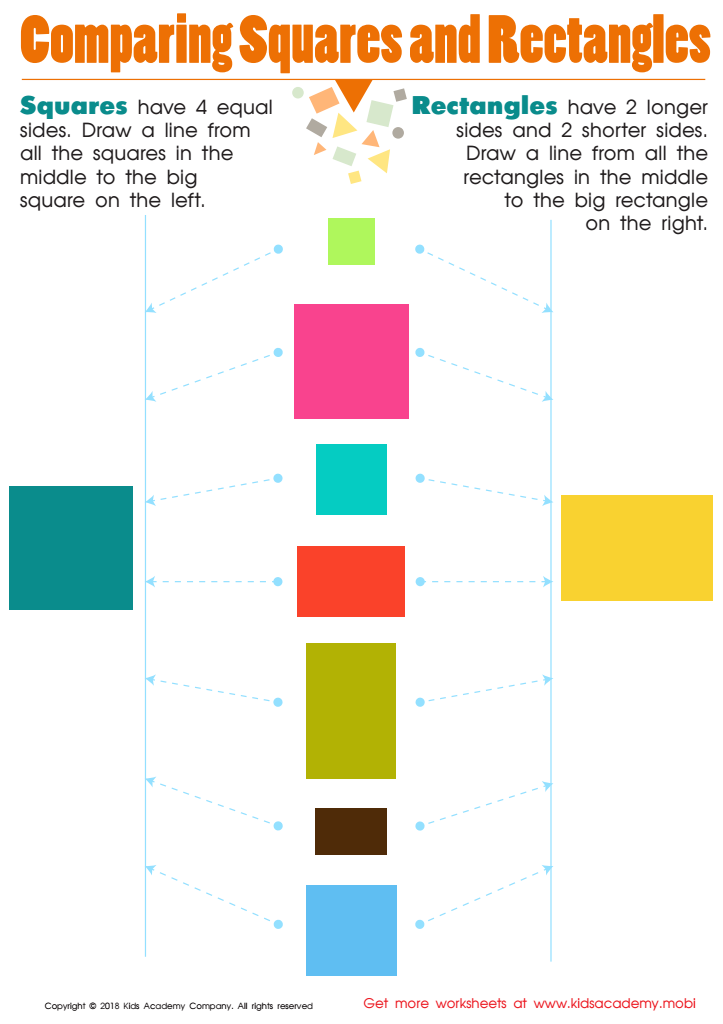
Comparing Squares Rectangles Worksheet
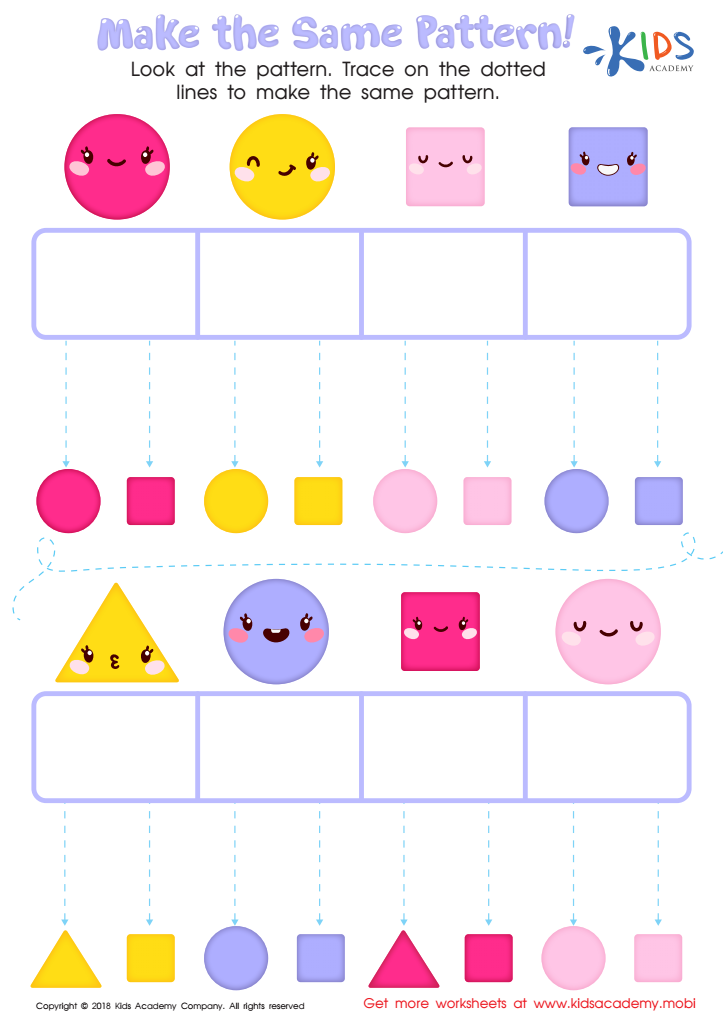
Make the Same Pattern Worksheet
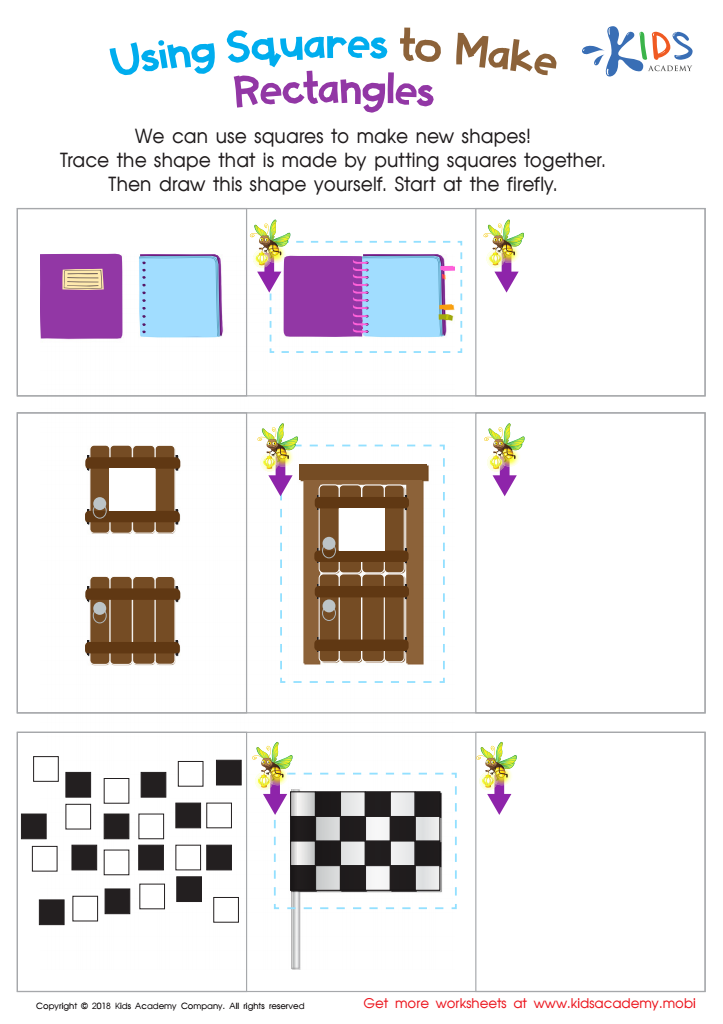
Using Squares to Make Rectangles Worksheet








Critical Thinking in Normal Geometry for ages 5-7 is vital for several reasons. At this foundational stage, children are developing their cognitive skills, and understanding geometric concepts plays a crucial role in their overall intellectual growth. Engaging with geometry fosters critical thinking by encouraging children to observe, visualize, and manipulate shapes and spaces. This interaction lays the groundwork for logical reasoning, an essential skill for problem-solving in mathematics and everyday life.
Parents and teachers should care about introducing critical thinking through geometry because it promotes a strong understanding of spatial relationships, measurement, and visualization. Such knowledge enhances creativity, as children learn to approach problems from various perspectives and understand the properties and relationships of different shapes. Additionally, fostering critical thinking prepares children for more advanced concepts in mathematics and science later on.
Moreover, skills developed through critical thinking in geometry can extend beyond math and into areas like art and design, where spatial awareness is crucial. Encouraging this way of thinking helps cultivate self-confidence in young learners as they explore and discover patterns, shapes, and relationships in the world around them. Ultimately, prioritizing critical thinking in geometry is essential for building a solid educational foundation and nurturing lifelong learners.








