Matching skills Normal Geometry Worksheets for Ages 5-7
3 filtered results
-
From - To
Enhance your child's learning with our Matching Skills Normal Geometry Worksheets designed for ages 5-7. These engaging worksheets help young learners develop important matching and spatial recognition skills through fun geometry-focused activities. Each worksheet encourages children to match shapes, patterns, and figures, fostering both cognitive and visual skills. Ideal for home or classroom use, our worksheets provide a balanced introduction to key geometric concepts while keeping learning enjoyable. Perfect for parents and educators seeking to boost kids' confidence in math early on. Download our printable worksheets today and help your child master matching skills in geometry with creativity and enthusiasm!
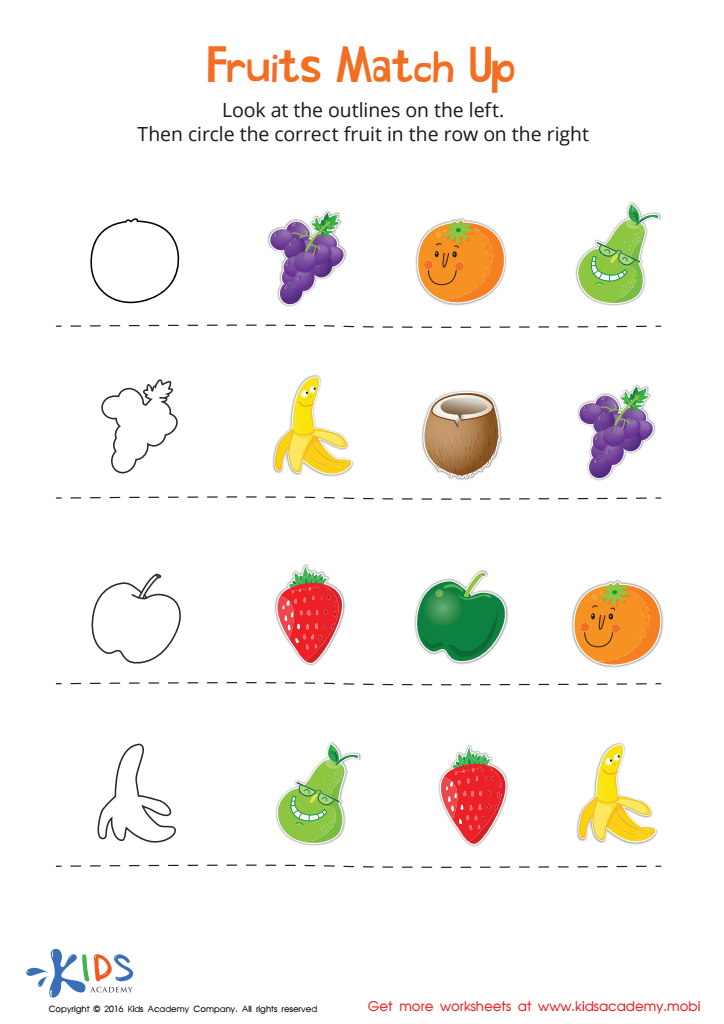
Fruits Match Up Worksheet
 Assign to My Students











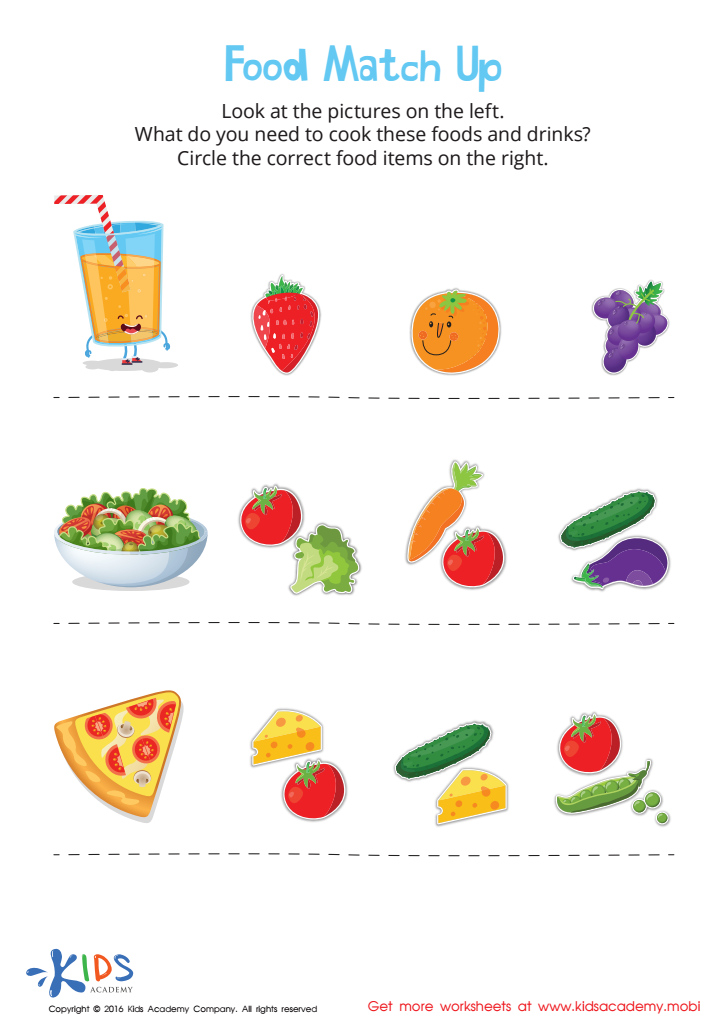
Food Match Up Worksheet
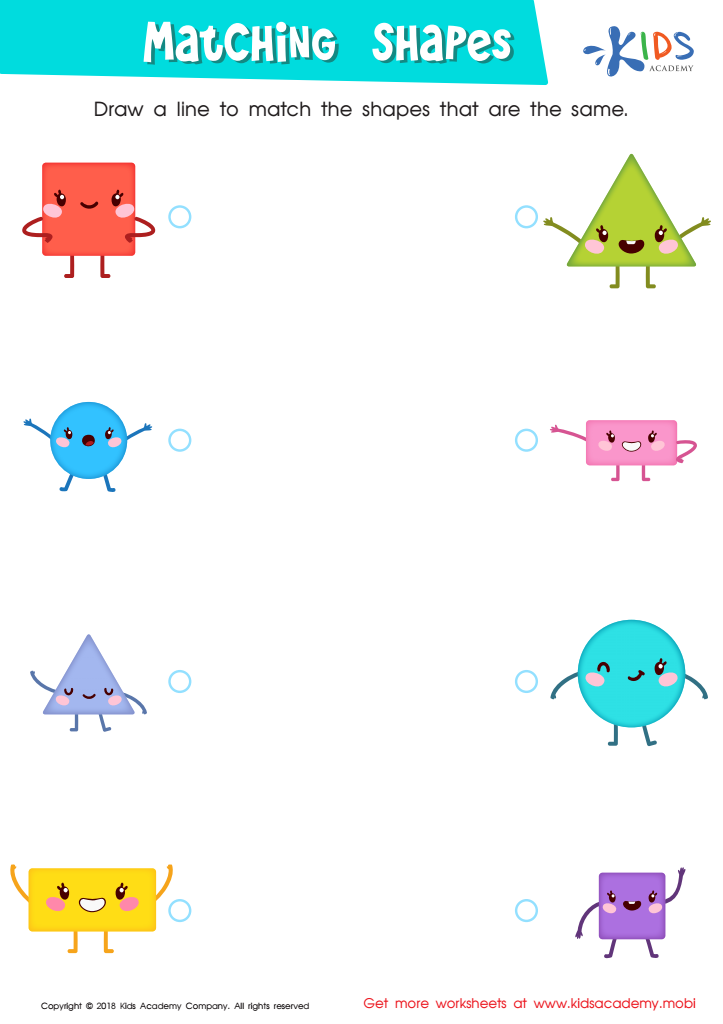
Matching Shapes Worksheet








Matching skills in Normal Geometry for ages 5-7 are essential for several reasons, making it a vital focus for parents and teachers alike. At this age, children are naturally curious and eager to learn about their surroundings. Introducing geometric shapes and their properties helps them develop spatial awareness, which is crucial for early mathematical understanding.
Engaging with geometry fosters cognitive development, as children learn to identify, compare, and categorize shapes. These skills not only enhance their mathematical foundation but also improve critical thinking and problem-solving abilities. Additionally, recognizing patterns reinforces their understanding of relationships between different shapes and encourages logical reasoning.
Furthermore, matching skills support fine motor development as children handle and manipulate geometric objects. This hands-on experience builds confidence, inspires creativity, and makes learning fun. Collaborative activities that involve matching shapes also promote social skills, as children learn to work with peers, share ideas, and communicate effectively.
Ultimately, a strong foundation in geometry sets the stage for future learning in mathematics and science. Therefore, it is crucial for parents and teachers to prioritize these skills, as they play a significant role in holistic child development during these formative years.








