
Visual Learning Normal Math Worksheets for Ages 5-7
4 filtered results
Difficulty Level
Grade
Age
-
From - To
Subject
Activity
Standards
Discover our engaging Visual Learning Normal Math Worksheets designed for children aged 5-7. These innovative worksheets integrate visual aids to enhance mathematical understanding and retention in young learners. Our carefully crafted activities focus on foundational concepts such as addition, subtraction, and number recognition, promoting interactive and fun learning experiences. With colorful graphics and dynamic layouts, children can grasp challenging math concepts more easily. Perfect for both classroom use and at-home learning, these worksheets provide a variety of exercises tailored to meet diverse learning styles. Equip your child with the essential math skills they need for future success with our visual learning resources!
Favorites
With answer key
Interactive
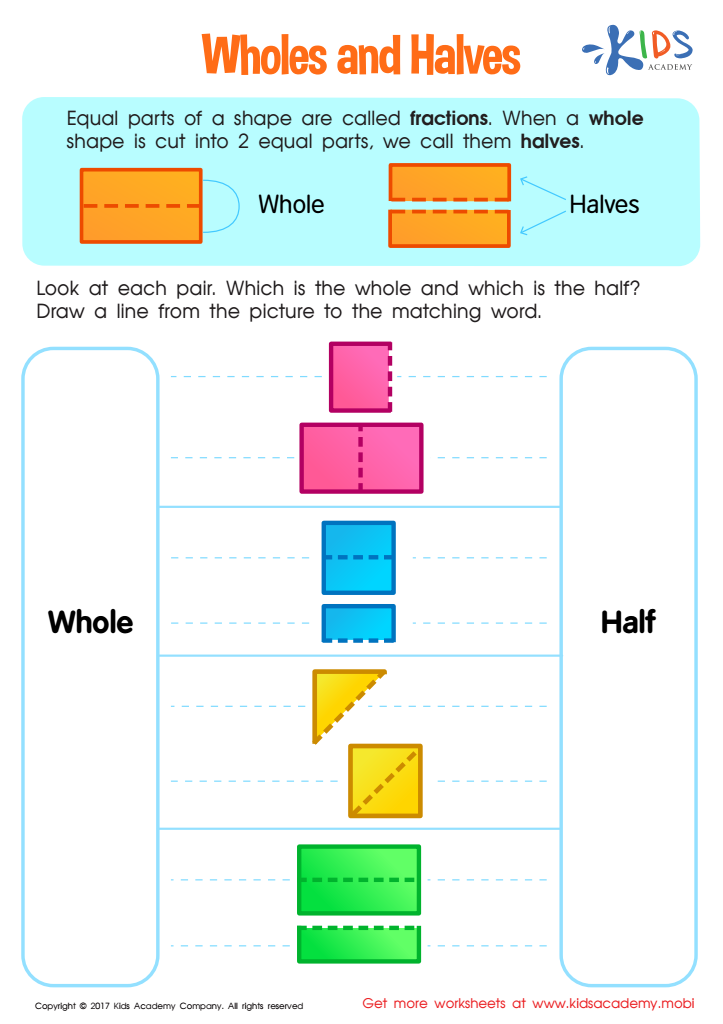
Wholes and Halves Worksheet
Students can feel overwhelmed with fractions. Help take the stress off by using a colorful worksheet to explain whole shapes and how to find halves. Ask them to identify the whole and point to the matching word for the half. A free printout can help guide them.
 Assign to My Students
Wholes and Halves Worksheet
Worksheet
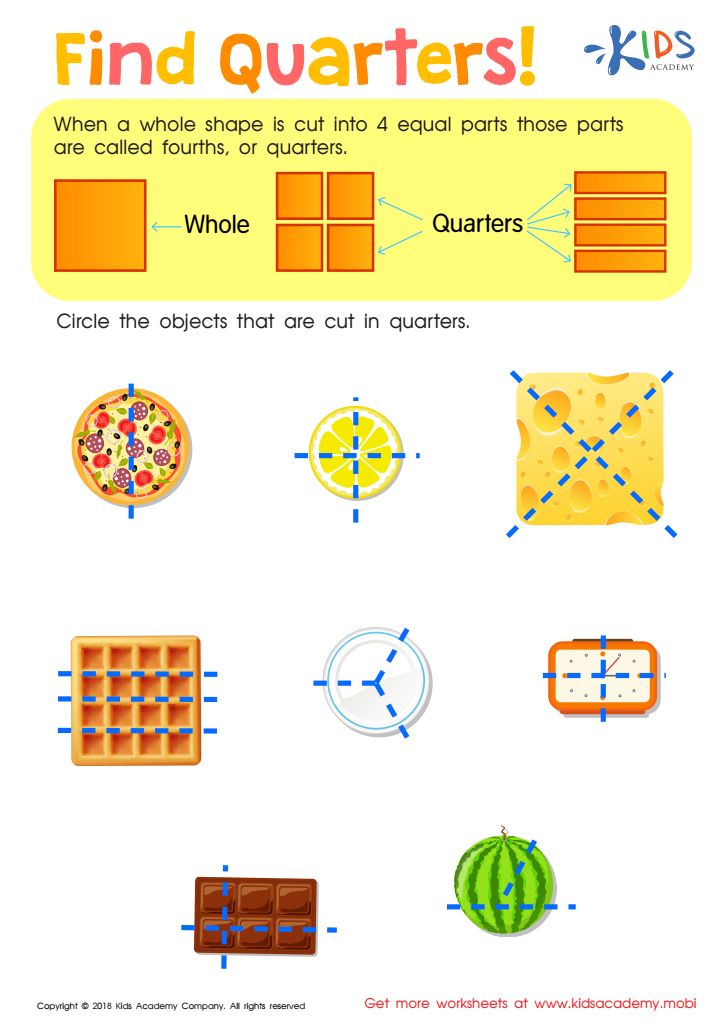
Find Quarters Worksheet
Ask your child if they know what it is called when a shape is cut into two equal parts. If yes, introduce them to quarters. Tell them that when a shape is cut into 4 equal parts, each part is called a quarter. Have them do this exercise by finding and circling objects split into quarters.
Find Quarters Worksheet
Worksheet
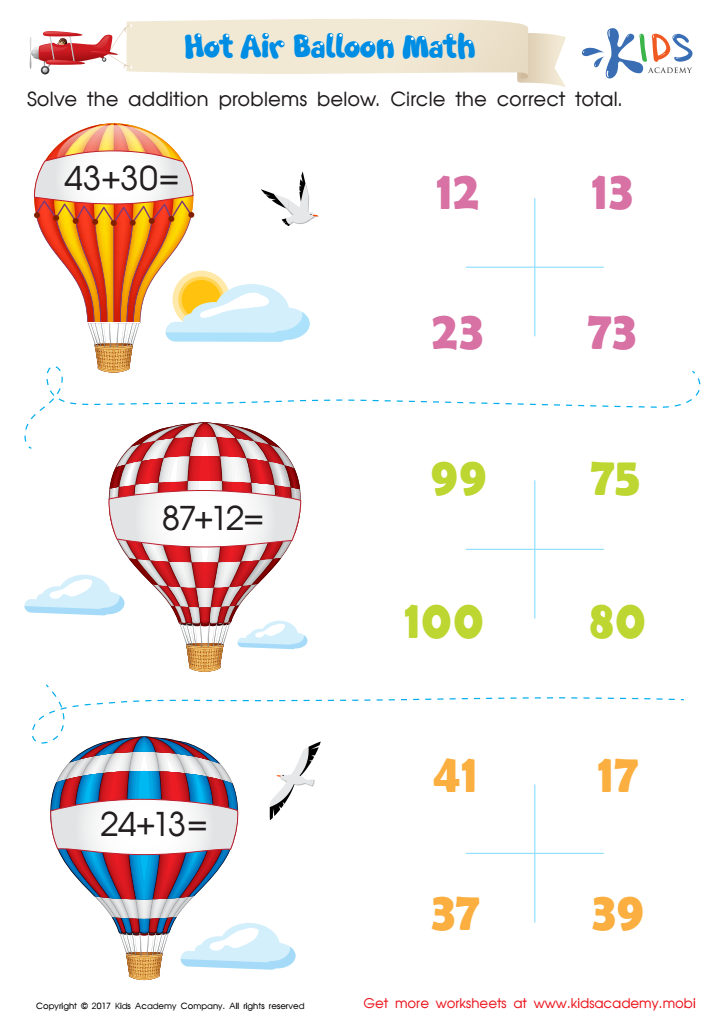
Hot Air Balloon Math Worksheet
It uses engaging pictures and a hot air balloon theme to keep your child interested, and it’s designed to build addition confidence.
Hot Air Balloon Math Worksheet
Worksheet
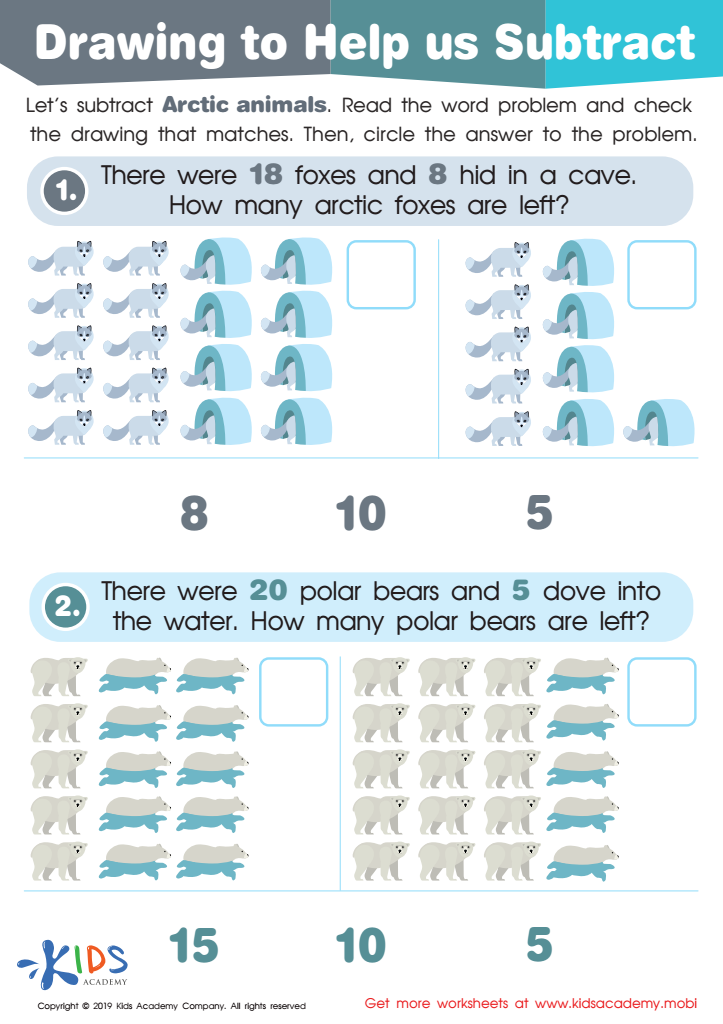
Drawing to Help Us Subtract Worksheet
Math is made fun with this free worksheet featuring Arctic animal pictures to solve basic subtraction word problems. Kids read the problem and choose the correct drawing of the animals to represent the solution. They'll have a blast with their cool animal friends while learning math!
Drawing to Help Us Subtract Worksheet
Worksheet
Join Kids Academy for Free
Who is primarily going to use this learning content?








Visual Learning in mathematics for children ages 5-7 is vital because it aligns with how young brains develop and acquire knowledge. At this stage, children are naturally drawn to visual stimuli. By incorporating visual aids—such as pictures, charts, and manipulatives—teachers and parents can enhance understanding and retention of mathematical concepts.
Young learners often struggle with abstract ideas; visual learning helps bridge that gap, turning math into tangible experiences. For instance, using blocks to demonstrate addition brings clarity, making the idea of combining quantities physically understandable. This approach caters to various learning styles, ensuring that visual learners are engaged, while also supporting auditory and kinesthetic learners.
Furthermore, engaging children visually can spark creativity and curiosity about mathematics, fostering a positive attitude towards the subject. This lays a strong foundation for foundational skills, such as counting, problem-solving, and critical thinking, which are essential for future academic success.
Ultimately, the early introduction of visual learning techniques in math helps build confidence and competency, reducing the anxiety often associated with math as children grow. By prioritizing visual learning, parents and teachers can ensure a more enriching, effective, and enjoyable learning experience for young learners.








