Categorization skills Normal Matching Worksheets for Ages 5-7
6 filtered results
-
From - To
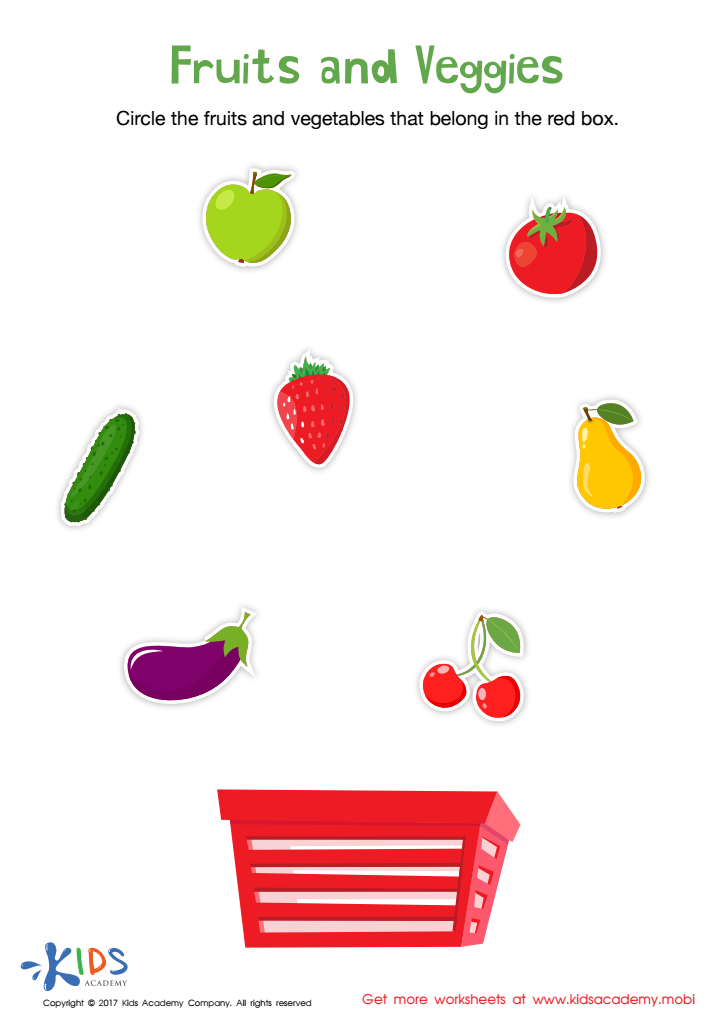
Enhance your child's early learning experience with our Categorization Skills Normal Matching Worksheets for ages 5-7. Designed to foster vital cognitive development, these engaging worksheets provide fun exercises that help children recognize patterns, sort items, and group similar objects. By improving their ability to categorize, kids enhance their problem-solving skills and boost overall comprehension. Perfect for home or classroom use, our worksheets are simple to follow, colorful, and age-appropriate, encouraging independent learning. Empower your child to develop essential categorization skills while enjoying interactive and educational activities! Explore our collection today and watch your child thrive academically!
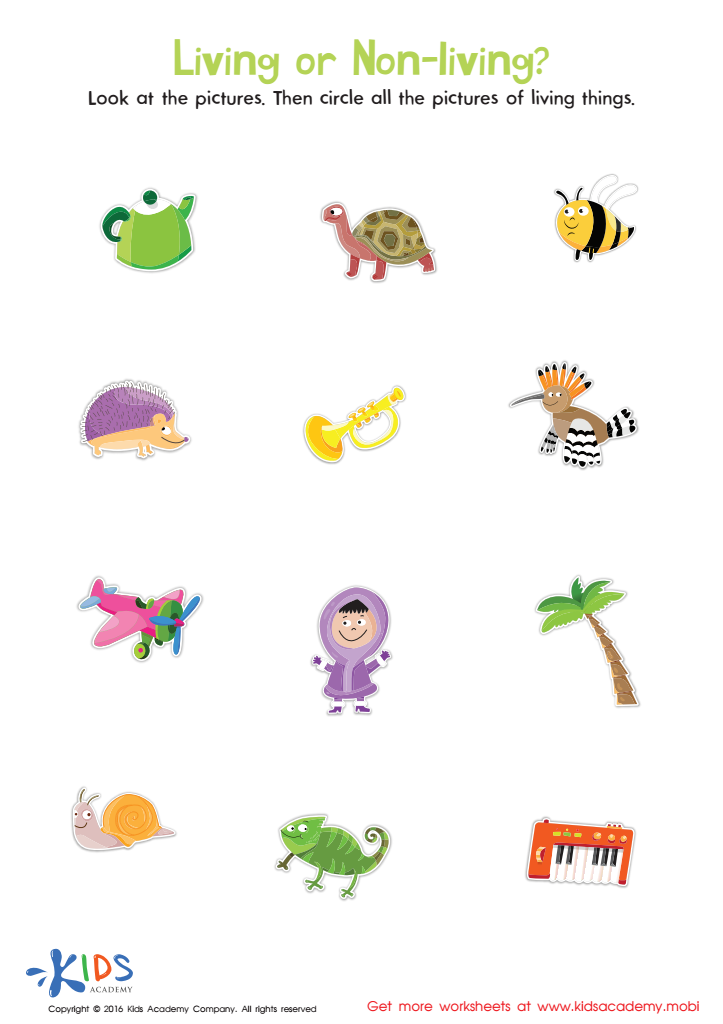
Identifying Living and Non–living Things Sorting Worksheet
 Assign to My Students
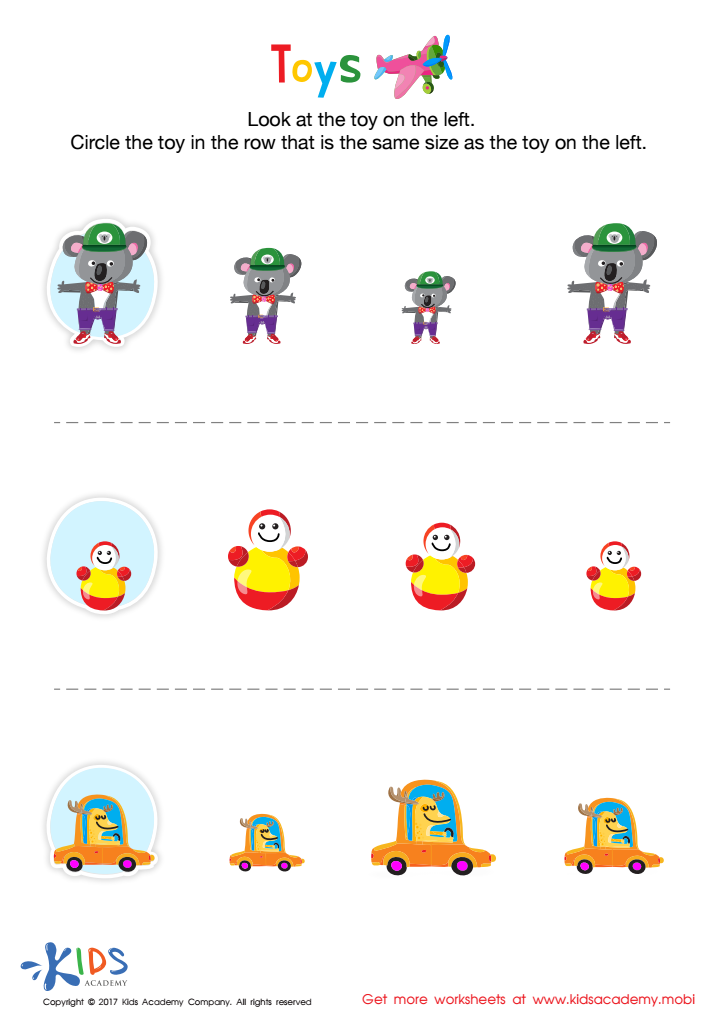
Matching: Classifying Toys by Size Worksheet
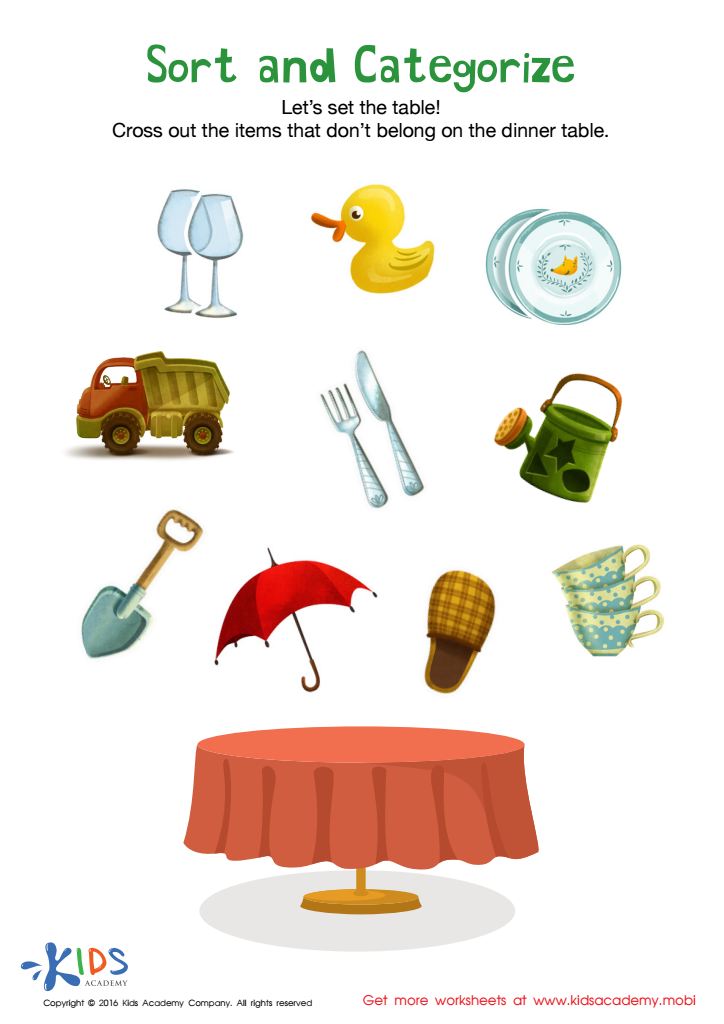
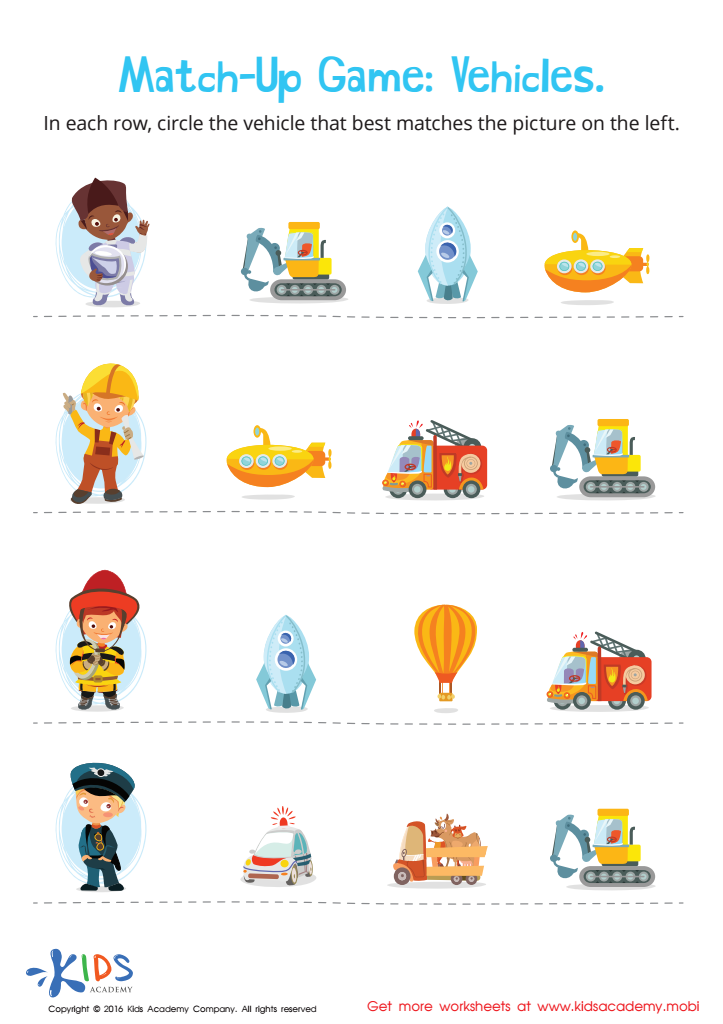
Vehicles Worksheet
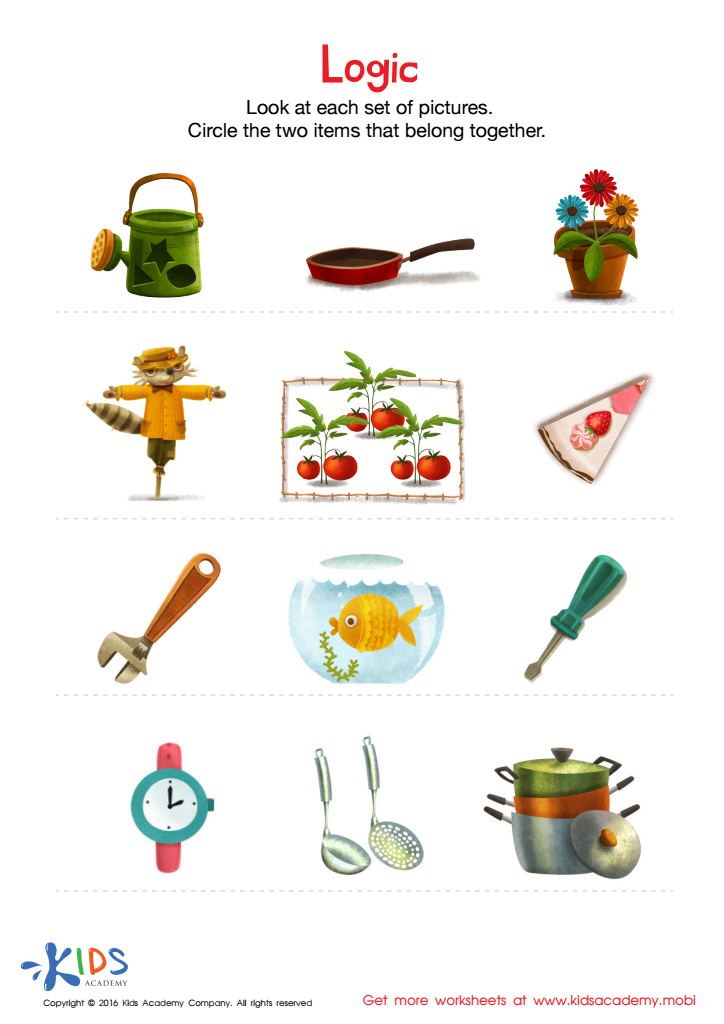
Logic Game Sorting Worksheet







Categorization skills play a crucial role in children's cognitive development, especially in the ages 5-7, where they are building foundational understanding of the world around them. Normal matching, which involves grouping objects or concepts based on shared characteristics, helps children develop critical thinking and problem-solving abilities. By engaging in matching activities, kids learn to identify similarities and differences, enhancing their analytical skills.
Parents and teachers should care about these skills because they are not just foundational for academic success but also for social interactions. Children who can categorize effectively are better equipped to participate in cooperative play, understand social structures, and communicate their thoughts. For instance, recognizing categories—like animals, vehicles, or shapes—enables them to make connections and express themselves more clearly.
Furthermore, categorization fosters organization, which is vital for more complex subjects such as math and science later on. As children become proficient in matching and categorizing, they set the stage for advanced learning. Encouraging these skills through playful activities and structured tasks can significantly benefit a child's lifelong learning journey, ultimately leading to more successful educational outcomes.








