Fine Motor Skills Normal Tracing Numbers Worksheets for Ages 5-7
6 filtered results
-
From - To
Discover our Fine Motor Skills Normal Tracing Numbers Worksheets for ages 5-7 at Kids Academy! Designed to enhance essential early learning skills, these worksheets provide fun and engaging tracing activities that help children develop fine motor control and number recognition. Perfect for young learners, they support pencil grip improvement, hand-eye coordination, and muscle memory. Our tracing numbers worksheets pave the way for confident writing while making learning enjoyable and interactive. Visit our website to explore a variety of free printable sheets that bring mathematics and early literacy to life! Help your child take the first step in education today.
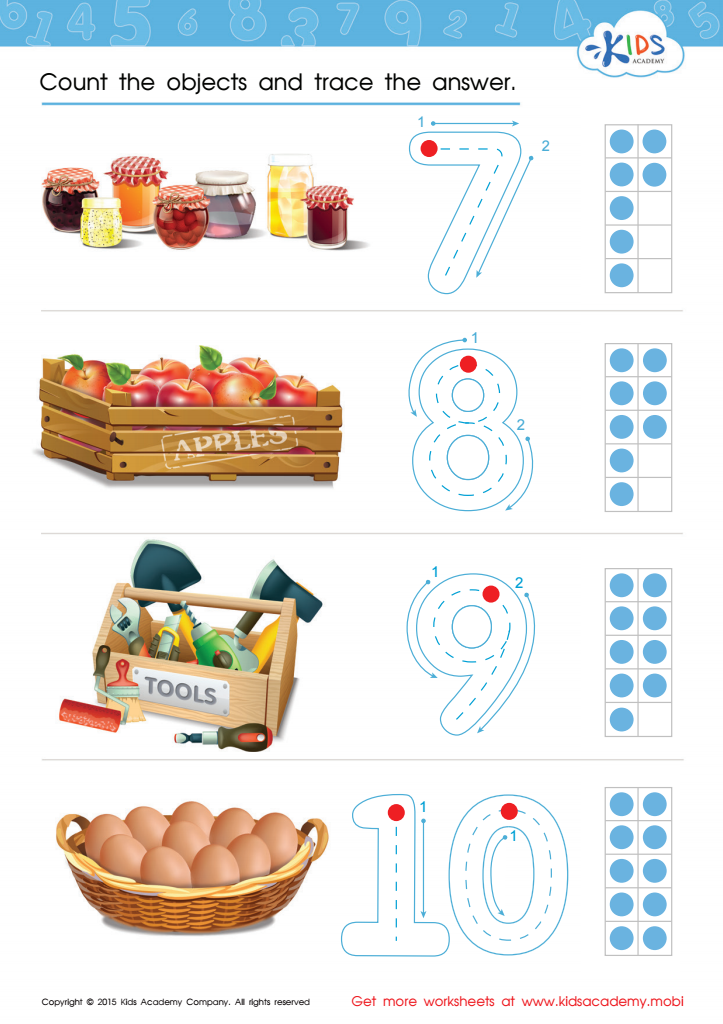
Count and Trace 7 – 10 Worksheet
 Assign to My Students
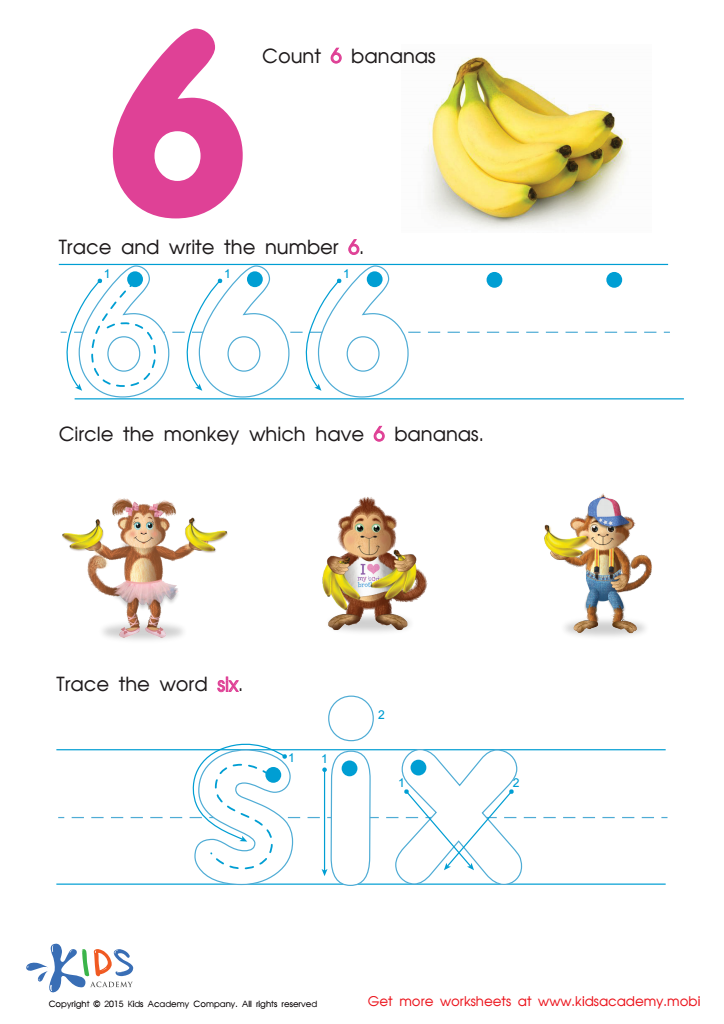
Tracing And Writing Number 6 Worksheet
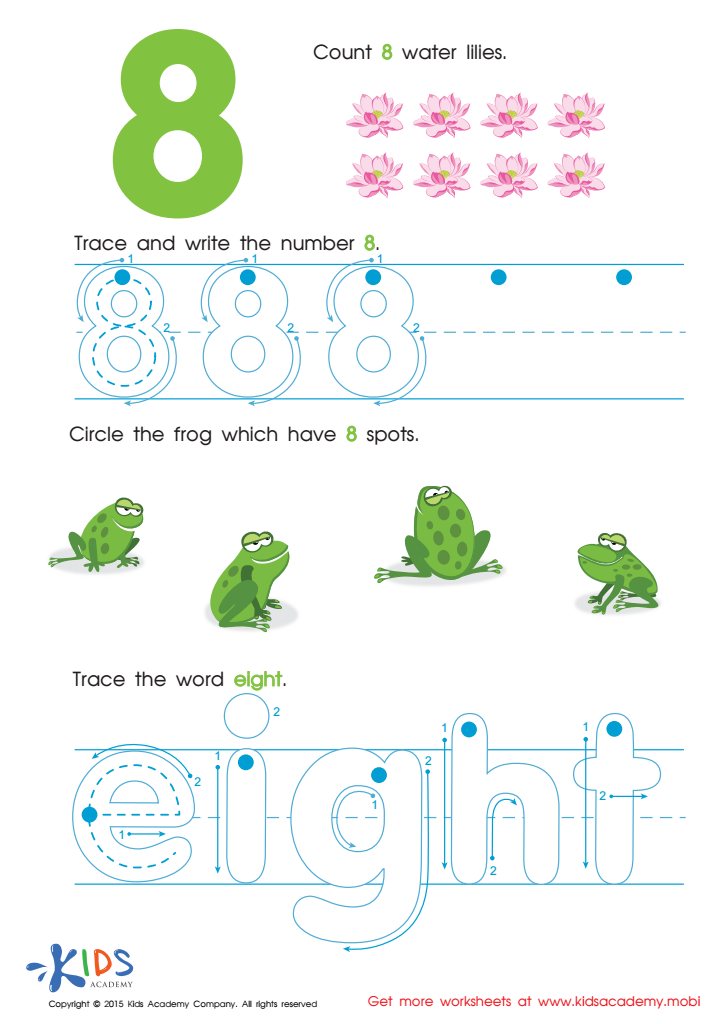
Learn Number 8 Easily Worksheet
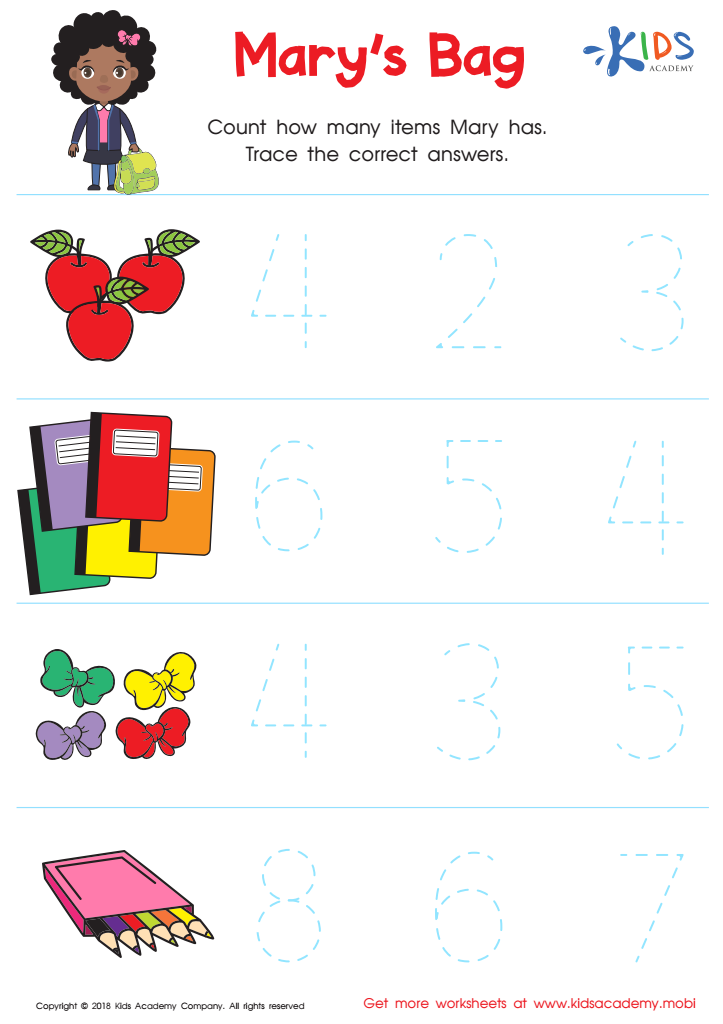
Kindergarten Number Tracing: Mary's Bag Worksheet
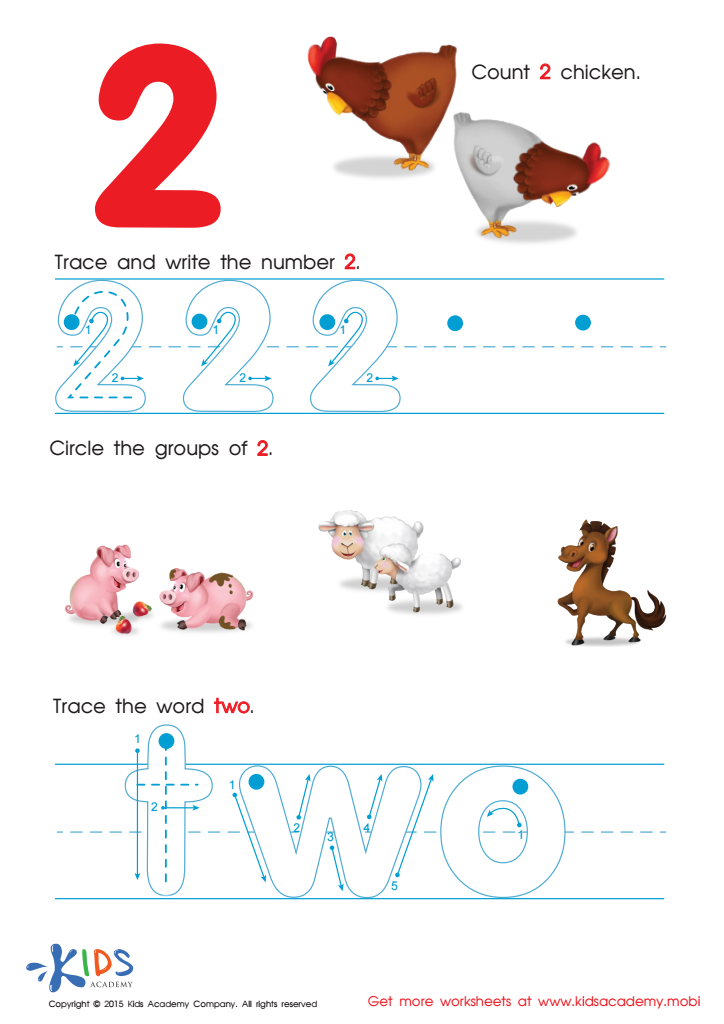
Learn to Write the Number 2 Worksheet








Parents and teachers should prioritize fine motor skills development, including normal tracing of numbers, for children aged 5-7 because it lays a crucial foundation for academic and everyday tasks. Fine motor skills involve the coordination of small muscles, particularly in the hands and fingers, and are essential for writing, cutting, buttoning clothes, and more. Tracing numbers at an early age not only enhances handwriting but also fosters better hand-eye coordination and finger strength. These skills contribute to a child's ability to perform a variety of activities independently, boosting their confidence and self-esteem.
From an academic perspective, fine motor skills directly impact a child's ability to participate fully in classroom tasks. When children can efficiently trace and write numbers, they're better equipped to focus on more complex learning activities such as math problems and reading exercises. Engaging in tracing activities also aids cognitive development by reinforcing number recognition, numerical order, and spatial awareness. This dual benefit—physical dexterity and cognitive reinforcement—makes fine motor skills an indispensable part of early childhood education.
Lastly, early proficiency in fine motor skills can predict future academic success and ease the transition to more advanced tasks as children grow. Therefore, focusing on such development is an investment in a child's overall educational and personal growth.