Filters

7 filtered results

Clear all filters
Favorites
With answer key
Interactive

7 filtered results

Difficulty Level

Grade


Welcome to our Cognitive Development Normal Alphabet Worksheets for Ages 5-8! These engaging worksheets are designed to support young learners in enhancing their cognitive skills while mastering the alphabet. Each activity focuses on critical thinking, problem-solving, and memory retention, making learning both fun and educational. With colorful illustrations and interactive exercises, children can develop their understanding of letters, sounds, and vocabulary in a playful way. Perfect for parents and teachers, our worksheets create a comprehensive learning experience that encourages curiosity and confidence in early literacy. Download our worksheets today and watch your child's cognitive abilities flourish!

Check out this FREE Trial Lesson on Alphabet for age 5-8!

Demonstrate Understanding of Frequently Occurring Verbs and Adjectives by Relating Them to Their Opposites

Favorites
With answer key
Interactive
  • 5-8
  • Cognitive Development
  • Alphabet
  • Normal
Rhymes in Poems Worksheet

Rhymes in Poems Worksheet

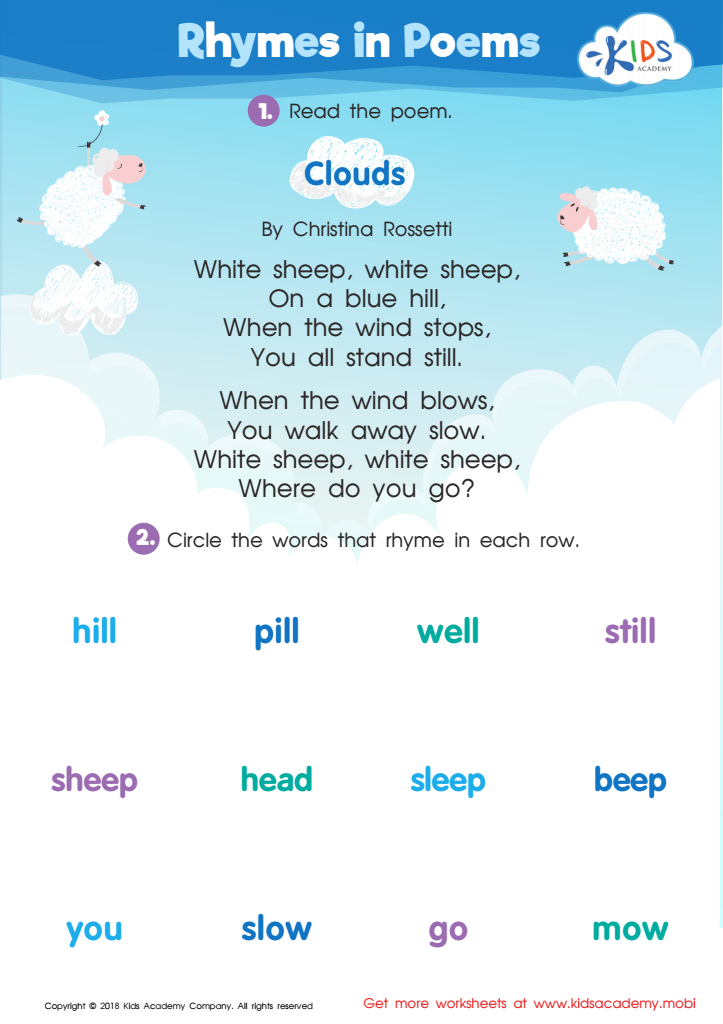
Poems are lovely works of literature; some with rhymes, and some without. This poem for kids is full of rhymes and tells the tale of a sheep. Read it aloud to your kids, then help them circle the rhyming words.
Rhymes in Poems Worksheet
Worksheet
Word Match Reading Worksheet

Word Match Reading Worksheet

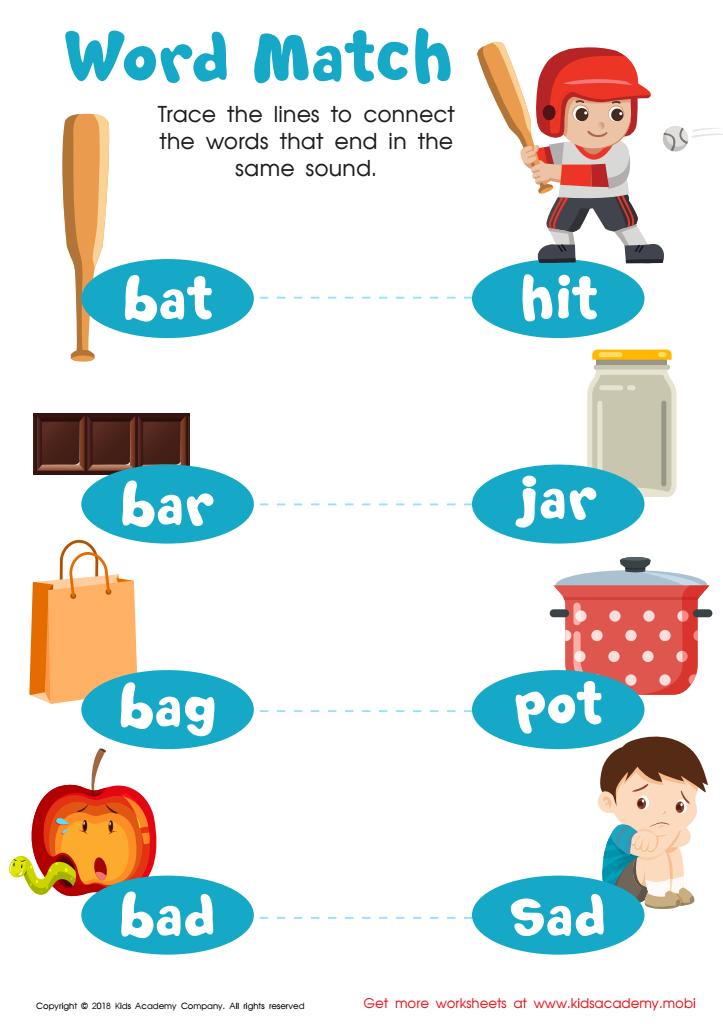
This printout helps children learn to read fluently by connecting words with the same sound. Colorful pictures aid understanding and context for kindergarten-level students. Tracing lines, they learn to identify the sounds made by letters of the alphabet and deepen their knowledge of phonics.
Word Match Reading Worksheet
Worksheet
Opposite Day Worksheet

Opposite Day Worksheet

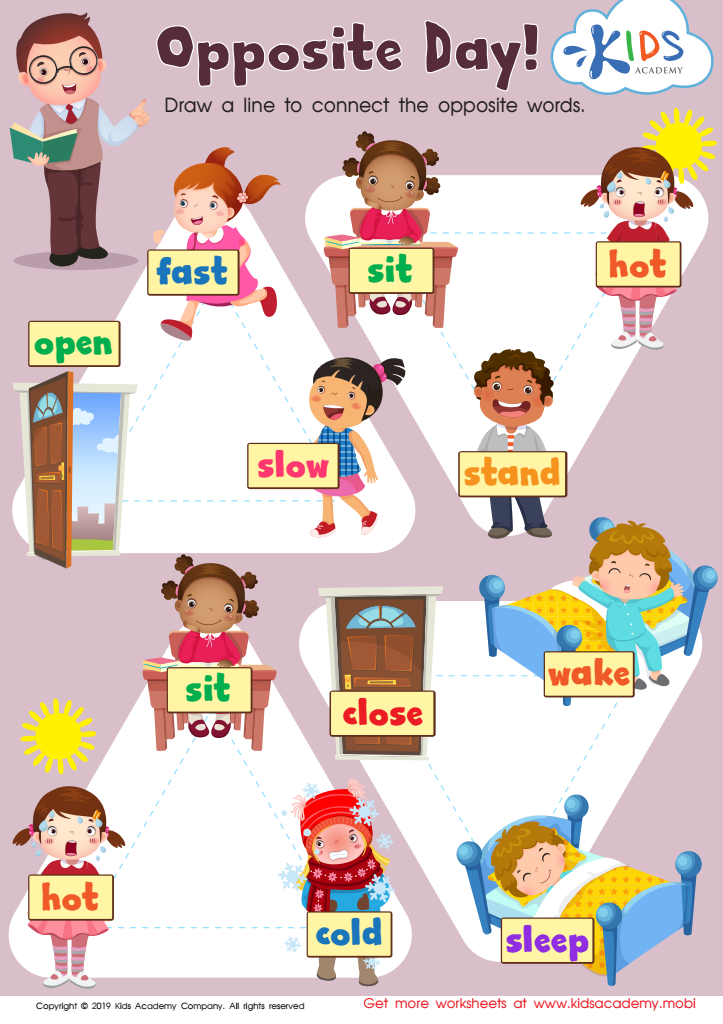
Early learners need to know about opposites to improve their higher-order thinking and critical thinking. This fun worksheet helps them understand the concept, practice opposite words, read high-frequency words and work on fine motor skills. Download the traceable PDF to get started.
Opposite Day Worksheet
Worksheet
Which Letter Should you Choose? Worksheet

Which Letter Should you Choose? Worksheet

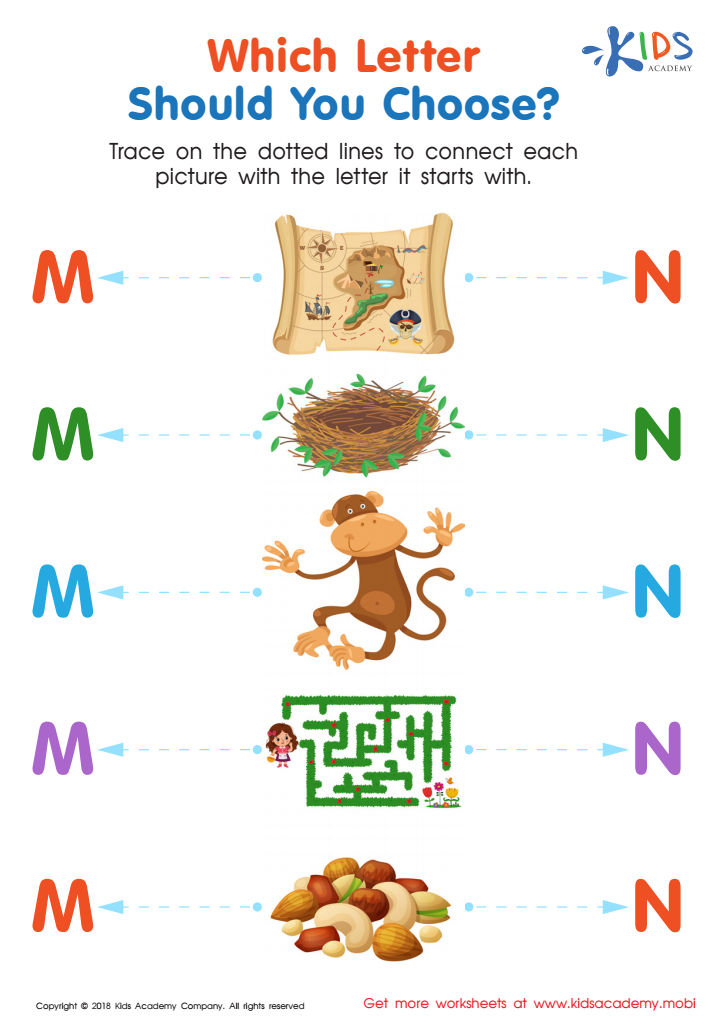
Trace the dotted lines to connect images with their first letter: "n" or "m." Challenge your child to name each picture, then identify the first letter and trace to the right letter! Five images in total.
Which Letter Should you Choose? Worksheet
Worksheet
Word Matching Game Worksheet

Word Matching Game Worksheet

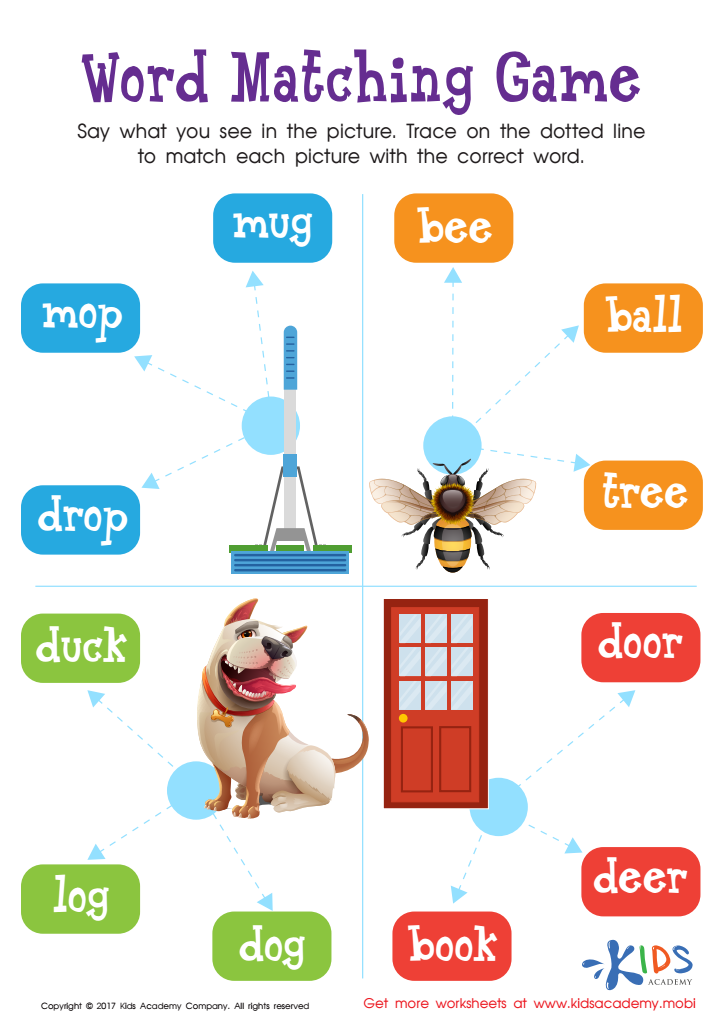
Help your early reader develop prereading skills with this fun matching worksheet! Visual cues help them learn sight words, decode words in word families, and identify phonetic patterns. They'll practice discerning sounds past initial consonants while saying the name of the picture and finding the matching word - and reading at the same time!
Word Matching Game Worksheet
Worksheet
Let's Count the Sounds Worksheet

Let's Count the Sounds Worksheet

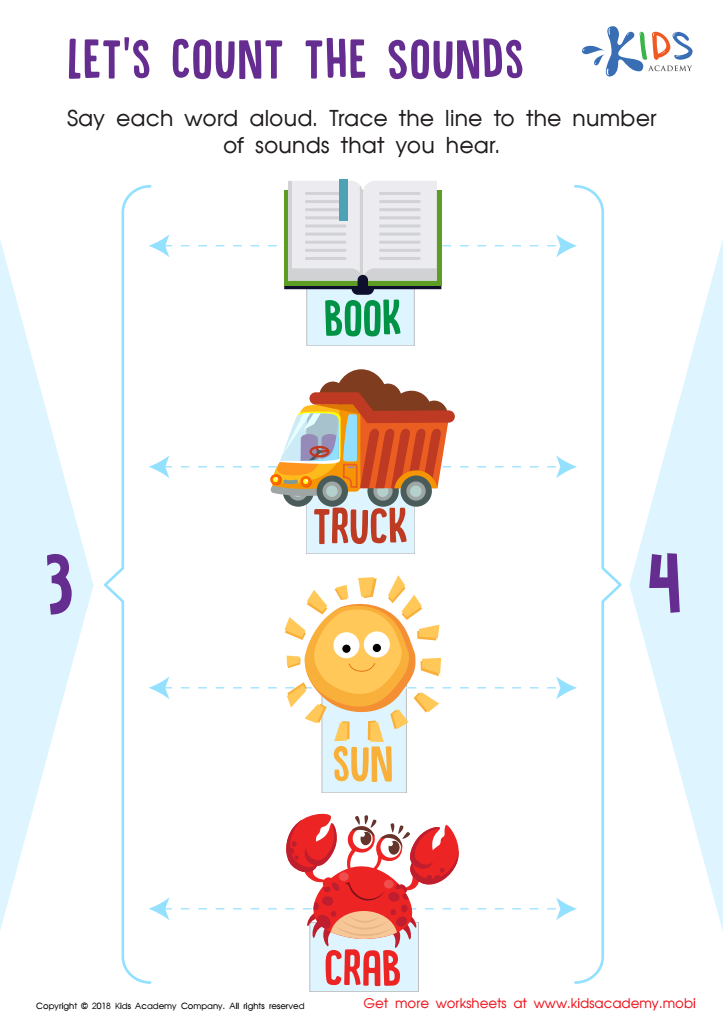
This bright and cheery traceable worksheet encourages children to practice auditory discrimination and phonological awareness. Using picture clues, they read each word and trace the line that represents the number of sounds heard. This builds decoding skills and helps them become successful readers.
Let's Count the Sounds Worksheet
Worksheet
Consonant Blend Dr and Tr Printable Worksheet

Consonant Blends: "Dr" and "Tr" Printable

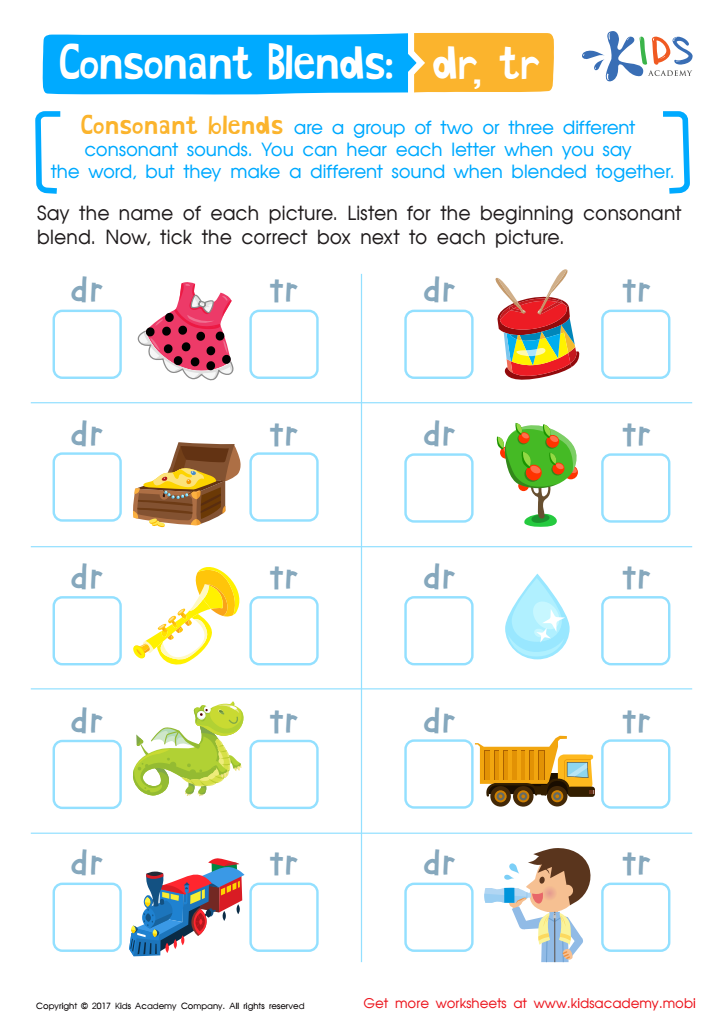
Pictures of the words provide a visual cue, and sound-outs help with auditory cues.
Consonant Blends: "Dr" and "Tr" Printable

Worksheet


Cognitive development during ages 5 to 8 is crucial as it lays the foundation for future learning, problem-solving, and critical thinking skills. At this age, children transition from recognizing letters to reading simple words, making it essential for parents and teachers to support this process. An understanding of cognitive development helps adults adapt their teaching methods to suit children's developmental stages, creating a more conducive learning environment.

Learning the normal alphabet enhances linguistic skills, which are intertwined with cognitive growth. Children learn to associate sounds with letters, enabling them to decode words and develop vocabulary. This process fosters critical thinking as they start to make connections between words, their meanings, and the world around them.

Additionally, engaging children in cognitive tasks that involve letters and words enriches their curiosity and encourages exploration. Encouraging healthy discussions, reading aloud, and interactive phonics games are effective strategies that can boost cognitive development.

Ultimately, when parents and teachers prioritize cognitive development with the alphabet, they contribute to children's overall educational success, helping them become confident learners and adept communicators. This care now will yield long-lasting benefits as children progress through their educational journey and beyond.