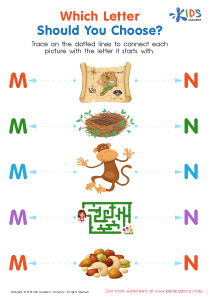
Letter recognition Normal Lowercase/Small Letters Worksheets for Ages 5-8
10 filtered results
-
From - To
Help your child master the basics of reading and writing with our "Letter Recognition Normal Lowercase/Small Letters Worksheets" designed for ages 5-8. These engaging and educational worksheets aim to improve your child's ability to identify, recognize, and write lowercase letters through fun activities and exercises. Each worksheet is carefully crafted to enhance fine motor skills, promote letter-sound associations, and build a solid foundation for early literacy. Perfect for both classroom use and at-home practice, our worksheets make learning an enjoyable experience. Equip your child with the tools they need for academic success by downloading our worksheets today!
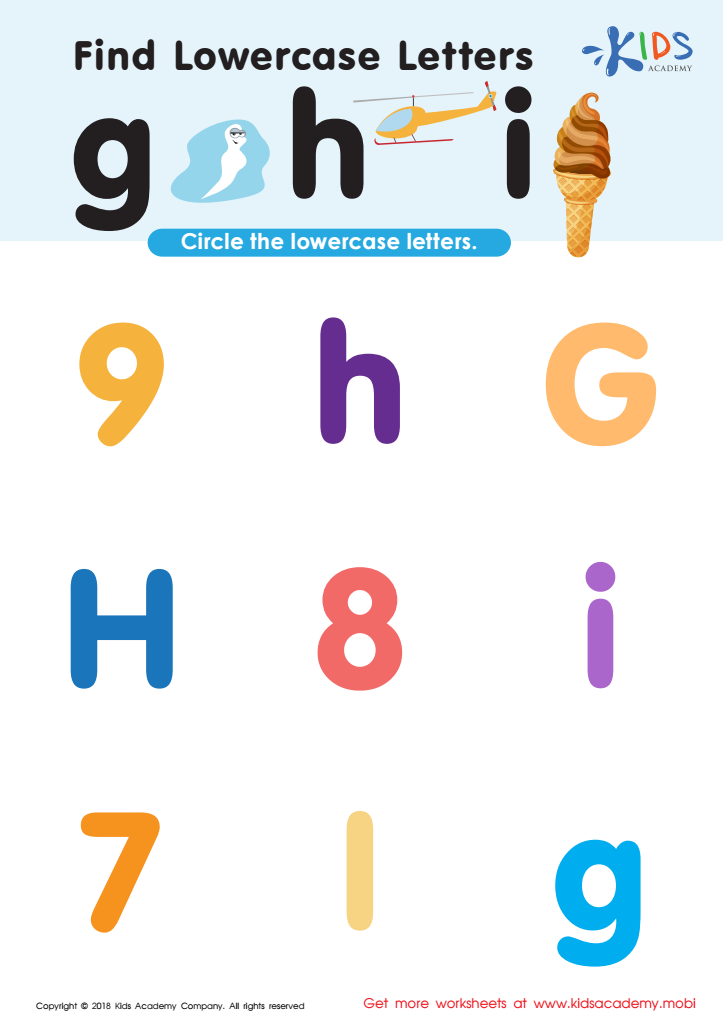
Find Lowercase Letters g h i Worksheet
 Assign to My Students
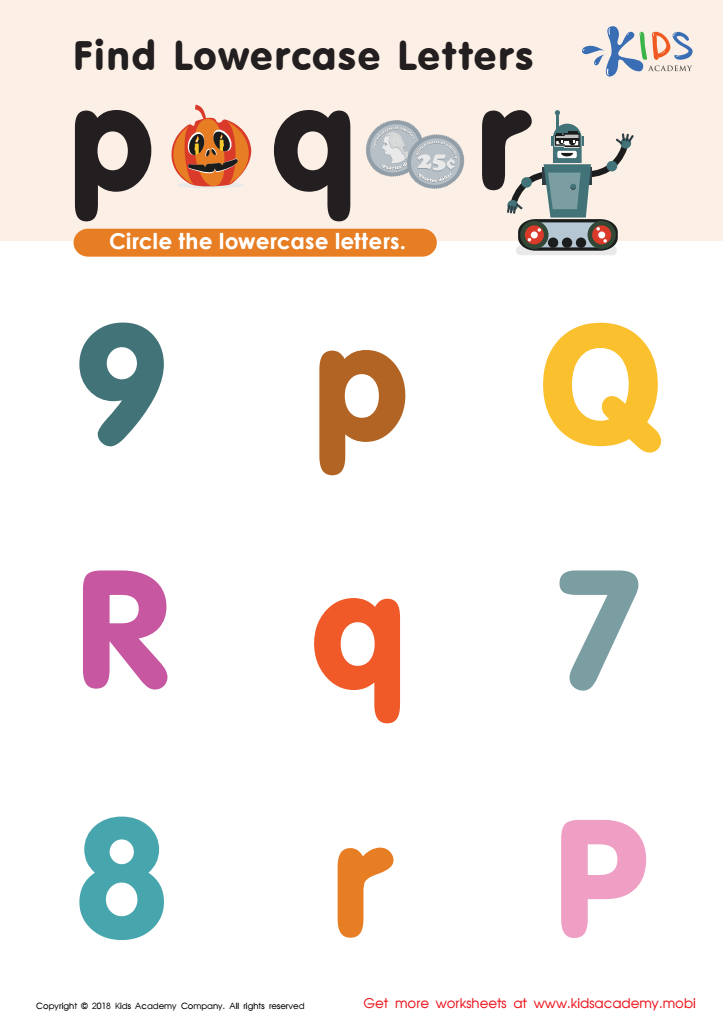
Find lowercase Letters p q r Worksheet
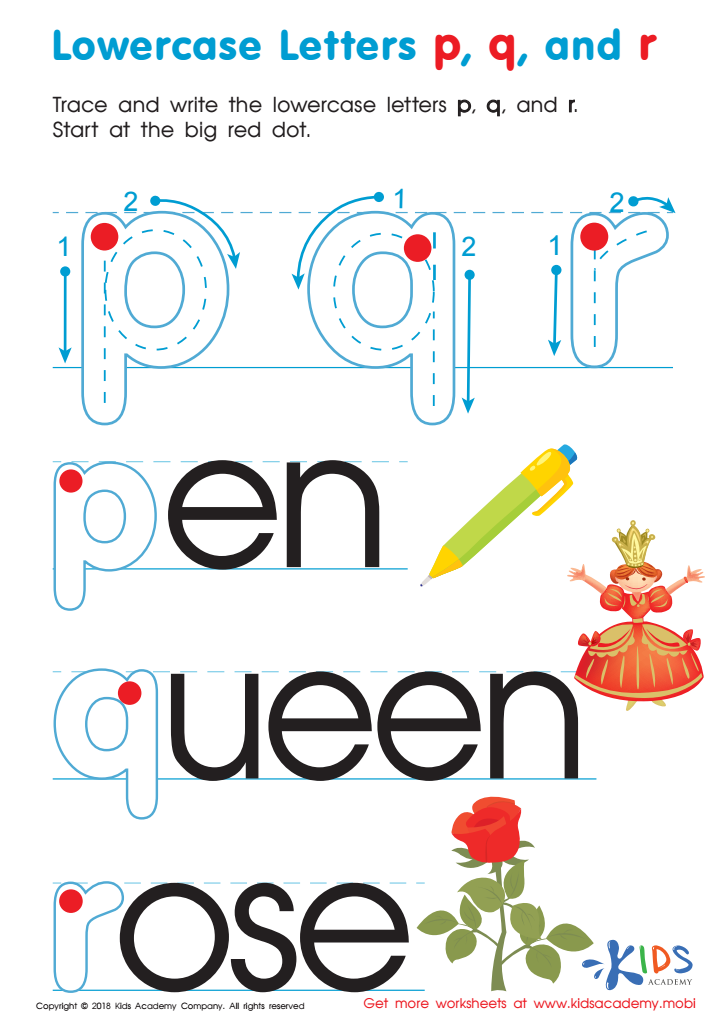
Lowercase Letters p q r Worksheet
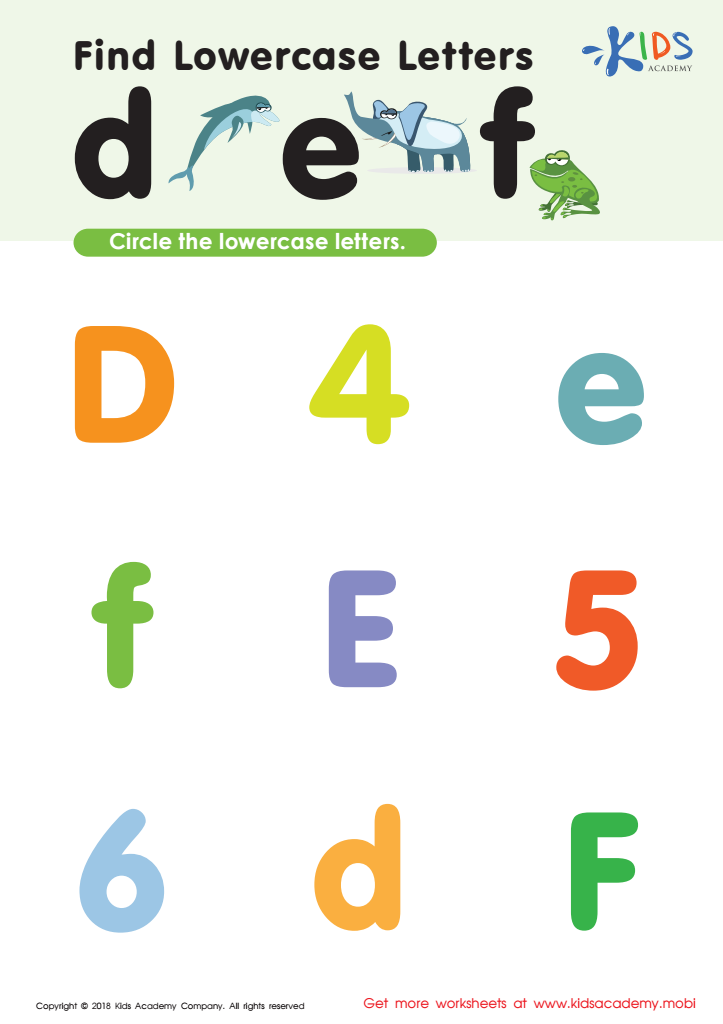
Find Lowercase Letters d e f Worksheet
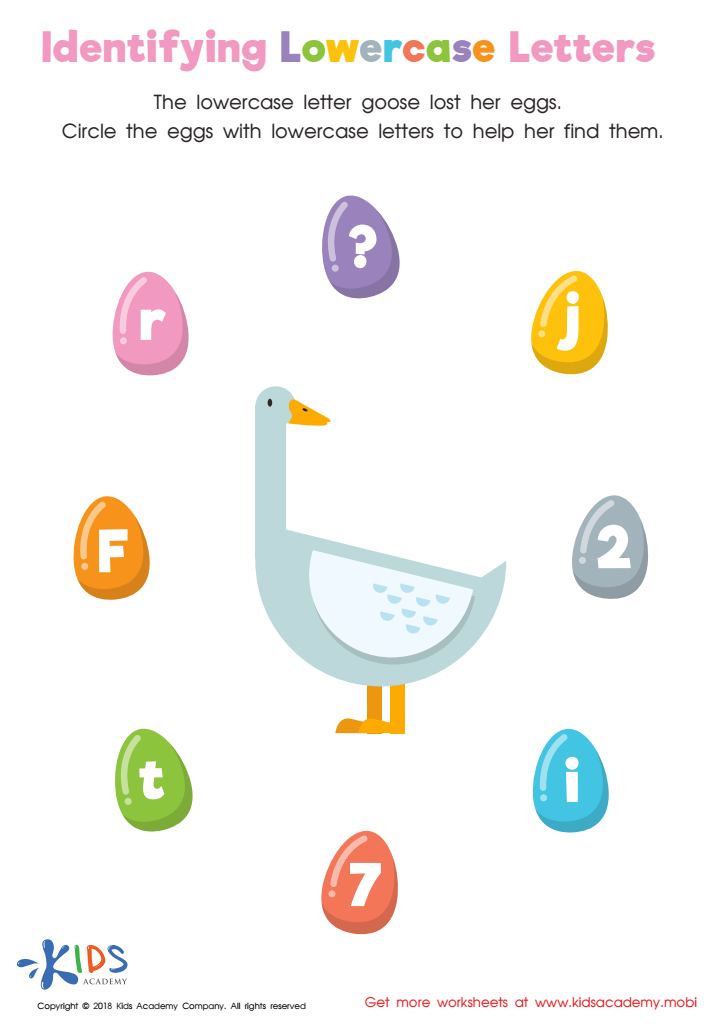
Identifying Lowercase Letters Worksheet
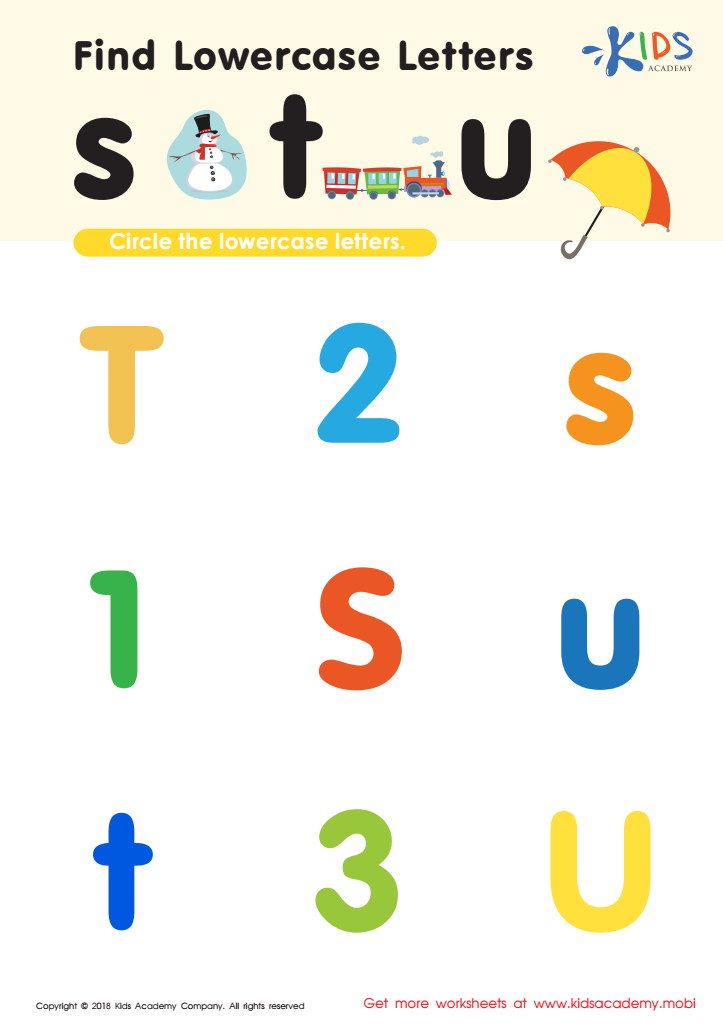
Find lowercase Letters s t u Worksheet
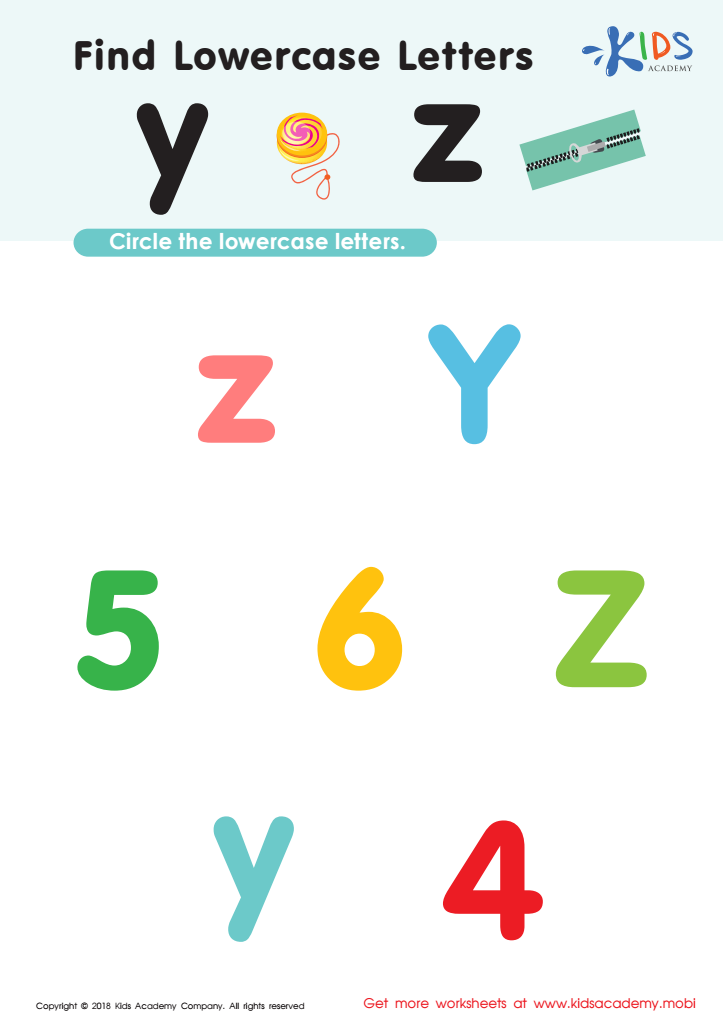
Find Lowercase Letters y z Worksheet
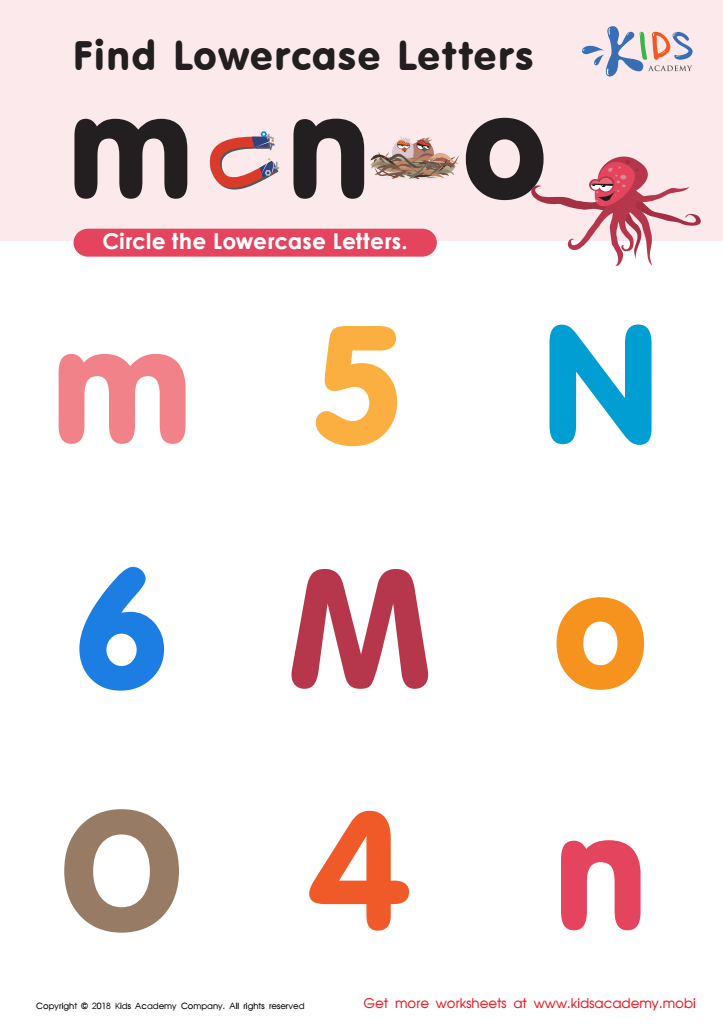
Find Lowercase Letters m n o Worksheet

Find lowercase letters a b c Worksheet
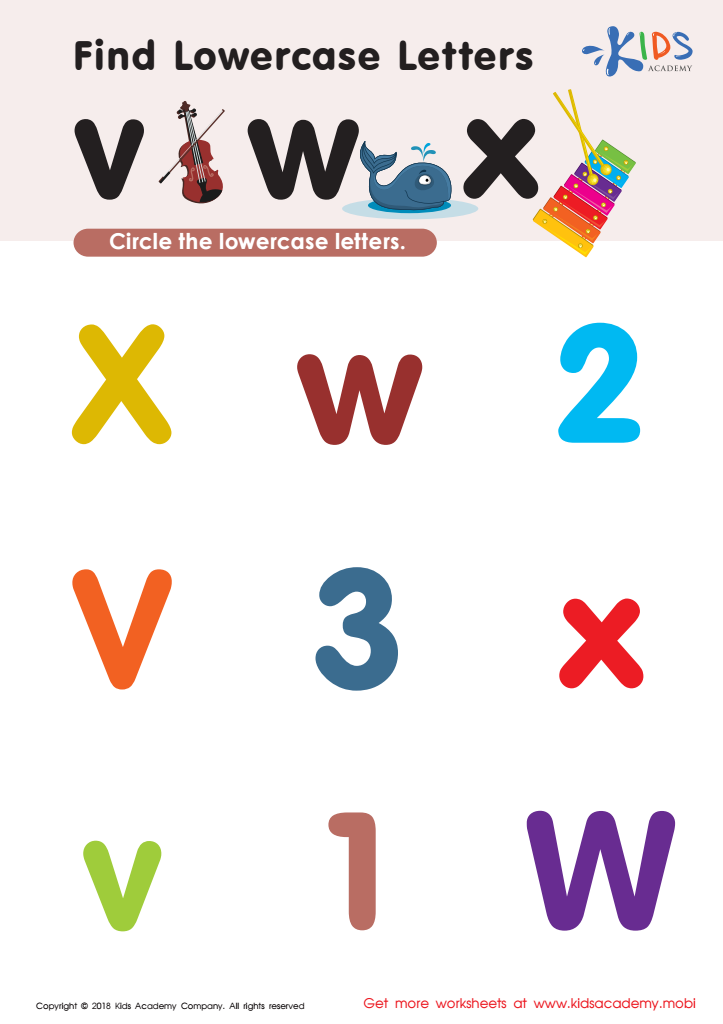
Find Lowercase Letters v w x Worksheet


Letter recognition, particularly of lowercase or small letters, is foundational for children ages 5-8 as it underpins critical early literacy skills. During these pivotal years, children are transitioning from pre-readers to emergent readers. Lowercase letters are predominant in English texts, comprising over 95% of printed material. Therefore, proficiency in recognizing lowercase letters significantly enhances a child's ability to read fluently and with comprehension.
Early and effective letter recognition fosters word decoding, spelling skills, and vocabulary expansion. When children discern lowercase letters effortlessly, they can focus on understanding the text's meaning rather than struggling to identify letters. This leads to improved reading confidence and motivation. Moreover, foundational literacy skills are closely linked to later academic success; children who experience early reading difficulties often encounter broader educational challenges.
For teachers, small letter recognition allows for effective phonics instruction and paves the way for advanced literacy skills, like writing and reading fluency. Parents play a crucial role too. By engaging in activities that promote lowercase letter recognition, such as reading together, playing letter games, and writing practice, parents can support their child's literacy journey, making it enjoyable and effective.
Thus, prioritizing lowercase letter recognition between ages 5-8 sets the stage for both immediate learning success and lifelong literacy enjoyment and competence.